Source Eco-Friendly Reusable Handled Gift Bag for Shopping, Promotion, and Packaging
Explore 30 options for an Eco-Friendly Reusable Handled Gift Bag suitable for shopping, promotion, and packaging. Buyers can compare features like spot UV printing, kraft paper material, and customized logos across suppliers in China.
Key considerations
Products List


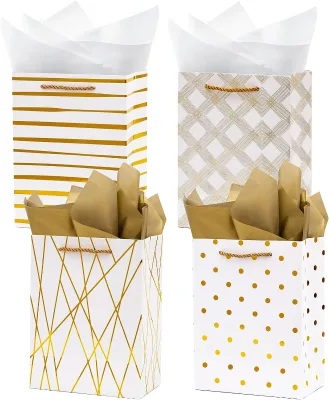


Eco-Friendly Christmas Theme Design Bags for Sustainable Gifting Solutions
$0.05 - $0.13
MOQ: 500 Pieces


Comprehensive Sourcing Guide
Strategic Sourcing Guide for Eco-Friendly Reusable Handled Gift Bags
The global shift toward sustainable packaging has elevated the demand for eco-friendly, reusable handled gift bags. These products serve as a critical intersection between brand presentation, environmental responsibility, and functional utility. For procurement professionals, sourcing these items requires a nuanced understanding of material science, manufacturing capabilities, and supply chain logistics. This guide synthesizes available market data to provide a structured approach for evaluating suppliers and specifications, ensuring that the final procurement aligns with both operational needs and sustainability goals.
Understanding Material Composition and Structural Integrity
The foundation of any high-quality reusable bag lies in its material selection. In the current market, Kraft Paper is the predominant material cited for these products, valued for its natural texture, strength, and biodegradability. Unlike synthetic alternatives, Kraft Paper offers a robust balance between durability and environmental compliance. The specific product data indicates that these bags are often categorized under "Kraft Paper Handbag" or "Paper Gift Bag," with a specific focus on "Bio-Degradable" features.
When evaluating structural integrity, buyers must look beyond the raw material. The "Bag Type" often includes "Stand" configurations, which are essential for retail display and heavy-load carrying. The presence of a "Flexiloop Handle" or a standard "With Handle" configuration is a critical specification. These handles must be securely attached to prevent failure under load, especially when the bag is used for "Garment & Shoes," "Jewelry," or "Electronic Products." The "Folded" type mentioned in specifications suggests a design that prioritizes storage efficiency when not in use, a feature highly valued for "Promotion" and "Packing" logistics.
The craftsmanship of the bag also dictates its longevity. Surface treatments such as "Spot UV," "Matte," or "Glossy Lamination" are common. While these finishes enhance aesthetic appeal for "Cosmetic" and "Gifts" applications, buyers must verify that the lamination process does not compromise the recyclability of the paper. The "Eco-Friendly" and "Reusable" attributes are only valid if the materials can be processed through standard recycling streams or composting facilities after their lifecycle.
Technical Specifications and Customization Capabilities
Customization is a primary driver in the gift bag market, allowing brands to align packaging with their identity. The data confirms that "OEM / ODM Are Welcome," and "Customized" orders are accepted. This flexibility extends to several technical dimensions. The "Logo Printing" capability is universal, with options ranging from "UV Printing" to "Flexo Printing." UV printing typically offers higher resolution and durability for detailed graphics, while flexo printing is often more cost-effective for large-volume, simpler designs.
Size specifications vary significantly based on the intended "Industrial Use." For instance, specific models like "Paper Bag 016" or "LJ0106" may have distinct dimensions, such as "272111" or "15137" centimeters. Procurement teams must ensure that the selected size accommodates the specific product being packaged, whether it is "Food," "Arts And Crafts," or "Health Care Products." The "Closure Type" is generally "Open," but the structural design must prevent spillage or damage during transit.
The "Custom Order" acceptance implies that buyers can request specific color variations, including "Pink," "Yellow," or "OEM" colors to match brand guidelines. However, the "Standard" for these products is often listed as "Customized," meaning there is no single universal size or color standard. Buyers should verify the exact dimensions and color codes (e.g., Pantone) during the design phase to avoid discrepancies in the final batch. The "Gross Weight Per Batch" of 2.800 Kg for certain models provides a baseline for logistics planning, though this will fluctuate based on the total quantity and bag thickness.
Compliance, Certification, and Environmental Claims
Navigating the landscape of environmental claims requires rigorous verification. While the product attributes explicitly list "Eco-Friendly," "Reusable," "Durable," and "Bio-Degradable," these terms are observations of the product's intended nature rather than guaranteed certifications. In the absence of verified supplier data, buyers must treat these claims as hypotheses to be tested.
The background information mentions several relevant standards and certifications, including CE, EN 13432, GOTS, OEKO-TEX, and FSC. It is crucial to understand that the presence of these standards in the background context does not automatically apply to every listed product. EN 13432, for example, is a European standard for compostable packaging, while FSC (Forest Stewardship Council) certifies responsible forestry management. GOTS (Global Organic Textile Standard) and OEKO-TEX are typically associated with textiles but may be relevant if the bag includes fabric components or specific chemical safety requirements.
Buyers should request specific documentation to validate these claims. If a supplier claims compliance with EN 13432, they must provide a valid test report from an accredited laboratory. Similarly, for FSC certification, the chain of custody documentation must be available. Without these documents, the "Bio-Degradable" claim remains an unverified attribute. The "Standard" field in the product data often lists "Customized," which further emphasizes that compliance is not inherent but must be negotiated and verified per order.
Cost Drivers and Minimum Order Quantity Analysis
The economics of sourcing handled gift bags are influenced by material costs, customization complexity, and order volume. The observed price range in the market spans from $0.02 to $6.50 USD per unit. This wide variance is driven by factors such as paper weight, handle material, printing complexity, and the specific finish (e.g., Spot UV vs. standard printing). A bag priced at $0.02 likely represents a basic, unbranded, or high-volume order, whereas a bag at $6.50 may include premium materials, complex multi-color printing, or a very small order quantity.
Minimum Order Quantity (MOQ) is another significant cost driver. The observed MOQ range is substantial, spanning from 50 to 500,000 units. Specific product data points to MOQs of 1,000 PCS and 200 PCS for different models. The "Selling Units" may be listed as "Single item" or "Multiple of 100," which affects how buyers calculate their total cost. For smaller businesses, an MOQ of 200 or 500 units might be the entry point, while large retailers may negotiate volumes closer to the 500,000 mark to achieve the lower end of the price spectrum.
Buyers must also consider the "Export Carton" or "Paper Box" packing requirements. These packaging details impact the overall shipping cost and storage efficiency. A higher density of bags per carton reduces freight costs, but the structural integrity of the carton must be sufficient to protect the bags during transit. The "Gross Weight Per Batch" is a critical metric for freight forwarders to calculate shipping costs accurately.
Supplier Evaluation and Geographic Considerations
The geographic origin of the supplier plays a pivotal role in lead times, shipping costs, and communication efficiency. The product data identifies two primary manufacturing hubs: Guangzhou, China, and Zhejiang, China. Guangzhou is a major hub for packaging and printing, offering a vast ecosystem of suppliers and raw materials. Zhejiang is also a significant manufacturing center, particularly known for its paper and textile industries.
When evaluating suppliers, buyers should look for those who explicitly state "OEM / ODM Are Welcome" and demonstrate a history of handling "Customized" orders. The ability to accept "Customized Logo" and "Custom Order" requests is a strong indicator of a flexible and capable supplier. However, buyers must verify the supplier's capacity to meet the specific "MOQ" requirements without compromising quality.
Communication is key in international sourcing. Suppliers located in China may operate on different time zones, and the language barrier can sometimes lead to misunderstandings regarding technical specifications. It is advisable to request physical samples before placing a bulk order. These samples allow the buyer to verify the "Paper Type," "Craftsmanship," and "Feature" claims firsthand. The "Industrial Use" of the bag, such as for "Food" or "Cosmetic," may also require specific supplier certifications regarding food safety or chemical leaching, which should be part of the supplier evaluation checklist.
Quality Control and Long-Term Procurement Strategy
Quality control (QC) is essential to ensure that the "Eco-Friendly" and "Reusable" claims hold up in real-world scenarios. Buyers should implement a multi-stage QC process. First, verify the material composition to ensure it matches the "Kraft Paper" specification. Second, test the handle strength, especially for "Flexiloop Handle" types, to ensure they can support the intended load for "Shopping" or "Promotion" activities. Third, inspect the printing quality to ensure that "UV Printing" or "Flexo Printing" is clear, durable, and does not smudge.
For long-term procurement, consistency is paramount. Suppliers should be able to maintain the same "Standard" and "Customized" specifications across multiple batches. The "prod_model" numbers, such as "LJP2024" or "Paper Bag 011," serve as reference points for maintaining product consistency. Buyers should establish a formal agreement that includes quality benchmarks, acceptable defect rates, and a clear process for handling non-conforming goods.
Furthermore, the "Usage" of the bag extends beyond a single transaction. As a "Reusable" item, the bag should be durable enough to withstand multiple uses. This durability is a key selling point for brands looking to enhance their sustainability image. Procurement teams should consider the end-of-life scenario for the bag. If the bag is marketed as "Bio-Degradable," the supplier should provide guidance on how the bag should be disposed of to ensure it breaks down correctly, aligning with local waste management regulations.
Application Scenarios and Market Fit
The versatility of these bags is evident in their diverse "Usage" categories. They are suitable for "Greeting Cards," "Letters," "Health Care Products," "Garment & Shoes," "Jewelry," "Electronic Products," "Food," "Cosmetic," and "Gifts." This broad applicability means that a single supplier can serve multiple industries, provided they have the capacity to handle different customization needs.
For the "Food" industry, the bag must meet specific hygiene standards, and the "Paper Type" must be food-safe. For "Cosmetic" and "Jewelry," the aesthetic finish, such as "Matte or Glossy Lamination," is critical for brand perception. In the "Electronic Products" sector, the bag must offer sufficient protection against dust and minor impacts. The "Industrial Use" of "Gift & Craft" suggests that these bags are often used for promotional events, where the "Logo Printing" and "Customized" nature of the bag serve as a marketing tool.
Buyers should align their procurement strategy with their specific industry needs. A company selling "Garment & Shoes" might prioritize a larger bag size with a sturdy handle, while a "Cosmetic" brand might focus on a smaller, more elegant bag with high-quality printing. The "Keyword" "Kraft Paper Handbag" or "Non Woven Packaging Bag" (though the latter is less common in the provided data) helps in identifying the right product category within the supplier's catalog.
Conclusion
Sourcing eco-friendly reusable handled gift bags requires a balanced approach that considers material quality, customization capabilities, compliance verification, and cost efficiency. The market offers a wide range of options, from basic Kraft Paper bags to highly customized solutions with advanced printing techniques. By focusing on verified specifications, requesting appropriate documentation for environmental claims, and establishing clear quality control protocols, buyers can secure a supply chain that supports their sustainability goals and brand identity. The data indicates a robust market with suppliers in Guangzhou and Zhejiang capable of meeting diverse needs, provided that buyers conduct thorough due diligence and maintain open communication with their partners.
FAQs
What materials are used for these handled gift bags?
Kraft Paper is the predominant material used for these eco-friendly reusable handled gift bags. This material is selected for its natural texture, strength, and biodegradability, making it suitable for various industrial uses like cosmetics and food packaging.
Can I customize the logo and color of the bags?
Yes, OEM and ODM services are welcome, allowing for customized logos and colors like pink or yellow. Buyers can request specific printing methods such as UV or Flexo printing to match their brand identity and product requirements.
What are the typical minimum order quantities for these bags?
Minimum order quantities range from 200 to 500,000 units depending on the specific model and customization level. Some models require 1,000 pieces, while others may start as low as 200, with selling units often being multiples of 100.
Where are these paper bags manufactured?
These products originate from manufacturing hubs in China, specifically Guangzhou and Zhejiang. These locations are known for their robust packaging ecosystems and ability to handle large-scale production of customized paper gift bags.
Are these bags considered eco-friendly and recyclable?
The products are described as eco-friendly, reusable, durable, and bio-degradable. However, buyers should verify specific certifications like FSC or EN 13432 with the supplier to ensure the claims meet their sustainability goals and local regulations.
What printing techniques are available for these bags?
Available surface printing techniques include UV Printing and Flexo Printing, along with finishes like Spot UV and Matte or Glossy Lamination. These options allow for high-resolution graphics and durable branding on the kraft paper surface.