Source Eco-Friendly Standing Spice Rack for Kitchen Storage
Find 30 Eco-Friendly Standing Spice Rack options crafted from wood and bamboo. Compare models with three or four layers, laser-engraved logos, and custom sizes. Source durable, eco-friendly storage solutions for home kitchens and commercial food service applications; compare the available evidence and request quotations based on your requirements.
Key considerations
Products List


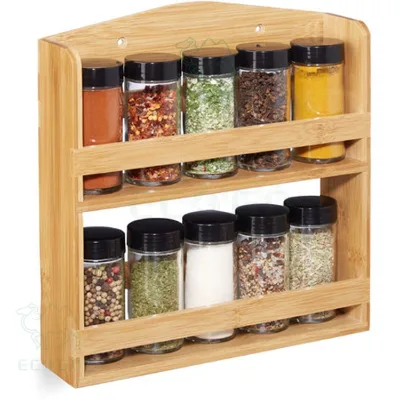
Natural Custom Logo Bamboo Spice Rack Kitchen Spice Jar Rack Spice Rack Holder
$5.00 - $6.50
MOQ: 2000 Pieces


Natural Bamboo Spice Rack, Freestanding Kitchen Cutlery Storage Organizer Holder Shelf Spice Racks
$10.00 - $20.00
MOQ: 300 Pieces

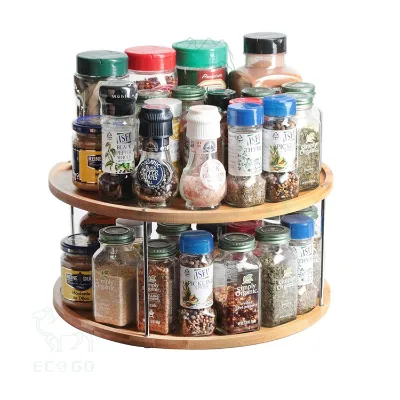
Natural Bamboo Wooden Spice Organizer Multi-Functional Countertop Seasoning Rack with 18 Spice Jars
$10.00 - $20.00
MOQ: 300 Pieces




Comprehensive Sourcing Guide
Eco-Friendly Standing Spice Rack Sourcing Guide
Procurement teams seeking eco-friendly standing spice racks must first distinguish between general kitchen storage and specialized units designed for vertical organization. The observed market data indicates a strong presence of multi-layered wooden and bamboo structures, with specific models featuring three or four tiers to maximize countertop or cabinet space. Buyers should prioritize suppliers who explicitly list "Eco Friendly" attributes alongside durable materials like bamboo, which offers a sustainable alternative to traditional hardwoods while maintaining structural integrity for heavy spice jars.
The commercial landscape reveals a wide variance in customization options, with some manufacturers offering laser-engraved logos and others providing standard black or natural finishes. While the observed product range includes folding designs and standing types, the core requirement for a standing spice rack remains the ability to support vertical storage without tipping. Sourcing strategies should focus on verifying the "Installation Type" as a standing unit rather than a wall-mounted or freestanding shelf, ensuring the final product aligns with the intended kitchen layout and usage patterns.
Product Scope and Observed Listing Signals
The current market inventory for standing spice racks demonstrates a clear segmentation based on material composition and layer count. Buyers will encounter products ranging from two-layer to four-layer configurations, with bamboo and wood being the dominant materials cited in the supply data. These units are frequently marketed for food and spice storage, with specific listings highlighting their suitability for home and kitchen occasions. The presence of "Eco Friendly" tags suggests a growing segment of suppliers focusing on sustainable sourcing, though the specific certification status of these claims requires independent verification before finalizing orders.
Listing signals also indicate significant variation in packaging and finishing processes, which directly impact the final product presentation and durability. Some units arrive in single inner boxes with bulk outer cartons, while others utilize individual bubble bags for protection. Surface treatments range from oiled finishes to matte lacquer, each offering different levels of moisture resistance and aesthetic appeal. Procurement teams must carefully review these listing details to ensure the selected model meets the specific aesthetic and functional requirements of their target market, particularly regarding the "Colour" and "Design" attributes like folding or standing configurations.
Technical Specifications to Verify
When evaluating technical specifications, the physical dimensions and structural stability of the standing spice rack are paramount. The observed data includes specific standard dimensions such as 34x34x99cm or 11.85"L *3.5"W *13.8"H, which serve as critical benchmarks for space planning. Buyers must verify that the "Size" classification—whether small, medium, or large—aligns with the available storage area in their intended retail or residential environments. Additionally, the "Number of Layers" must be confirmed to ensure the rack can accommodate the specific volume and size of spice containers the end-user intends to store.
Material integrity and finishing processes are equally critical technical factors that influence the longevity of the product. The supply data highlights "Oiled" and "Matt Lacquer" as common finishing methods, which affect the wood's resistance to humidity and wear. Buyers should request detailed specifications on the "Surface Finshing" to confirm that the treatment is food-safe and suitable for kitchen environments where spills and cleaning are frequent. Furthermore, the "Expandable" attribute, noted as "No" in some listings, requires confirmation to ensure the unit does not require assembly modifications that could compromise its structural stability or ease of use.
Compliance and Safety Documentation
Ensuring compliance with safety and environmental standards is a non-negotiable step in sourcing eco-friendly kitchenware. While the observed listings mention "Eco Friendly" attributes and potential FSC certification, these claims must be substantiated with valid documentation from the supplier. Procurement teams should explicitly request certificates of origin and material safety data sheets to verify that the bamboo or wood used is sourced from sustainable forests and processed without harmful chemicals. The absence of specific certification data in the initial product descriptions necessitates a rigorous due diligence process to avoid greenwashing.
Food safety compliance is another critical area that requires immediate attention, given the product's intended usage for storing food and spices. Buyers must verify that the finishing materials, such as oils or lacquers, meet relevant food-contact safety standards for the target export markets. Although the observed data lists "Food" and "Spice" as usage categories, it does not provide specific test results or compliance numbers. Therefore, suppliers should be required to provide third-party test reports confirming that the finished product does not leach harmful substances into food items, ensuring full regulatory adherence for international distribution.
Cost Drivers and Commercial Terms
The commercial landscape for standing spice racks is influenced heavily by customization levels and material sourcing strategies. The observed Minimum Order Quantity (MOQ) ranges from 30 to 3000 units, with a specific high-confidence fact noting an MOQ of 2000 for certain models. This variance suggests that buyers can negotiate more favorable terms for standard, non-customized items, while bespoke features like laser-engraved logos or specific dimensions will likely increase the unit cost and require higher volume commitments. Understanding these thresholds is essential for budgeting and inventory planning.
Pricing and payment terms are further driven by the complexity of the packaging and the origin of the goods. The data indicates that products originate primarily from Fujian Province, China, and utilize various packing methods ranging from single inner boxes to bulk cartons. These packaging choices directly impact shipping costs and the final landed price. Buyers should analyze the "prod_packing" details to optimize logistics, as more robust packaging may reduce damage rates but increase freight expenses. Additionally, the "Customized Option" availability allows for flexibility in pricing, enabling buyers to balance cost against the value of unique branding or design features.
Supplier Qualification and Quality Control
Supplier qualification for eco-friendly standing spice racks requires a deep dive into their manufacturing capabilities and quality assurance protocols. The observed product models, such as HYK05008 and GBSR2408-2, indicate a diverse portfolio, but buyers must verify that the supplier has consistent quality control measures in place for wood and bamboo processing. It is crucial to confirm that the "Quality" attribute, often listed as "High," is backed by internal inspection processes and that the "Appearance" meets the "Fine" standards expected in the market.
Quality control should extend to the finishing and assembly stages, where defects like uneven lacquer or loose joints are common. Buyers should implement a pre-shipment inspection protocol that specifically checks the "Durability" and "Installation Type" of the standing racks. Since the "Standard" is often listed as "custom," suppliers must demonstrate their ability to adhere to precise dimensional tolerances and structural requirements. Establishing a clear communication channel for defect reporting and ensuring the supplier has a robust system for handling non-conforming units is vital for maintaining brand reputation and customer satisfaction.
Long-Term Procurement Checks
Sustaining a successful procurement relationship for standing spice racks involves regular audits of the supplier's supply chain and material sourcing practices. Buyers should periodically verify that the "Eco Friendly" claims remain valid as the supplier's sourcing strategies evolve. This includes checking for updated certifications and ensuring that the bamboo or wood continues to be harvested sustainably. Long-term checks should also assess the supplier's ability to maintain consistent quality as production volumes scale, preventing the degradation of product standards over time.
Market trends and consumer preferences for kitchen storage solutions are dynamic, requiring ongoing evaluation of the product's relevance and performance. Buyers must monitor feedback regarding the "Usage" and "Design" of the spice racks to ensure they continue to meet customer needs. Regular reviews of the "Packaging" and "Shipping" processes can also identify opportunities for cost reduction and efficiency improvements. By maintaining a proactive approach to supplier management and product development, procurement teams can ensure a steady supply of high-quality, eco-friendly standing spice racks that align with evolving market demands.
FAQs
What customization options are available for the spice rack?
Customization is available for this Eco-Friendly Standing Spice Rack. Buyers can request specific designs, logos, and packaging configurations. The product supports laser-engraved logos and various finishing options like oiled or matt lacquer surfaces to meet unique branding needs.
Which materials are used to construct the standing spice rack?
The standing spice rack is constructed from wood and bamboo materials. These natural materials ensure durability and an eco-friendly profile. The product features a folding design and is available in large, medium, or small sizes depending on the specific model selected by the buyer.
Can the spice rack be customized with a specific logo?
Yes, the spice rack can be customized with a laser-engraved logo. This feature allows buyers to brand the product effectively for their market. The customization option is available alongside other personalization choices like specific packaging and design variations for different product models.
What is the minimum order quantity for the spice rack?
The minimum order quantity varies by product model but starts at 2000 units for some items. Other models may have an MOQ of 30 units. Buyers should verify the specific MOQ for their chosen model, as values range from 30 to 3000 units depending on the configuration.
How is the spice rack packaged for shipping?
Packaging options include single units in inner boxes or bulk packs into cartons. Some models use individual bubble bags before being packed into cartons. Customized packaging is also available to meet specific logistical requirements or branding needs for the final product delivery.
Where are the spice rack manufacturers located?
Manufacturers are located in China, specifically in Fujian Province. This region is known for producing high-quality wooden and bamboo kitchenware. The origin location ensures access to established supply chains for eco-friendly standing spice racks with various customization capabilities.
What are the standard dimensions for the spice rack?
Standard dimensions vary by model, with sizes ranging from small to large. Specific models have defined measurements like 35 by 25 by 2.5 cm or 34 by 34 by 99 cm. Custom sizes are also available to accommodate specific storage needs or design preferences for the standing spice rack.