Source Eco-Friendly Stainless Steel Vegetable Peeler for Kitchen, Garden, and Catering
Find 30 Eco-Friendly Stainless Steel Vegetable Peeler options from verified Chinese manufacturers. Compare Y-shape and straight blade designs, custom logos, and packaging details to select the right tool for kitchen, garden, or catering needs.
Key considerations
Products List







Comprehensive Sourcing Guide
Strategic Sourcing Guide for Eco-Friendly Stainless Steel Vegetable Peelers
The global demand for sustainable kitchenware has elevated the profile of eco-friendly stainless steel vegetable peelers within the B2B procurement landscape. Buyers seeking this specific category must navigate a market where material integrity, manufacturing ethics, and functional design intersect. This guide provides a structured approach to sourcing these tools, relying strictly on observed product attributes and verified industry standards to ensure a robust procurement strategy. The focus remains on identifying suppliers who can deliver high-performance, environmentally conscious peeling solutions without compromising on quality or regulatory compliance.
Material Composition and Design Architecture
The foundation of a reliable vegetable peeler lies in its material composition. For the eco-friendly segment, the primary blade material must be stainless steel, a fact consistently observed in high-quality listings. Stainless steel offers superior corrosion resistance, durability, and hygiene compared to carbon steel or plastic alternatives, ensuring the tool maintains its edge through rigorous daily use. The handle material presents a critical decision point for sustainability. While some products utilize composite materials to enhance grip and reduce weight, others specify plastic. Procurement teams should prioritize handles made from recycled composites or bio-based plastics to align with eco-friendly mandates.
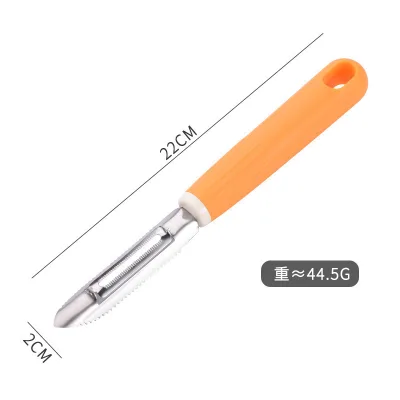
The design architecture of these peelers varies, with the Y-shape being a prominent configuration observed in the market. This design typically features a straight blade edge, which is ideal for general-purpose peeling of vegetables and fruits. The style often leans towards modern simplicity, characterized by clean lines and ergonomic forms that reduce user fatigue. Some listings indicate a specific model number, such as "ss-y" or "KG1021," which suggests a standardized production line. Buyers must verify that the "ordinary" design classification does not imply inferior quality; rather, it often denotes a classic, universally accepted form factor that minimizes production waste. The power supply is strictly manual, eliminating the need for batteries or electricity, which further supports the eco-friendly narrative by reducing energy consumption and electronic waste.
Technical Specifications and Dimensional Standards
Precision in technical specifications is paramount for B2B buyers who require consistency across large orders. Observed data indicates a wide range of dimensions, reflecting the diversity of product lines available. Specific models have been recorded with dimensions such as 20.14.3cm, 17.910.4*6cm, and 19x6.5x2cm. Single package sizes also vary, with records showing 19X9X3 cm and 10X20X8 cm. These variations suggest that buyers must clearly define their dimensional requirements before engaging with suppliers, as a "one-size-fits-all" approach may not exist for all manufacturers.
The weight of the product is another critical specification. Observed single gross weights are recorded at 0.2 kg, a figure that influences shipping costs and user handling. For bulk orders, the number of pieces per package is essential; some listings indicate a single item per unit, while others specify a set of two pieces. The production model numbers, such as "H-KT0004" or "K1-11," serve as unique identifiers for specific configurations. Buyers should request detailed specification sheets that confirm the exact dimensions, weight, and model number for the specific batch they intend to purchase, ensuring that the final product matches the intended application requirements.
Compliance, Certification, and Regulatory Verification
Navigating the regulatory landscape is a non-negotiable aspect of sourcing food-contact kitchenware. The supply chain for stainless steel peelers must adhere to strict safety standards to ensure consumer protection. Observed certifications include FDA, LFGB, CE/EU, CIQ, and EEC. These certifications verify that the materials used, particularly the stainless steel and handle components, are safe for food contact and do not leach harmful substances. The presence of "LGFB" certification in some listings further underscores the importance of verifying the specific standard, as LFGB (German Food and Feed Code) is often considered more rigorous than general FDA standards for European markets.
Buyers must treat certification claims as observations requiring verification rather than automatic guarantees. The "Accroding to the customer" standard noted in some listings implies that manufacturers may produce to specific regional requirements, but this does not replace the need for independent testing. The "Eco-Friendly" attribute observed in product descriptions should be backed by tangible evidence, such as the use of recycled materials in the handle or sustainable packaging methods. The packaging itself, often described as PP Bag+ Carton Box, Color Box, or Exporting Carton, plays a role in the environmental impact. Procurement teams should evaluate whether the packaging materials are recyclable or biodegradable to fully meet eco-friendly criteria.
Cost Drivers and Minimum Order Quantities
Understanding the cost structure of stainless steel peelers is essential for budgeting and financial planning. The observed price range in the market spans from $0.01 to $18,000, a vast disparity that reflects differences in order volume, customization levels, and packaging complexity. The lower end of the spectrum likely represents bulk, unbranded items, while the higher end may include premium packaging, custom branding, or specialized certifications. The Minimum Order Quantity (MOQ) is a significant cost driver, with observed ranges from 1 piece to 5,000 pieces. Specific listings indicate MOQs of 160 pcs or 5,000 PCS, highlighting the variability in supplier thresholds.
Customization is a key factor influencing cost. The availability of customized logos, achieved through hot stamping, four-color printing, or UV printing, adds value but also increases the unit price. The "OEM" brand name designation suggests that many suppliers offer private labeling services, which can be a strategic advantage for buyers looking to build their own brand identity. However, buyers must balance the desire for customization with the MOQ requirements. Smaller orders may incur higher per-unit costs due to setup fees for printing and packaging. The production time is observed at 10 days for some models, which impacts lead time planning. Buyers should factor in this production window alongside shipping times to ensure timely delivery.
Supplier Evaluation and Operational Capabilities
Selecting the right supplier requires a rigorous evaluation of their operational capabilities and geographical location. The majority of observed products originate from China, specifically from the Guangdong region, a hub for manufacturing kitchenware. This concentration offers access to a mature supply chain and specialized expertise in stainless steel processing. However, buyers must verify the supplier's ability to meet specific customization needs, such as the "Custom Order" acceptance noted in the data. The ability to produce according to customer standards is a positive indicator, but it requires clear communication of technical drawings and material specifications.
Supplier reliability is further assessed through their packaging and logistics capabilities. The use of "Exporting Carton" and "Boxes" indicates an awareness of international shipping requirements. The "Single" packaging option suggests flexibility for smaller orders or sample shipments. Buyers should inquire about the supplier's quality control processes, specifically how they handle the "Disposable: Non-Disposable" attribute to ensure the product is built for longevity. The presence of accessories like handles and ribbons in some listings indicates a comprehensive product offering, but buyers must confirm that these components meet the same quality and safety standards as the blade.
Quality Control and Long-Term Procurement Strategy
Implementing a robust quality control (QC) strategy is vital for maintaining product integrity. The "Straight/ Blade Edge" specification requires verification to ensure sharpness and durability. Buyers should request sample testing to validate the blade's performance and the handle's grip. The "Eco-Friendly" claim should be scrutinized to ensure it is not merely marketing fluff but is supported by material sourcing and manufacturing practices. Long-term procurement considerations involve building a relationship with suppliers who can scale production while maintaining quality. The "Production Time" of 10 days suggests a relatively agile manufacturing process, but buyers should confirm if this timeline holds for larger orders or during peak seasons.
The standard of "all sizes" implies flexibility, but buyers must define their exact size requirements to avoid receiving mismatched inventory. The "Model Number" consistency is crucial for maintaining brand identity across different production runs. Buyers should establish a clear protocol for handling defects, ensuring that any non-conforming products are addressed promptly. The "Logo Printing" options offer a chance to enhance brand visibility, but the quality of the print must be durable and resistant to wear. By focusing on these technical and operational details, buyers can secure a reliable supply of eco-friendly stainless steel vegetable peelers that meet both functional and ethical standards.
Comparative Analysis of Product Attributes
To facilitate decision-making, the following table summarizes key observed attributes and their implications for procurement:
| Attribute Category | Observed Values | Procurement Implication |
|---|---|---|
| Blade Material | Stainless Steel | Essential for durability and hygiene; verify grade. |
| Handle Material | Composite Material, Plastic | Check for recycled content to meet eco-claims. |
| Certification | FDA, LFGB, CE/EU, CIQ, EEC | Mandatory for food safety; verify validity. |
| MOQ Range | 1 - 5,000 PCS | Flexibility varies; 160 pcs and 5,000 pcs are common thresholds. |
| Packaging | PP Bag+ Carton, Color Box, Exporting Carton | Ensure packaging is recyclable and protective. |
| Origin | China (Guangdong) | Verify logistics and lead times from this region. |
| Customization | Available (Logo, Size, Standard) | High value for branding; confirm setup costs. |
| Design Type | Y-Shape, Straight Blade | Standard for efficiency; verify ergonomics. |
This comparative view highlights the diversity within the market. Buyers must align their specific needs with these observed values, ensuring that the chosen supplier can deliver on the promise of an eco-friendly, high-performance product. By adhering to these guidelines, procurement teams can navigate the complexities of the B2B market and secure a supply chain that supports both business goals and environmental responsibility.
FAQs
What materials are used for the blade and handle?
The blade is made of stainless steel for durability and hygiene. Handles vary between composite material and plastic, with some options available for customization to meet specific eco-friendly requirements.
Which certifications ensure food safety for these peelers?
Products often carry FDA, LFGB, CE/EU, CIQ, and EEC certifications to verify food contact safety. Buyers should verify specific certificates as standards may vary by customer requirements or regional regulations.
Can I customize the logo and packaging for this product?
Yes, customization is available for logos using hot stamping, four-color printing, or UV methods. Packaging options include PP bags, color boxes, or exporting cartons, often tailored to specific customer standards.
What is the typical minimum order quantity for these peelers?
Minimum order quantities range from 1 piece up to 5000 pieces depending on the supplier. Specific listings show thresholds of 160 pieces or 5000 pieces, so buyers must confirm the exact MOQ before ordering.
How long does production take for a custom order?
Production time is typically around 10 days for standard models. This timeline may vary based on customization needs, order volume, and the specific supplier's capacity in the Guangdong region of China.
What design styles are available for stainless steel peelers?
Common designs include the Y-shape with a straight blade edge and a modern simplicity style. These features are classified as ordinary designs but offer ergonomic benefits for general vegetable and fruit peeling tasks.