Source Egg Shape Rotary Hanging Chair for Patio, Garden, and Indoor Use
Explore 30 listings of the Egg Shape Rotary Hanging Chair designed for outdoor patios, garden spaces, and indoor relaxation areas. Buyers can compare specifications like load capacity, cushion thickness, and frame materials to find the right supplier.
Key considerations
Products List


Garden Rattan Egg Shaped One Person Seat Hanging Swing Chair with Cushion
$70.00 - $80.00
MOQ: 200 Pieces


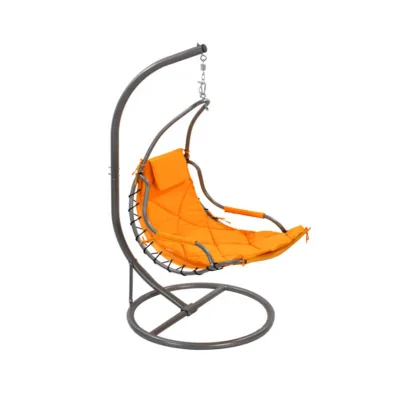
China Supplier Modern Outdoor Hanging Swing Chairs Egg Hanging Chair Leisure Chair
$51.99 - $52.99
MOQ: 1000 Minimum


Hanging Chair with Round Frame Rattan Hanging Egg Garden Rattan Swing Chair
$14.00 - $15.00
MOQ: 1000 Pieces

Indoor Swing Chair Manufacturer with Stand Outdoor Hanging Egg Shape Chair
$80.00 - $160.00
MOQ: 5 Sets


Outdoor Rattan Hanging Basket Swing Chair for Leisure Hanging Egg Chair
$19.50 - $20.50
MOQ: 500 Pieces


Outdoor Rattan Wicker Seat Hanging Egg Swing Chair with Metal Stand Mail Packaging
$106.00 - $119.00
MOQ: 10 Sets
Comprehensive Sourcing Guide
Strategic Sourcing Guide for Egg Shape Rotary Hanging Chairs
The global market for outdoor and indoor leisure furniture has seen a significant surge in demand for ergonomic, space-efficient seating solutions. Among these, the Egg Shape Rotary Hanging Chair has emerged as a premium category, blending aesthetic appeal with functional versatility. For B2B procurement professionals, sourcing these units requires a disciplined approach that moves beyond visual appeal to scrutinize technical specifications, material integrity, and compliance standards. This guide provides a comprehensive framework for evaluating suppliers and products within this specific niche, ensuring that procurement decisions are grounded in verified data and industry best practices.
Technical Specifications and Structural Integrity
When evaluating an Egg Shape Rotary Hanging Chair, the primary focus must be on the structural framework and its load-bearing capabilities. The product data indicates that the frame material is predominantly metal, often finished with a powder-coated process to ensure resistance against corrosion and weathering. This is critical for units intended for outdoor use or high-traffic indoor environments. The frame dimensions vary significantly across different models, with specific observations noting frame sizes such as 42*25mm and overall product standards ranging from diameters of 95cm to larger configurations like 194x125x174cm.
A critical technical parameter is the maximum load capacity. The observed data reveals a variance in this specification, with some models rated for 200KG and others engineered to support up to 300KG. Procurement teams must verify the specific load rating for the model they intend to purchase, as this directly correlates with the thickness and grade of the metal used in the frame. Additionally, the rotary mechanism is a defining feature of this product category. The data confirms the availability of both fixed and rotary options, with the rotary variant allowing for 360-degree movement. This mechanical feature requires precise engineering to ensure smooth operation without wobbling or excessive friction, which can be a safety hazard if not properly maintained.
The seating surface also presents diverse material options. Observations highlight the use of round rattan, which offers a natural aesthetic, as well as 2x2 Textilene, a synthetic fabric known for durability and breathability. The cushioning is another area of variation, with thicknesses ranging from 8cm to 20-25cm. The fabric composition for the cover is typically waterproof polyester, with weights observed at 160g and 180g, while the cushion filling may consist of shirt fiber or short fiber. Buyers should request detailed material datasheets to confirm that the textile weights and fiber densities meet the specific durability requirements of their target market.
Compliance, Certification, and Safety Standards
In the B2B sector, compliance is not merely a formality but a prerequisite for market entry. The supplied product facts explicitly mention the EN581 standard, which is the European standard for outdoor furniture. This standard covers safety, strength, durability, and stability requirements for outdoor lounging chairs. When sourcing egg shape rotary hanging chairs, verifying that the product has undergone testing according to EN581 is essential. This certification ensures that the chair can withstand the dynamic loads associated with rotary movement and the static loads of typical usage.
Beyond the specific EN581 reference, buyers should investigate other relevant safety certifications depending on the destination market. For instance, if the product is destined for the United States, compliance with ASTM standards for outdoor furniture may be required. The presence of a test report is a strong indicator of a supplier's commitment to quality, but the buyer must ensure that the report is current and issued by an accredited third-party laboratory. The data also notes that the product origin is Zhejiang Province, a major manufacturing hub in China. While this location is known for its supply chain efficiency, it necessitates rigorous due diligence regarding the specific factory's quality management systems and their adherence to international standards.
Cost Drivers and Pricing Dynamics
The pricing for egg shape rotary hanging chairs is influenced by a complex interplay of factors, including material costs, manufacturing complexity, and order volume. The observed price range in the market spans from approximately 8.69 USD to 207.75 USD. This wide disparity is not indicative of a single product line but rather reflects differences in specifications, such as the type of metal used, the quality of the powder coating, the complexity of the rotary mechanism, and the luxury level of the cushioning materials.
Several specific cost drivers can be identified. First, the customization options available, such as the ability to choose any color for the fabric and frame, can impact the unit cost due to the need for smaller batch production runs or specific dyeing processes. Second, the packing method plays a significant role; options like "Strong Carton Packing," "Mail Box," or "Stack" packing affect the volume efficiency and shipping costs. For example, models that can be stacked or packed in a way that maximizes container utilization (e.g., 185 pieces in a 40HQ container versus 350 pieces) will have a lower landed cost per unit.
The Minimum Order Quantity (MOQ) is another critical financial consideration. The observed MOQ range is 1 to 1000 units. Suppliers offering an MOQ of 1 are likely catering to sample orders or very small retailers, while those requiring 1000 units are targeting large-scale distributors. Buyers must align their order volume with the supplier's MOQ to optimize the unit price. Additionally, payment terms such as T/T (Telegraphic Transfer) or L/C at Sight are standard, and the lead time of 10-15 days after deposit is a factor in cash flow planning. Understanding these variables allows procurement teams to negotiate more effectively and forecast total landed costs with greater accuracy.
Typical Applications and Market Segmentation
The versatility of the Egg Shape Rotary Hanging Chair makes it suitable for a wide array of applications. The "European" style noted in the product attributes suggests a design language that appeals to markets valuing modern, minimalist aesthetics. These chairs are frequently utilized in residential settings, such as patios, sunrooms, and balconies, where they serve as statement pieces. In the commercial sector, they are increasingly found in boutique hotels, resort lobbies, and co-working spaces that aim to provide a relaxing, lounge-like atmosphere.
The distinction between fixed and rotary models further defines their application. Rotary chairs are ideal for environments where social interaction is key, such as outdoor cafes or hotel terraces, as they allow users to easily turn and engage with others. Fixed models are better suited for private reading nooks or areas where stability is paramount. The "Single" type designation indicates that these are primarily standalone units, though they can be grouped to create conversation areas. The global market reach, as indicated by the "Globle" (Global) market attribute, suggests that these products are designed to meet diverse cultural preferences, though the specific design elements like the "European" style may require localization for different regions.
Supplier Evaluation and Quality Control
Selecting the right supplier is the most critical step in the procurement process. Given the origin in Zhejiang Province, buyers should expect a high density of manufacturers, which necessitates a rigorous vetting process. The evaluation should begin with a review of the supplier's portfolio to ensure they have experience with the specific technical requirements of rotary hanging chairs, particularly the engineering of the suspension and rotation mechanisms.
Quality control measures must be embedded throughout the supply chain. Buyers should verify that the supplier conducts in-process inspections, particularly for the powder coating process, which is vital for the longevity of the metal frame. The consistency of the cushion thickness and the integrity of the waterproof polyester cover are also key quality indicators. The data mentions specific packing sizes, such as 1160820160mm, which suggests that the supplier has standardized their packaging. Buyers should request samples to test the durability of the stitching, the softness of the cushion, and the smoothness of the rotation. Furthermore, checking the supplier's capacity to handle the specific lead time of 10-15 days after deposit is essential for maintaining project timelines.
Long-Term Procurement Considerations
Sourcing egg shape rotary hanging chairs is not a one-time transaction but part of a long-term supply chain strategy. Buyers should consider the scalability of the supplier's production capabilities. As demand grows, the ability to maintain consistent quality and meet larger order volumes without compromising lead times is crucial. The availability of customization, such as specific fabric colors and frame finishes, offers a competitive advantage for brands looking to differentiate their product lines.
Sustainability and after-sales support are also important long-term factors. While the current data does not explicitly detail environmental certifications, buyers should inquire about the recyclability of the materials, particularly the metal frame and the synthetic fabrics. Additionally, the availability of spare parts, such as replacement cushions or rotation bearings, ensures that the product remains viable in the market for years. The payment terms and the flexibility of the packing options (e.g., custom requests) should be negotiated to align with the buyer's logistical and financial strategies. By focusing on these long-term aspects, procurement professionals can build resilient supply chains that deliver value over the lifecycle of the product.
Comparative Analysis of Key Product Attributes
To facilitate decision-making, the following table summarizes the key technical and logistical attributes observed in the product data. This comparison highlights the variability in specifications that buyers must navigate when selecting a specific model.
| Attribute | Observation A | Observation B | Observation C | Observation D |
|---|---|---|---|---|
| Model ID | FR-ESW001 | FR-ESW005 | FR-ESW025 | FR-ESW021 |
| Max Load Capacity | 200KG | N/A | 300KG | N/A |
| Rotary Mechanism | Fixed | N/A | Rotary | Rotary |
| Cover Material | 160 Waterproof Polyester | N/A | 180g Waterproof Polyester | N/A |
| Cushion Thickness | 8cm | N/A | 20~25cm | N/A |
| Seat Material | Round Rattan | N/A | 2X2 Textilene | N/A |
| Frame Finish | Powder Coated | N/A | N/A | N/A |
| Packing Size | Stack | 1160820160mm | N/A | N/A |
| Container Capacity | 185PCS (40HQ) | 350PCS (40HQ) | N/A | N/A |
| Origin | Zhejiang Province | Zhejiang Province | Zhejiang Province | Zhejiang Province |
| Standard | EN581 | 1set/ctn | D110x205cm | Product size: 194X125X174cm |
This table illustrates that while the core product category remains consistent, the specific attributes vary significantly between models. A procurement strategy that ignores these differences risks ordering a product that does not meet the specific functional or aesthetic requirements of the target market. By carefully cross-referencing these attributes with the buyer's specific needs, the procurement process can be optimized for efficiency and quality.
In conclusion, sourcing egg shape rotary hanging chairs requires a meticulous approach that balances technical specifications, compliance requirements, and cost considerations. By leveraging the available data and adhering to rigorous quality control standards, buyers can secure high-quality products that meet the demands of the global market. The focus should remain on verifying the claims made by suppliers, particularly regarding load capacity, material durability, and safety certifications, to ensure a successful and sustainable procurement outcome.
FAQs
What is the maximum load capacity for these chairs?
The maximum load capacity varies by model, with some units rated for 200KG and others supporting up to 300KG. Buyers must verify the specific rating for the intended model to ensure safety compliance.
Can the fabric and frame colors be customized?
Yes, any color is available for both the fabric and frame to meet specific design requirements. This customization option allows for tailored aesthetics but may require specific batch production runs.
How long is the delivery time after deposit?
The standard delivery time is 10 to 15 days after the deposit is received. This lead time applies to the manufacturing and preparation of the order for shipment from the origin.
Which certification standard does the product meet?
The product complies with the EN581 standard for outdoor furniture safety and durability. This certification ensures the chair meets specific requirements for strength and stability in outdoor environments.
What materials are used for the seat and cushion?
Seats are constructed from round rattan or 2x2 Textilene fabric. Cushions feature a thickness of 8cm or 20-25cm with covers made of waterproof polyester and fillings of shirt or short fiber.
Where are these chairs manufactured?
These chairs originate from Zhejiang Province, a major manufacturing hub in China. This location provides access to an efficient supply chain for metal frames and textile components.