Source Egg Holder for Fridge, Transport, and Storage
Find 30 Egg Holder options for fridge organization, transport, and storage. Compare automatic machines, plastic trays, and paper pulp solutions with varying capacities and customization features.
Key considerations
Products List













Comprehensive Sourcing Guide
Strategic Sourcing Guide for Egg Holders and Packaging Solutions
The global demand for egg containment and storage solutions has diversified significantly, ranging from industrial-scale pulp molding machinery to consumer-grade refrigerator organizers. For procurement professionals, the term "Egg Holder" encompasses a broad spectrum of products, each with distinct technical requirements, material compositions, and supply chain dynamics. This guide provides a disciplined framework for sourcing these items, ensuring that buyers can navigate the complex landscape of manufacturers while adhering to strict quality and compliance standards. The analysis below synthesizes observed market data and technical specifications to offer actionable intelligence for B2B procurement strategies.
Understanding Product Categories and Technical Specifications
The first step in sourcing is distinguishing between the primary categories of egg holders available in the market. The data indicates two distinct product lines: industrial machinery for manufacturing egg trays and consumer or commercial storage units.
On the industrial side, the focus is on the Egg Tray Machine and Paper Pulp Egg Tray Making Machine. These are automated systems designed for high-volume production. Key technical specifications for such machinery include an automatic grade, a condition rated as new, and specific production capacities. For instance, observed models demonstrate a capacity of 1000 pieces per hour, with a physical footprint defined by standard dimensions such as 230019501600mm. The production model EH-100 represents a specific configuration within this sector. These machines are typically sourced from manufacturing hubs like Zhengzhou, China, and utilize wood for packing to ensure safe transit.
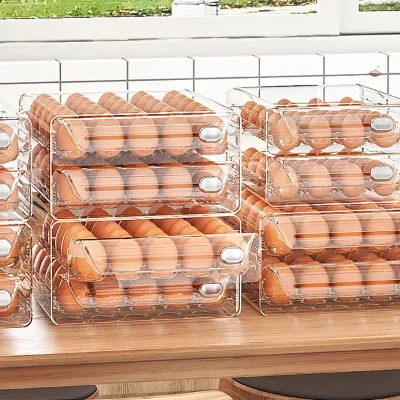
Conversely, the consumer and commercial sector focuses on the Egg Holder for Fridge and Egg Transport Tray. These products prioritize ergonomics, material safety, and storage efficiency. The technical profile for these items includes a material composition of PET (Polyethylene Terephthalate) or plastic, with a shape that is typically rectangular. The capacity varies significantly, with options ranging from 12 to 60 eggs, or specific counts like 12, 20, 24, 30, and 40 eggs. The dimensional tolerance for these plastic units is observed to be less than ±1cm, ensuring a snug fit in standard refrigeration units. The weight tolerance is generally maintained within ±5%, including the packaging weight.
The following table summarizes the key technical distinctions between the two primary categories:
| Feature | Industrial Egg Tray Machine | Consumer/Commercial Egg Holder |
|---|---|---|
| Primary Function | Manufacturing egg trays from pulp | Storing and organizing eggs |
| Material | Metal (implied by machinery), Wood (packing) | PET, Plastic |
| Capacity | 1000 PCS/Hour | 12-60 Eggs per unit |
| Dimensions | ~230019501600mm | 30X26X13 cm (Single package) |
| Style | American Style | Rectangle, Multifunctional |
| Origin | Zhengzhou, China | Zhejiang, China |
Buyers must verify these specifications against their specific operational needs. For instance, a bakery requiring 1000 trays daily needs the industrial machine, whereas a retail distributor needs the transport trays or fridge organizers.
Material Selection and Compliance Verification
Material selection is a critical determinant of product safety and durability. For the Egg Holder for Fridge, the primary material identified is PET. This material is selected for its clarity, strength, and food-grade safety. The products are described as "Eco-Friendly" and "Recyclable," which aligns with modern sustainability goals. The color options typically include Clear and Cream White, which are standard for food containers to allow for visual inspection of contents.
For the Egg Transport Tray, the material is listed as Plastic, with a specific mention of "Plastic Egg Tray" as a keyword. These trays are designed for a wide range of uses, including Fruit, Egg, Electronic Product, Cosmetic, Toy, Medicine, Hardware, and Food. This versatility suggests a robust material formulation capable of withstanding various environmental conditions.
When evaluating compliance, buyers must exercise caution regarding certification claims. While some background data mentions CE certification, this should be treated as a low-confidence observation. Procurement teams should not assume a supplier holds CE status based on general market data. Instead, buyers must explicitly request current, valid certification documents from the supplier for the specific batch of goods. For food-contact applications, verifying compliance with local food safety standards (such as FDA in the US or EU regulations in Europe) is mandatory. The "Eco-Friendly" and "Recyclable" attributes should be substantiated by third-party testing reports or material data sheets (MSDS) provided by the manufacturer.
Cost Drivers and Pricing Dynamics
The pricing structure for egg holders is influenced by several factors, including material costs, production complexity, and order volume. The observed price range in the market is vast, spanning from $0.01 to $1,630. This disparity reflects the difference between a single plastic Egg Holder unit and a complete industrial paper pulp molding machine.
For industrial machinery, the high end of the price spectrum ($1,630 and above) is driven by the inclusion of automated components, high-capacity motors, and the engineering required to achieve a throughput of 1000 pieces per hour. The "Automatic Grade" and "New" condition of these machines also contribute to the premium pricing.
For consumer-grade holders, the cost is driven by the material grade (PET vs. generic plastic), the complexity of the injection molding process, and the customization options. The "Customization" attribute is available for many products, allowing for logo printing and specific color requests. However, customization often incurs additional tooling costs and higher minimum order quantities (MOQs). The observed MOQ for some items is as low as 1 piece, while others require up to 20,000 pieces. This wide range allows buyers to test the market with small orders or secure bulk pricing for large-scale distribution.
Buyers should analyze the cost per unit relative to the "Selling Units" and "Single package size." For example, a single item with a gross weight of 2.0 kg and dimensions of 30X26X13 cm will have different shipping costs compared to a bulk shipment of 20,000 units. Logistics costs can significantly impact the total landed cost, especially for heavy machinery or large-volume plastic trays.
Supplier Evaluation and Origin Analysis
Geographic origin plays a significant role in supplier evaluation. The data highlights two primary manufacturing regions: Zhengzhou and Zhejiang, both in China. Zhengzhou is noted for the production of the Egg Tray Machine, suggesting a hub for heavy industrial machinery. Zhejiang, on the other hand, is associated with the Egg Holder for Fridge and Egg Transport Tray, indicating a specialization in consumer goods and plastic molding.
When evaluating suppliers, buyers should look for specific attributes that indicate reliability. The "Advantage" section lists "Easy to assemble," "Easy to clean," and "Easy to use" for the fridge holders. These are not just marketing terms but indicators of user experience and potential after-sales support needs. A supplier that emphasizes ease of assembly likely provides clear documentation and support, reducing the risk of installation errors.
The "Sample" lead time is another critical metric. Observed sample times range from 1 to 3 days, which is relatively fast. This suggests that suppliers are prepared to provide samples for quality verification. Buyers should utilize this window to inspect the "Injection" technics used in the manufacturing process. The "Injection" method implies a high level of precision and consistency in the plastic parts, which is essential for the "Multifunctional" design of the holders.
Suppliers should also be evaluated on their "Product Packing" standards. The use of wood for packing the industrial machines indicates a commitment to protecting heavy equipment during transit. For plastic holders, the "Single package size" and "Single gross weight" are vital for calculating shipping efficiency. A supplier with consistent packaging standards reduces the risk of damage and ensures that the "dimensional tolerance" is maintained throughout the supply chain.
Quality Control and Performance Metrics
Quality control is paramount, especially for products intended for food contact. The "Load" capacity for the fridge holders is specified as ≤5kg, a critical metric for ensuring the product does not collapse under the weight of a full egg carton. The "Volume" capacity is noted as >35L for certain containers, which helps buyers determine if the unit meets their storage requirements.
The "Technics" of "Injection" molding for the plastic holders suggest a high-quality finish with minimal flash or defects. However, buyers must verify the "Dimensional Tolerance" of <±1cm in their own quality assurance protocols. This tolerance ensures that the egg holders fit correctly in standard refrigerators and that the eggs are held securely without excessive movement.
For the industrial machines, the "Capacity" of 1000 PCS/H is a performance claim that must be validated. Buyers should request a factory audit or a live demonstration to verify that the machine can consistently produce at this rate without compromising the quality of the egg trays. The "Automatic Grade" implies a high level of automation, which reduces labor costs but increases the complexity of maintenance. Therefore, the availability of spare parts and technical support is a crucial quality control factor.
The "Feature" list includes "Eco-Friendly," "Folding," and "Stocked." For the transport trays, the "Recyclable" feature is a significant quality indicator regarding environmental impact. Buyers should verify the recyclability claims through material certifications. The "Folding" attribute suggests a design that saves space when not in use, which is a functional quality that adds value for the end-user.
Long-Term Procurement Considerations
Sourcing egg holders is not merely a transactional event but a strategic decision that impacts long-term operations. The "Customization" availability allows brands to differentiate their products through logos and specific designs. However, customization requires a stable supply chain and consistent quality over time. Buyers should assess the supplier's ability to maintain the "Color" consistency (Clear / Cream White) and the "Shape" (Rectangle) across different production batches.
The "MOQ" of 100 Pcs for some items and up to 20,000 for others indicates flexibility in the supply chain. For startups or small businesses, the low MOQ allows for market testing without significant capital investment. For established enterprises, the high MOQ capability ensures a steady supply of inventory, reducing the risk of stockouts.
Lead times and sample availability are also long-term considerations. The "Sample" time of 1-3 days is excellent for rapid prototyping and decision-making. However, buyers must clarify the lead time for full production orders, as this can vary based on the "Condition" of the machinery (New) and the "Capacity" of the factory.
Finally, the "Product Name" and "Keyword" consistency are important for brand alignment. Whether sourcing an "Egg Tray Machine" or an "Egg Holder for Fridge," the supplier should be able to provide clear documentation that matches the product description. This ensures that the procurement process is transparent and that the delivered goods meet the expected specifications.
In conclusion, successful sourcing of egg holders requires a deep understanding of the technical specifications, material properties, and supply chain dynamics. By focusing on verified data and avoiding unconfirmed claims, buyers can build a robust supply chain that delivers high-quality products efficiently. The distinction between industrial machinery and consumer goods is clear, and each category demands a tailored approach to evaluation and procurement.
FAQs
What is the production capacity of the automatic egg tray machine?
The automatic egg tray machine has a production capacity of 1000 pieces per hour. This high output is suitable for industrial-scale operations requiring consistent daily volume of egg trays made from paper pulp.
Which material is used for the Egg Holder for fridge storage?
The Egg Holder for fridge storage is made from PET plastic. This material ensures the container is clear or cream white, recyclable, and safe for food contact while keeping the refrigerator neat and organized.
Can I customize the logo on the egg transport tray?
Yes, the logo on the egg transport tray is customizable. Buyers can request specific branding on the plastic trays which are designed for multifunctional use including fruits, cosmetics, and hardware items.
How much does the egg tray machine weigh and how is it packed?
The egg tray machine is packed in wood to ensure safe transit. While the single package weight for fridge holders is 2.0 kg, the industrial machine dimensions are 2300 by 1950 by 1600 mm.
What is the minimum order quantity for the Egg Holder products?
The minimum order quantity varies from 1 piece up to 20,000 pieces depending on the specific product. Some items like the fridge holder have an MOQ of 100 pieces, allowing flexibility for different buyer needs.
How long does it take to get a sample of the Egg Holder?
It takes 1 to 3 days to receive a sample of the Egg Holder. This quick turnaround allows buyers to verify the injection molding quality and dimensional tolerance before placing a larger bulk order.