Source Electric Airflow Spray Dryer for Food, Chemical, Pharma
Find 30 Electric Airflow Spray Dryer models for foodstuff and chemical processing. Compare PLC controls, SUS304/316L materials, and rotary or pressure atomization options to select the right industrial drying solution.
Key considerations
Products List


$15000.00 - $1580000.00
MOQ: 1 Sets


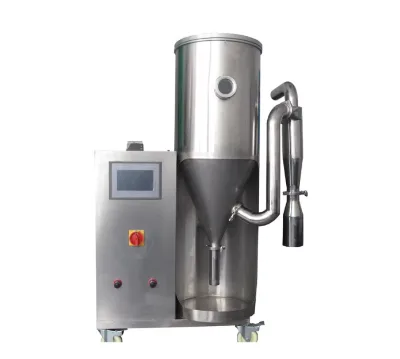
Automatic Control Spray Dryer for Precise Temperature and Flow Adjustment
$8500.00 - $9000.00
MOQ: 1 Pieces




Comprehensive Sourcing Guide
Electric Airflow Spray Dryer Sourcing Guide
Selecting the right Electric Airflow Spray Dryer requires a careful balance of thermal efficiency, material compatibility, and operational flexibility. These systems are designed to convert liquid feedstocks into dry powders by spraying them into a hot gas stream, where rapid evaporation occurs. The "electric" designation typically refers to the heating element or auxiliary power sources, while "airflow" describes the mechanism by which the drying medium interacts with the droplets. Buyers must distinguish between systems that rely solely on electric resistance heating and those that use electricity to drive fans and pumps while utilizing other heat sources like natural gas or steam. Understanding this distinction is critical for evaluating energy costs and infrastructure requirements at the installation site.
The procurement process for these machines involves navigating a wide range of configurations, from small-scale laboratory units to large industrial continuous dryers. The observed market data indicates a significant variance in pricing and specifications, reflecting the diversity of available models. Buyers should approach this category with a clear definition of their throughput needs, material properties, and desired final product characteristics. A thorough evaluation of the supplier’s technical capabilities and the machine’s adaptability to different feed materials will ensure that the selected equipment meets both current production demands and future scalability goals.
Product Scope and Observed Listing Signals
The product landscape for electric airflow spray dryers encompasses a variety of models, including the Xlp Series, YPG, LPSD-2SS, LPG, and TFS-series. These units are generally categorized by their atomization method, with rotary and pressure atomization being common techniques observed in the market. The drying medium can vary, with air, superheated steam, and inactive gases being viable options depending on the material’s sensitivity to oxidation or moisture. The voltage range for these machines typically spans from 220V to 450V, indicating that they can be adapted to different industrial power standards. Buyers should verify the specific electrical requirements of their facility to ensure compatibility with the selected model.
Material status and flow dynamics are key differentiators among the available units. Some systems are designed for bulk, strap, cream, solution, or powder inputs, while others handle granules. The flow type can be parallel, contra-flow, or multistage, each offering distinct advantages for different drying profiles. For instance, parallel flow is often used for heat-sensitive materials, while contra-flow may offer higher thermal efficiency for robust products. The movement way of the material can be fixed or involve spraying mechanisms, and the operation pressure is typically atmospheric. These technical nuances directly impact the drying time, particle size distribution, and overall yield of the final product.
Technical Specifications to Verify
When evaluating technical specifications, the heating mode and atomization type are paramount. Some units utilize dielectric heating, while others rely on transmission heating or direct fuel combustion. The atomization method, whether rotary, pressure, or gas-based, determines the droplet size and, consequently, the drying rate and powder consistency. Buyers must ensure that the chosen atomization method aligns with the viscosity and surface tension of their feed material. Additionally, the control system, often featuring PLC touch screens or button-type interfaces, plays a crucial role in maintaining consistent operating parameters. Automated controls allow for precise adjustment of temperature, feed rate, and airflow, ensuring reproducible results across production batches.
The structural design and dimensional constraints of the dryer must also be carefully assessed. The structure is typically an airflow drier, and the dimensions can vary significantly depending on the model and capacity. For example, some units may have standard dimensions such as 9408501500mm or larger configurations like 3.53.54.8m. The working temperature range, often observed between 50-150 degrees Celsius, must be sufficient to achieve the desired moisture content without degrading heat-sensitive components. Furthermore, the dry powder yield, which can be 95% or higher, is a critical performance metric. Buyers should request specific yield data for their material to validate the machine’s efficiency and minimize product loss.
Compliance and Safety Documentation
Compliance with international quality and environmental standards is a baseline requirement for industrial drying equipment. Many suppliers provide certifications such as ISO9001 and ISO14001, indicating adherence to quality management and environmental management systems. These certifications suggest that the manufacturer has established processes for consistent product quality and responsible environmental practices. Buyers should request copies of these certificates and verify their validity with the issuing body. Additionally, while CE marking is mentioned in some contexts, it is not a universal guarantee for all listed products. Buyers must confirm that the specific model they intend to purchase meets the regulatory requirements of their destination country, including electrical safety and machinery directives.
Safety documentation should include detailed operational manuals, electrical schematics, and maintenance guidelines. The equipment should be designed with appropriate safety features, such as emergency stop buttons, over-temperature protection, and proper grounding for electrical components. Given that some units operate with high voltages and temperatures, clear labeling and protective guards are essential. Buyers should also inquire about the availability of spare parts and technical support. A comprehensive warranty policy and a responsive after-sales service network are vital for minimizing downtime and ensuring the long-term reliability of the drying system.
Cost Drivers and Commercial Terms
The cost of an Electric Airflow Spray Dryer is influenced by several factors, including capacity, material construction, and customization options. The observed price range is extensive, from approximately $140 to $1,580,000, reflecting the diversity from small benchtop units to large industrial systems. The material of construction, such as SUS304 or SUS316L stainless steel, significantly impacts the price, with higher-grade alloys commanding a premium due to their superior corrosion resistance and durability. Customization options, such as specific dimensions, control systems, or atomization types, can also add to the initial cost. Buyers should clearly define their non-negotiable specifications to avoid paying for unnecessary features.
Commercial terms, including minimum order quantity (MOQ) and packaging, are also important considerations. The observed MOQ is often as low as one unit, making these systems accessible for various production scales. Packaging typically involves wooden cases or customized packaging to ensure safe transportation. Lead times can vary based on the complexity of the order and the supplier’s production schedule. Buyers should negotiate clear delivery terms and payment conditions. It is advisable to include clauses for performance testing and acceptance criteria in the contract to ensure that the delivered machine meets the agreed-upon specifications before final payment is released.
Supplier Qualification and Quality Control
Supplier qualification is a critical step in the procurement process. Buyers should assess the supplier’s manufacturing capabilities, quality control processes, and track record in the industry. Suppliers originating from regions like Henan, China, may offer competitive pricing, but buyers must verify their ability to maintain consistent quality. Requesting references from previous clients and visiting the manufacturing facility, if possible, can provide valuable insights into the supplier’s operations. The supplier should demonstrate a commitment to continuous improvement and customer satisfaction, with clear channels for communication and issue resolution.
Quality control measures should be implemented throughout the manufacturing and delivery process. This includes incoming material inspections, in-process quality checks, and final product testing. Buyers should request a factory acceptance test (FAT) report, which documents the machine’s performance under simulated operating conditions. The report should include data on temperature stability, airflow consistency, and powder yield. Additionally, buyers should verify that the supplier provides a comprehensive installation and commissioning service. Proper installation is crucial for the optimal performance and longevity of the dryer, and professional support can help prevent common operational issues.
Long-Term Procurement Checks
Long-term procurement success depends on the machine’s maintainability and the supplier’s support infrastructure. Buyers should evaluate the availability of spare parts and the cost of consumables such as nozzles and filters. A well-designed dryer should allow for easy access to critical components for routine maintenance and cleaning. The supplier should provide a detailed maintenance schedule and training for the operating staff. Regular maintenance is essential to prevent buildup, ensure consistent drying performance, and extend the lifespan of the equipment. Buyers should also consider the energy efficiency of the system, as operating costs can accumulate significantly over time.
Future scalability and adaptability are also important factors. As production needs evolve, the dryer should be capable of handling different materials or increased throughput. Customization options and modular designs can facilitate these changes. Buyers should inquire about the supplier’s ability to provide upgrades or modifications. Additionally, staying informed about advancements in drying technology can help buyers make informed decisions about future replacements or expansions. Building a strong relationship with the supplier can provide access to new products and services, ensuring that the drying operation remains competitive and efficient in the long run.
FAQs
What heat sources power the Electric Airflow Spray Dryer?
The dryer supports multiple heat sources including fuel, natural gas, steam, and electricity. This flexibility allows adaptation to various industrial energy infrastructures while maintaining consistent drying performance for bulk materials.
Which atomization methods are available for this equipment?
Available atomization methods include rotary, pressure, and gas atomization depending on the specific model configuration. These options ensure precise control over particle size and distribution for diverse material processing requirements.
Can the dryer handle different material statuses like powder or solution?
Yes, the system processes various material statuses including bulk, strap, cream, solution, and powder. This versatility makes it suitable for applications across the foodstuff and chemical industries with different input forms.
What is the typical drying yield for this airflow spray dryer?
The equipment achieves a dry powder yield of 95 percent or higher under standard operating conditions. This high efficiency ensures minimal material loss during the continuous drying process for industrial production.
How is the dryer controlled and operated?
Operation is managed via PLC touch screens or button types for precise parameter control. The system supports continuous operation with atmospheric pressure settings and fixed or spraying movement ways for optimal processing.
What certifications do these spray dryers typically hold?
Many models carry ISO9001 and ISO14001 certifications to ensure quality and environmental compliance. These standards verify that the manufacturing processes meet international requirements for safety and operational consistency.
Which materials are used to construct the dryer components?
Construction materials include SUS304, SUS316, and other stainless steel grades like 304/316L. These materials provide corrosion resistance and durability essential for handling foodstuff and chemical industry applications effectively.