Source Electric Commercial Kitchen Fryer for Chips, Meat, and Vegetables
Compare 30 Electric Commercial Kitchen Fryer options featuring high efficiency and timing devices. Buyers can evaluate models with varying power sources, capacities, and customization availability for commercial cooking and frying applications.
Key considerations
Products List


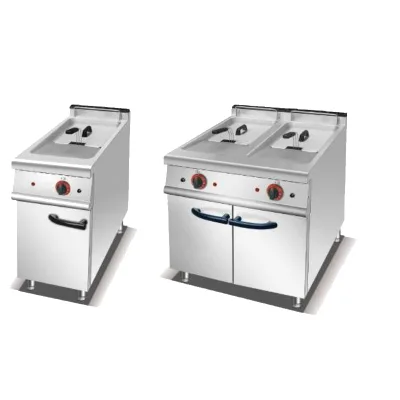
Commercial Electric Deep Fryer for Restaurants Kitchen Fryer with Two Baskets
$1600.00 - $2500.00
MOQ: 1 Pieces




Comprehensive Sourcing Guide
Strategic Sourcing Guide for Electric Commercial Kitchen Fryers
Understanding the Technical Landscape of Electric Deep Fryers
The procurement of electric commercial kitchen fryers requires a precise understanding of the technical specifications that define operational efficiency and safety. Unlike gas-powered alternatives, electric units rely entirely on electrical input to generate the thermal energy necessary for deep frying. In the current market, the observed power configurations for these units vary significantly to accommodate different kitchen scales. Data indicates that high-capacity commercial models often utilize dual heating elements, with specific configurations observed at 8kW per element, totaling 16kW of power consumption. This high-power draw is typical for industrial units designed to recover temperature rapidly after food immersion. Conversely, smaller or semi-commercial units may operate on single elements ranging from 2.5kW to 4.5kW, suitable for lower-volume operations or specific applications like chip production.
Voltage requirements are a critical technical constraint for buyers. The supply chain data highlights a standard operating voltage of 380V for larger industrial units, which necessitates three-phase electrical infrastructure. This is distinct from standard single-phase residential voltages and requires careful verification of the kitchen's electrical grid before installation. Smaller units, such as those with 6L or 8L capacities, may operate on lower power inputs, but the voltage compatibility must still be confirmed against local standards. The power source is exclusively electric, meaning the efficiency of the heating element and the insulation of the tank are paramount for energy conservation.
The physical dimensions and capacity of the fryer are equally vital. Observed specifications show a wide range of capacities, from compact 6L and 8L units to large-scale 14L and 40L models. The physical footprint also varies, with some industrial units measuring approximately 800mm in width and depth, while smaller countertop models may be as compact as 265mm wide. Buyers must ensure that the selected unit fits the designated kitchen space while allowing for adequate ventilation and maintenance access. The oil capacity directly correlates with the production volume; a 40L unit, for instance, offers significantly higher throughput than a 6L unit, but requires more floor space and a larger electrical supply.
Compliance and Certification Verification Protocols
In the commercial food service industry, compliance with safety and quality standards is non-negotiable. When sourcing electric deep fryers, buyers must prioritize equipment that carries recognized certifications. The available product data confirms that many units in this category are certified under ISO and CE standards. The CE marking indicates conformity with health, safety, and environmental protection standards for products sold within the European Economic Area, which often serves as a baseline for global quality assurance. The presence of ISO certification suggests that the manufacturer adheres to international standards for quality management systems, which is a strong indicator of consistent production quality.
However, buyers should not assume that every listed product possesses these certifications without verification. The procurement process must include a direct request for certification documents from the supplier. It is essential to distinguish between the certification of the final product and the certification of the manufacturing facility. While the observed data lists CE and ISO, the buyer must ensure these certifications are current and applicable to the specific model being purchased. Additionally, while some background information mentions RoHS, this should be treated as a secondary consideration unless the specific market or client requirements mandate it. The primary focus must remain on the electrical safety and material safety certifications relevant to food processing equipment.
Furthermore, the origin of the product plays a role in compliance. The supply data indicates origins in regions such as Guangdong and Binzhou in China. While these are major manufacturing hubs, the buyer must verify that the specific factory producing the unit meets the export standards of the destination country. Compliance is not just about the product label; it involves the entire supply chain's adherence to safety regulations. Buyers should request the test reports associated with the CE or ISO marks to ensure they are valid for the specific batch or model number.
Cost Drivers and Pricing Structure Analysis
The pricing of electric commercial kitchen fryers is influenced by a complex interplay of factors, including power rating, capacity, build quality, and customization options. The observed price range in the market spans from approximately $26 to $3,535, a variance that reflects the vast difference between small, manual units and large, automated industrial systems. The lower end of this spectrum typically corresponds to compact, manual-grade units with lower power ratings (e.g., 2.5kW to 3.25kW) and smaller oil capacities (6L to 8L). These units are often packaged in cartons and are designed for smaller commercial kitchens or specific niche applications like chip production.
Conversely, the higher price points are associated with high-efficiency, industrial-grade fryers. These units often feature dual heating elements (e.g., 8kW x 2), larger capacities (up to 40L), and advanced features such as timing devices and semi-automatic or automatic operation. The cost is also driven by the packaging and shipping requirements. Industrial units are frequently shipped in wooden cases or wooden frames to protect the heavy machinery during transit, which adds to the overall cost compared to carton packaging used for smaller units. The weight of the product, ranging from 5.5kg for small units to 33kg for larger ones, also impacts shipping logistics and final landed costs.
Customization is another significant cost driver. The market data shows that some models offer customization options, while others are non-customized. Customized units, which may include specific dimensions, branding, or tailored electrical configurations, generally command a premium price. Buyers must weigh the cost of customization against the operational benefits it provides. For instance, a customized unit designed to fit a specific kitchen layout might reduce installation costs in the long run, even if the initial purchase price is higher. The Minimum Order Quantity (MOQ) also affects the unit price, with observed ranges starting from 1 unit up to 5 units. Buyers purchasing in larger volumes may negotiate better pricing, but the data suggests that even single-unit orders are feasible for many suppliers.
Typical Applications and Operational Versatility
Electric commercial kitchen fryers are designed to handle a diverse range of food preparation tasks, making them versatile assets in various commercial settings. The primary function observed is the cooking and frying of meat and vegetables, a core requirement for restaurants, hotels, and catering services. The high-efficiency features of these units ensure that food is cooked evenly and quickly, maintaining the desired texture and flavor. The inclusion of timing devices in many models allows for precise control over cooking times, which is essential for maintaining consistency in a high-volume kitchen environment.
Beyond general frying, these units are also specialized for specific applications. The data indicates that some models are specifically designed for the production of chips, highlighting their suitability for snack food manufacturers or fast-food chains specializing in potato products. The capacity of the fryer dictates its application scale; a 40L unit is ideal for high-volume operations requiring continuous frying, while a 6L or 8L unit is better suited for smaller batches or side stations. The thermal processing nature of these units ensures that the oil temperature remains stable, which is critical for food safety and quality.
The application also extends to the type of food being processed. While the primary use is frying, the electric nature of the units makes them suitable for environments where gas is prohibited or impractical. The ability to fry both meat and vegetables without cross-contamination is enhanced by the design of the fryer baskets and the ease of cleaning. Buyers should consider the specific menu requirements of their establishment when selecting a fryer. For example, a restaurant focusing on fried chicken may require a unit with a larger oil capacity and higher power recovery rate compared to a café that primarily fries vegetables. The versatility of the electric fryer allows it to adapt to changing menu demands, provided the unit's capacity and power rating are sufficient.
Supplier Evaluation and Sourcing Strategy
Evaluating suppliers for electric commercial kitchen fryers requires a rigorous approach to ensure reliability and product quality. Buyers should prioritize suppliers who can provide clear documentation regarding certifications, such as ISO and CE, and who are transparent about the product's origin. The supply data indicates that manufacturers are located in regions like Guangdong and Binzhou, which are known for their manufacturing capabilities. However, the specific factory's reputation and track record should be verified before placing an order.
One of the key factors in supplier evaluation is the level of customization offered. The market data shows that some suppliers offer customized products, while others provide standard models. Buyers should assess whether the supplier can accommodate specific requirements, such as custom dimensions or electrical configurations, without compromising quality. The availability of customization is a strong indicator of a supplier's flexibility and technical capability. Additionally, the packaging method, whether wooden cases or cartons, should be evaluated to ensure it meets the buyer's shipping and storage needs.
Lead times and Minimum Order Quantities (MOQ) are also critical considerations. While the observed MOQ ranges from 1 to 5 units, buyers should confirm the lead time for production and delivery. A supplier with a consistent track record of meeting delivery deadlines is preferable to one with a history of delays. The buyer should also inquire about after-sales support, including warranty terms and the availability of spare parts. A supplier who offers comprehensive support ensures that the fryer remains operational for the long term, minimizing downtime and maintenance costs.
Quality Control and Long-Term Procurement Considerations
Ensuring the quality of electric commercial kitchen fryers is essential for maintaining operational efficiency and safety. Buyers should implement a robust quality control process that includes pre-shipment inspections and verification of product specifications. The observed specifications, such as power ratings, voltage, and dimensions, must be verified against the actual product to ensure they match the order. This is particularly important for high-power units, where discrepancies in electrical specifications could lead to safety hazards or equipment failure.
Long-term procurement considerations involve evaluating the durability and maintenance requirements of the fryer. The materials used in construction, such as the stainless steel or other alloys for the tank and heating elements, should be resistant to corrosion and high temperatures. The automatic grade of the unit, whether manual or semi-automatic, also impacts the long-term maintenance needs. Semi-automatic units may require more frequent calibration and part replacement compared to fully automatic models. Buyers should also consider the energy efficiency of the unit, as high-efficiency models can significantly reduce operational costs over time.
Furthermore, the packaging and shipping process play a role in the long-term condition of the equipment. Units shipped in wooden cases are generally better protected than those in cartons, reducing the risk of damage during transit. Buyers should ensure that the packaging is robust enough to withstand the rigors of shipping and handling. Finally, the buyer should establish a relationship with the supplier that allows for ongoing support and potential future orders. A reliable supplier relationship ensures that the buyer can access the latest models and technologies, keeping their kitchen operations competitive and efficient.
Comparative Analysis of Key Specifications
To assist buyers in making informed decisions, the following table compares key specifications observed across different models in the market. This comparison highlights the variations in capacity, power, and dimensions that influence the selection process.
| Model Identifier | Capacity | Power Rating | Voltage | Dimensions (Approx.) | Packaging Type | Customization |
|---|---|---|---|---|---|---|
| HY / Industrial | 40L | 8kW x 2 | 380V | 800x800x800mm | Wooden Frame | Available |
| EFC-14L | 14L | 4.5kW | 380V | 335x580x410mm | Carton | Non-Customized |
| EF-8L | 8L | 3.25kW | 380V | 265x425x345mm | Carton | Non-Customized |
| EF-6L | 6L | 2.5kW | 380V | 265x425x295mm | Carton | Non-Customized |
| ljt-932 | Variable | Variable | Variable | 41x75x109cm | Wooden Case | Customized |
This table illustrates the diversity in the market, from compact 6L units to large 40L industrial fryers. Buyers should use this data as a reference point to identify models that align with their specific operational needs. The variation in packaging and customization options further underscores the importance of detailed supplier communication to ensure the selected unit meets all requirements. By carefully analyzing these specifications, buyers can make strategic procurement decisions that optimize kitchen performance and cost-efficiency.
FAQs
What certifications do electric commercial kitchen fryers typically have?
Many units carry ISO and CE certifications to ensure safety and quality. Buyers must verify these documents directly with the supplier for the specific model, as not every listed product is guaranteed to possess them without confirmation.
Which voltage requirements apply to high-power industrial fryers?
Large industrial units often operate on 380V voltage, requiring three-phase electrical infrastructure. Smaller models may use lower power inputs, but voltage compatibility must always be confirmed against local kitchen standards before installation.
Can buyers request customization for these electric deep fryers?
Customization is available for some models, including specific dimensions or electrical configurations. Other units are non-customized, so buyers should check the specific product attributes to determine if tailored options are offered by the manufacturer.
What is the typical price range for commercial electric fryers?
The observed price range spans from 26 to 3535 USD depending on capacity and features. Lower prices correspond to compact manual units, while higher costs reflect high-efficiency industrial systems with dual heating elements and larger capacities.
How does the oil capacity affect the fryer's application?
Oil capacity ranges from 6L to 40L, directly correlating with production volume. A 40L unit suits high-volume operations, whereas 6L or 8L models are better for smaller batches or specific applications like chip production.
What packaging methods are used for shipping these fryers?
Industrial units are frequently shipped in wooden cases or wooden frames to protect heavy machinery. Smaller countertop models often use carton packaging, which impacts shipping logistics and final landed costs for the buyer.
Which locations are common origins for these manufacturing units?
Products originate from major manufacturing hubs like Guangdong and Binzhou in China. Buyers should verify that the specific factory meets export standards for their destination country, as origin influences compliance and supply chain reliability.