Source Electric Commercial Deep Fryer for Restaurants, Cafes, and Food Trucks
Explore 30 listings of Electric Commercial Deep Fryer units with varying capacities and power ratings. Buyers can compare specifications including oil capacity, wattage, and dimensions to find suitable equipment for commercial kitchens.
Key considerations
Products List


11.6*4L Commercial Fryer Machine Professionnel Industrial Electric Deep Fryers
$2908.00 - $4155.00
MOQ: 1 Pieces


Commercial Deep Fried Food Machine Electric Deep Fryer Gas Deep Fryer
$3799.00 - $4999.00
MOQ: 1 Pieces


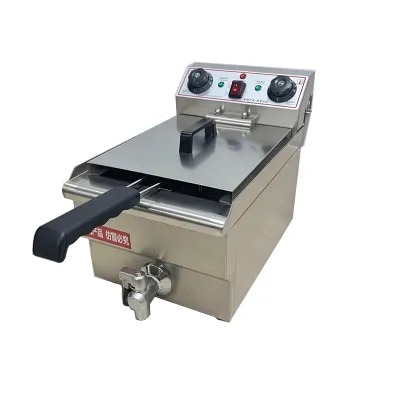


Commercial Electric Deep Fryer for Restaurants Kitchen Fryer with Two Baskets
$1600.00 - $2500.00
MOQ: 1 Pieces

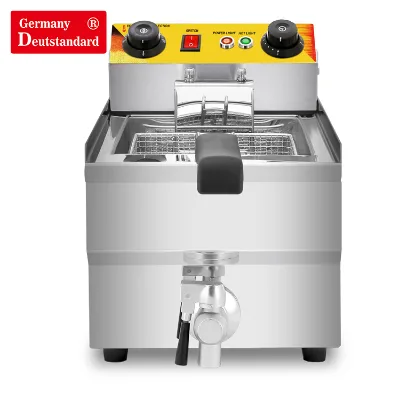


Comprehensive Sourcing Guide
Strategic Sourcing Guide for Electric Commercial Deep Fryers
Selecting the right Electric Commercial Deep Fryer is a critical decision for food service operators, as the equipment directly impacts throughput, energy efficiency, and food quality. The market offers a diverse array of units ranging from compact countertop models to high-capacity industrial systems. Buyers must navigate a landscape defined by varying power configurations, tank capacities, and automation levels. This guide synthesizes observed product attributes and industry standards to provide a structured approach for procurement, ensuring that the selected equipment aligns with specific operational demands without relying on unverified marketing claims.
Technical Specifications and Performance Parameters
The core technical specifications of a commercial deep fryer dictate its suitability for a given kitchen environment. When evaluating units, buyers should prioritize power source, wattage, and oil capacity. The available data indicates that electric models typically operate within a voltage range of 220-240V, which is standard for many commercial kitchens. Power consumption varies significantly based on the unit's intended volume; observed configurations include dual heating elements with combined ratings of 3.25+3.25kw, 2.5+2.5kw, and single high-output units rated at 5kw or 9kw. Some heavy-duty industrial models may offer options up to 18kw, reflecting their capacity to handle continuous high-volume frying cycles.
Oil capacity is another pivotal specification. Units are available with single-tank capacities of 6L, 8L, or 12L, while larger commercial systems may feature dual-tank configurations such as 6L x 2 or combined capacities of 8L+8L. The physical dimensions of the fryer must also be verified against kitchen floor plans. Observed standard dimensions for specific models include widths ranging from 265mm to 560mm, depths from 425mm to 580mm, and heights between 295mm and 410mm. Buyers must ensure that the selected unit fits the designated workspace while allowing for necessary ventilation and service access.
Furthermore, the material composition of the fryer is essential for durability and hygiene. Stainless steel is the predominant material observed in commercial-grade units, offering resistance to corrosion and ease of cleaning. The automation level also varies; while some units are fully manual, others feature semi-automatic controls. This distinction affects the labor intensity required during operation. For instance, a semi-automatic grade may offer improved consistency in frying times, whereas a manual grade relies entirely on operator monitoring.
Compliance and Certification Verification
In the commercial food service sector, compliance with safety and quality standards is non-negotiable. Buyers must verify that any equipment purchased carries recognized certifications. The provided data confirms that certain models hold CE certification, indicating adherence to European health, safety, and environmental protection standards. However, the presence of CE marking should be treated as a specific attribute of the listed product rather than a universal guarantee for all units in a category.
When evaluating compliance, procurement teams should request documentation proving that the electrical components meet local grid standards. While specific ASTM standards such as ASTM F1361 or ASTM F2144 are mentioned in background contexts, buyers should not assume these apply to every deep fryer without explicit verification from the manufacturer. Instead, the focus should be on confirming that the unit's electrical safety, thermal protection, and material safety align with the regulations of the country where the equipment will be installed.
Safety features are also a critical component of compliance. Observed units include features such as high-temperature protection devices, which are vital for preventing oil overheating and potential fire hazards. Buyers should inspect the control panels and heating elements to ensure that these safety mechanisms are integrated into the design. Additionally, the packaging standards, such as carton or wooden packages, should be evaluated to ensure they meet shipping safety requirements and protect the equipment during transit.
Cost Drivers and Pricing Structures
Understanding the cost drivers for electric commercial deep fryers is essential for budget planning. The price range for these units is broad, with observed listings spanning from $26 to $9,500. This significant variance is driven by several factors, including capacity, power output, material quality, and the level of automation. Smaller, single-tank units with lower wattage and manual operation tend to fall at the lower end of the price spectrum. In contrast, dual-tank systems with high power ratings, stainless steel construction, and advanced safety features command premium prices.
Minimum Order Quantity (MOQ) is another factor influencing the total cost of acquisition. The observed MOQ range is between 1 and 50 units. Buyers purchasing a single unit for a small café will face different pricing dynamics compared to those procuring a fleet of fryers for a large chain. The ability to customize the equipment, such as adding specific branding or modifying tank configurations, can also impact the final cost. While customization is available, it may incur additional charges or extend the lead time.
Buyers should also consider the total cost of ownership, which includes energy consumption and maintenance. Units with higher power ratings, such as those at 9kw or 18kw, will incur higher electricity costs. However, they may offer faster recovery times and higher throughput, potentially justifying the energy expense in high-volume environments. Conversely, lower-power units may be more cost-effective for establishments with intermittent frying needs.
Typical Applications and Operational Fit
The application of a commercial deep fryer is closely tied to the type of food being prepared and the volume of service. The observed data highlights that these units are commonly used for frying chips, indicating their suitability for fast-food operations, casual dining restaurants, and snack bars. The specific model selection should align with the menu requirements. For example, a model with a 6L capacity might be ideal for a small outlet focusing on fries and appetizers, while a dual-tank system with 14L capacity would be necessary for a high-volume cafeteria or a restaurant serving large quantities of fried chicken.
The feature set of the fryer also dictates its operational fit. Units with two working tanks allow for simultaneous frying of different items, such as fries and chicken, without cross-contamination of flavors. This feature is particularly valuable in kitchens with diverse menus. Additionally, the presence of high-temperature protection devices makes these units suitable for unattended or semi-attended operations, reducing the risk of accidents during peak hours.
Buyers should also consider the physical layout of the kitchen. The dimensions of the fryer, such as the standard size of W540D425H345mm, must be compatible with the available counter space. The weight of the unit, ranging from 6kg to 80kg depending on the model, is another consideration for installation and potential relocation. Heavy units may require reinforced flooring or specific mounting solutions, while lighter models offer more flexibility in placement.
Supplier Evaluation and Product Attributes
Evaluating suppliers requires a focus on the transparency of product attributes and the reliability of the supply chain. The origin of the equipment is a key factor; observed data indicates that many units originate from Guangdong, China, a region known for its manufacturing capabilities in kitchen equipment. Buyers should verify the specific manufacturing location to ensure it aligns with their quality expectations and logistical preferences.
When assessing suppliers, buyers should examine the consistency of product attributes. For instance, while some models are listed as "Customized," others are "Non-Customized." This distinction is crucial for buyers seeking tailored solutions. Similarly, the packaging method, whether carton or wooden package, should be evaluated based on the fragility of the equipment and the shipping distance. Wooden packages are often used for heavier, larger units to provide extra protection during international transit.
The specification of the product model, such as EF-8L-2 or FRY-18EF, serves as a unique identifier for the unit's capabilities. Buyers should cross-reference these model numbers with the detailed specifications provided by the supplier to ensure accuracy. It is also important to verify the net weight and gross weight of the units, as these figures impact shipping costs and handling requirements. For example, a unit with a net weight of 65kg and a gross weight of 80kg will require different logistics planning compared to a 12kg unit.
Quality Control and Long-Term Procurement Considerations
Implementing a robust quality control (QC) process is essential when sourcing electric commercial deep fryers. Buyers should request detailed test results and performance data from the supplier, although specific test data should not be assumed without verification. The QC process should include checks for electrical safety, thermal efficiency, and material integrity. For stainless steel units, buyers should inspect the finish for scratches or imperfections that could harbor bacteria or lead to corrosion.
Long-term procurement considerations involve the availability of spare parts and the ease of maintenance. Units with standardized components, such as heating elements and thermostats, are easier to maintain and repair. Buyers should inquire about the warranty terms and the supplier's support network. Additionally, the energy efficiency of the unit should be evaluated in the context of long-term operational costs. While high-power units may have higher upfront costs, their efficiency in recovering oil temperature after loading can lead to significant energy savings over time.
Finally, buyers should consider the scalability of their procurement strategy. If the business plans to expand, selecting a supplier that can accommodate larger orders with consistent quality is vital. The MOQ range of 1 to 50 units suggests flexibility, but buyers should confirm the supplier's capacity to handle larger volumes without compromising lead times or quality. By focusing on these long-term factors, buyers can ensure a sustainable and reliable supply of commercial deep fryers that support their operational growth.
Comparative Analysis of Key Models
To assist in decision-making, the following table compares key attributes of observed product models. This comparison highlights the diversity in specifications and helps buyers identify the most suitable unit for their specific needs.
| Product Model | Oil Capacity | Power Rating | Net Weight | Material | Automation Grade | Key Features |
|---|---|---|---|---|---|---|
| EF-8L-2 | 8L + 8L | 3.25 + 3.25kw | 14kg | Stainless Steel | Manual | Dual Tanks, CE Certified |
| EF-6L-2 | 6L x 2 | 2.5 + 2.5kw | 12kg | Stainless Steel | Semi-Automatic | Compact, Carton Packing |
| EF-82A | 12L | 5kw | 10kg | Stainless Steel | Semi-Automatic | High Temp Protection |
| EF-903B | 14L | 4.5kw | 10kg | Stainless Steel | Semi-Automatic | Large Capacity |
| EF-8L | 8L | 3.25kw | 6kg | Stainless Steel | Manual | Standard Size |
| FRY-18EF | Variable | 9kw or 18kw | 65kg | Stainless Steel | Manual | High Power, Industrial |
This table illustrates the trade-offs between capacity, power, and weight. For instance, the EF-8L-2 offers a dual-tank configuration suitable for high-volume frying, while the EF-8L is a more compact option for smaller operations. The FRY-18EF represents the high-end of the power spectrum, designed for industrial applications. Buyers should use this data to match their specific operational requirements with the appropriate model specifications.
FAQs
What power options are available for electric commercial deep fryers?
Electric commercial deep fryers offer various power configurations ranging from 2.5kw dual elements to high-output 18kw units. Smaller models typically use 3.25kw or 5kw ratings, while heavy-duty industrial systems support up to 18kw for continuous high-volume frying cycles in professional kitchens.
Which oil capacities are standard for these commercial units?
Standard oil capacities include single tanks of 6L, 8L, or 12L, as well as dual-tank systems holding 8L plus 8L or 6L times 2. Buyers should select a capacity that matches their specific menu volume, ensuring the unit fits the designated kitchen workspace without overcrowding.
Can I find deep fryers with CE certification for safety compliance?
Yes, specific models in the market carry CE certification, indicating adherence to European health and safety standards. Buyers must verify this attribute for individual units rather than assuming it applies to all products, ensuring the electrical components meet local grid regulations before purchase.
How does customization affect the availability of these fryers?
Customization is available for some electric commercial deep fryers, allowing for tailored branding or configuration changes. However, other units are listed as non-customized, and buyers should confirm the specific model's customization status as it may impact lead times and final pricing.
What is the typical price range for electric commercial deep fryers?
The price range for these units spans from 26 USD to 9500 USD depending on capacity and features. Lower-priced models are often compact with manual operation, while premium dual-tank systems with high power ratings and stainless steel construction command significantly higher costs.
Which material is commonly used for durable commercial fryer construction?
Stainless steel is the predominant material used for commercial-grade deep fryers due to its corrosion resistance and ease of cleaning. This material ensures hygiene and durability, making it suitable for high-volume food service environments where frequent washing and high temperatures are required.
What are the standard dimensions for countertop electric deep fryers?
Standard dimensions vary by model, with widths ranging from 265mm to 560mm and heights between 295mm and 410mm. Buyers must verify the specific product standard, such as W540*D425*H345mm, to ensure the unit fits the available counter space while allowing for necessary ventilation.
Can these fryers operate with high-temperature protection devices?
Yes, certain models feature high-temperature protection devices to prevent oil overheating and reduce fire hazards. This safety feature is critical for unattended or semi-attended operations, ensuring the equipment remains safe during peak hours and continuous frying cycles in busy commercial kitchens.