Source Electric Manual Tyre Regroover with 20pcs Accessories Kit for Tire Repair, Rubber Sheet Grooving, and Tire Maintenance
Find an Electric Manual Tyre Regroover with 20pcs Accessories Kit among 30 available options. Buyers can compare models like T010350 and HSD-T100, noting features such as adjustable grooving sizes, 230V power, and ISO certifications for tire repair and rubber sheet applications.
Key considerations
Products List


Handheld 400W Tire Regroover - Essential Car Tire Repair Kit for Anti-Slip Grooving
$115.00 - $130.00
MOQ: 1 Sets

All-in-One Portable Tire Groover 400W - Industrial Car Tire Repair Kit for Grooving
$115.00 - $130.00
MOQ: 1 Sets


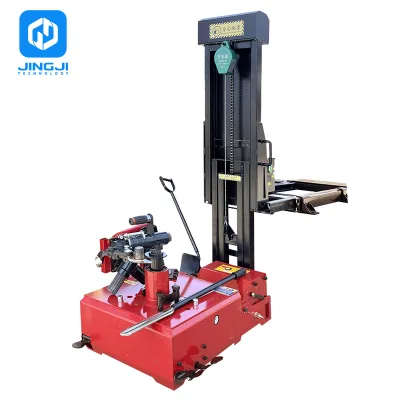
Vehicle Repair Tools Portable Manual Tire Changer Machine 22.5 Electric Tyre Changer
$298.00 - $336.00
MOQ: 1 Pieces

Electric Three Cylinder Portable Manual Tire Changer for Truck Truck Tire Changer
$298.00 - $336.00
MOQ: 1 Pieces



Comprehensive Sourcing Guide
Strategic Sourcing Guide for Electric Manual Tyre Regroovers with Accessory Kits
The global automotive maintenance sector relies heavily on efficient tire repair and maintenance solutions, with the electric manual tyre regroover standing out as a critical tool for extending tire life and ensuring road safety. For procurement professionals and workshop managers, sourcing a unit equipped with a 20-piece accessories kit requires a disciplined approach that balances technical capability, regulatory compliance, and total cost of ownership. This guide synthesizes available product data and industry standards to provide a comprehensive framework for evaluating potential suppliers and selecting the right equipment for your operational needs.
Technical Specifications and Operational Parameters
When evaluating an electric manual tyre regroover, the primary focus must be on the machine's core operational parameters, which dictate its suitability for specific repair tasks. Based on observed market data, these machines typically operate on a 230V power supply, though some models support a broader input range of AC 110V/220V at 50/60Hz, ensuring compatibility with diverse international electrical grids. The power efficiency of these units is a crucial metric; observed data indicates an efficiency rating of approximately 85%, with specific models featuring a maximum output power of 300W, while others may be rated higher for heavy-duty applications.
The physical design of the regroover is equally significant. The product attributes indicate a manual automatic grade, meaning the operator manually guides the tool while the electric motor provides the necessary cutting force. This hybrid approach offers the precision of manual control with the consistency of electric power. The operating temperature range is typically specified between 0 and 200 degrees, allowing for operation in various environmental conditions without thermal degradation of the motor or cutting components.
The cutting mechanism itself is defined by the blade configuration. Available blade types are categorized as W1-W5 and R1-R5, allowing for different groove depths and patterns depending on the tire tread requirements. The grooving sizes are adjustable, providing versatility for various tire sizes and tread wear patterns. The machine's dimensions and weight are critical for logistics and workspace planning. Observed specifications list a gross weight of 6.000kg for standard units, with dimensions around 28.00cm * 26.00cm * 21.00cm, though other models may vary, such as those with a net weight of 1kg and gross weight of 2kg, or larger units with a power cord length of 110cm.
| Parameter | Observed Specification | Verification Requirement |
|---|---|---|
| Voltage | 230V (Standard), AC 110V/220V (Variable) | Confirm local grid compatibility and plug type. |
| Power Output | 300W (Min), Higher for heavy duty | Verify actual wattage under load. |
| Blade Types | W1-W5, R1-R5 | Ensure the kit includes blades for your specific tire types. |
| Operating Temp | 0~200 Degrees | Check thermal protection mechanisms. |
| Weight | 1kg to 6kg (Net/Gross) | Assess portability vs. stability needs. |
| Dimensions | 28x26x21cm (Standard) | Verify fit within workshop storage. |
Compliance and Certification Verification
In the B2B procurement of industrial tools, compliance with international safety and quality standards is non-negotiable. The supplied data highlights several certifications that buyers should look for, including ISO, GS, and CE. Specifically, the CE marking often encompasses EMC (Electromagnetic Compatibility) and LVD (Low Voltage Directive) standards, ensuring the device does not interfere with other equipment and operates safely within voltage limits.
However, it is imperative to treat these certifications as observations of specific listings rather than universal guarantees for all products in the category. Buyers must verify that the specific unit they are purchasing carries the valid certification documents. Some listings mention "Standard Exporting Package" or "Wooden Box" packaging, which may imply adherence to export standards, but the primary focus should remain on the product's safety certification. The origin of the product, often listed as China, Ningbo, Zhejiang, or Shanxi Province, does not inherently dictate quality, but it does influence the supply chain logistics and the specific regulatory frameworks the manufacturer must navigate.
Buyers should request the original test reports for EMC and LVD compliance. Additionally, while some data points mention "SGS" as a standard, this should be interpreted as a potential third-party verification method rather than a mandatory attribute for every unit. The absence of a specific certification on a product page does not necessarily mean the product is non-compliant, but it requires a deeper due diligence process to obtain the necessary documentation before finalizing a purchase.
Cost Drivers and Economic Considerations
The cost of an electric manual tyre regroover is influenced by several factors beyond the base unit price. The observed price range in the market spans from 1 to 1612 USD, a wide variance that reflects differences in build quality, power output, brand reputation, and the inclusion of accessory kits. The inclusion of a 20-piece accessories kit is a significant cost driver. This kit typically includes various blades, replacement parts, and potentially specialized tools for tire gauge measurement, which adds value but also increases the initial investment.
The Minimum Order Quantity (MOQ) is another economic factor to consider. The observed MOQ range is between 1 and 50 units. For small workshops or individual buyers, an MOQ of 1 is highly advantageous, allowing for a single-unit purchase to test the equipment. However, for larger fleets or distributors, negotiating an MOQ closer to 50 might unlock volume discounts. Payment terms, such as TT (Telegraphic Transfer), are standard in this sector and should be factored into the cash flow planning.
Shipping and packaging costs also play a role in the total landed cost. Products are often shipped in wooden boxes, wooden cases, or standard carton boxes. The gross weight of the unit, ranging from 2kg to 6kg, directly impacts freight charges. Buyers should calculate the total cost of ownership, including the initial purchase price, shipping, potential import duties, and the cost of consumables like replacement blades, which are essential for long-term operation.
Typical Applications and Usage Scenarios
The primary application of the electric manual tyre regroover is tire repair and rubber sheet grooving. These machines are designed to restore the tread pattern of worn tires, effectively extending their service life and improving traction. The "Tire Repair Tools" keyword underscores their role in maintenance rather than manufacturing. The specific usage scenario often involves "Rubber Sheet Grooving," where the machine cuts precise grooves into rubber sheets or tire treads to improve water dispersion and reduce hydroplaning risks.
The portability of these tools is a key feature for their application. Described as "Portable" and often weighing as little as 1kg net, they can be easily transported to different workstations or even used in field conditions. The "Easy Operation" feature ensures that technicians with varying levels of expertise can use the machine effectively. The adjustable grooving sizes allow for customization based on the specific tire model and the desired tread depth, making these tools versatile for both light vehicle and heavy-duty truck tire maintenance.
Supplier Evaluation and Sourcing Strategy
Evaluating suppliers requires a focus on reliability, transparency, and after-sales support. The data indicates that customization is available, which is a strong indicator of a supplier's flexibility and willingness to meet specific client needs. Buyers should prioritize suppliers who offer clear product models, such as T010350, HSD-T100, EHG-12328K, TC-909, and TPDHJ, as these specific identifiers help in tracking inventory and verifying product authenticity.
When assessing a supplier, buyers should look for evidence of a robust warranty program. The observed data mentions a "3 Years" warranty for certain models, which is a significant indicator of the manufacturer's confidence in their product's durability. However, this warranty should be clearly defined in the terms of sale, covering specific components and excluding normal wear and tear. The condition of the product is listed as "New," but buyers should verify the packaging integrity and ensure that the product has not been previously used or refurbished without disclosure.
The origin of the product, whether from Ningbo, Zhejiang, or Shanxi Province, China, provides insight into the manufacturing hub. Buyers should verify the supplier's physical location and contact information to ensure they are dealing with a legitimate entity. The availability of an "Update Method by Internet" for some models suggests that the supplier may offer firmware updates or digital support, which is a valuable feature for modernizing equipment over time.
Quality Control and Long-Term Procurement
Quality control is paramount when sourcing industrial tools. Buyers should implement a rigorous inspection process upon receipt of the goods. This includes verifying the physical condition of the machine, checking the voltage and power specifications against the order, and testing the blade sharpness and alignment. The "Standard" or "Please check details" designation for product standards in some listings highlights the need for buyers to explicitly request and verify the technical specifications before production or shipment.
Long-term procurement considerations involve the availability of spare parts and the lifecycle of the tool. The 20-piece accessories kit is a critical component of the long-term value proposition. Buyers should ensure that the kit includes a sufficient supply of blades and that replacement parts are readily available from the supplier. The "Wooden Case" or "Carton Box Packaging" should be durable enough to protect the equipment during transit and storage.
Furthermore, the "Power Efficiency" of 85% and the "Max. Output Power" of 300W are metrics that should be monitored over time to ensure the machine maintains its performance. Regular maintenance, including cleaning and blade replacement, is essential to sustain the machine's efficiency and safety. Buyers should also consider the environmental impact of the tool, ensuring that it meets local regulations regarding noise and energy consumption.
In conclusion, sourcing an electric manual tyre regroover with a 20-piece accessories kit requires a balanced approach that considers technical specifications, compliance, cost, and supplier reliability. By adhering to the verification steps outlined in this guide, buyers can make informed decisions that ensure the acquisition of high-quality, compliant, and cost-effective equipment suitable for their tire repair and maintenance operations. The wide range of observed models and specifications offers ample opportunity for customization, but the key lies in rigorous due diligence and clear communication with suppliers to meet specific operational requirements.
FAQs
What voltage options are available for electric manual tyre regroovers?
These machines typically operate on 230V, though some models support AC 110V or 220V at 50/60Hz. This versatility ensures compatibility with diverse international electrical grids and workshop environments without requiring additional transformers.
Which certifications should I verify before purchasing a regroover?
Look for ISO, GS, and CE certifications, with CE often covering EMC and LVD standards. These marks indicate compliance with safety and electromagnetic compatibility requirements, but buyers must request specific test reports for the exact unit.
How does the blade configuration affect tire repair tasks?
Available blades are categorized as W1-W5 and R1-R5 to handle different groove depths and patterns. This variety allows operators to customize tread restoration based on specific tire wear patterns and manufacturer requirements.
Can I find models with a 3-year warranty included?
Yes, certain models like TC-909 offer a 3-year warranty as a standard feature. This warranty indicates manufacturer confidence in durability, but terms must be verified to cover specific components and exclude normal wear.
What is the typical power efficiency rating for these units?
Observed data indicates a power efficiency rating of approximately 85% for standard electric models. This metric helps estimate energy consumption during operation, ensuring cost-effective performance for regular tire repair and maintenance workflows.
Which packaging types are commonly used for shipping these tools?
Products are typically shipped in wooden boxes, wooden cases, or standard carton boxes. These packaging methods protect the equipment during transit, with gross weights ranging from 2kg to 6kg depending on the specific model.
What is the operating temperature range for safe usage?
The operating temperature range is typically specified between 0 and 200 degrees Celsius. This allows for operation in various environmental conditions without thermal degradation of the motor or cutting components during heavy-duty use.