Source electromagnetic-operated motor starter for industrial automation
Compare 30 electromagnetic-operated motor starter options from verified Chinese suppliers. Buyers can evaluate specifications like rated voltage, current, and protection functions to find suitable units for low voltage circuit breaker applications.
Key considerations
Products List

0250 Electromagnetic Starter 380V 15kw Magnetic Switching Motor Protects The Starter
$1.50 - $10.50
MOQ: 10 Pieces


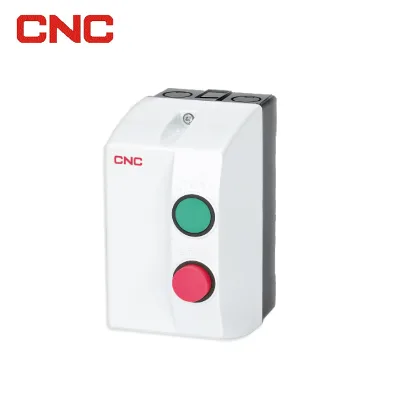


Premium Durable Starter for High-Efficiency Performance and Reliability
$26.00 - $99.00
MOQ: 10 Pieces


Three Phase Motor Start Soft Starter - Motor Protection AC Soft Starter
$112.93 - $125.48
MOQ: 1 Pieces


Three Phase AC Motor Starter with Soft Start & Controller Full Protection
$82.80 - $92.00
MOQ: 1 Pieces


Comprehensive Sourcing Guide
Strategic Sourcing Guide for Electromagnetic-Operated Motor Starters
Understanding Technical Specifications and Operational Parameters
When sourcing an electromagnetic-operated motor starter, buyers must first establish a clear understanding of the core technical parameters that define the device's capability and suitability for specific industrial environments. The fundamental operation of these units relies on an electromagnetic coil to actuate the contactor, engaging the motor circuit. In the current market, these devices are frequently categorized by their rated working voltage, which often aligns with standard industrial levels such as 380V, though some units are rated for voltages up to 550V. The electrical frequency is another critical specification, with the majority of available models supporting a dual-rated frequency of 50Hz/60Hz, ensuring compatibility with global power grids.
The physical configuration of the starter is equally vital. Buyers should verify the number of poles, as standard configurations often include three-phase arrangements (Phase:3) to match three-phase motor requirements. The breaking capacity is a crucial safety metric; for low voltage circuit breakers and starters, this capacity determines the maximum fault current the device can safely interrupt. In many observed product listings, the breaking capacity is noted as "Low Voltage Circuit Breakers," indicating the specific voltage class and safety rating of the unit. Furthermore, the arc-extinguishing medium is typically air, which is standard for low-voltage applications where the arc is cooled and divided by air gaps within the contact chamber.
The installation method is another primary specification to confirm. Most electromagnetic starters are designed for fixed installation, meaning they are intended to be mounted permanently on a panel or in a control cabinet rather than being portable. The operation mode is predominantly manual type for the actuation mechanism, though the control logic may involve automatic elements depending on the specific model. For instance, some advanced models function as an Electromagnetic Starter with a linear mathematical model, suggesting a predictable relationship between input current and magnetic force. The connection method often involves a thermal relay, which provides essential overcurrent protection by monitoring the motor's temperature and current draw, tripping the circuit if limits are exceeded.
Compliance, Certification, and Regulatory Standards
Navigating the compliance landscape is a non-negotiable aspect of sourcing industrial electrical components. Buyers must rigorously verify that the supplied products meet the necessary international and regional certification standards. The market data indicates a high prevalence of specific certifications, including ISO9001, which validates the manufacturer's quality management systems. Additionally, the China Compulsory Certification (CCC) is frequently cited, a mandatory requirement for products sold within the Chinese market and often a baseline for export quality.
Beyond domestic standards, international certifications such as CE (Conformité Européenne) and RoHS (Restriction of Hazardous Substances) are critical for buyers targeting European or global markets. The observed product attributes list certifications like "CCC, ISO: CE" and "RoHS, CCC, ISO: SGS, CE," suggesting that compliant units often carry a cluster of these marks. The presence of SGS (Société Générale de Surveillance) certification further indicates third-party verification of product quality and safety. It is important to note that while some listings mention "Standard Package" or "Ocean Freight" as part of the standard, these are logistical terms, not certifications. The actual product standard is often defined as "By The Customer Needs" or adhering to specific industry standards like CE, SGS, ISO9001.
Buyers should be cautious of generic claims. For example, while "Standard Package" is listed as a standard, it does not imply a specific technical compliance level. Instead, the buyer must request explicit documentation proving that the specific batch of electromagnetic starters meets the required ISO, CE, or CCC standards. The material composition, often Stainless Steel or Steel, also plays a role in compliance, particularly regarding durability and resistance to environmental factors, which may be required by specific industry regulations.
Cost Drivers and Pricing Variables
The pricing of electromagnetic-operated motor starters is influenced by a complex interplay of factors, ranging from raw material costs to customization levels. The observed price range in the market spans from 1 to 1000 USD, a wide spectrum that reflects the diversity of product specifications. A unit priced at the lower end of this range is likely a basic model with standard specifications, such as a fixed installation, manual operation, and standard packaging. Conversely, units at the higher end may feature advanced customization, specialized materials like stainless steel, or higher-rated current capacities.
Material composition is a significant cost driver. Products utilizing Stainless Steel are generally more expensive than those made from standard Steel due to the higher cost of the raw material and the added manufacturing processes required for corrosion resistance. The complexity of the internal structure also affects price; for instance, a "Combination" structure that integrates multiple protection functions into a single unit may command a premium over a simpler design. Customization is another major variable. While many products offer "Available" customization, the extent of this customization—such as specific voltage ratings, unique enclosure types (IP42, IP55, IP65), or tailored communication protocols like RS485 Modbus—will directly impact the final cost.
Packaging and logistics also contribute to the total cost of ownership. While some listings mention "Box," "Carton," or "Wooden Box" as packaging types, the choice of packaging can influence shipping costs and the final price. "Ocean Freight" and "Standard Export Package" are logistical terms that may be bundled into the price or charged separately. Buyers should also consider the MOQ (Minimum Order Quantity), which ranges from 1 to 1000 units. Higher MOQs often result in lower unit prices, but they require a larger upfront capital investment. The rated current, such as 40A, is another technical specification that correlates with price; higher current ratings typically require larger contacts and more robust internal components, increasing the manufacturing cost.
Typical Applications and Functional Requirements
Electromagnetic-operated motor starters are versatile components designed for a wide array of industrial applications. Their primary function is to provide Overvoltage Protection (OVP) and Overcurrent Protection, ensuring that motors are protected against electrical faults that could lead to equipment damage or safety hazards. These devices are commonly used in scenarios where motor control is required, such as in manufacturing lines, water treatment facilities, and HVAC systems. The ability to handle a rated frequency of 50Hz/60Hz makes them suitable for a global market, allowing for deployment in regions with different power grid standards.
The specific application often dictates the required enclosure type. For environments with dust or water exposure, units with an IP42, IP55, or IP65 rating are essential. The IP65 rating, for instance, indicates protection against low-pressure water jets, making it ideal for outdoor or washdown applications. In contrast, IP42 is suitable for indoor environments with limited exposure to solids or water. The communication capabilities of the starter also expand its application scope. Models featuring RS485 Modbus communication allow for integration into larger automated control systems, enabling remote monitoring and control. This is particularly valuable in modern smart factories where data-driven maintenance and real-time status updates are critical.
The task of the starter is often to "Adjust" or control the motor's operation, ranging from simple start-stop functions to more complex automatic control sequences. The "Signal: Continuous" attribute suggests that these devices are designed for applications requiring sustained operation without interruption. The "Condition: New" status is a standard expectation for new procurement, ensuring that the buyer receives a product with full warranty coverage and no prior wear. Whether the application requires a "Speed: Normal Type Circuit Breaker" or a specific "Linear" mathematical model, the buyer must match the starter's capabilities to the operational demands of the specific motor and process.
Supplier Evaluation and Origin Verification
Selecting the right supplier is as critical as selecting the right product. The origin of the product is a key indicator of the supply chain's reliability and the manufacturing standards employed. The observed data points to two primary origins: Zhejiang, China, and Shanghai, China. Both regions are known for their robust manufacturing bases for electrical components. However, buyers should not assume that all products from these locations meet the same quality standards. The specific manufacturer's track record, production capacity, and quality control processes must be evaluated independently.
When evaluating a supplier, buyers should look for evidence of consistent adherence to the certifications mentioned earlier, such as ISO9001 and CCC. A supplier that can provide valid, up-to-date certification documents for their specific product lines demonstrates a commitment to quality. The "Standard: 8kg" or "Standard: STANDARD PACKAGE" attributes in the data are vague and should not be used as primary evaluation criteria. Instead, focus on the supplier's ability to meet specific customer needs, as indicated by the "Standard: By The Customer Needs" attribute. This suggests a flexible manufacturing approach that can adapt to specific project requirements.
Communication is another vital aspect of supplier evaluation. Suppliers that offer "RS485 Modbus" communication capabilities are likely more technologically advanced and better equipped to support modern industrial automation needs. The "Customization: Available" attribute indicates that the supplier is willing to work with buyers to tailor products, which is a positive sign for complex projects. However, buyers must verify the lead times and the supplier's ability to maintain quality during customization. The "Product Name: Dol Starter" (Direct-On-Line Starter) is a common designation, but buyers should ensure the supplier can provide detailed technical datasheets for this specific model to confirm its compatibility with their existing systems.
Quality Control and Long-Term Procurement Considerations
Ensuring the long-term reliability of electromagnetic-operated motor starters requires a robust quality control strategy. Buyers should implement incoming inspection protocols that verify the physical attributes of the product, such as the material (Steel or Stainless Steel), the color (Grey), and the packaging (Box, Carton, or Wooden Box). The "Structure: Combination" attribute suggests a complex internal design that requires careful inspection to ensure all components are correctly assembled. The "Operation: Manual Type" and "Installation: Fixed" attributes should be verified against the actual product to ensure they match the specifications provided in the purchase order.
Long-term procurement considerations also include the availability of spare parts and the supplier's after-sales support. Given the wide range of models, from "HOWO371" to "SJR2000" and "VG1560090001," buyers should ensure that the supplier can provide consistent support for the specific models they purchase. The "Condition: New" status is a baseline, but buyers should also inquire about the expected lifespan and maintenance requirements of the starter. The "Rated Current: 40A" and "Rated Voltage: up to 550V" specifications should be monitored over time to ensure the product continues to operate within safe limits.
Finally, buyers should consider the environmental impact and sustainability of the product. The use of materials like Stainless Steel and the adherence to RoHS standards indicate a commitment to environmental compliance. The "Packing: Standard Export Package" and "Ocean Freight" options suggest that the supplier is experienced in international shipping, which is crucial for maintaining the integrity of the product during transit. By focusing on these quality control and long-term factors, buyers can ensure that their investment in electromagnetic-operated motor starters delivers reliable performance and value over the life of the equipment.
Comparative Analysis of Product Attributes
To facilitate informed decision-making, the following table summarizes the key attributes observed in the market for electromagnetic-operated motor starters. This comparison highlights the variability in specifications and helps buyers identify the features most relevant to their specific needs.
| Attribute Category | Observed Values | Relevance to Buyer |
|---|---|---|
| Certification | ISO9001-CCC, CCC, ISO: CE, RoHS, SGS | Critical for regulatory compliance and market access. |
| Rated Voltage | 380V, up to 550V | Determines compatibility with existing power systems. |
| Rated Frequency | 50Hz/60Hz | Ensures global applicability across different grid standards. |
| Material | Steel, Stainless Steel | Impacts durability, corrosion resistance, and cost. |
| Enclosure Type | IP42, IP55, IP65 | Defines protection level against dust and water. |
| Function | OVP, Overcurrent Protection, Automatic Control | Defines the safety and control capabilities of the unit. |
| Operation | Manual Type, Automatic Control | Indicates the level of automation and user interaction. |
| Communication | RS485 Modbus | Essential for integration into automated control systems. |
| Origin | Zhejiang, China; Shanghai, China | Indicates manufacturing location and potential supply chain dynamics. |
| Packing | Box, Carton, Wooden Box, Standard Export | Affects shipping costs and product protection during transit. |
This table serves as a reference for buyers to quickly assess the diversity of available products and to prioritize the attributes that align with their specific project requirements. By systematically evaluating these factors, buyers can navigate the complex market of electromagnetic-operated motor starters with confidence and precision.
FAQs
What certifications do electromagnetic-operated motor starters typically hold?
These starters commonly hold ISO9001, CCC, CE, and RoHS certifications. Buyers should verify specific batch documentation to ensure compliance with international safety standards like SGS and ISO9001 for quality management systems.
Which voltage ratings are standard for these motor starters?
Standard rated working voltages include 380V, with some models supporting up to 550V. These units typically operate at a rated frequency of 50Hz or 60Hz to match global power grid requirements.
How are these starters installed and operated?
They are designed for fixed installation and often feature manual operation types. The connection method frequently involves a thermal relay to provide essential overcurrent protection and ensure safe motor control.
Can buyers request customization for these motor starters?
Yes, customization is available for specific needs such as unique enclosure types or communication protocols. Buyers can request tailored solutions like RS485 Modbus communication or specific IP ratings for their environment.
What materials are used to construct these devices?
Manufacturers typically use Steel or Stainless Steel for durability and corrosion resistance. The choice of material impacts the cost and suitability for harsh industrial environments requiring high protection levels.
Where are these motor starters primarily manufactured?
Products originate mainly from Zhejiang and Shanghai in China. Buyers should evaluate suppliers from these regions based on their specific track records and adherence to quality management standards.