Source Electromagnetic Shaker Linear Vibrating Sieve for mining, lab, and school
Compare 30 listings of Electromagnetic Shaker Linear Vibrating Sieve machines designed for ore processing, laboratory analysis, and educational use. Buyers can review specifications like oscillation speed, sieve layers, and motor power to find suitable units for mining, lab, or school applications.
Key considerations
Products List


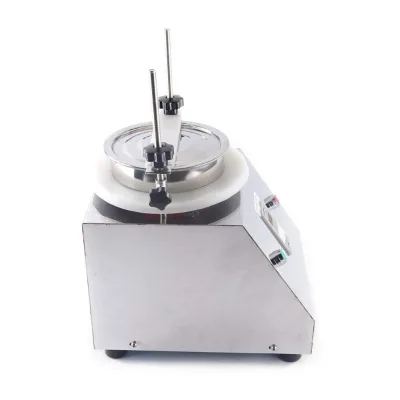


Shaker Experimental Sieve Standard Lab Machine Electric Vibrator Test Sieve
$600.00 - $1550.00
MOQ: 1 Pieces

High Precision Flour Screening Equipment Circular Vibrating Screen Sieve
$1400.00 - $2500.00
MOQ: 2 Pieces


Automated Industrial Linear Stone Shaker Screening Vibrating Sieve with User-Friendly Controls
$59000.00 - $117000.00
MOQ: 1 Pieces


Explosion-Proof Industrial Screening Shaker Sieve for Hazardous Areas
$24400.00 - $146000.00
MOQ: 1 Pieces


Lab Soil Aggregate High Frequency Sample Grading Vibration Sieve Shaker
$500.00 - $700.00
MOQ: 1 Pieces


Comprehensive Sourcing Guide
Strategic Sourcing Guide for Electromagnetic Shaker Linear Vibrating Sieves
The procurement of industrial screening equipment, specifically electromagnetic shaker linear vibrating sieves, requires a disciplined approach to ensure operational efficiency and regulatory compliance. Buyers in the mining, laboratory, and educational sectors must navigate a complex landscape of technical specifications, customization options, and supplier capabilities. This guide synthesizes observed market data and technical attributes to provide a framework for evaluating potential suppliers and selecting the appropriate machinery for specific screening needs. The focus remains on evidence-based criteria derived from available product attributes, ensuring that procurement decisions are grounded in verified facts rather than speculative claims.
Technical Specifications and Operational Parameters
Understanding the precise technical architecture of an electromagnetic shaker is the first step in the sourcing process. The core functionality of these machines often revolves around specific vibration patterns and mechanical structures. In the current market, distinct variations exist between circular and linear motion profiles. For instance, observed product data indicates the presence of "Double" shaft configurations and "High Frequency Vibrating Screen" functionalities, which are critical for processing hard materials like ore. The transmission structure is explicitly identified as a "Vibrating Screen," suggesting a direct mechanical linkage designed for high-efficiency material separation.
When evaluating linear vibrating sieves, buyers must scrutinize the oscillation metrics. Specific models in the market demonstrate an oscillation rate of 221 times per minute with a journey of 25mm, while others exhibit peak attack times of 147 times per minute with an 8mm journey. These numerical values are not universal; they vary significantly based on the intended application, whether it is heavy-duty mining or delicate laboratory analysis. The motor power is another critical specification, with observed units operating at 0.37kw, powered by AC380V or AC 220V voltages. Buyers should verify that the electrical infrastructure at their facility matches these voltage requirements to prevent operational failures.
Furthermore, the physical dimensions and weight are essential for logistics planning. Observed package dimensions for certain laboratory models are recorded as 680×500×1090 mm, with a gross weight of 130 Kg. However, other industrial units may have customizable dimensions (LWH) to fit specific production lines. The material composition is predominantly Stainless Steel, offering corrosion resistance and durability, though buyers must confirm the specific grade of steel used for their intended environment. The structure of the machine can range from "Portable" units suitable for mobile applications to fixed installations, and the supporting devices often include Rubber Springs to dampen noise and vibration.
Compliance, Certification, and Standardization
Regulatory compliance is a non-negotiable aspect of industrial procurement, particularly when sourcing equipment from international markets. The supplied data highlights that products often carry ISO and CE certifications. While the presence of these marks is a positive indicator, buyers must treat them as observations of specific listings rather than universal guarantees for all suppliers. The standard for these machines is frequently listed as "Customized," implying that the manufacturing process allows for adaptation to local regulatory frameworks. However, for standard compliance, buyers should look for adherence to ISO 9001 quality management systems, though specific certification status must be verified through current documentation.
The origin of the machinery plays a significant role in compliance and logistics. A substantial portion of the observed market originates from Hebei, China, a region known for its manufacturing capabilities in mining and screening equipment. When sourcing from this region, buyers must ensure that the supplier provides valid certification documents that are recognized in the destination country. The "Export Wooden Case" packing standard is a common observation, which serves as a protective measure during international transit but also adds to the overall shipping weight and volume.
Buyers should also verify the "Standard" designation for the product model. While some listings indicate specific dimensions like 700x530x1110mm as a standard, others emphasize that the standard is customizable. This distinction is vital for facilities with strict spatial constraints. The warranty period is another critical compliance metric, with a high-confidence observation of a 3-year warranty. This suggests a baseline expectation for product reliability, but the specific terms and conditions of the warranty must be reviewed to understand coverage for parts, labor, and shipping.
Cost Drivers and Pricing Dynamics
The pricing structure for electromagnetic shaker linear vibrating sieves is highly variable, reflecting the diversity in specifications, customization levels, and production volumes. The observed price range in the market spans from $1 to $146,000 USD. This wide disparity is driven by several key factors. At the lower end, the cost is influenced by the scale of the unit, such as laboratory models with fewer layers and lower power requirements. For example, a 7-layer vibrating sieve with a 0.37kw motor may fall into a different price bracket compared to a high-output industrial unit designed for ore processing.
Customization is a primary cost driver. The market data indicates that "Customization" is available, and many products are listed as "Customized." This implies that buyers can request specific modifications to the shaft number, dimension, or transmission structure, which inevitably increases the unit price. The material choice also impacts cost; while Stainless Steel is a common observation, the grade and thickness of the steel will affect the final price. Additionally, the complexity of the control system, such as the transition from manual control to digital display systems, adds to the manufacturing cost.
Minimum Order Quantity (MOQ) is another factor influencing the total cost of ownership. The observed MOQ range is between 1 and 2 pieces, indicating a flexible purchasing environment that accommodates both single-unit procurement for testing and small-batch orders for pilot projects. However, buyers should be aware that while the MOQ is low, the lead time for customized orders may be longer than for standard stock items. The delivery date is observed to be 10-15 days for certain models, but this can vary based on the complexity of the customization and the supplier's current production load.
Typical Applications and Industry Use Cases
The versatility of electromagnetic shaker linear vibrating sieves allows them to serve a wide range of industries, from heavy mining operations to precision laboratory analysis. The "Object" of these machines is frequently identified as "Ore," highlighting their critical role in the mining sector for separating valuable minerals from waste rock. In this context, the "High Output" and "Low Energy Consumption" advantages are particularly valuable, as they directly impact the operational efficiency and profitability of mining operations. The "Mine Shaker" classification further underscores their suitability for rugged, high-volume environments.
Beyond industrial mining, these machines are extensively used in educational and research settings. The "Application" field lists "Lab" and "School" as primary use cases, where the "Product Name" often includes terms like "Hot Sell Laboratory Sieve Shaker." In these environments, the precision of the screening process is paramount. The specific oscillation and tapping parameters, such as 290+-6 times per minute for rotation and 156+-3 times per minute for tapping, ensure consistent and reproducible results for material analysis. The "7 Layer" configuration is particularly popular in laboratories, allowing for the simultaneous separation of multiple particle sizes.
The "Usage" of these machines also extends to general screening tasks where "Screening" is the primary feature. Whether in a factory setting or a research facility, the ability to handle different sieve diameters, such as Dia200mm, Dia100mm, and Dia75mm, provides the flexibility needed for various material types. The "Portable" structure of some models makes them ideal for field testing or temporary setups, while the "Rotary Vane Shaker" and "Circular Vibrating Screen" types are better suited for fixed, high-capacity installations.
Supplier Evaluation and Capability Assessment
Selecting the right supplier is as critical as selecting the right machine. Buyers should evaluate suppliers based on their ability to meet the specific technical and logistical requirements outlined in the procurement plan. The "Customization" capability is a key differentiator; suppliers that offer "Available" customization can tailor the machine to specific needs, such as adjusting the "Dimension(LWH)" or modifying the "Transmission Structure." However, buyers must verify that the supplier has the engineering expertise to execute these customizations without compromising the structural integrity of the machine.
The "Condition" of the product is another evaluation criterion. All observed products are listed as "New," which is the expected standard for industrial equipment. Buyers should ensure that the supplier provides a clear warranty, with a 3-year period being a common benchmark. The "Supporting Device" technology, such as the use of Rubber Springs, should also be assessed for quality and durability, as these components are subject to high stress and wear.
Supplier location is a significant factor in logistics and communication. With a high concentration of manufacturers in Hebei, China, buyers should consider the implications of international shipping, including potential delays and customs duties. The "prod_origin" field confirms this location, and buyers should verify the supplier's experience in exporting to their specific region. The "Delivery Date" of 10-15 days is a useful benchmark, but buyers should confirm this timeline with the specific supplier, as it may vary based on order volume and customization requirements.
Quality Control and Long-Term Procurement Considerations
Ensuring the long-term reliability of electromagnetic shaker linear vibrating sieves requires a robust quality control strategy. Buyers should request detailed test results and performance data before finalizing a purchase. While specific test results are not provided in the general market data, the "Levelness of The Basement" specification of <=0.6mm/Min indicates a high standard of precision in machine alignment. Buyers should verify that the supplier can demonstrate compliance with such standards through third-party testing or in-house quality assurance protocols.
The "Feature" of "Screening" is fundamental, but the efficiency of this feature depends on the maintenance of the machine's components. The "Motor Power" and "Working Voltage" must be stable to prevent overheating and premature failure. Buyers should inquire about the availability of spare parts, particularly for critical components like the vibration motors and springs. The "Gross Weight" of 130 Kg for certain models suggests a robust build, but the durability of the Stainless Steel construction must be confirmed for the specific operating environment.
Long-term procurement considerations also include the potential for future upgrades or expansions. The "Customizable" nature of the "Dimension" and "Product Name" suggests that the market offers scalable solutions. Buyers should plan for the possibility of increasing the number of sieve layers or upgrading the control system from manual to digital as their needs evolve. The "Warranty" of 3 years provides a safety net, but buyers should also consider the cost of maintenance and the availability of technical support after the warranty period expires.
Comparative Analysis of Model Variants
To facilitate informed decision-making, buyers should compare the key attributes of different model variants available in the market. The following table summarizes the observed specifications for three distinct categories of electromagnetic shaker linear vibrating sieves:
| Attribute | Laboratory Model (AF-CVS-1) | Industrial Mining Model (STSJ-3A) | Multi-Layer Sieve (STSJ-6) |
|---|---|---|---|
| Primary Application | Lab, School | Mine Shaker, Ore | General Screening |
| Oscillation Rate | 221 times/Min | 290+-6 times/Min | 290+-6 times/Min |
| Motor Power | Not Specified | 0.37kw | Not Specified |
| Sieve Layers | Not Specified | 7 Layers | Not Specified |
| Control System | Digital | Manual Control | Digital |
| Material | Stainless Steel | Stainless Steel | Stainless Steel |
| Warranty | 3 Years | 3 Years | 3 Years |
| Origin | Hebei, China | China | China |
| Packing | Customizable | Export Wooden Case | Customizable |
This comparison highlights the diversity in the market. The Laboratory Model is characterized by digital controls and high oscillation rates suitable for precision work. The Industrial Mining Model emphasizes robust construction and multi-layer capabilities for high-volume processing. The Multi-Layer Sieve variant offers a balance of features, with digital displays and manual control options. Buyers should select the model that best aligns with their specific operational requirements, ensuring that the technical specifications match the intended use case.
In conclusion, sourcing electromagnetic shaker linear vibrating sieves requires a meticulous evaluation of technical specifications, compliance standards, and supplier capabilities. By adhering to the evidence-based criteria outlined in this guide, buyers can make informed decisions that optimize performance, ensure regulatory compliance, and maximize the return on investment for their screening operations.
FAQs
What certifications do electromagnetic shaker linear vibrating sieves have?
These machines typically carry ISO and CE certifications. Buyers should verify that the specific supplier provides valid documentation for these marks, as they are observations of specific listings rather than universal guarantees for all products.
How long is the delivery time for these vibrating sieves?
The standard delivery date is observed to be 10-15 days for certain models. This timeline may vary depending on the complexity of customization requests and the supplier's current production load.
Can the dimensions of the sieve be customized for my facility?
Yes, the dimension L*W*H is listed as customizable to fit specific production lines. Buyers can request modifications to the physical size, though this may impact the unit price and lead time.
What is the minimum order quantity for purchasing these units?
The minimum order quantity ranges from 1 to 2 pieces. This flexible purchasing environment accommodates both single-unit procurement for testing and small-batch orders for pilot projects.
Which materials are used to construct these vibrating screens?
The material composition is predominantly stainless steel, offering corrosion resistance and durability. Buyers must confirm the specific grade of steel used for their intended environment to ensure long-term performance.
What is the warranty period for the electromagnetic shaker equipment?
A high-confidence observation indicates a 3-year warranty period. This suggests a baseline expectation for product reliability, but the specific terms and conditions must be reviewed to understand coverage.
How much does the machine weigh for shipping purposes?
The gross weight is observed to be 130 Kg for certain laboratory models. This weight is critical for logistics planning and may vary for larger industrial units with different configurations.