Source EMI Shielding Polyetherimide for Solar Panels, Electronics, Aerospace
Find 30 verified listings for EMI Shielding Polyetherimide suitable for solar panels, electronic devices, and aerospace applications. Compare specifications like thermal rating, tensile strength, and insulation properties to select the right organic insulating material for your manufacturing needs.
Key considerations
Products List


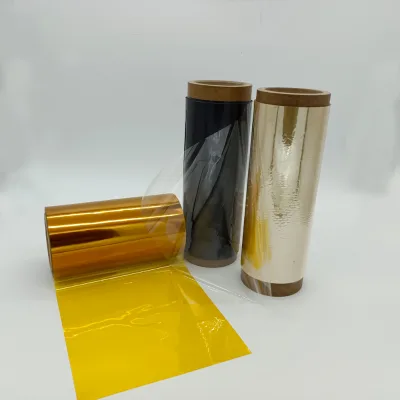


Comprehensive Sourcing Guide
Strategic Sourcing Guide for EMI Shielding Polyetherimide Solutions
Procuring advanced polymer materials for electromagnetic interference (EMI) shielding requires a rigorous understanding of material science, supply chain logistics, and technical compliance. While the core keyword often points toward polyetherimide (PEI), the available market data reveals a complex landscape where polyimide (PI) and polyethylene (PE) variants frequently appear in similar procurement contexts. Buyers must navigate these distinctions carefully to ensure the selected material meets the specific thermal, electrical, and mechanical demands of their application. This guide outlines the critical factors for sourcing high-performance insulation and shielding films, focusing on verified attributes, compliance frameworks, and supplier evaluation criteria derived from current market observations.
Technical Specifications and Material Distinctions
The foundation of any successful procurement strategy lies in the precise definition of technical specifications. In the current market, polyimide (PI) is the dominant material class for high-temperature insulation and EMI shielding applications, often distinguished by its exceptional thermal stability and mechanical strength. Observed product attributes indicate that polyimide films typically exhibit a thermal rating of H 180, signifying a continuous operating temperature of 180°C. This is a critical parameter for applications in aerospace, automotive manufacturing, and solar panel manufacturing, where materials must withstand extreme environmental conditions without degrading.
When evaluating polyimide products, buyers should verify specific mechanical properties. Data suggests that high-performance films in this category often possess a Young's Modulus of greater than or equal to 3.1 GPa, ensuring structural rigidity. Furthermore, tensile strength is a vital metric, with observed values reaching or exceeding 165 MPa. Elongation at break is another key indicator of flexibility, with reliable products demonstrating a minimum of 45%. For EMI shielding specifically, the dielectric strength is paramount; observed specifications indicate values of at least 195 mV/m, ensuring effective electrical insulation under high voltage conditions.
It is essential to distinguish polyimide from other polymers like polyethylene, which may appear in the same search results but serve different functions. Polyethylene is generally associated with lower thermal ratings and different chemical resistance profiles. If the application requires high-temperature resistance or specific electrical insulation properties, polyimide is the preferred choice. Buyers must also consider the film's optical properties; high-transmittance polyimide films often exceed 88% light transmittance, which is beneficial for applications where visual inspection or light transmission is required alongside shielding. Additionally, the coefficient of thermal expansion (CTE) should be verified, with observed standards suggesting values below 27 ppm per degree, ensuring dimensional stability during thermal cycling.
Compliance, Certification, and Regulatory Standards
Navigating the regulatory landscape is as critical as evaluating physical properties. In the global supply chain, certification serves as a proxy for quality management and process consistency. The most frequently observed certification for high-performance polymer films is ISO9001. This standard indicates that the manufacturer adheres to a quality management system that ensures consistent product quality and customer satisfaction. However, buyers should not assume that all listed products possess this certification; it must be explicitly verified for each supplier.
Beyond general quality management, specific industry standards govern the dimensions and performance of these materials. Product standards often define the physical dimensions of the film rolls or sheets. Observed standard specifications include widths of 520mm and 1040mm, as well as packing dimensions such as 46.533.534 cm. These figures are crucial for logistics planning and inventory management. Buyers must also verify if the product meets specific industry classifications, such as "Organic Insulating Material" or "Organic Insulation," which categorize the chemical nature of the polymer.
For applications in the automotive and aerospace sectors, additional compliance checks may be necessary. While specific automotive or aerospace certifications (such as UL94 or AS9100) are not explicitly listed in the general product data, the presence of these materials in those industries implies a need for rigorous validation. Buyers should request test reports confirming the material's classification as an organic insulating material and verify its suitability for the intended environment. The "H 180" thermal rating is a specific classification that should be cross-referenced with the buyer's operational temperature requirements to ensure compliance with safety standards.
Cost Drivers and Pricing Dynamics
Understanding the cost structure of polyimide and related insulation films is essential for budgeting and negotiation. The observed price range in the market is extensive, spanning from $0.05 to $3,500. This wide variance is not indicative of a single product type but rather reflects differences in material grade, film thickness, width, and customization requirements. The lower end of the spectrum likely corresponds to standard, off-the-shelf polyethylene or basic polyimide sheets, while the higher end represents specialized, custom-engineered films with enhanced properties.
Several factors drive the cost of these materials. First, the raw material chemistry plays a significant role; polyimide is inherently more expensive to produce than polyethylene due to the complex polymerization process required to achieve high thermal stability. Second, customization is a major cost driver. The market data confirms that customization is available, which can significantly increase the unit price. Customization may involve specific thicknesses, widths, or the addition of conductive coatings for EMI shielding. Third, the minimum order quantity (MOQ) impacts the effective unit cost. Observed MOQs range from 1 to 1000 units. Larger orders typically benefit from economies of scale, reducing the per-unit cost, whereas small batch orders or custom samples may carry a premium.
Buyers should also consider the packaging and shipping costs. Products are often packed in cartons, with options for pallets or wooden cases for larger shipments. The origin of the product, primarily China, influences logistics costs and lead times. While the origin is a known factor, the specific shipping terms and Incoterms will ultimately determine the landed cost. It is advisable to request detailed quotes that break down material costs, tooling fees for customization, and logistics expenses to avoid hidden costs.
Typical Applications and Performance Requirements
The versatility of polyimide and related insulation films makes them suitable for a diverse range of high-performance applications. The observed application sectors include solar panel manufacturing, electronic devices, the construction industry, automotive manufacturing, and aerospace. In the solar panel industry, these films serve as protective layers that withstand UV exposure and thermal stress, although it is important to note that some observed products explicitly state "UV Protection: No," requiring additional coatings or design considerations for outdoor use.
In the electronic device sector, polyimide films are widely used as insulation films for flexible printed circuits (FPC). The material's ability to protect FPCs from mechanical damage and electrical shorts is critical. The "Protection of FPC" attribute highlights this specific use case. For automotive and aerospace applications, the high-temperature resistance and low coefficient of thermal expansion are vital. These materials must maintain their integrity under the extreme thermal cycling experienced in engine compartments and aircraft fuselages. The "Insulation" and "Electrical Insulation" attributes confirm their role in preventing short circuits in high-voltage environments, with maximum voltage ratings observed between 10 kV and 19 kV.
The construction industry also utilizes these materials for their durability and insulation properties. The "High Temperature Resistance" and "Chemical Resistance" (implied by the organic insulation classification) make them suitable for harsh industrial environments. When selecting a product for a specific application, buyers must match the material's properties to the environmental stresses of the end-use. For instance, a film with a tensile strength of 165 MPa is suitable for structural support in electronics, while a film with a Young's Modulus of 3.1 GPa is better for rigid insulation components.
Supplier Evaluation and Quality Control
Selecting the right supplier is a critical step in the procurement process. The market data indicates that suppliers are located primarily in China, with some offering significant production capacities, such as 3000 tons per year. This capacity suggests that larger suppliers can handle substantial order volumes, which is beneficial for long-term contracts. However, buyers must evaluate suppliers based on more than just capacity.
Quality control should be a primary focus. Buyers should verify the supplier's adherence to ISO9001 standards and request documentation for specific product tests. Key quality metrics to verify include the dielectric strength, tensile strength, and elongation at break. The "Joints" attribute, with a limit of 3 or fewer, is a specific quality indicator for film continuity; fewer joints indicate higher manufacturing precision. Additionally, the "Shrinkage" rate, observed to be less than or equal to 0.12%, is a critical quality parameter for maintaining dimensional stability during processing.
Suppliers may offer different installation methods, such as adhesive application or static cling. The choice of installation method depends on the specific application requirements and the buyer's manufacturing processes. Buyers should also inquire about the availability of custom samples, as the market data confirms that custom samples are available. This allows for rigorous testing before committing to a large order. Rush order capabilities, with delivery times ranging from 3 to 7 days, are also a valuable attribute for projects with tight deadlines, though this may come at a premium.
Long-Term Procurement Considerations
Sourcing high-performance materials like polyimide for EMI shielding is not a one-time transaction but a long-term strategic partnership. Buyers should consider the scalability of the supply chain and the supplier's ability to adapt to changing requirements. The availability of customization is a strong indicator of a supplier's flexibility, allowing for product evolution as design requirements change.
Lead times and delivery reliability are also crucial for long-term planning. While some suppliers offer rapid delivery, others may have longer lead times depending on the complexity of the order. Buyers should establish clear communication channels and agree on delivery schedules to avoid production delays. The "Rush Order" capability mentioned in the data suggests that some suppliers can accommodate urgent needs, but this should be confirmed for each specific order.
Finally, buyers should plan for the total cost of ownership, including maintenance, replacement, and potential downtime. High-quality materials with verified specifications reduce the risk of failure and extend the lifespan of the end product. By focusing on verified attributes such as thermal rating, dielectric strength, and mechanical properties, buyers can ensure that their procurement strategy supports the long-term reliability and performance of their applications. The integration of these factors into a comprehensive sourcing strategy will enable buyers to navigate the complexities of the EMI shielding market effectively.
Summary of Key Technical Parameters
To assist in the evaluation process, the following table summarizes the key technical parameters observed in the market for polyimide and related insulation films. This data serves as a reference for buyers to compare potential suppliers and products.
| Parameter | Observed Value / Range | Significance |
|---|---|---|
| Material | Polyimide, Polyethylene | Determines thermal and chemical resistance. |
| Thermal Rating | H 180 | Indicates max continuous operating temp (180°C). |
| Tensile Strength | >= 165 MPa | Measures resistance to breaking under tension. |
| Young's Modulus | >= 3.1 GPa | Indicates stiffness and rigidity. |
| Dielectric Strength | >= 195 mV/m | Critical for electrical insulation performance. |
| Light Transmittance | > 88% | Important for optical applications. |
| CTE | < 27 ppm/Degree | Dimensional stability under thermal changes. |
| Shrinkage | <= 0.12% | Ensures minimal deformation during processing. |
| Certification | ISO9001 | Indicates quality management system compliance. |
| Application | Solar, Electronics, Auto, Aerospace | Defines suitable end-use environments. |
By adhering to these guidelines and verifying the specific attributes of each product, buyers can make informed decisions that align with their technical requirements and business objectives. The market offers a wide range of options, but success depends on rigorous due diligence and a clear understanding of the material properties required for EMI shielding and insulation applications.
FAQs
What is the thermal rating for polyimide insulation films?
Polyimide films typically have a thermal rating of H 180, indicating continuous operation at 180°C. This high temperature resistance makes them suitable for aerospace and automotive manufacturing where extreme thermal conditions are common.
Which mechanical properties define high-performance polyimide films?
High-performance films exhibit a Young's modulus of at least 3.1 GPa and tensile strength exceeding 165 MPa. These metrics ensure structural rigidity and durability required for protecting flexible printed circuits in electronic devices.
Can buyers request custom samples for polyimide materials?
Yes, custom samples are available for buyers to verify material suitability before bulk orders. This option allows for rigorous testing of properties like dielectric strength and elongation at break in specific application environments.
What is the minimum order quantity for these insulation films?
The minimum order quantity ranges from 1 to 1000 units depending on the supplier and product type. Smaller orders may carry a premium, while larger volumes often benefit from economies of scale in pricing.
How does the dielectric strength of these films compare?
Observed dielectric strength values are at least 195 mV/m, ensuring effective electrical insulation. This property is critical for applications involving maximum voltages between 10 kV and 19 kV in high-voltage environments.
What certifications are commonly associated with these polymer films?
ISO9001 is the most frequently observed certification, indicating adherence to quality management systems. Buyers should verify this explicitly as it ensures consistent product quality and process reliability from the manufacturer.
Which installation methods are available for these insulation films?
Available installation methods include adhesive application and static cling options. The choice depends on the specific application requirements and the buyer's existing manufacturing processes for electronic or construction components.