Source Empty Glass Beer Bottle for Beverage, Food, and Daily Use
Compare 30 listings for Empty Glass Beer Bottle options including 330ml and 355ml sizes with crown caps. Buyers can review specifications like 226mm height and 26mm caliber from suppliers in Xiamen, China.
Key considerations
Products List


Empty Beer Bottles 70ml Glass Bottle Glass Bottle 650ml 700ml Glass Bottle Cork
$0.25 - $0.50
MOQ: 6000 Pieces


Champagne Glass Bottle Empty 750ml Wine Bottle Color Beer Bottles Glass
$0.28 - $0.42
MOQ: 5000 Pieces


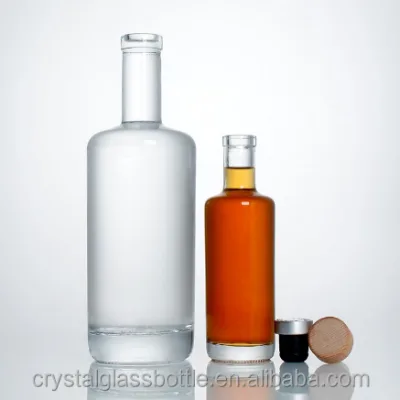


Factory Outlet Cheap Price Customized Empty 330ml Glass Beer Bottle with Cap
$0.10 - $0.20
MOQ: 10000 Pieces
Comprehensive Sourcing Guide
Empty Glass Beer Bottle Sourcing Guide
Sourcing empty glass beer bottles requires a disciplined approach that balances aesthetic customization with rigorous technical verification. Buyers must navigate a market where product attributes vary significantly across suppliers, ranging from standard crown-cap closures to specialized internal coatings. The following guide provides evidence-based procurement strategies to ensure that selected containers meet functional, regulatory, and commercial requirements without relying on unverified claims.
Product Scope and Observed Listing Signals
The current market landscape for empty glass beer bottles reveals a diverse range of product models and capacities, indicating that buyers cannot assume uniformity across all listings. Observed data points to specific models such as VP-13-0100 and IDJE-208, alongside generic descriptors like "Others Beer Bottles" and "Beer(20)," which suggests that suppliers may use varying nomenclature for similar or distinct items. Capacity standards observed include 250ml, 275ml, 330ml, 355ml, and 375ml, highlighting the need for precise specification matching rather than relying on general category labels.
Visual and physical attributes also show significant variation, with green glass being a common observation, though customization is explicitly available for many suppliers. The shape is predominantly round, and the closure type is frequently identified as a crown cap, which is standard for beer applications. However, buyers should note that some listings mention alternative materials like aluminum or different sealing types such as screw caps, which fall outside the strict definition of a glass beer bottle and require careful filtering to avoid procurement errors.
Technical Specifications to Verify
Dimensional accuracy is critical for both production line efficiency and final product presentation. Key specifications to verify include the height, which can be around 226mm for certain 330ml models, and the bottom diameter, which may be approximately 60mm. The caliber, or neck opening, is another vital parameter, with observed values around 26mm, though other listings indicate bore diameters of 28mm or 38mm. These variations directly impact the compatibility with capping equipment and must be confirmed against the buyer’s existing machinery specifications.
Weight and volume consistency are equally important for cost control and quality assurance. Observed weights for 330ml bottles range from 260g to 270g, which influences shipping costs and structural integrity. Buyers should also investigate the internal coating, as some suppliers offer epoxy resin linings that may be necessary for specific beverage preservation requirements. Additionally, the package configuration, such as pallet counts of 3330 pieces, affects logistics planning and storage capacity, making it a key factor in the total cost of ownership calculation.
Compliance and Safety Documentation
Regulatory compliance is non-negotiable for food and beverage packaging, and buyers must demand verifiable documentation from suppliers. Common certifications observed in the market include CE, FDA, SGS, and LFGB, which indicate adherence to specific safety and quality standards. The presence of a Food Safe Certificate is particularly crucial for glass bottles intended for direct contact with consumables, ensuring that the material does not leach harmful substances into the product.
It is essential to distinguish between general quality certifications and specific food-contact approvals. While ISO certification may indicate a supplier’s overall management system, it does not automatically guarantee that the glass itself meets food-grade standards. Buyers should request batch-specific test results or material safety data sheets that confirm compliance with relevant regional regulations, such as those enforced by the FDA in the United States or LFGB in Germany. Relying solely on a supplier’s claim of "Food Safe" without supporting documentation poses a significant risk to brand reputation and consumer safety.
Cost Drivers and Commercial Terms
Pricing in the Empty Glass Beer Bottle market is influenced by several factors, including material quality, customization complexity, and order volume. Observed price ranges can be quite broad, reflecting differences in glass purity, wall thickness, and decorative processes such as printing or decal application. Buyers should be aware that prices as low as $0.05 per unit may correspond to basic, uncustomized items, while higher prices may reflect multi-color printing or specialized shapes.
Minimum Order Quantities (MOQs) vary significantly, with observed ranges from 500 to 300,000 pieces, depending on the supplier’s production capacity and the level of customization required. Some suppliers may offer lower MOQs for standard items but require much larger volumes for custom designs. Delivery times are often listed as "Depends," indicating that lead times are not fixed and may fluctuate based on production schedules and order size. Buyers should negotiate clear delivery terms and understand the cost implications of expedited shipping or rush orders.
Supplier Qualification and Quality Control
Evaluating supplier capability requires more than just reviewing product listings; it involves assessing their manufacturing processes and quality control systems. Buyers should verify the supplier’s origin, with many listings indicating production in China, particularly in regions like Xiamen, which is known for glass manufacturing. Understanding the supplier’s location can help in assessing logistics costs and potential supply chain risks.
Quality control measures should include checks for visual defects, dimensional accuracy, and pressure resistance. Buyers should inquire about the supplier’s internal testing protocols, such as thermal shock tests or leak tests, to ensure that the bottles can withstand filling and transportation stresses. Additionally, the availability of customization services, including printing up to nine colors or embossed labels, should be evaluated based on the supplier’s technical capabilities and past performance. Requesting samples before placing a large order is a critical step to validate quality and compatibility.
Long-Term Procurement Checks
Sustainable sourcing practices are becoming increasingly important, and buyers should consider the environmental impact of their packaging choices. Glass is a recyclable material, but the energy intensity of its production and transportation should be factored into the overall sustainability strategy. Buyers may prefer suppliers who demonstrate commitment to energy-efficient manufacturing processes or who use recycled glass content in their production.
Long-term partnerships with reliable suppliers can lead to better pricing, improved quality consistency, and more flexible terms. Buyers should establish clear communication channels and regular review processes to monitor supplier performance over time. This includes tracking delivery reliability, defect rates, and responsiveness to issues. By maintaining a structured evaluation framework, buyers can mitigate risks and ensure a stable supply of high-quality empty glass beer bottles for their production needs.
FAQs
What certifications do the empty glass beer bottles have?
The bottles hold CE, FDA, SGS, and Food Safe Certificate approvals. Some listings also reference ISO certification and LFGB standards. These documents verify safety for beverage and food contact applications.
Which customization options are available for these glass bottles?
Customization is available for shape, printing, and packaging. Buyers can select up to nine colors for printing and choose between printed, paper, or embossed labels. Packaging can be customized as pallet, carton, or carton plus pallet configurations.
How much is the minimum order quantity for glass beer bottles?
The minimum order quantity ranges from 500 to 300,000 pieces depending on the specific supplier and model. Some listings specify an MOQ of 20,000 pieces for certain models. Buyers should verify the exact requirement for their selected item.
Can I find empty glass beer bottles made in China?
Yes, the products originate from Xiamen, China. The listings confirm the production location as China for the glass bottle models. This origin is consistent across the observed product data for these beverage containers.
What are the standard capacities for these beer bottles?
Standard capacities include 250ml, 275ml, 330ml, 355ml, and 375ml. Some models also support a broader range from 50ml to 700ml. Specific models like the VP-13-0100 and IDJE-208 correspond to these volume standards.
What closure types are used for these glass beer bottles?
The bottles primarily use Crown Caps for sealing. Some alternative models feature Screw Caps as the sealing type. The choice depends on the specific product model and intended application for the beverage or food product.
How are the empty glass beer bottles packaged for shipment?
Packaging options include Pallet, Carton, or Carton plus Pallet configurations. Specific listings mention a package density of 3330 pieces per pallet. Custom packaging arrangements are also available to meet specific shipping requirements.