Source Engraved Stainless Steel Heart Ring for Wedding, Gift, Decoration
Compare 30 listings for the Engraved Stainless Steel Heart Ring from Dong Guan, China. Buyers can review options featuring PVD plating, high polishing, and OEM customization for anniversary, engagement, and party occasions.
Key considerations
Products List


Romantic Love Heart Shaped Ring Fashion Gold Stainless Steel Jewelry Ring
$1.03 - $1.65
MOQ: 50 Pieces

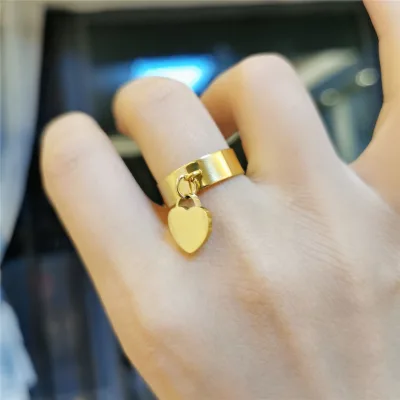


316L Stainless Steel Fashion Jewelry Heart Design Wedding Engagement Ring
$2.00 - $5.00
MOQ: 100 Pieces


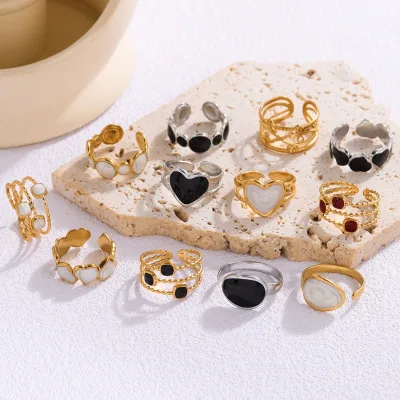
Wholesale Elegance Heart Drop Oil Gold Plated 18K Gold Stainless Steel Ring
$0.53 - $0.75
MOQ: 15 Minimum


Comprehensive Sourcing Guide
Strategic Sourcing Guide for Engraved Stainless Steel Heart Rings
The global market for personalized jewelry has seen a sustained surge in demand for durable, cost-effective, and aesthetically versatile accessories. Among these, the Engraved Stainless Steel Heart Ring represents a specific niche where functionality meets emotional expression. For B2B procurement professionals, sourcing this item requires a nuanced understanding of material properties, manufacturing processes, and supply chain logistics. This guide synthesizes available product attributes and industry standards to provide a comprehensive framework for evaluating suppliers and managing procurement risks for this specific category.
Material Composition and Fabrication Standards
The foundational element of this product category is the material itself. Stainless steel is the primary substrate, selected for its resistance to corrosion, high tensile strength, and hypoallergenic properties. In the context of B2B sourcing, it is critical to distinguish between the raw material grade and the final finish. The supplied data indicates that the metal type is consistently identified as Stainless Steel, with a specific emphasis on "High Quality" attributes. This suggests that suppliers should be capable of sourcing steel grades that resist tarnishing and maintain structural integrity over time.
The fabrication process plays a pivotal role in the final product's appearance and durability. The observed data highlights "Polishing" and "High Polished" as standard finishing techniques. This process is essential for achieving the smooth surface required for high-quality engraving. Furthermore, the "Electroplating" process is frequently cited, often in conjunction with "Eco-Friendly" coating specifications. This indicates that the rings are not merely raw steel but undergo surface treatments to achieve specific aesthetic finishes, such as PVD (Physical Vapor Deposition) plating for gold, rose gold, or gunmetal tones. Buyers must verify that the electroplating process adheres to environmental regulations, particularly regarding heavy metals and waste disposal, as the "Eco-Friendly" claim is a specific attribute listed in the product data.
The shape of the ring is a defining characteristic for this specific keyword. While "Round" is a common shape in the broader ring category, the "Heart" shape is the specific variant requested. This geometric requirement introduces complexity to the fabrication process, as the heart shape involves curves and points that must be precisely formed and polished to avoid sharp edges that could cause discomfort. The data also notes a specific weight of 7g for certain models, which serves as a benchmark for buyers to compare against other suppliers to ensure consistency in material usage and perceived value.
Technical Specifications and Customization Capabilities
Customization is a primary driver for purchasing engraved stainless steel heart rings in the B2B sector. The product attributes confirm that "Customization" is available, with specific services including OEM (Original Equipment Manufacturer) and ODM (Original Design Manufacturer). This flexibility allows brands to tailor the product to their specific market needs. The "Logo" attribute lists three distinct methods: Embossed, Engraved, and Laser. Each method offers different aesthetic and durability outcomes. Laser engraving is typically preferred for high-precision, permanent markings on stainless steel, while embossing creates a raised relief effect.
The technical specifications also extend to packaging and model identification. The data references specific product models such as "SSR," "R4058," and "KR49221-K." These model numbers are crucial for inventory management and ensuring that the buyer receives the exact design intended. Packaging varies from "OPP Bag" to "Individual OPP Bag Package" and "Bag/Cardboard Box." The choice of packaging impacts the final retail presentation and protection during transit. Additionally, the standard packing dimensions are noted as 30x25x20cm for general shipments, though individual item standards may be customized.
Color options are diverse, with "Silver," "Gold," "Black," "Rose Gold," and "Gunmetal" listed. The "Gold Color" is specifically noted as "PVD Plated," which is a superior plating method compared to traditional electroplating in terms of adhesion and longevity. Buyers should verify that the color consistency is maintained across batches, as stainless steel plating can vary if the surface preparation is not uniform. The "Shape" attribute confirms the availability of the "Heart" design, which is often categorized under "Trendy Elements" like "Love/Heart Shaped." This aligns with the product's intended usage for occasions such as anniversaries, engagements, and weddings.
Compliance, Certification, and Regulatory Adherence
In the jewelry industry, compliance is non-negotiable, particularly when dealing with materials that come into direct contact with the skin. The supplied data explicitly mentions "SGS/Reach Report" as a certification. SGS is a globally recognized inspection, verification, testing, and certification company, while REACH (Registration, Evaluation, Authorization, and Restriction of Chemicals) is a European Union regulation concerning the registration, evaluation, authorization, and restriction of chemicals. The presence of these certifications indicates that the supplier is capable of meeting international safety standards regarding chemical content, specifically heavy metals like nickel, lead, and cadmium.
The "Function" attribute lists "Waterproof/No Fade/Anti-Allergy Quality/Nicke," which likely implies "Nickel-Free" or "Nickel-Safe" properties. This is a critical selling point for the "Unisex" and "Female" markets, as nickel allergies are common. Buyers must ensure that the "Anti-Allergy" claim is backed by the aforementioned SGS or REACH reports. Without these documents, the product cannot be legally sold in many jurisdictions, particularly the EU and North America. The "Eco-Friendly" coating mentioned earlier also suggests compliance with environmental standards, which is increasingly important for corporate social responsibility (CSR) initiatives.
When evaluating suppliers, procurement teams should request current, valid copies of these certificates. It is important to note that certifications are often batch-specific or model-specific. A supplier may have a general SGS report, but the specific "Heart Ring" model might require a separate test to confirm that the plating and alloy composition meet the required thresholds. The "Standard" attribute mentions "30x25x20cm" for packing, but for the product itself, the standard is often "customized," meaning buyers must define their own quality benchmarks if they deviate from the supplier's default specifications.
Cost Drivers and Pricing Dynamics
Understanding the cost structure of engraved stainless steel heart rings is essential for effective budgeting and margin analysis. The observed price range in the market is 0.14 to 6.7 USD. This wide variance is driven by several factors, including the complexity of the heart shape, the type of plating used, the depth and precision of the engraving, and the quantity ordered. The "High Polished" finish and "PVD Plated" options generally command a higher price point due to the additional processing steps and higher material costs associated with PVD technology.
The Minimum Order Quantity (MOQ) is another significant cost driver. The data indicates an MOQ range of 10 to 1000 units, with a specific high-confidence fact noting an MOQ of 100 pieces. For startups or small businesses, an MOQ of 100 pieces may be a barrier, whereas larger retailers may find the 1000-piece threshold more aligned with their volume needs. The "Sample Time" of about 3-10 days and the "Lead Time" of 5-7 days for production suggest a relatively agile supply chain, but these timelines can fluctuate based on order volume and customization complexity.
Buyers should also consider the cost of customization. While "Customized Logo" is acceptable, the method of application (laser vs. embossing) will impact the unit cost. Laser engraving, while precise, may incur a setup fee or a higher per-unit cost compared to standard stamping. Additionally, the "Service" of "Full Customization" implies that the supplier can alter the mold or design, which involves tooling costs that are often amortized over the order quantity. When negotiating, buyers should clarify whether the quoted price includes the cost of the mold or if it is a separate charge.
Supplier Evaluation and Operational Logistics
Selecting the right supplier involves more than just comparing prices; it requires a holistic evaluation of their operational capabilities. The data points to "Dong Guan, Guang Dong, China" as a primary origin location. This region is a major hub for jewelry manufacturing, offering a dense ecosystem of suppliers, raw material providers, and logistics partners. However, buyers must verify the specific factory location to ensure it aligns with their risk tolerance regarding geopolitical stability and shipping reliability.
The "Shipping Method" includes major carriers like DHL, UPS, and FedEx. This indicates that the supplier has established relationships with international logistics providers, which is crucial for timely delivery. Buyers should confirm who bears the cost of shipping and insurance, as well as the Incoterms (e.g., FOB, EXW, DDP) applicable to the transaction. The "Lead Time" of 5-7 days is a strong indicator of production efficiency, but it is essential to distinguish between the time required for production versus the total time including sample approval and shipping.
When evaluating suppliers, procurement teams should assess their capacity for "Full Customization." This includes the ability to handle design changes, logo placement, and packaging requirements. The "Services" attribute confirms that full customization is available, but the supplier's track record in delivering on these promises is the true measure of their reliability. Buyers should request references or case studies from previous clients who have ordered similar customized items. Additionally, the "Sample Time" of 3-10 days should be factored into the project timeline, as delays in sample approval can cascade into production delays.
Quality Control and Long-Term Procurement Strategy
Quality control (QC) is paramount when sourcing engraved stainless steel heart rings. The "High Quality" attribute is a claim that must be validated through rigorous inspection protocols. Buyers should implement a multi-stage QC process, starting with the raw material inspection to ensure the stainless steel grade meets specifications. During production, visual inspections should be conducted to check for polishing defects, plating uniformity, and the precision of the heart shape. Post-production, a sample of the finished rings should be tested for durability, including scratch resistance and plating adhesion.
The "Function" attributes of "Waterproof/No Fade" are critical long-term performance indicators. Buyers should request test results or third-party verification for these claims, especially regarding the "No Fade" aspect of the PVD plating. Over time, poor-quality plating can peel or discolor, leading to customer dissatisfaction and potential returns. The "Anti-Allergy" claim also requires ongoing verification, as the skin contact safety of the product must be maintained throughout its lifecycle.
For long-term procurement, establishing a strategic partnership with the supplier is more beneficial than transactional relationships. The "OEM/ODM" capabilities suggest that the supplier can grow with the buyer's brand. Buyers should negotiate terms that allow for flexible order quantities and rapid response to market trends. The "Customized Logo" and "Full Customization" services should be leveraged to create unique product lines that differentiate the buyer in the market. Regular communication and joint planning sessions can help align production schedules with marketing campaigns, ensuring that the engraved stainless steel heart rings are available when demand peaks, particularly during seasons like Valentine's Day, anniversaries, and wedding seasons.
In conclusion, sourcing engraved stainless steel heart rings requires a balanced approach that considers material quality, technical specifications, compliance, cost, and supplier reliability. By adhering to the standards and attributes outlined in this guide, B2B buyers can mitigate risks and secure a supply chain that delivers high-quality, compliant, and customizable jewelry products. The key to success lies in thorough due diligence, clear communication, and a commitment to maintaining the highest standards of quality and safety.
FAQs
What certifications do engraved stainless steel heart rings have?
These rings typically hold SGS and REACH reports to ensure safety. Buyers must verify that these documents cover the specific heart ring model and plating process to confirm compliance with chemical restrictions.
How long is the lead time for production?
The standard lead time for production is 5 to 7 days. This duration applies to orders meeting the minimum quantity requirements and may vary if complex customization or specific packaging is requested.
Can I customize the logo on the ring?
Yes, suppliers accept customized logos using embossed, engraved, or laser methods. Buyers should confirm the specific technique and any associated setup costs before placing an order for branded items.
What is the minimum order quantity for these rings?
The minimum order quantity is typically 100 pieces, though some suppliers may accept orders as low as 10 units. Buyers should check specific factory policies as MOQs can range up to 1000 pieces.
Which materials are used for the ring body?
The rings are made from high-quality stainless steel with various plating options. This material ensures the rings are waterproof, anti-allergy, and resistant to fading for long-term wear.
What shapes are available for the stainless steel rings?
Both round and heart shapes are available, with the heart design being a key trendy element. The heart rings often feature inlaid details and are polished to a high finish for comfort.
How are the rings packaged for shipment?
Rings are packed in individual OPP bags, cardboard boxes, or bulk bags depending on the order. Specific packing dimensions like 30x25x20cm may apply to general shipments while individual items use custom packaging.