Source Engraved Patterned Plastic Champagne Glass for Hotel, Restaurant, Bar
Find 30 options for Engraved Patterned Plastic Champagne Glass suitable for hotels, restaurants, and bars. Compare specifications including size, material, and customization features from verified suppliers in Guangdong, China.
Key considerations
Products List


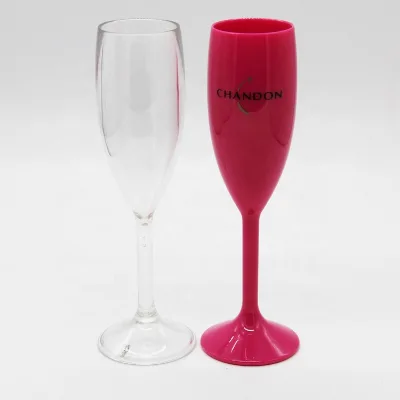
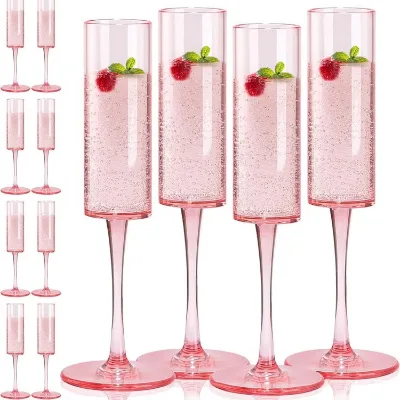
150ml Fancy Unbreakable Plastic Wine Glass champagne Flutes Glass champagne Glass
$0.65 - $0.80
MOQ: 5000 pieces



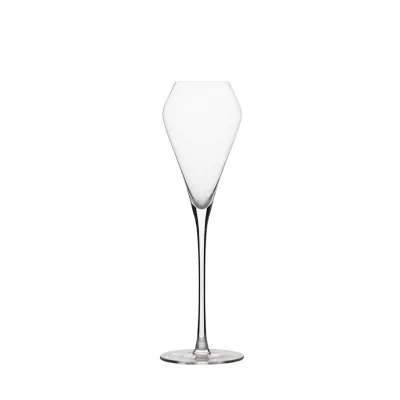

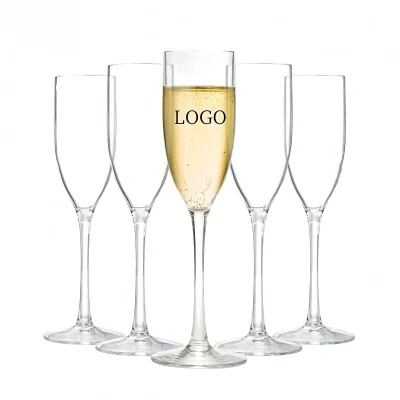
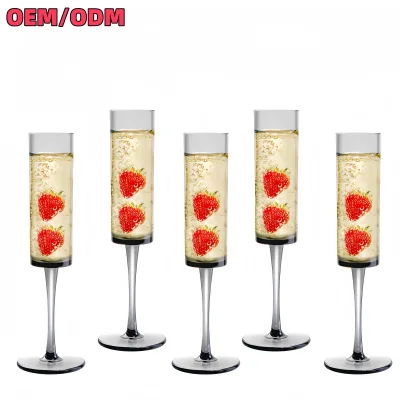
Comprehensive Sourcing Guide
Strategic Sourcing Guide for Engraved Patterned Plastic Champagne Glass
Understanding Product Attributes and Material Composition
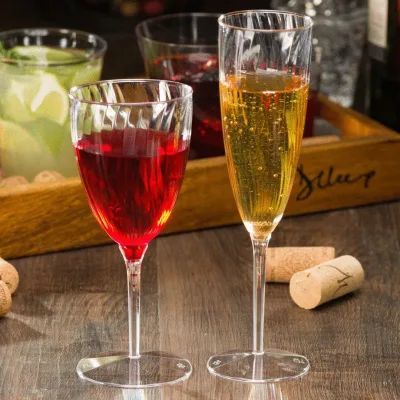
When sourcing engraved patterned plastic champagne glasses, buyers must first distinguish between the aesthetic presentation and the underlying material reality. The product market often features items described as "Rose Champagne Glass" or "Champagne Coupes" that are fundamentally constructed from plastic polymers rather than traditional silica glass. In the current supply landscape, specific listings indicate the use of Polystyrene (PS) and Polycarbonate (PC) as primary materials. PS is frequently cited for its clarity and cost-effectiveness, offering a rigid structure suitable for single-event use or light-duty service, while PC provides enhanced durability and impact resistance, making it a viable option for establishments requiring reusable plastic alternatives.
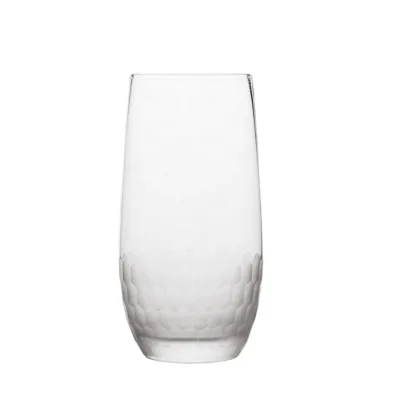
The visual appeal of these items often relies on an "engraved pattern" or specific design styles, such as Nordic or Elegant aesthetics. These patterns are typically molded into the plastic during the manufacturing process rather than applied via post-production engraving, ensuring the design is integral to the product's structure. The observed product dimensions vary, with common specifications including a size of 4.5x23.3cm or a cup size of 56x60x162mm. Capacity is another critical variable, with listings showing 4oz and 5oz options. Buyers should verify that the "engraved" aspect refers to the molded texture that mimics cut glass, as this affects the tactile experience and light refraction. The color profile is predominantly transparent or clear, though some variations may offer unicolor options. Understanding that these are technically "Plastic Champagne Glass" products, despite their elegant styling, is essential for setting realistic expectations regarding their performance in high-temperature environments or with carbonated beverages.
Technical Specifications and Dimensional Standards
Precision in technical specifications is paramount when ordering bulk quantities of plastic champagne glasses. The physical dimensions directly influence the product's stability and its ability to hold specific liquid volumes without tipping. Standard listings provide a consistent set of measurements, such as a height of approximately 162mm with a base width of 56mm and a top diameter of 60mm. These dimensions are designed to accommodate the classic coupe silhouette while maintaining a low center of gravity. The weight of individual units is another critical data point; observed specifications indicate a unit weight of 16g, which suggests a balance between sturdiness and lightweight handling.
Packaging dimensions and unit counts per carton are equally vital for logistics planning. Typical packing configurations show a quantity of 72 pieces per carton or a mixed configuration of 6 pieces per pack with 50 packs per carton. The external carton size is often recorded as 42x42x48cm or 100cm³ depending on the specific SKU, which directly impacts freight costs and warehouse storage efficiency. Buyers must cross-reference the "Qty/CTN" with the "CTN Size" to calculate the total volume of their shipment. Furthermore, the "Packing Style" often involves shrink wrapping or individual plastic bags to prevent surface scratching, which is particularly important for engraved patterns where surface integrity is key to the visual appeal. The absence of a lid is a standard feature for these open-top coupes, simplifying the cleaning process but requiring careful handling during transport to avoid dust accumulation.
Compliance, Certification, and Safety Verification
For food-contact applications, particularly in hospitality settings like hotels, restaurants, and bars, verifying compliance with international safety standards is non-negotiable. The supply chain for plastic drinkware is subject to rigorous testing to ensure that the materials do not leach harmful substances into beverages. Available data points to specific certifications such as LFGB (German Food and Feed Code), FDA (US Food and Drug Administration), and QS (Quality Safety). These certifications indicate that the PS or PC materials used in the manufacturing process have been tested for food safety. However, buyers must treat these as observations of specific supplier capabilities rather than universal guarantees for every listed product.
The distinction between "Eco-Friendly" or "Sustainable" claims and actual certification status requires careful scrutiny. While some product attributes list features like "Sustainable" or "Eco-Friendly," these terms are often marketing descriptors. True sustainability claims should be backed by specific material recycling codes or third-party environmental audits, which are not explicitly detailed in the general product listings. Buyers should request current test reports for LFGB and FDA compliance before finalizing orders, especially if the product is intended for export to the European Union or North America. The "Disposable" attribute is listed as "Non-Disposable" in several contexts, suggesting a design for repeated use, which further elevates the importance of chemical safety testing. Without verified documentation, the risk of regulatory non-compliance in the destination market remains a significant procurement hazard.
Cost Drivers and Pricing Dynamics
The pricing structure for engraved patterned plastic champagne glasses is influenced by a complex interplay of material costs, order volume, and customization requirements. The observed price range in the market spans from $0.05 to $3.27 USD per unit, a wide variance that reflects differences in material quality (PS vs. PC), production complexity, and order quantity. The Minimum Order Quantity (MOQ) is a primary driver of unit cost; while some listings suggest an MOQ of 100 pieces, others require volumes up to 50,000 pieces. A higher MOQ typically correlates with a lower unit price due to economies of scale in production runs.
Customization is a significant cost variable. The availability of "Customized" options, including custom branding, specific engraving patterns, or unique color variations, often incurs additional setup fees and higher per-unit costs. The "Customization" attribute is widely available, but buyers must understand that this flexibility comes with a premium. Additionally, the "Production" method, whether it involves injection molding for PS or more complex molding for PC, affects the baseline cost. Payment terms, such as a 30% deposit followed by a 70% balance after document confirmation, also impact the cash flow dynamics of the procurement process. Buyers should anticipate that prices at the lower end of the range ($0.05) likely correspond to standard, non-customized PS items with high MOQs, while prices approaching $3.27 may reflect specialized PC materials, lower MOQs, or extensive custom branding.
Typical Applications and Usage Scenarios
The versatility of engraved patterned plastic champagne glasses makes them suitable for a diverse range of commercial and event-based applications. The primary usage sectors identified include hotels, restaurants, bars, and various catering services. The "Elegant" and "Nordic" design styles align well with upscale hospitality environments where the aesthetic of traditional glass is desired but the risk of breakage is a concern. In these settings, the plastic alternative offers a practical solution for high-traffic areas, outdoor events, or venues with children, where safety and durability are prioritized over the traditional feel of glass.
Beyond commercial hospitality, these glasses are frequently utilized in large-scale events such as weddings, corporate parties, and festivals. The "Non-Disposable" nature of the product allows for reuse within a single event or across multiple events if proper cleaning protocols are followed, distinguishing them from single-use plastic cups. The 4oz and 5oz capacities are ideal for serving sparkling wines, cocktails, or mocktails, fitting standard portion control requirements. The "Adult" age specification indicates that these products are designed for general adult consumption, though their durability makes them suitable for supervised environments. The "Without Lid" design facilitates easy pouring and drinking, which is critical for the fluid dynamics of carbonated beverages. Buyers should consider the specific venue's operational needs; for instance, a beach bar might prioritize the impact resistance of PC plastic, while a fine dining establishment might focus on the clarity and molded engraving details of PS plastic.
Supplier Evaluation and Quality Control Protocols
Selecting a reliable supplier for plastic champagne glasses requires a rigorous evaluation of their manufacturing capabilities and quality assurance processes. The origin of these products is predominantly Guangdong, China, a region known for its extensive plastic manufacturing infrastructure. Buyers should verify the supplier's production capacity, lead times, and ability to maintain consistent quality across large batches. The standard delivery time observed is approximately 35 days after all confirmations, a timeline that must be factored into the procurement schedule to avoid stockouts.
Quality control should focus on several key areas: dimensional accuracy, surface finish, and material integrity. Buyers must inspect samples for consistent molding of the engraved patterns, ensuring there are no flash lines or uneven textures that could detract from the product's elegance. The "Packing Style," often involving shrink packs or individual bags, must be verified to ensure the glasses arrive without scratches or cracks. Additionally, the "Brand" association, such as "Soton," may indicate a specific manufacturer's reputation, but buyers should not rely solely on brand names without verifying the specific factory's credentials. It is advisable to request a pre-shipment inspection report that includes random sampling for weight, dimensions, and visual defects. The "Certification" status should be re-verified for each batch, as certifications can expire or be specific to certain production lines.
Long-Term Procurement and Operational Considerations
Sourcing engraved patterned plastic champagne glasses is not merely a one-time transaction but part of a long-term supply chain strategy. Buyers must consider the lifecycle of the product, including cleaning protocols and durability over time. While the "Non-Disposable" attribute suggests reusability, the actual lifespan depends on the frequency of washing and the harshness of the cleaning agents used. PS plastic may degrade faster under high-heat dishwasher cycles compared to PC, so buyers should align the material choice with their operational cleaning capabilities.
Inventory management is another critical long-term consideration. The "Qty/CTN" and "CTN Size" data provided earlier must be used to optimize warehouse space and shipping logistics. Consistent ordering patterns can help secure better pricing and reduce lead time variability. Furthermore, the "Customizable" nature of the packing and product design offers opportunities for branding and marketing differentiation. Buyers should plan for potential design updates or seasonal variations, ensuring the supplier has the flexibility to adapt to changing market trends. Finally, maintaining a relationship with a supplier who offers transparent communication regarding material changes or regulatory updates is essential for mitigating risks in the long term. By focusing on these strategic elements, buyers can build a resilient supply chain that supports their operational goals while delivering high-quality products to their customers.
FAQs
What material is used for the Engraved Patterned Plastic Champagne Glass?
The product is primarily constructed from Polystyrene (PS) or Polycarbonate (PC) plastic. These materials provide clarity and durability suitable for hotel and bar usage while mimicking the look of traditional glass.
Which certifications ensure the safety of this plastic champagne glass?
Available certifications include LFGB, FDA, and QS for food safety compliance. Buyers should verify these specific test reports for each batch to ensure the materials do not leach harmful substances into beverages.
How does the MOQ affect the pricing of the Engraved Patterned Plastic Champagne Glass?
Minimum Order Quantities range from 100 pieces to 50,000 pieces depending on the supplier. Higher volumes typically correlate with lower unit prices, with observed costs ranging from 0.05 to 3.27 USD per unit.
Can I customize the packaging style for the Engraved Patterned Plastic Champagne Glass?
Yes, customization options include shrink packs, plastic bags, and cartons with specific quantities per pack. Buyers can often choose between 72 pieces per carton or 6 pieces per pack with 50 packs per carton.
What is the lead time for production of the Engraved Patterned Plastic Champagne Glass?
The standard delivery time is approximately 35 days after all confirmations are received. This timeline must be factored into procurement schedules to ensure stock availability for upcoming events or inventory needs.
Which dimensions are standard for the Engraved Patterned Plastic Champagne Glass?
Common specifications include a cup size of 56x60x162mm or a total size of 4.5x23.3cm. Capacities are typically available in 4oz and 5oz options to suit various serving requirements.
Where are the Engraved Patterned Plastic Champagne Glass products manufactured?
Products originate from Guangdong, China, a region known for extensive plastic manufacturing infrastructure. Buyers should verify specific factory credentials as the brand Soton is associated with these goods.