Source EPA Tier4 Small Excavator for Construction Mining Landscaping
Compare 30 EPA Tier4 Small Excavator listings from verified suppliers in China. Buyers can evaluate specifications like engine power, digging depth, and weight for construction, mining, and landscaping projects.
Key considerations
Products List


1.2t Small Excavator with EPA/CE Certification Ideal for Residential Construction
$4299.00 - $6199.00
MOQ: 1 Pieces


1.2t1.5t Small Excavator Price Is Simple to Operate Easy to Maintain
$1500.00 - $2000.00
MOQ: 1 Pieces


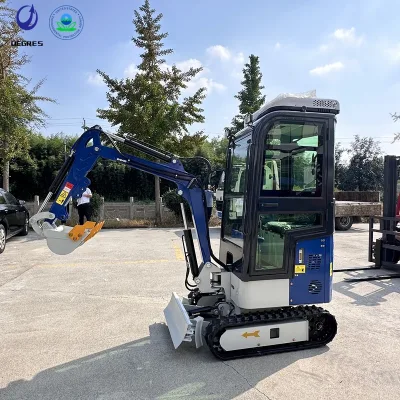


Small Size Construction Machinery Strong Power Excavator and Mini Digger
$7320.00 - $8440.00
MOQ: 1 Pieces
Comprehensive Sourcing Guide
Strategic Sourcing Guide for EPA Tier 4 Small Excavators
Understanding the Technical Landscape of Mini Excavators
The procurement of small-scale earth-moving machinery requires a precise understanding of the technical specifications that define performance and utility. In the current market, the core keyword "EPA Tier 4 small excavator" points to a specific segment of equipment designed for urban construction, landscaping, and tight-space operations where emissions compliance is mandatory. The observed product data reveals a diverse range of configurations, including models identified as SY135C Tier4 and various mini crawler excavators with distinct power ratings and dimensions.
A critical observation in the current supply landscape is the variation in drive types. While the target keyword emphasizes Tier 4 compliance, which is historically associated with internal combustion engines meeting strict emission standards, the available data indicates a mix of drive systems. Some units are explicitly listed with an Internal Combustion Drive, utilizing engines such as the Yanmar 4tnv98c, which delivers a power output of 42.4 Kw. This engine configuration is typical for larger mini excavators in the 6000kg class, offering a Maximum Digging Height of 5790 mm and a Maximum Digging Depth of 3590 mm. Conversely, other entries in the market data suggest Electric Drive options, highlighting a growing trend toward electrification even within the small excavator category. Buyers must verify whether a specific unit labeled as Tier 4 utilizes a diesel engine with after-treatment systems or if the listing refers to a different compliance tier, as the data shows "Electric Drive" and "Internal Combustion Drive" as distinct attributes for different models.
The physical dimensions and operational capabilities vary significantly across the observed inventory. For instance, the SY135C Tier4 model operates at a machine weight of 6000kg, whereas other mini excavators, such as the HT series, range from lighter configurations with a total weight of 1500kg to models with specific standard dimensions like 335513002290mm. The digging radius for the heavier 6000kg unit reaches 6320 mm, while smaller units like the HT08 or HT20 series may offer a Max Digging Radius of 4040mm. Understanding these variances is essential for matching the machine to the job site. A buyer seeking a machine for deep trenching in a confined urban lot must prioritize the Maximum Digging Depth, which ranges from 2400mm in lighter models to 3590mm in the heavier class. Similarly, the Rated Speed, observed at 2.4 / 3.7 Km/Hr for certain models, dictates the efficiency of moving the machine between work zones.
Compliance Verification and Certification Standards
Navigating the regulatory landscape for small excavators is a paramount concern for B2B buyers, particularly when the core search intent involves EPA Tier 4 compliance. The EPA Tier 4 standard represents a significant milestone in emission regulations, requiring engines to utilize advanced filtration and after-treatment technologies to reduce nitrogen oxides and particulate matter. However, the provided product data contains certifications such as CE and ISO9001, which are distinct from EPA regulations. CE marking indicates conformity with health, safety, and environmental protection standards for products sold within the European Economic Area, while ISO9001 certifies the manufacturer's quality management systems.
Buyers must exercise caution when interpreting certification labels. The presence of a CE certification on a product listing does not automatically guarantee EPA Tier 4 compliance for the North American market. The data lists "CE" and "ISO9001: Condition:New" as attributes, but it does not explicitly confirm EPA certification status for every listed unit. Furthermore, the data mentions "prod_standard: other" or specific weight standards like "1000kg" and "100kg," which are likely internal or regional standards rather than global emission benchmarks. A responsible procurement strategy requires the buyer to request specific documentation proving EPA Tier 4 compliance from the supplier. This documentation should include the engine manufacturer's certification and the official EPA compliance label, which is legally required for the machine to be operated in the United States.
The distinction between different engine brands is also critical in this context. The data highlights the Yanmar 4tnv98c engine for the 6000kg class and Kubota as an engine band for other models. Both Yanmar and Kubota are reputable manufacturers that produce engines meeting various emission tiers. However, the specific Tier level (e.g., Tier 4 Final vs. Tier 3) must be verified against the engine serial number and the official compliance documentation. Relying solely on the product title or a generic "Tier4" tag without verifying the engine's specific certification can lead to regulatory non-compliance. Additionally, the "Condition: New" attribute confirms the state of the machinery but does not imply any specific emission standard. Buyers should treat all certification claims as observations to be verified rather than guaranteed attributes of every listed product.
Cost Drivers and Pricing Structure Analysis
The financial landscape for sourcing small excavators is influenced by a complex array of factors, including engine technology, machine weight, and the level of customization available. The observed price range in the market data spans from 1000 to 200,000 USD, a wide variance that reflects the difference between basic mini excavators and more sophisticated, heavy-duty units. The lower end of this spectrum likely corresponds to the lighter models, such as the 1500kg units or those with electric drive systems, which may have lower manufacturing costs due to simpler hydraulic systems or smaller battery packs. The upper end of the range likely encompasses the 6000kg class machines with internal combustion drives, advanced hydraulic transmissions, and high-power engines like the 42.4 Kw Yanmar unit.
Several specific attributes contribute to the cost drivers within this segment. The "Customization: Available" attribute indicates that buyers can tailor the machine to specific needs, which invariably increases the unit price. Customizations might include specialized bucket types, such as the "Grab Shovel" or "Backhoe" observed in the data, or modifications to the rubber track width, such as the 230mm tracks noted for certain models. The choice of engine brand also plays a significant role; engines from premium manufacturers like Yanmar or Kubota often command a higher price point compared to generic or less established brands, reflecting their reputation for reliability and compliance.
The packaging and origin of the machine also impact the final landed cost. The data shows variations in packing, ranging from "Wooden Box" to "Wooden Case" or "Other." Robust wooden packaging is essential for protecting the machinery during international shipping, particularly for units originating from Jiangsu or Shandong, China. The shipping costs, insurance, and import duties associated with these origins must be factored into the total cost of ownership. Furthermore, the "Standard" attribute, which lists values like "1000kg" or "335513002290mm," suggests that some pricing may be tied to specific dimensional or weight classes. Buyers should be aware that the listed price range is broad and that the specific configuration, including the engine type and bucket size, will determine the final quotation. It is crucial to request a detailed breakdown of costs to understand how much of the price is attributed to the engine, the hydraulic system, and the customization options.
Operational Applications and Performance Matching
Selecting the right small excavator requires a clear alignment between the machine's specifications and the intended application. The market data reveals a variety of usage scenarios, from "GM Excavator" and "Special Excavator" to "Mining Excavator" and general "Earth-Moving Machinery." The term "GM Excavator" may refer to a specific application or a classification within the supplier's catalog, while "Mining Excavator" suggests a heavier-duty capability, potentially aligning with the 6000kg class machine.
For urban construction and landscaping, the "Mini Crawler Excavator" and "Mini Hydraulic Excavator" models are ideal. These machines, with weights around 1500kg and compact dimensions, offer high maneuverability in confined spaces. The "Backhoe" bucket type is particularly suited for trenching and digging tasks in residential or commercial sites. In contrast, the "Grab Shovel" bucket is better suited for material handling, such as loading debris or moving loose soil, making it a versatile choice for demolition or site cleanup operations. The "Maximum Digging Height" and "Maximum Digging Depth" are critical metrics for these applications. A machine with a 5790 mm digging height is necessary for loading trucks or working on elevated platforms, while a 3590 mm digging depth is required for deep foundation work.
The drive type also influences the application suitability. Electric drive excavators are increasingly popular for indoor work or environmentally sensitive areas where noise and emissions must be minimized. However, for heavy-duty applications like mining or large-scale earthmoving, the internal combustion drive with a 42.4 Kw engine provides the necessary torque and power. The "Rated Speed" of 2.4 / 3.7 Km/Hr indicates the travel speed, which is important for moving the machine across large sites. Buyers should evaluate the specific demands of their project, such as the need for high digging force, long reach, or extended operating hours, to select the model that offers the best performance-to-cost ratio.
Supplier Evaluation and Quality Assurance Protocols
Evaluating suppliers for small excavators requires a rigorous assessment of their capabilities, particularly given the diverse origins and specifications observed in the market. The data indicates that products originate from regions such as Jiangsu and Shandong, China, which are known manufacturing hubs for construction machinery. However, the presence of multiple models with similar names but different specifications, such as the HT08, HT20, and HT35, suggests a need for careful verification of the supplier's product line consistency.
Buyers should prioritize suppliers who can provide transparent documentation regarding the "Condition: New" status and the specific engine brand. The "Customization: Available" attribute implies that the supplier has the capacity to modify machines, which is a positive indicator of technical capability. However, buyers must verify the supplier's ability to maintain quality during the customization process. The "prod_packing" attribute, listing "Wooden Box" or "Wooden Case," is a basic indicator of shipping standards, but buyers should also inquire about the quality control processes used to ensure the machine is free from defects before packaging.
Quality assurance should extend beyond the initial inspection. Buyers should request information on the "prod_standard" and "prod_model" consistency. The data shows some entries with "prod_standard: other" or specific weight standards, which may indicate a lack of uniformity in the supplier's product lines. A reliable supplier should adhere to recognized international standards for construction machinery, even if the specific standard is listed as "other" in the initial data. Buyers should also verify the "Certification" claims, ensuring that the CE and ISO9001 certifications are valid and applicable to the specific model being purchased.
Long-Term Procurement and Maintenance Considerations
The decision to purchase a small excavator is a long-term investment that requires careful consideration of maintenance, parts availability, and lifecycle costs. The "Engine Brand" is a critical factor in this regard. Engines from manufacturers like Yanmar and Kubota are known for their durability and the availability of spare parts, which can significantly reduce downtime and maintenance costs. Buyers should verify the local availability of parts for the specific engine model, such as the Yanmar 4tnv98c or Kubota engines, to ensure that routine maintenance can be performed efficiently.
The "Transmission" type, listed as "Hydraulic Transmission" in the data, is a standard feature in modern excavators but requires regular maintenance to ensure optimal performance. Buyers should inquire about the recommended maintenance intervals and the availability of hydraulic fluids and filters. The "Rubber Track" specification, such as the 230mm width, is another component that requires attention. Tracks are subject to wear and tear, and the cost of replacement can be a significant factor in the total cost of ownership. Buyers should check the supplier's policy on track warranties and the availability of replacement tracks.
Furthermore, the "Condition: New" status is a positive indicator, but buyers should also consider the warranty terms and the supplier's after-sales support. A reliable supplier should offer a comprehensive warranty that covers major components like the engine and hydraulic system. The "Customization: Available" attribute also suggests that the supplier may offer extended warranties or service packages for customized units. Buyers should negotiate these terms to ensure long-term protection for their investment. Finally, the "prod_origin" and "prod_packing" details can influence the logistics of receiving and maintaining the machine. Buyers should plan for the transportation and storage of the machine, ensuring that the "Wooden Box" or "Wooden Case" packaging is suitable for the intended storage environment.
Conclusion
Sourcing an EPA Tier 4 small excavator involves a multifaceted evaluation of technical specifications, compliance requirements, cost drivers, and supplier reliability. The market data reveals a wide range of options, from lightweight electric models to heavy-duty internal combustion units, each with unique capabilities and applications. Buyers must carefully verify the EPA compliance status, as the presence of CE or ISO9001 certifications does not guarantee Tier 4 compliance. By focusing on engine quality, customization options, and long-term maintenance support, buyers can make informed decisions that align with their operational needs and regulatory requirements. The broad price range and diverse specifications underscore the importance of a detailed, evidence-based procurement strategy to ensure the acquisition of a machine that delivers value and performance over its entire lifecycle.
FAQs
What engine brands are available for EPA Tier 4 small excavators?
Reputable engine brands like Yanmar and Kubota are available for these machines. The data shows Yanmar 4tnv98c engines for 6000kg units and Kubota bands for other models, ensuring compliance and reliability for various operational needs.
Which certifications should buyers verify for these excavators?
Buyers should verify CE and ISO9001 certifications listed on product pages. While CE indicates European conformity, it does not guarantee EPA Tier 4 compliance, so specific emission documentation must be requested from the supplier for North American markets.
Can buyers customize the bucket type for these excavators?
Yes, customization is available for bucket types such as Grab Shovel or Backhoe. Buyers can select specific configurations like 230mm rubber tracks or different digging dimensions to match their specific project requirements and site conditions.
How does the machine weight affect the excavator selection?
Machine weight ranges from 1500kg for mini models to 6000kg for larger units. Heavier machines offer greater digging depth and radius, while lighter models provide better maneuverability for confined urban spaces and landscaping tasks.
What drive types are offered for small excavators?
Both Internal Combustion Drive and Electric Drive options are offered in the market. Internal combustion units typically use Yanmar or Kubota engines, while electric drives are suitable for indoor or environmentally sensitive applications requiring zero emissions.
Where are these excavators typically manufactured?
These excavators are typically manufactured in Jiangsu and Shandong, China. Buyers should consider shipping costs and lead times associated with these origins when planning their procurement strategy and budget for international delivery.