Source European Type Black Scythe for Farming, Gardening, and Snow Removal
Find a selection of 30 European Type Black Scythe options from verified Chinese manufacturers. Buyers can compare specifications like blade material, handle composition, and hardness ratings to identify the right tool for farming, gardening, or snow removal applications.
Key considerations
Products List


Best Selling Folding Scythe Woodcutting Knife Household Harvesting Weeding Sickle
$4.11 - $4.63
MOQ: 250 Pieces


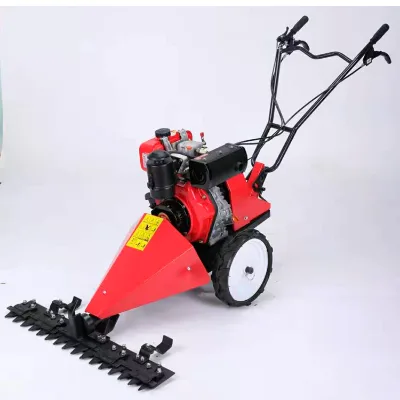
Scythe Lawn Mower Hand Push Gasoline Lawn Mower Scissor-type Grass Pusher
$420.00 - $480.00
MOQ: 1 sets


Professional Hand Push Agricultural Mower Gasoline Scythe Mower (SM03)
$230.00 - $255.00
MOQ: 20 Pieces


Comprehensive Sourcing Guide
Sourcing Guide for European-Style Black Scythes
Understanding Product Definitions and Core Specifications
When sourcing a European-type black scythe, buyers must first distinguish between the specific design characteristics implied by the term "European style" and the actual attributes available in the current market data. The European style typically refers to a long, curved blade designed for sweeping cuts in grass and grain, often paired with a wooden or plastic handle that allows for a standing posture. Based on the observed product data, the blade material is frequently identified as Carbon Steel, which is a critical determinant for edge retention and durability in agricultural applications. The hardness of these blades varies within specific ranges, with observed data indicating values between HRC 38 and 46, and other listings showing a range of 42 to 48 HRC. These numerical ranges suggest that hardness is not a universal constant but a variable dependent on the specific manufacturer and heat treatment process.
The handle material presents a significant variation in the supply base. While traditional European scythes often utilize wood, the available data explicitly lists both Wood and Plastic as handle materials for similar product categories. This divergence requires the buyer to verify the specific material composition for each supplier inquiry. Furthermore, the product models identified in the dataset, such as SI301, SI303, and SI202, indicate that manufacturers produce distinct variations of the tool. The "black" color attribute is a standard observation, with "Black" listed as a regular color option, suggesting that the dark finish is a common aesthetic or protective coating choice for this specific style. The size specifications are equally diverse, ranging from 14 inches to 24 centimeters, and including metric dimensions like 290x290mm or 225x290x1470mm. Buyers must align their procurement needs with these specific dimensional standards, as the term "14 inch" or "24cm" may refer to the blade length, the total length, or the width of the cutting surface depending on the manufacturer's labeling convention.
Compliance, Certification, and Safety Standards
In the B2B procurement of agricultural tools, verifying compliance and certification is essential for mitigating risk and ensuring product quality. The supplied data indicates that certain products in this category carry ISO certification, while others list ISO9001 and SGS certifications. These certifications are vital markers of a supplier's commitment to quality management systems and product safety standards. However, the presence of these certifications in the data does not guarantee that every listed product possesses them; rather, they represent options available within the supply chain. Buyers must explicitly request certification documentation for the specific batch or model they intend to purchase.
The standardization of the product is another critical area of verification. The data references standards such as "SIZE 14 inch," "see picture," and specific model numbers like SI202. This variability suggests that there is no single universal standard governing all "European type black scythes" in the current market. Instead, standards are often tied to the specific model number or the visual representation provided by the supplier. For instance, one listing defines the standard as "24cm," while another refers to a "russian style" with dimensions of 290x290mm. This lack of a unified standard necessitates that buyers treat the "standard" field as a variable to be confirmed rather than a fixed attribute. Additionally, the origin of the products is predominantly listed as China, with specific locations including Hebei, Tangshan, and Xingang, Tianjin. While these locations indicate the manufacturing hubs, they do not inherently confer a specific quality level; the buyer must rely on the supplier's ability to meet the requested ISO or SGS standards regardless of the specific city of origin.
Cost Drivers and Pricing Dynamics
The pricing structure for European-style black scythes is influenced by several key factors, including material composition, customization options, and packaging requirements. The observed price range in the market data spans from $0.35 to $480. This wide disparity indicates that the unit price is highly dependent on the specific configuration of the product. A unit at the lower end of the spectrum likely represents a basic model with standard materials and minimal packaging, whereas a unit at the higher end may include specialized features, premium materials, or bulk packaging solutions.
Material costs are a primary driver of price variation. The choice between Carbon Steel, Railway Steel, and Plastic handles significantly impacts the final cost. Railway steel, often associated with higher durability, may command a premium over standard carbon steel or plastic alternatives. Customization is another major cost factor. The data confirms that customization is available for many products, with options ranging from "Customized" to "Non-Customized." Custom orders typically involve higher per-unit costs due to the setup required for non-standard shapes, colors, or branding. The "Steel Elephant" brand is mentioned in the data, suggesting that branded products may also carry a price premium compared to generic or unbranded items.
Packaging and logistics further influence the total cost. The data lists various packing methods, including "Plywood Case," "Carton," "Pallet," "Bag," and "Box." The quantity per carton varies, with examples such as 120PCS/Carton and 12PCS/PVC Bag. These packaging choices affect the shipping volume and weight, which in turn impact freight costs. Additionally, the Minimum Order Quantity (MOQ) is a significant economic factor. The observed MOQ range is 1 to 4800 pieces, with a specific high-confidence fact noting an MOQ of 1200PCS for certain models. Buyers must consider their inventory capacity and cash flow when selecting a supplier, as ordering below the MOQ may result in higher per-unit costs or be impossible depending on the supplier's policy. The supply ability of 100,000 pieces per month suggests that large-scale buyers can secure consistent supply, but smaller buyers may face constraints or higher prices due to the MOQ requirements.
Typical Applications and Functional Versatility
The functional applications of European-style black scythes are diverse, extending beyond simple lawn maintenance to heavy-duty agricultural tasks. The data explicitly lists applications such as "Farming," "Agricultural," "Gardening," "Snow Shovel," and "Garden Shovel." This indicates that these tools are designed for multi-purpose use, capable of handling tasks ranging from cutting grass and crops to moving snow or soil. The "Multifunctional" attribute reinforces this versatility, suggesting that the design allows for various attachments or usage modes.
The shape of the blade is a critical determinant of its application. The data identifies shapes such as "Square Shovel" and "Sharp Spade," which implies that the "scythe" category may encompass a broader range of digging and cutting tools than the traditional curved blade. For buyers specifically seeking a traditional European scythe for grass cutting, it is essential to verify that the product matches the desired blade curvature and width. The "Unfolded" attribute suggests that some models may be collapsible or foldable, which could be advantageous for storage and transport, although traditional European scythes are often rigid. The weight of the product, observed between 0.8kg and 1.0kg, is another factor influencing its suitability for different applications. A lighter tool may be preferred for extended gardening sessions, while a heavier tool might offer more momentum for cutting dense vegetation or snow.
The attachment status is also relevant. The data notes "Without Attachment" for some models, indicating that the product is sold as a standalone tool. Buyers looking for a complete system may need to inquire separately about compatible handles, snaths, or other accessories. The "Russian style" designation in the data points to a specific regional variation that may have distinct functional characteristics compared to the standard European style. Understanding these nuances is crucial for matching the tool to the specific operational requirements of the buyer's target market.
Supplier Evaluation and Quality Control Protocols
Evaluating suppliers for European-style black scythes requires a rigorous approach to quality control and capability assessment. The data highlights several key attributes that buyers should use as evaluation criteria. The "Hardness" of the blade, ranging from HRC 38 to 48, is a primary quality indicator. Buyers should request hardness test reports to verify that the blades meet the specified range, as this directly affects the tool's ability to hold an edge and resist chipping. The "Material" specification, including Carbon Steel and Railway Steel, should be cross-referenced with the supplier's material certificates to ensure authenticity.
Certification status is another critical evaluation point. While the data lists ISO and SGS certifications, buyers must confirm that these certifications apply to the specific product line they are purchasing. A supplier may hold ISO9001 for their factory but not have specific product testing for the scythes. The "Customization" attribute offers a window into the supplier's flexibility. Suppliers that offer "Customized" options are likely more adaptable to specific buyer requirements, such as branding, packaging, or dimensional adjustments. However, buyers should also be aware that "Non-Customized" options may offer better consistency and lower costs for standard orders.
The supply ability of 100,000 pieces per month suggests that some suppliers have significant production capacity. Buyers should verify this capacity against their own order volumes to ensure the supplier can meet demand without delays. The "Delivery Port" of Xingang, Tianjin, is a standard logistics point for Chinese exports, and buyers should factor this into their shipping and customs planning. Quality control should also extend to the packaging. The variety of packing options, from "Plywood Case" to "Bag," indicates that packaging quality can vary. Buyers should inspect samples to ensure that the packaging protects the blades from damage during transit, especially given the sharp nature of the product.
Long-Term Procurement and Strategic Considerations
For long-term procurement, buyers must consider the scalability and consistency of the supply chain. The wide range of MOQs, from 1 to 4800 pieces, offers flexibility for different stages of business growth. Small buyers can start with low MOQs to test the market, while large buyers can negotiate better terms based on volume. The "Regular Colors" of Black and the availability of "Other Packing" options like Pallets and Cartons suggest that the supply chain is mature enough to support standardized global distribution.
Strategic considerations also include the potential for product evolution. The presence of multiple model numbers (SI301, SI303, SI202) and standards (24cm, 14 inch) indicates that manufacturers are continuously refining their product lines. Buyers should maintain open communication with suppliers to stay informed about new models or improvements in material quality. The "Brand" attribute, such as "Steel Elephant," suggests that branding opportunities exist, which can be leveraged for market differentiation.
Finally, buyers should monitor the "Lead Time" and "Delivery Port" information closely. While specific lead times are not provided in the data, the existence of a specific port (Xingang, Tianjin) allows for accurate logistics planning. Buyers should establish clear expectations regarding delivery schedules and contingency plans for potential delays. By focusing on these long-term factors, buyers can build a resilient supply chain that supports their growth and adapts to changing market demands. The combination of verified certifications, consistent material quality, and flexible production capabilities ensures that European-style black scythes remain a viable and profitable product category for B2B procurement.
FAQs
What blade material is used for European Type Black Scythe?
The blade material is typically Carbon Steel, though some listings specify Railway Steel. Buyers must verify the specific material for each model as variations exist within the supply base.
Which handle materials are available for this scythe type?
Handle materials include Wood and Plastic, depending on the specific manufacturer and model. Traditional designs often use wood, but plastic options are also listed in the current market data.
Can I find suppliers with ISO certification for these tools?
Yes, some suppliers offer ISO or ISO9001 SGS certification for their products. However, buyers must explicitly request certification documentation for the specific batch or model they intend to purchase.
What is the typical hardness range for the scythe blades?
The hardness ranges from HRC 38 to 46 or 42 to 48 HRC depending on the manufacturer. This variation is due to different heat treatment processes used by different suppliers.
How does the MOQ vary for European Type Black Scythe orders?
The Minimum Order Quantity ranges from 1 to 4800 pieces, with some models requiring 1200PCS. Buyers should check specific supplier policies as requirements differ significantly across the supply base.
Which packaging options are available for shipping these scythes?
Packaging options include Carton, Plywood Case, Pallet, Bag, and Box. The quantity per carton varies, such as 120PCS or 12PCS per bag, affecting shipping volume and costs.
What are the common applications for this agricultural tool?
Applications include Farming, Gardening, Snow Shoveling, and general Agricultural tasks. The tool is described as multifunctional, suitable for cutting grass, crops, or moving soil and snow.