Source Evergreen Potted Artificial Olive Tree for Home, Office, and Garden
Compare 30 listings for the Evergreen Potted Artificial Olive Tree available from suppliers in China. Buyers can review sizes ranging from 60cm to 6m, materials like plastic, and customization options for indoor and outdoor decoration.
Key considerations
Products List




Comprehensive Sourcing Guide
Strategic Sourcing Guide for Evergreen Potted Artificial Olive Trees
Understanding Product Variants and Technical Specifications
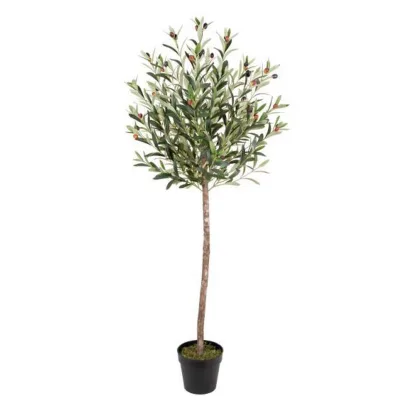
The market for evergreen potted artificial olive trees presents a diverse range of options, primarily distinguished by scale, material composition, and intended display environment. Buyers must first recognize that "Artificial Olive Tree" and "Artificial Potted Plant" are often used interchangeably but may denote different structural configurations. The core product attributes observed in current listings indicate a primary material of plastic, which is engineered to mimic the texture and color of natural olive foliage. The standard color profile is consistently green, designed to provide a vibrant, evergreen aesthetic regardless of seasonal changes.
Technical specifications vary significantly based on the intended application. For indoor residential or office use, the product is frequently described as an "Artificial Olive Tree Plant" with a height standard of 60cm. However, for larger commercial spaces, the specifications expand to include heights of 90cm, 120cm, 160cm, 180cm, and 210cm. A distinct category of large-scale installations exists, featuring trees with a height of 6 meters, a trunk height of 4.5 meters, and a head diameter of 70cm. These larger units are often categorized as "Artificial Banyan Tree" or generic "Artificial Tree" in supplier catalogs, yet they serve the same decorative purpose for high-ceiling environments. The size of 3 meters is also noted as a customizable option, suggesting that buyers can request specific dimensions to fit unique architectural constraints.
The construction process is a critical differentiator. Many suppliers utilize a "Hand-Made" or "Hand-Made" processing method, which implies a higher level of attention to detail in leaf placement and branch shaping compared to fully automated mass production. This manual intervention often results in a more natural appearance, a key factor for buyers seeking to replicate the organic look of a real olive tree. The surface treatment for some models involves printing techniques to enhance the realism of the foliage, while others rely on the inherent texture of the plastic material.
Compliance, Certification, and Safety Standards
When sourcing artificial greenery, particularly for public venues, compliance with safety and quality standards is paramount. While the supplied data does not confirm specific certification statuses for all listed products, buyers should be aware that the industry often references standards such as ISO 27001 for data security in supplier management, though this is not a direct product certification. For the physical product, the primary concern is fire resistance and material safety, especially for trees placed in hotels, shopping malls, and restaurants.
Buyers must verify if the plastic materials used meet local fire safety codes. The provided text mentions a "Life Time" of 5-8 years for indoor use and up to 10 years for certain models, which serves as a proxy for durability but does not replace formal testing. Since the products are intended for "Home, Office, Supermarket," "Hotel, Shop, Restaurant," and "Public" spaces, the material must be non-toxic and stable. The absence of specific certification claims in the general product descriptions means that procurement teams cannot assume compliance based on the listing alone. Instead, buyers should request specific test reports regarding flame retardancy and material composition before finalizing orders for large-scale deployments.
Furthermore, the origin of the products is a significant factor in compliance. The majority of the observed listings indicate an origin of "China," with specific mentions of "Guangdong, China." This geographic concentration suggests a mature supply chain, but it also necessitates rigorous due diligence regarding export regulations and quality control protocols. Buyers should ensure that the supplier adheres to the import regulations of their destination country, particularly concerning the declaration of materials and the labeling of the product.
Cost Drivers and Pricing Dynamics
The pricing for artificial olive trees is influenced by several variable factors, including size, customization, and packaging complexity. The observed price range in the market spans from $4.50 to $980.00 USD. This wide disparity is primarily driven by the scale of the unit. A small 60cm potted plant will naturally fall at the lower end of the spectrum, while a 6-meter tree with a specialized plywood frame and custom trunk construction will command the higher prices.
Customization is a major cost driver. The data indicates that "Customized" options are available, including specific sizes like 3 meters or custom dimensions. However, some listings also specify "Non-Customized" models. The ability to customize the height, trunk thickness, or foliage density typically increases the unit cost due to the additional labor and material handling required. The "Hand-Made" processing method also contributes to higher costs compared to machine-stamped alternatives, as it requires skilled labor.
Packaging requirements significantly impact the final landed cost. Standard models may be packed in simple cartons or boxes, with some listings specifying "Boxed" or "Carton" packaging. In contrast, larger trees require robust protection, such as "2PCS/Bubble Bag with Plywood Frame" or "Plywood Wooden Box." The use of plywood frames and wooden boxes adds substantial weight and volume to the shipment, increasing freight costs. Buyers should factor in these packaging variables when calculating the total cost of ownership, as the shipping cost for a 6-meter tree can exceed the product cost itself.
Typical Applications and Spatial Requirements
The versatility of the artificial olive tree allows it to be deployed across a wide array of environments. The product is explicitly listed as suitable for "Home," "Office," "Supermarket," "Hotel," "Shop," "Restaurant," "Garden," and "Public" spaces. This broad applicability makes it a staple for interior designers and facility managers looking to introduce greenery without the maintenance requirements of live plants.
For residential and office settings, the 60cm to 120cm range is ideal. These sizes fit well in corners, entryways, and reception areas, providing a decorative accent that enhances the ambiance without obstructing foot traffic. The "Indoor 5-8 Years" life expectancy suggests that these units are durable enough for long-term placement in climate-controlled environments. In commercial settings like shopping malls and restaurants, larger trees are preferred. The 1.6-meter to 2.1-meter models serve as focal points in atriums or dining areas, while the 6-meter trees are designed for high-ceiling lobbies or outdoor plazas where they can make a bold visual statement.
The "Display" attribute is consistently noted as "Decoration," reinforcing the primary function of these products. However, the "Advantage" of being "Simple, Stylish, Generous" indicates that the design is intended to blend seamlessly with various interior styles, from modern minimalist to traditional rustic. The "Type" is often listed as "Potted Plant," which implies that the trees come with a base or pot, facilitating easy placement and movement. Buyers should verify the dimensions of the pot or base to ensure it matches the aesthetic and spatial requirements of the intended location.
Supplier Evaluation and Operational Parameters
Selecting the right supplier requires a careful analysis of operational capabilities, including Minimum Order Quantity (MOQ), lead times, and payment terms. The observed MOQ range is broad, spanning from 1 piece to 50 pieces. Some suppliers offer an MOQ of 1 piece, which is advantageous for buyers testing the market or fulfilling small-scale projects. Others may require an MOQ of 4 or 5 pieces, which is common for wholesale transactions. Buyers should align their order volume with the supplier's MOQ to avoid unnecessary costs or order rejections.
Lead times are another critical operational parameter. The data indicates a "Lead Time" of 15-20 days for standard orders, while "Sample Lead Time" can be as short as 7 days. For custom orders, the "Producing Time" is listed as 7-15 days, which may vary depending on the complexity of the customization. Buyers should plan their procurement schedule to account for these production windows, especially for time-sensitive projects like event setups or new store openings.
Payment terms are also a factor in supplier evaluation. The observed payment method includes "Paypal," which offers a level of buyer protection but may not be available for all large transactions. Buyers should confirm the accepted payment methods and negotiate terms that balance risk and cash flow. Additionally, the "Logo Printing" attribute is listed as "Without Logo Printing" in some cases, meaning that branding customization may not be available or may require a separate agreement. Buyers seeking branded products should verify this capability early in the negotiation process.
Quality Control and Long-Term Procurement Considerations
Ensuring consistent quality in artificial olive trees requires a robust quality control (QC) strategy. Since the products are "Hand-Made," there is inherent variability in the final output. Buyers should implement a pre-shipment inspection protocol to verify that the leaf density, color consistency, and structural integrity meet their specifications. The "Life Time" claims of 5-8 years or 10 years should be treated as estimates rather than guarantees. To validate these claims, buyers can request samples to test for color fading, material brittleness, and structural stability over time.
Long-term procurement considerations involve the maintenance and replacement of the trees. While artificial trees require less maintenance than live plants, they are not maintenance-free. Buyers should inquire about the availability of replacement parts, such as individual branches or leaves, in case of damage. The "Packing" specifications, such as "Carton" or "Plywood Wooden Box," also influence the longevity of the product during transit. Ensuring that the packaging is robust enough to prevent damage during shipping is essential for maintaining the product's aesthetic appeal.
Furthermore, buyers should consider the environmental impact of the plastic materials used. While the data does not specify recyclability, the use of plastic raises sustainability concerns. Buyers aiming for green certifications in their facilities should verify if the materials are made from recycled content or are recyclable. The "Origin" of the product, primarily from China, also necessitates a review of the supply chain's environmental practices. By integrating these considerations into the procurement strategy, buyers can ensure that their artificial olive trees not only meet aesthetic and functional requirements but also align with broader corporate sustainability goals.
Comparative Analysis of Product Attributes
To facilitate decision-making, the following table summarizes the key attributes observed across different product listings. This comparison highlights the variability in specifications, packaging, and operational terms that buyers must navigate.
| Attribute Category | Small Scale (Indoor) | Large Scale (Commercial) | Custom/Variable |
|---|---|---|---|
| Product Name | Artificial Olive Tree Plant | Artificial Olive Tree / Banyan Tree | Artificial Olive Tree |
| Standard Height | 60cm, 90cm, 120cm | 160cm, 180cm, 210cm, 6m | 3m or Customized |
| Material | Plastic | Plastic | Plastic |
| Processing | Hand-Made | Hand-Made | Hand-Made |
| Life Time | Indoor 5-8 Years | 10 Years | 5-8 Years |
| Packaging | Carton, Boxed | Plywood Wooden Box, Bubble Bag | Carton, Boxed |
| MOQ | 1-5 PCS | 4-50 PCS | Variable |
| Lead Time | 15-20 Days | 15-20 Days | 7-15 Days (Producing) |
| Suitable For | Home, Office | Hotel, Shop, Restaurant, Public | Home, Garden, Supermarket |
This table underscores the importance of matching the product specification to the specific use case. Small-scale units are ideal for residential or office environments where space is limited, while large-scale units are necessary for commercial lobbies and public spaces. The variability in MOQ and lead time further emphasizes the need for early communication with suppliers to align expectations and ensure timely delivery. By carefully evaluating these attributes, buyers can make informed decisions that optimize both cost and quality in their procurement of evergreen potted artificial olive trees.
FAQs
What is the typical lifespan of indoor artificial olive trees?
Indoor artificial olive trees typically last between 5 to 8 years. Some specific models are designed to endure up to 10 years, depending on the material quality and environmental conditions where they are displayed.
Which sizes are available for artificial olive tree plants?
Standard sizes include 60cm, 90cm, 120cm, 160cm, 180cm, and 210cm. Custom dimensions such as 3 meters or 6 meters with specific trunk heights are also available upon request for large commercial spaces.
Can buyers request customized sizes for these artificial trees?
Yes, customized sizes are available for many models, including specific heights like 3 meters. However, some standard listings offer non-customized options, so buyers must verify customization availability before ordering.
What is the minimum order quantity for purchasing these trees?
The minimum order quantity ranges from 1 piece to 50 pieces depending on the supplier. Some vendors accept orders as low as 1 or 4 pieces, while others may require a minimum of 5 pieces.
How long does it take to produce a standard order?
Standard production lead times are typically 15 to 20 days. Sample lead times can be shorter, often around 7 days, while custom producing times generally range from 7 to 15 days.
Where are these artificial olive trees manufactured?
The majority of these products originate from China, with specific manufacturing hubs located in Guangdong. Buyers should verify the exact origin as it impacts shipping logistics and import compliance requirements.
What packaging methods are used for shipping large trees?
Smaller plants are often packed in cartons or boxes. Larger trees require robust protection using plywood wooden boxes or bubble bags with plywood frames to prevent damage during transit.