Source Extra Long Arm Hex Key for Automotive, Machinery, and Furniture Assembly
Compare 30 listings for Extra Long Arm Hex Key tools featuring carbon steel and chrome vanadium materials. Buyers can evaluate models with lengths up to 12 inches, various handle colors, and anti-explosion features from verified Chinese manufacturers.
Key considerations
Products List


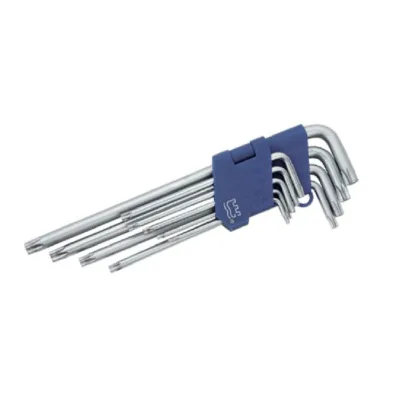


Handle Design Outstanding Performance OEM Accepted Key Security Room Key
$0.09 - $0.11
MOQ: 10000 Pieces
Comprehensive Sourcing Guide
Strategic Sourcing Guide for Extra Long Arm Hex Keys
Understanding Technical Specifications and Material Integrity
When sourcing extra long arm hex keys, buyers must first distinguish between standard tools and specialized variants designed for deep-reach applications. The core keyword "extra long arm" implies a specific dimensional requirement that goes beyond the standard lengths often found in general tool sets. In the current market, specifications for these tools vary significantly based on the intended application. Observed data indicates that length specifications are categorized as "Standard" or "Extra Long," a critical distinction for procurement teams. The "Extra Long" designation is not merely a marketing term but a functional requirement for accessing fasteners in confined spaces or deep bores where standard wrenches cannot reach.
Material composition is the second pillar of technical evaluation. The supply chain for these tools primarily utilizes Carbon Steel and Chrome-vanadium Steel. Carbon steel is frequently cited as a base material for general-purpose tools, offering a balance of cost and durability. However, for heavy-duty industrial applications, Chrome-vanadium Steel is often the preferred specification due to its superior tensile strength and resistance to deformation under high torque. The hardness of the tool is equally critical; verified data points to a hardness range of HRC 45-55. This range ensures the tool can withstand the mechanical stress of tightening and loosening bolts without rounding off the hexagonal tips. Buyers should verify that the specific batch of extra long keys they procure meets this hardness threshold, as softer tools are prone to failure when extended leverage is applied.
Surface treatment plays a vital role in the longevity and usability of these tools. The market offers a variety of finishes, including Chrome, Black, Nickel Coated, and Mirror or Matt finishes. Chrome plating is common for its corrosion resistance and ease of cleaning, while Black finishes often provide a non-reflective surface that reduces glare in low-light environments. Nickel coating is another option that offers enhanced protection against rust. The choice of finish should align with the operating environment of the end-user. For instance, tools intended for marine or outdoor use require robust anti-corrosion treatments, whereas indoor assembly line tools might prioritize a matte finish for better grip.
Compliance, Certification, and Standardization
Navigating the complex landscape of international standards is essential for ensuring that procured hex keys meet regulatory requirements in target markets. The observed product data reveals a diverse array of standards, including Metric, British, German Type, European Type, American Type, and JIS (Japanese Industrial Standards). This variety underscores the necessity for buyers to specify the exact standard required for their application. A tool compliant with the Metric standard will not function correctly on a fastener designed for the American Type, leading to potential equipment damage or safety hazards.
Certification status is another critical factor in the procurement process. Verified listings indicate that suppliers may hold certifications such as GS, CE, CCC, RoHS, and Tuvgs/JIS. These certifications serve as third-party validations of product safety, environmental compliance, and quality management. The GS mark, for example, indicates conformity with German safety standards, while CE denotes compliance with European Union directives. RoHS certification ensures that the product does not contain restricted hazardous substances, which is a mandatory requirement for electronics and automotive applications in many regions. Buyers must explicitly request proof of these certifications rather than relying on general claims, as compliance is not universal across all product lines.
The standardization of the hex key itself is equally important. Data shows that sets often come in specific configurations, such as 9pcs (1.5-10mm) or individual lengths like 6'', 8'', 10'', and 12''. The "Extra Long" variant must be cross-referenced with these standard sets to ensure compatibility. Furthermore, the thread type of the fastener being accessed—whether Full Thread or Half Thread—can influence the choice of hex key, although the key itself is typically a solid tool. Understanding the specific standard (e.g., JIS vs. Metric) is crucial because the dimensions of the hexagon can vary slightly between standards, affecting the fit and torque transfer.
Cost Drivers and Pricing Dynamics
The pricing of extra long arm hex keys is influenced by a complex interplay of factors, including material costs, manufacturing processes, and packaging requirements. The observed price range in the market spans from 0 to 12 USD, a wide spectrum that reflects the diversity in quality, brand, and specification. Lower-priced items often utilize basic carbon steel and standard packaging, while higher-priced options may feature chrome-vanadium steel, specialized surface treatments, and premium packaging like color boxes or blister packs.
Material cost is a primary driver. Chrome-vanadium steel is generally more expensive than standard carbon steel due to the alloying elements and the more rigorous heat-treatment processes required. The hardness range of HRC 45-55 requires precise control during the manufacturing process, adding to the production cost. Additionally, surface treatments such as nickel coating or mirror finishing involve additional steps and materials, which can increase the unit price.
Packaging also significantly impacts the final cost. The market offers various packaging options, including OPP bags, color boxes, plastic holders, blister packs, and cartons. While an OPP bag is cost-effective for bulk distribution, a color box or a sailcloth bag adds value and protection, appealing to retail markets. The choice of packaging should align with the target market's expectations and the logistics requirements of the supply chain. For instance, tools destined for industrial procurement might be shipped in bulk cartons, while retail-ready products require individual blister packs or color boxes.
Minimum Order Quantity (MOQ) is another critical cost factor. The observed MOQ range spans from 1 to 50,000 units, offering flexibility for both small businesses and large corporations. High-volume buyers can negotiate better unit prices by leveraging economies of scale, while smaller buyers may face higher per-unit costs due to lower production runs. Buyers should consider their inventory turnover rates and storage capabilities when determining the optimal order quantity to balance cost efficiency with cash flow management.
Typical Applications and Functional Requirements
Extra long arm hex keys are designed for specific applications where reach and leverage are paramount. The "Extra Long" specification is particularly valuable in industries such as automotive, aerospace, and heavy machinery, where fasteners are often located in deep engine bays, transmission housings, or structural frames. In these environments, standard-length tools are insufficient, and the extended arm allows technicians to apply torque without removing surrounding components.
The functional requirements for these tools extend beyond simple reach. The "Working Mode" is typically manual, requiring the operator to apply physical force. However, the design must account for the increased leverage generated by the longer arm. A tool that is too long without adequate strength can bend or break under high torque. Therefore, the material selection and heat treatment are critical to ensuring the tool can handle the increased mechanical stress. The "Feature" attribute observed in the market includes "Ordinary" and "Anti-Explosion," indicating that some variants are designed for hazardous environments where sparks could ignite flammable gases.
The "Application Age" is listed as "Adult," suggesting that these tools are intended for professional use by trained personnel. The "Handle Color" varies from "Pure" to "Metallic" and "Colorful," which can serve as a visual aid for organizing tools by size or function. In a busy workshop, color-coded handles can improve efficiency and reduce the risk of using the wrong size key. The "Head Type" is also a critical specification, with options including Flat/Plain, Ball, and Torx. While the core keyword focuses on hex keys, the availability of different head types allows for versatility in applications where access angles vary.
Supplier Evaluation and Customization Capabilities
Evaluating suppliers requires a thorough assessment of their manufacturing capabilities, quality control processes, and customization support. The market data indicates that suppliers offer "Customization" support, including OEM (Original Equipment Manufacturer) and ODM (Original Design Manufacturer) services. This flexibility allows buyers to tailor products to their specific branding and technical requirements. For instance, a buyer might request a specific handle color, logo placement, or unique packaging design to align with their corporate identity.
Geographic origin is another factor in supplier evaluation. The observed data points to suppliers located in China, specifically in regions like Zhejiang, Danyang City, and Jiangsu Province. These regions are known for their robust manufacturing infrastructure and expertise in tool production. However, buyers should conduct due diligence to ensure that the supplier maintains consistent quality standards across different batches. The "Standard" attribute, which includes British, European, and American types, suggests that suppliers are capable of producing tools for various international markets, but buyers must verify that the specific supplier can meet the required standards for their target region.
The "Product Name" observed is "Allen Key/Hex Key," which is the industry-standard terminology. Buyers should ensure that the supplier uses consistent terminology in their documentation to avoid confusion. Additionally, the "Folded" attribute is listed as "Unfolded," indicating that these are solid, non-folding tools. This is a critical distinction, as folding hex keys are a different product category with different mechanical properties. Buyers must confirm that the supplier provides the specific type of tool required for their application.
Quality Control and Long-Term Procurement Considerations
Quality control is paramount when sourcing extra long arm hex keys, as the failure of these tools can lead to significant safety risks and equipment damage. Buyers should implement a rigorous quality assurance process that includes material verification, hardness testing, and surface treatment inspection. The observed hardness range of HRC 45-55 should be verified through third-party testing to ensure consistency. Additionally, surface treatments like chrome or nickel coating should be inspected for uniformity and adhesion to prevent premature corrosion.
Long-term procurement considerations involve building a sustainable relationship with suppliers who can consistently deliver high-quality products. This includes establishing clear communication channels, defining quality standards, and setting expectations for lead times and delivery schedules. The "Product Packing" options, ranging from simple OPP bags to complex color boxes, should be standardized to ensure that the tools arrive in optimal condition. Buyers should also consider the environmental impact of their procurement decisions, looking for suppliers who adhere to RoHS and other environmental standards.
The "Feature" attribute, including "Anti-Explosion" and "Anti-Magnetic," highlights the importance of selecting tools that meet specific safety requirements. In industries where magnetic interference or explosion hazards are concerns, buyers must verify that the tools are certified for such environments. The "Application" attribute, listed as "Multifunctions," suggests that these tools are versatile, but buyers should ensure that the specific variant they procure is suitable for their intended use.
Final Procurement Strategy and Verification Checklist
To conclude, sourcing extra long arm hex keys requires a strategic approach that balances technical specifications, compliance, cost, and supplier reliability. Buyers should start by defining their specific requirements, including the standard (Metric, British, etc.), material (Carbon Steel or Chrome-vanadium), and length (Extra Long). They must then verify the supplier's ability to meet these requirements through certifications like GS, CE, and RoHS. Cost drivers such as material, surface treatment, and packaging should be analyzed to optimize the budget without compromising quality.
A comprehensive verification checklist should include:
- Confirmation of the exact standard (e.g., Metric, JIS) and size range (1.5-10mm or specific lengths).
- Verification of material composition and hardness (HRC 45-55).
- Inspection of surface treatment quality and corrosion resistance.
- Validation of certifications (GS, CE, CCC, RoHS, Tuvgs/JIS).
- Assessment of customization capabilities (OEM/ODM) and packaging options.
- Review of supplier location and manufacturing capabilities (e.g., Zhejiang, Jiangsu).
By adhering to these guidelines, buyers can ensure that they procure high-quality extra long arm hex keys that meet their technical and safety requirements, ultimately supporting efficient and safe operations in their respective industries. The diversity of the market offers numerous options, but careful evaluation and verification are essential to select the right product for the specific application.
FAQs
What materials are used for extra long arm hex keys?
These tools are primarily made from Carbon Steel or Chrome-vanadium Steel. Chrome-vanadium offers superior tensile strength for heavy-duty applications, while carbon steel provides a cost-effective balance for general use.
Which certifications are available for these hex key sets?
Verified products often carry GS, CE, CCC, RoHS, and Tuvgs/JIS certifications. These marks validate safety, environmental compliance, and quality management standards required for international markets like the EU and Germany.
How does the hardness of the tool affect performance?
The hardness typically ranges from HRC 45 to 55 to prevent deformation under high torque. This specific range ensures the tool withstands mechanical stress without rounding off the hexagonal tips during use.
Can buyers request custom packaging for these tools?
Yes, suppliers offer customization support including OEM and ODM services for packaging. Options range from simple OPP bags to color boxes, blister packs, and sailcloth bags depending on the target market requirements.
What standard types are available for hex key sets?
Sets comply with Metric, British, German Type, European Type, American Type, and JIS standards. Buyers must specify the exact standard required as dimensions vary between types to ensure proper fit on fasteners.
Where are these tools typically manufactured?
Manufacturing is concentrated in China, specifically in Zhejiang, Danyang City, and Jiangsu Province. These regions provide robust infrastructure for producing tools compliant with various international standards and customization needs.