Source Extreme Soft TPU ETPU Soles for sports, casual, and work footwear
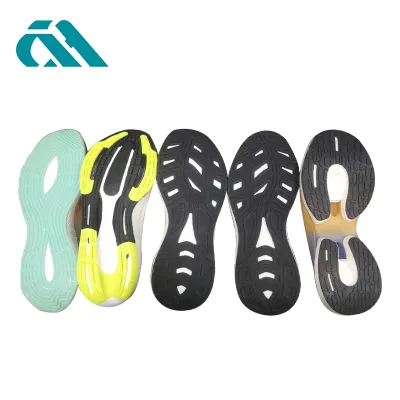
Find 30 listings for Extreme Soft TPU ETPU Soles suitable for various footwear types. Buyers can compare features like elasticity, material composition, and customization options from suppliers in China.
Key considerations
Products List




Comprehensive Sourcing Guide
Strategic Sourcing Guide for Extreme Soft TPU and ETPU Soles
Understanding Material Properties and Performance Characteristics
When sourcing extreme soft TPU (Thermoplastic Polyurethane) and ETPU (Expanded Thermoplastic Polyurethane) soles, buyers must first distinguish between the fundamental material behaviors that define these categories. The supplied product data indicates a strong emphasis on elasticity and softness, with specific observations noting attributes such as "Soft," "Elastic," and "Light." These characteristics are critical for applications requiring high comfort and shock absorption. The material composition is explicitly identified as EVA in some listings, while others highlight "High Quality PU and TPU," suggesting that the market offers a spectrum of formulations ranging from pure TPU to blended or expanded variants.
The "extreme soft" designation implies a specific durometer range that prioritizes flexibility over structural rigidity. In the observed product set, features such as "Comfortable," "Flexible," and "High Intensity" are frequently paired with the material type. This combination suggests that the soles are engineered to withstand dynamic movement while maintaining a plush feel underfoot. The "Size Difference" of 6.67mm observed in specific models provides a tangible metric for the dimensional precision required in these components. Furthermore, the "Thickness" of 2.5cm noted in the data serves as a baseline for bulk and cushioning potential, though buyers should verify if this thickness applies to the midsole or the outsole structure depending on the specific design.
Technical Specifications and Dimensional Standards
Technical due diligence requires a rigorous examination of size compatibility and dimensional tolerances. The product data reveals a wide range of size specifications, with observed ranges spanning from 33 to 45, and specific models listed as 36-44 or 36-45. This variability indicates that suppliers may cater to different regional sizing standards or specific shoe lasts. The "Size Difference" of 6.67mm is a precise observation that buyers should treat as a reference point for mold consistency rather than a universal standard for all TPU/ETPU soles.
The "Type" of product is consistently categorized as "Soles" or "Outsole," with specific models like 23005, 23097, and BT-8810 representing distinct design iterations. Buyers must verify the "Applicable User" demographic, which is listed as "Adults" and "Unisex," though some specific entries target "Female" users. The "Suitable for" category is predominantly "Sports Shoes" and "Sport Shoe," confirming that these materials are optimized for athletic performance rather than casual footwear. The "Season Availability" is noted as "Four Seasons" in some instances, while others specify "Spring/Autumn," suggesting that material formulation may vary based on thermal requirements.
| Specification Category | Observed Data Points | Verification Requirement |
|---|---|---|
| Size Range | 33 | Confirm last compatibility and size increments |
| Thickness | 2.5cm | Verify if this is total sole height or midsole only |
| Material | EVA, PU, TPU, High Quality PU and TPU | Request material composition certificates |
| Elasticity | Soft, Elastic | Conduct compression set testing |
| Abrasion | 300 | Verify test method and cycle count |
Compliance, Certification, and Regulatory Checks
Navigating the regulatory landscape for footwear components requires careful attention to chemical compliance, particularly for materials like TPU and ETPU. While the supplied data does not explicitly confirm certification status for every listing, background knowledge indicates that "REACH" and "RoHS" are relevant standards for European and global markets. Buyers should not assume compliance based on the presence of these keywords in general industry discussions; instead, they must request specific test reports from the supplier.
The "prod_standard" entry of "504032/carton" refers to packaging dimensions rather than product safety standards, yet it highlights the importance of logistical compliance. When evaluating suppliers, buyers must verify that the "High Quality PU and TPU" materials used do not contain restricted substances. The "Logo" customization options, including "Customized Logo by Laser," imply that the surface treatment process must also adhere to environmental regulations regarding solvent use and emissions.
It is crucial to distinguish between product attributes and certified claims. The data mentions "Authorized" logos and "Customized" colors, but these are production capabilities, not regulatory approvals. Buyers should explicitly ask for REACH and RoHS compliance certificates for the specific batch of TPU/ETPU soles being ordered. Without these documents, the risk of non-compliance in target markets remains high. Additionally, the "Quality" attribute of "High Quality" is a subjective claim that must be backed by objective third-party testing results regarding chemical safety and physical durability.
Cost Drivers and Economic Factors
The pricing structure for extreme soft TPU and ETPU soles is influenced by several variables, including material composition, customization complexity, and order volume. The observed price range in the market spans from $0.26 to $10 USD, a significant variance that reflects differences in material density, design intricacy, and brand positioning. The "MOQ" (Minimum Order Quantity) is a primary cost driver, with observed ranges from 10 to 2500 units, and specific listings stating "1000 Pairs" or "500 Pairs/Color."
Buyers should note that "Customization" is available, which typically incurs additional tooling and setup costs. The "Color" options, ranging from "Multiple Colors" to "Single Color" and "Customized," directly impact the production line efficiency. Multi-color runs often require separate molds or complex dyeing processes, increasing the per-unit cost. The "Payment Term" of "T/T" (Telegraphic Transfer) is standard, but buyers should negotiate terms based on order size and supplier relationship.
The "prod_packing" methods, including "Woven Bags," "Cartons," "Export Carton," and "Caron, Plastic Bag, Sack," also affect the final landed cost. Export-grade packaging is more expensive but necessary for international shipping to prevent damage. The "Location" of production, primarily "Zhejiang, China" and "Quanzhou," influences logistics costs and lead times. Buyers should calculate the total cost of ownership, including freight, insurance, and potential tariffs, rather than focusing solely on the unit price.
Supplier Evaluation and Operational Capabilities
Selecting the right supplier requires a holistic assessment of their operational capabilities, particularly regarding OEM and ODM support. The data confirms that "OEM and ODM: Support" and "OEM and ODM: Welcomed" are common attributes, indicating that many manufacturers are equipped to handle custom design requests. The "Logo" capabilities, including laser customization, suggest a level of technical sophistication in surface finishing.
When evaluating suppliers, buyers should verify the "prod_origin" consistency. The data lists both "Zhejiang, China" and "Quanzhou," which are distinct manufacturing hubs. Quanzhou is historically known for footwear production, while Zhejiang is a broader industrial center. Buyers must ensure that the supplier's claimed origin matches their actual factory location to avoid potential quality control issues. The "Season Availability" of "Four Seasons" suggests a robust supply chain capable of year-round production, whereas "Spring/Autumn" limitations might indicate seasonal capacity constraints.
The "Feature" set, including "Light, Comfortable, Flexible, High Intensity, Cold," provides insight into the supplier's product focus. A supplier emphasizing "High Intensity" and "Cold" resistance may be better suited for performance athletic footwear, while those focusing on "Soft and Comfortable" might cater to lifestyle or casual markets. Buyers should request samples that match their specific performance requirements to validate these claims before committing to a large order.
Quality Control and Long-Term Procurement Strategy
Implementing a robust quality control (QC) protocol is essential for maintaining product integrity in the TPU/ETPU sole market. The "Abrasion" value of 300 observed in the data serves as a potential benchmark, but buyers must define the specific test method (e.g., Taber abrasion) and the conditions under which this test was conducted. The "Feature" of "High Intensity" implies that the soles must withstand significant stress without degrading, necessitating rigorous stress testing.
Long-term procurement strategies should focus on building relationships with suppliers who offer consistent "Quality" and "Feature" profiles. The "Type" of sole, whether "Soles" or "Outsole," must align with the buyer's design specifications. The "prod_model" numbers, such as 23086, 23087, and GZM17115, serve as unique identifiers for tracking product consistency across batches. Buyers should establish a protocol for verifying that future orders match the specifications of the initial sample, particularly regarding "Thickness" and "Size."
The "Advantage" of being "Soft and Comfortable" is a key selling point that must be maintained over time. Suppliers should be required to provide batch-specific test reports to ensure that the "Elasticity" and "Softness" do not degrade due to material aging or formulation changes. Additionally, the "prod_packing" consistency is vital for protecting the soles during transit, as damage to the "Woven Bags" or "Cartons" can compromise the product's aesthetic and functional integrity.
In conclusion, sourcing extreme soft TPU and ETPU soles requires a meticulous approach that balances technical specifications, regulatory compliance, and economic factors. By leveraging the observed data points while maintaining a critical eye on unverified claims, buyers can navigate the market effectively. The focus should remain on verifying material properties, ensuring customization capabilities align with brand needs, and establishing a quality control framework that guarantees long-term product performance.
FAQs
What materials are used for Extreme Soft TPU ETPU Soles?
The soles are primarily made from EVA, PU, and TPU materials. Some listings specify high-quality PU and TPU blends to ensure flexibility and durability for athletic applications.
Can buyers request customized colors for these soles?
Yes, customized colors are available for these products. Buyers can choose from multiple colors or single color options depending on the specific manufacturer and order requirements.
Which size ranges are available for adult Extreme Soft TPU ETPU Soles?
Size ranges typically span from 33 to 45 for adult users. Specific models may offer narrower ranges like 36 to 44 or 36 to 45 depending on the design.
How does the MOQ vary for Extreme Soft TPU ETPU Soles?
Minimum Order Quantities vary significantly between suppliers. Some factories require 500 pairs per color, while others set the threshold at 1000 pairs or higher.
What customization options exist for logos on these soles?
Logos can be customized using laser technology or other approved methods. Buyers should verify if the supplier supports OEM and ODM services for specific branding needs.
Where are these soles typically manufactured?
Production is concentrated in Zhejiang and Quanzhou, China. These regions are known hubs for footwear components and offer various sourcing options for international buyers.
What packing methods are used for Extreme Soft TPU ETPU Soles?
Soles are packed in woven bags, cartons, or export cartons. Some suppliers also use plastic bags and sacks to ensure safe transport and protection during shipping.