Source FDA Certified Glass Coffee Cup for Home, Office, and Cafe Use
Compare 30 listings of FDA Certified Glass Coffee Cup options featuring double wall designs, clear glass materials, and various customization services. Buyers can evaluate certifications like LFGB and REACH alongside delivery times and packaging details to find the right supplier for daily use or commercial settings.
Key considerations
Products List


Manufacturers Direct Selling High Quality Glass Tea Cup Custom Glass Cups
$2.00 - $4.00
MOQ: 50 Pieces


Hot Selling Small Capacity Glass Coffee Cup Portable Glass Cup with Handle
$0.15 - $0.20
MOQ: 5000 pieces


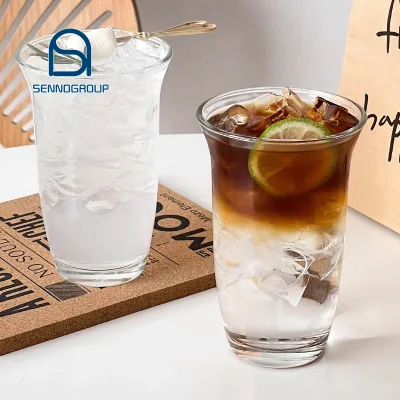


Double Layer 450ml Glass Coffee Cup 250ml 350ml High Borosilicate Glass Cup
$0.55 - $0.93
MOQ: 1000 Pieces


Comprehensive Sourcing Guide
Strategic Sourcing Guide for FDA Certified Glass Coffee Cups
Navigating the global market for FDA certified glass coffee cups requires a disciplined approach that balances aesthetic appeal with rigorous compliance and supply chain reliability. For procurement professionals, the core keyword "FDA Certified Glass Coffee Cup" signals a demand for products that meet specific food safety standards while maintaining the durability and clarity associated with high-quality glassware. The following guide synthesizes available product attributes, certification data, and technical specifications to provide a structured framework for evaluating potential suppliers and securing a supply chain that minimizes risk.
Understanding Material Composition and Glass Types
The foundation of any glass coffee cup sourcing strategy lies in verifying the material composition. The supplied data indicates a prevalence of "High Clear Glass" and "Melt Glass" as primary materials, with specific references to "Double Wall" construction. This distinction is critical for functional performance. Double-wall glassware, often described with the craft attribute of "Handmade/Hand Blown" or "Double Wall Glassware," offers superior thermal insulation compared to single-wall variants. This construction technique is particularly relevant for coffee applications where heat retention and user safety are paramount.
Buyers must scrutinize the specific glass type listed in supplier catalogs. While "Clear Glass" and "Colorless" are common descriptors, the presence of "High White Quality" suggests a specific grade of raw material that impacts opacity and visual purity. When evaluating a product model such as "GB500110380" or "Spbg018," the procurement team should verify if the glass type aligns with the intended application. For instance, "Melt Glass" implies a specific manufacturing process that may differ from standard soda-lime glass in terms of thermal shock resistance. The shape of the cup, whether "Round" or "Cylindrical Shape," also influences the manufacturing tolerances and the final aesthetic. A "Cylindrical Shape" with "Decal DECORATED" techniques requires a different quality control protocol than a plain "Round" cup.
Compliance Verification and Certification Standards
The term "FDA certified" is a primary driver for this category, but it must be understood within the context of international standards. The supplied facts confirm that products often carry a combination of certifications including "FDA," "LFGB," "REACH," "SGS," "RoHS," and "ISO." It is essential to note that while "FDA" is a United States regulatory standard, "LFGB" (German Food and Feed Code) and "REACH" (Registration, Evaluation, Authorisation and Restriction of Chemicals) are European standards that often exceed or complement FDA requirements.
When evaluating a supplier, buyers should not rely solely on the presence of a certificate name but must verify the scope of the certification. The data shows certifications like "FDA, SGS, LFGB" appearing together, suggesting a comprehensive compliance profile. However, the presence of "CE" or "BSCI" is listed in low-confidence background data and should not be treated as a guaranteed attribute without direct verification from the supplier. Procurement teams must request valid, up-to-date test reports that specifically link the product model (e.g., "Glass Coffee Set") to the claimed certification. The "Food" usage attribute explicitly supports the need for FDA compliance, ensuring the glass does not leach harmful substances when in contact with hot beverages.
Technical Specifications and Dimensional Tolerances
Precision in manufacturing is a key differentiator in the glassware industry. The supplied product data provides specific dimensional standards, such as a height of 100mm, a top diameter of 66mm, and a base diameter of 55mm for certain models. These figures serve as a baseline for quality control. However, the "Dimensional Tolerance" is explicitly stated as "<±1mm (Inclusive)," which is a critical metric for buyers. A tolerance of ±1mm indicates a high level of manufacturing precision, ensuring that cups fit securely on saucers or in packaging without excessive gaps.
Weight consistency is equally important. The data notes a "Weight Tolerancerance" of "<±1% (Inclusive)," which suggests strict control over the glass thickness and volume. For a product with a "Gross Weight of a Single Item" of 0.2kg, a 1% variance is negligible but significant for bulk shipping calculations. Buyers should also consider the "Package Size" of 9393145mm, which impacts logistics costs and palletization efficiency. The "Folded" attribute being "Unfolded" confirms that these are rigid, non-collapsible units, requiring robust "Safety Packing" or "Foam Box" solutions to prevent breakage during transit. The "Sets" attribute, ranging from 1-3PCS, indicates that these cups are often sold in coordinated sets, which requires careful attention to the "prod_packing" specifications to ensure all units in a set are identical in size and weight.
Cost Drivers and Minimum Order Quantity Analysis
The economic landscape of sourcing glass coffee cups is heavily influenced by Minimum Order Quantity (MOQ) and production lead times. The observed data reveals a wide range in MOQ, from a low of 500 units to a high of 75,000 units, with a specific product model listing an MOQ of 3,000 PCS. This variance suggests that suppliers cater to different market segments, from small boutique retailers to large-scale distributors. The "Sales Unit" is typically an "Individual Commodity," but the "Sets" attribute implies that bulk orders may be structured around set configurations.
Lead time is another significant cost driver. The "Delivery Time" is cited as 3545 days, which is a standard window for custom glassware production involving "Hand Blown" techniques. This timeline must be factored into inventory planning. Additionally, the "Sample Time" of 35 days allows for rapid prototyping and quality verification before committing to a large order. The "Customization" attribute being "Available" introduces variable costs; custom designs, such as "Decal DECORATED" finishes or specific "prod_model" requests, will likely increase the unit price and extend the lead time beyond the standard 35-day window. Buyers should be prepared for the "Safety Packing or as Per Customer's Requirement" clause, as specialized packaging can add to the overall landed cost.
Supplier Evaluation and Production Capabilities
Evaluating a supplier for glass coffee cups requires a deep dive into their production capabilities and origin. The data indicates that products originate from "Tianjin, China" or generally "China," which is a major hub for glass manufacturing. The "Brand" "Garbo Glassware" is mentioned, but buyers should not limit their search to a single entity. Instead, they should assess the supplier's ability to handle "Double Wall" and "Hand Blown" crafts, as these require specialized labor and equipment.
The "Craft" attribute of "Handmade/Hand Blown" suggests a higher degree of artisanal input, which can lead to slight variations in shape and size that fall within the acceptable tolerance ranges. Suppliers claiming this craft must demonstrate consistent quality control to ensure that the "High White Quality" and "Clear" appearance are maintained across the entire batch. The "Application" of "Daily Use" and "Food" usage implies that the supplier must have a robust quality management system. Buyers should verify if the supplier can accommodate "Various models can be made" requests, indicating flexibility in production lines. The "Gross Weight" and "Package Size" data should be cross-referenced with the supplier's logistics capabilities to ensure they can handle the specific shipping requirements without damage.
Quality Control Protocols and Long-Term Procurement
Implementing a rigorous quality control (QC) protocol is essential for maintaining the integrity of the supply chain. Given the "Dimensional Tolerance" of ±1mm and "Weight Tolerance" of ±1%, QC inspections should focus on these specific metrics. Visual inspections are necessary to verify the "Colorless" and "Clear" attributes, ensuring there are no bubbles, scratches, or discoloration that would violate the "High White Quality" standard. The "Eco-Friendly" feature mentioned in the data should be validated through the supplier's sustainability practices, particularly regarding the "RoHS" and "REACH" compliance which restricts hazardous substances.
For long-term procurement, buyers should establish a relationship with suppliers who offer "Safety Packing" or "Foam Box" solutions that are proven to reduce breakage rates. The "prod_packing" of "Carton and Pallet Package" suggests that the supplier is equipped for large-scale shipping, but the buyer must verify the palletization strategy to maximize container utilization. The "Sample Time" of 3~5 days is a valuable tool for initial QC; buyers should insist on pre-production samples that match the "prod_model" specifications exactly. Furthermore, the "Used for" attributes including "Party, Bar, Pub, Home, Shop" indicate that the product must be versatile enough for various retail environments, requiring a consistent aesthetic and functional quality.
Summary of Key Product Attributes for Verification
To assist in the final selection process, the following table summarizes the critical attributes that must be verified against supplier documentation. This checklist ensures that all technical, compliance, and logistical requirements are met before finalizing a purchase order.
| Attribute Category | Specific Data Points to Verify | Critical Verification Action |
|---|---|---|
| Certification | FDA, LFGB, REACH, SGS, RoHS, ISO | Request valid test reports linked to the specific model number. |
| Material & Craft | High Clear Glass, Double Wall, Hand Blown | Inspect samples for thermal shock resistance and clarity. |
| Dimensions | H: 100mm, T: 66mm, B: 55mm | Measure random samples to confirm ±1mm tolerance. |
| Weight | 0.2kg Single Item, ±1% Tolerance | Weigh a batch to ensure consistency and packaging weight accuracy. |
| Packaging | Foam Box, Carton, Safety Packing | Conduct drop tests to verify protection during transit. |
| MOQ & Lead | 500-75,000 PCS, 35-45 Days Delivery | Confirm capacity to meet volume and timeline requirements. |
| Customization | Decal Decorated, Custom Models | Review design proofs for accuracy before mass production. |
By adhering to these guidelines and leveraging the specific data points provided, procurement professionals can effectively source FDA certified glass coffee cups that meet high standards of safety, quality, and performance. The focus must remain on verifying the concrete attributes listed in the product data rather than relying on general market assumptions, ensuring a supply chain that is both compliant and reliable.
FAQs
What certifications do these glass coffee cups hold?
These cups hold FDA, LFGB, REACH, and SGS certifications. Some models also include RoHS and ISO compliance. Buyers must request valid test reports linked to specific model numbers to verify the scope of each certification for food safety.
How is the dimensional tolerance defined for these cups?
The dimensional tolerance is strictly set at plus or minus 1 millimeter inclusive. This precision ensures cups fit securely on saucers and in packaging. Buyers should measure random samples to confirm this tolerance matches the specified height and diameter standards.
Can I customize the design and packaging for this order?
Customization is available for designs, models, and packaging requirements. Buyers can request specific packing like foam boxes or safety packing. Custom designs such as decal decorations may increase unit prices and extend the standard delivery time beyond the typical window.
What is the minimum order quantity for these glass cups?
The minimum order quantity ranges from 500 to 3000 pieces depending on the supplier and model. Some listings show a specific MOQ of 3000 pieces while others start at 500. Buyers must confirm the exact volume requirement with the specific manufacturer before placing an order.
Which glass types are used for double wall construction?
High clear glass and melt glass are the primary materials used for double wall construction. These materials provide superior thermal insulation compared to single-wall variants. The craft often involves handmade or hand-blown techniques to achieve the required clarity and quality.
How long does delivery take for custom glass coffee cups?
Standard delivery time ranges from 35 to 45 days for production and shipping. Sample time is shorter, typically taking 3 to 5 days for prototyping. Custom designs or specific packaging requests may extend the lead time beyond the standard production window.
What are the weight tolerance limits for single items?
The weight tolerance is limited to plus or minus 1 percent inclusive. For a single item weighing 0.2 kilograms, this ensures consistent glass thickness and volume. Buyers should weigh a batch to ensure consistency and accurate packaging weight calculations for shipping.