Source Figur 8 Armored Cable for Aerial, FTTH, and Communication
Compare 30 listings for Figur 8 Armored Cable designed for aerial, FTTH, and communication applications. Buyers can evaluate models like GYXTC8S with varying core counts, jacket materials, and tensile strength specifications to find suitable options.
Key considerations
Products List


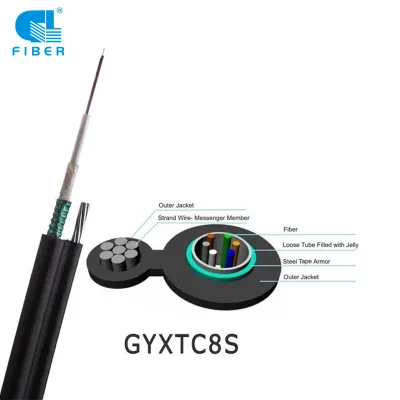
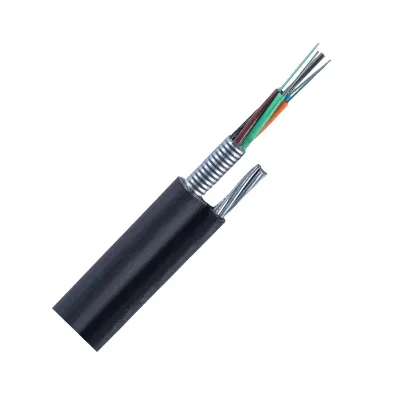
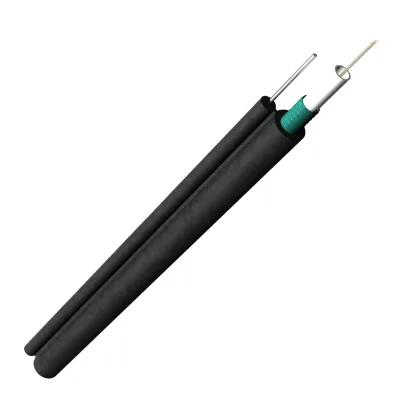

GYTC8S Gyxtc8s Outdoor Armored Self Supported Figure 8 Fiber Optic Cable Fig8
$0.12 - $0.21
MOQ: 1000 Meters


Armored Aerial Indoor Fiber Cable 12 Core GYTC8S Figure-8 Fiber Optic Cable
$0.43 - $0.46
MOQ: 15000 Meters

Self Supporting GYTC8S Figure 8 Armored Loose Tube Stranded Fiber Optic Cable
$0.43 - $0.46
MOQ: 15000 Meters

2-48 Core GYTC8S Figure 8 Steel ArmorSelf Supporting Fiber Optic Cable
$0.43 - $0.46
MOQ: 15000 Meters
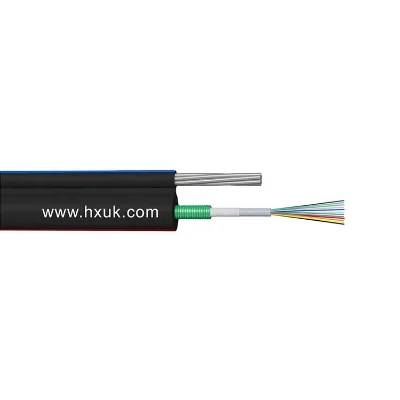


Comprehensive Sourcing Guide
Strategic Sourcing Guide for Figure 8 Armored Fiber Optic Cables
Understanding the Core Architecture and Technical Specifications
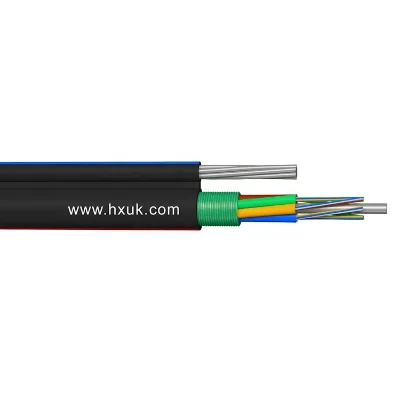
When sourcing Figure 8 armored cables, buyers must first distinguish between the various structural configurations available in the market. The term "Figure 8" refers to the cross-sectional profile where the fiber optic cable is suspended from a messenger wire, resembling the numeral eight. This design is specifically engineered for aerial deployment, allowing the cable to be self-supporting without the need for additional support wires or poles. The primary technical observation for this product category is the "All Dielectric Self-Supporting" (ADSS) nature of many variants, though specific models may incorporate steel messenger wires for enhanced tensile strength.
The internal composition is critical for performance. The core typically utilizes single-mode fiber, adhering to standards such as G652D, G657A1, or G657A2. These fiber types are selected for their ability to minimize signal loss and handle bending radius requirements in outdoor environments. The number of conductors or fiber cores varies significantly based on the specific model, with observed configurations ranging from single-core units to high-density options supporting 12, 24, 48, 96, 144, or even up to 144 cores. The central strength component is frequently composed of Fiber Reinforced Plastic (FRP), which provides necessary rigidity and tensile strength without adding excessive weight.
The outer sheath material plays a pivotal role in environmental resistance. Common observations include Polyethylene (PE) for general protection, with specific variants utilizing MDPE (Medium Density Polyethylene), HDPE (High Density Polyethylene), or LSZH (Low Smoke Zero Halogen) jackets depending on the installation environment. The color of the cable is predominantly black, though customized colors are available upon request. The physical shape of the wire within the cable can be round or flat, influencing how the cable interacts with aerial hardware. For armored variants, the presence of steel armor or steel messenger wires is a key differentiator, providing protection against mechanical damage and rodent attacks in certain applications.
Compliance, Certification, and Regulatory Verification
In the B2B procurement of fiber optic infrastructure, verifying compliance is as critical as evaluating technical specs. Buyers must treat certifications as observations rather than universal guarantees for every listed product. The market frequently lists certifications such as RoHS (Restriction of Hazardous Substances) and CE (Conformité Européenne). While these are standard markers for electronic and optical products, procurement teams must verify that the specific batch or model carries valid documentation, as these certifications are not automatically applied to all SKUs within a supplier's catalog.
Beyond the basic certifications, the structural integrity of the cable is often validated against specific mechanical limits. For Figure 8 cables, the allowed lateral pressure is a crucial metric. Observed data indicates a range where some products withstand less than 100 N/100mm, while others are rated for greater than 1000 N/100mm. Similarly, tensile strength varies, with some models rated between 100N and 1000N, and heavy-duty armored variants capable of withstanding 1000N to 10000N. These numerical ranges are not arbitrary; they dictate the suitability of the cable for specific span lengths and environmental loads.
Standardization is another area requiring careful attention. While ISO 9001 is a common background reference for quality management systems, buyers should not assume a specific manufacturer holds this certification without explicit proof. Instead, the focus should be on the product-specific standards. For instance, length specifications are often standardized to 2km, 3km, 4km, or 5km per drum, with some models offering customized lengths. The connection structure is typically observed as SC (Subscriber Connector), but this must be confirmed against the specific termination requirements of the network design. Buyers should request test reports that explicitly confirm the lateral pressure and tensile strength values for the specific order, rather than relying on general catalog claims.
Cost Drivers and Pricing Dynamics
The pricing structure for Figure 8 armored cables is influenced by a complex interplay of material costs, fiber count, and manufacturing complexity. The observed price range in the market spans from $0.01 to $300 per unit, though this wide variance often reflects differences in unit definitions (e.g., price per meter vs. price per drum) and the specific configuration of the cable. A single-core, short-length cable will naturally be priced lower than a 144-core, 5km armored drum.
Material costs are a primary driver. The inclusion of steel armor or a robust steel messenger wire significantly increases the weight and material expense compared to all-dielectric variants. Similarly, the choice of jacket material impacts cost; LSZH jackets are generally more expensive than standard PE or MDPE due to the specialized polymers required to meet fire safety standards. The fiber type also plays a role; G657A1 and G657A2 fibers, which offer superior bend resistance, may command a premium over standard G652D fibers.
Minimum Order Quantity (MOQ) is another critical factor affecting the effective unit cost. The market shows an MOQ range from 1 unit to 15,000 units, with specific length-based MOQs often set at 1km. Buyers purchasing smaller quantities may face higher per-unit costs due to the fixed costs of production setup and drum packaging. Conversely, bulk orders of 1km or more can leverage economies of scale. The packaging method, such as wooden drums or plywood reels, also adds to the total cost, particularly for international shipments where heavy wooden packaging incurs higher freight charges. Buyers should negotiate based on the total landed cost, considering that customized packaging or non-standard lengths may incur additional fees.
Typical Applications and Deployment Scenarios
Figure 8 armored cables are predominantly designed for aerial deployment in telecommunications and utility networks. The "Aerial Fiber Optic Cable" designation highlights their primary use case: hanging cables from utility poles or self-supporting spans between structures. This makes them ideal for Fiber to the Home (FTTH) deployments where underground conduit is unavailable or cost-prohibitive. The self-supporting nature of the Figure 8 design eliminates the need for separate messenger wires, simplifying the installation process and reducing labor costs.
The specific application dictates the required mechanical properties. In urban environments with high traffic or potential for mechanical impact, the armored variant with steel reinforcement is preferred. The steel armor provides protection against accidental damage from falling branches, construction activities, or rodent interference. In contrast, in rural or controlled environments where mechanical stress is lower, the all-dielectric self-supporting (ADSS) version may be sufficient, offering a lighter and more flexible solution.
Operating temperature ranges are another consideration for application suitability. The observed operating temperature for these cables is typically between -10°C and +70°C. This range covers most temperate climates but may require special consideration for extreme cold or hot environments. The cable's condition is listed as "New," ensuring that the material properties are intact for immediate deployment. The connection structure, often SC, suggests compatibility with standard patch panels and distribution frames used in FTTH and local area network (LAN) extensions. Whether the application requires 12 cores for a small business or 144 cores for a major backbone link, the Figure 8 design offers a versatile platform for various network densities.
Supplier Evaluation and Sourcing Criteria
When evaluating potential suppliers for Figure 8 armored cables, buyers must look beyond the basic product listing. The origin of the product is a significant factor; observed data indicates manufacturing locations in Guangdong and Jiangsu, China. While these regions are known for robust manufacturing capabilities, buyers should verify the specific factory's capacity and quality control processes. The brand is frequently listed as "OEM," indicating that the supplier may manufacture for other brands or offer white-label solutions. This can be advantageous for buyers seeking custom branding but requires due diligence to ensure the underlying product quality meets specifications.
Customization is a key differentiator in the market. Many suppliers offer "Available" customization options for the cable length, color, and packaging. For instance, while standard lengths are 2km to 5km per drum, some suppliers can provide customized lengths. The packaging is typically a wooden drum or plywood reel, but customized packaging options exist. Buyers should assess the supplier's ability to meet these customization requests without compromising the cable's integrity.
The warranty period is another critical evaluation metric. A standard warranty time of 1 year is observed in the market. Buyers should inquire about extended warranty options or specific guarantees regarding the cable's performance under stress. The condition of the product is listed as "New," but buyers should request proof of storage conditions to ensure the cable has not been exposed to environmental degradation prior to shipment. Additionally, the supplier's ability to provide detailed technical documentation, including test results for tensile strength and lateral pressure, is essential for validating the product's suitability for the intended application.
Quality Control and Long-Term Procurement Considerations
Ensuring the long-term reliability of Figure 8 armored cables requires a rigorous quality control (QC) framework. Buyers should not rely solely on the supplier's claims but must implement a verification process that includes checking the physical attributes of the cable. The material shape, whether round or flat wire, should be consistent with the design specifications. The sheath material, typically PE, MDPE, or HDPE, must be free from defects such as cracks, bubbles, or uneven thickness.
For armored cables, the integrity of the steel messenger or armor is paramount. Buyers should verify the corrosion resistance of the steel components, especially for installations in coastal or humid environments. The central strength component, usually FRP, must be properly bonded to the fiber core to prevent signal attenuation due to micro-bending. The fiber count, ranging from 2 to 144 cores, must be accurately counted and tested for continuity and loss.
Long-term procurement considerations also involve the supply chain stability. The lead time and production capacity of the supplier are critical for large-scale projects. While specific lead times are not provided in the observed data, buyers should establish clear timelines for production and delivery. The packaging, whether wooden drums or plywood reels, must be robust enough to protect the cable during transit. The "New" condition of the product should be maintained through proper storage and handling protocols.
Finally, buyers should consider the lifecycle of the cable. The operating temperature range of -10°C to +70°C is suitable for most applications, but extreme conditions may require additional protective measures. The warranty time of 1 year is a baseline; buyers should negotiate terms that cover potential defects in materials or workmanship. By focusing on these quality control aspects and long-term considerations, buyers can ensure that their investment in Figure 8 armored cables delivers reliable performance over the intended service life.
Comparison of Key Product Attributes
To facilitate a clearer understanding of the variations available in the market, the following table summarizes the key attributes observed in Figure 8 armored cables. This comparison highlights the diversity in specifications and helps buyers identify the right product for their specific needs.
| Attribute | Standard Observation | High-Performance/Armored Observation |
|---|---|---|
| Fiber Type | G652D, G657A1 | G657A2 (Bend-Insensitive) |
| Fiber Count | 1 Core, 2-12 Cores | 12, 24, 48, 96, 144 Cores |
| Tensile Strength | 100N < 1000N | 1000N < 10000N |
| Lateral Pressure | < 100 N/100mm | > 1000 N/100mm |
| Jacket Material | PE, MDPE | HDPE, LSZH |
| Messenger Wire | Single Steel | Stranding Steels |
| Length per Drum | 2km - 5km | Customized Length |
| Packaging | Wooden Drum, Plywood Reel | Plywood Reel, Customized |
| Origin | Guangdong, Jiangsu, China | China (General) |
| Warranty | 1 Year | 1 Year (Negotiable) |
This table underscores the importance of selecting the correct specification based on the mechanical and environmental demands of the project. Buyers should use these attributes as a checklist during the sourcing process to ensure alignment with their technical requirements.
FAQs
What fiber types are used in Figure 8 armored cables?
These cables typically use G652D, G657A1, or G657A2 single-mode fibers. The specific fiber count ranges from 1 core up to 144 cores depending on the model selected for your network requirements.
Can I customize the length and packaging of the cable?
Yes, customization is available for length and packaging options. Standard drums hold 2km to 5km of cable, but suppliers offer customized lengths and packaging like plywood reels or wooden drums upon request.
Which certifications are commonly listed for these cables?
Common certifications observed include RoHS and CE compliance. Buyers should verify that specific batches carry valid documentation for these standards rather than assuming universal application across all catalog SKUs.
How does the tensile strength vary across different models?
Tensile strength varies significantly, with some models rated between 100N and 1000N while heavy-duty armored variants withstand 1000N to 10000N. This metric dictates suitability for specific span lengths and environmental loads.
What is the typical operating temperature range for this cable?
The operating temperature range is typically between -10°C and +70°C. This range covers most temperate climates but may require special consideration for extreme cold or hot environments during deployment.
Which materials are used for the cable jacket and sheath?
Jacket materials include MDPE, HDPE, or LSZH, while the sheath material is often PE. The choice depends on the installation environment, with LSZH offering superior fire safety standards compared to standard PE.
What is the minimum order quantity for purchasing this cable?
The minimum order quantity is typically 1km per drum. However, the market shows an MOQ range from 1 unit to 15,000 units depending on the specific configuration and supplier policies.