Source Fishnet Pantyhose for fashion, dance, and costume needs
Compare 30 Fishnet Pantyhose options from suppliers in China, Fujian, and Yiwu. Buyers can review models like 2057 and H3618, noting variations in material, packing, and customization services for adult fashion and dance applications.
Key considerations
Products List


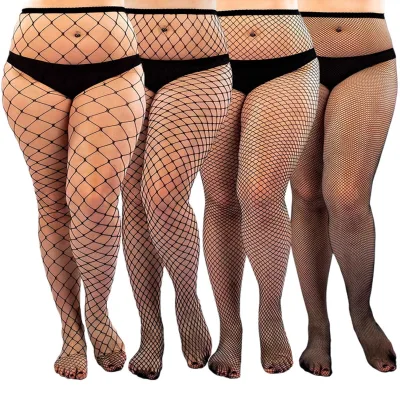
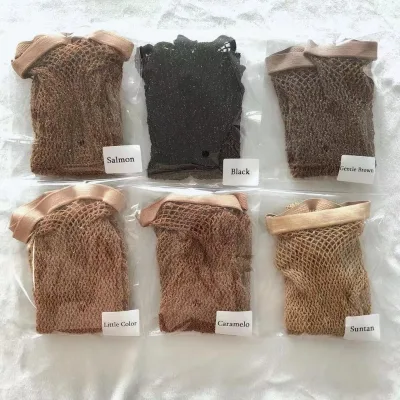
Comprehensive Sourcing Guide
Strategic Sourcing Guide for Fishnet Pantyhose Procurement
Navigating the global market for Fishnet Pantyhose requires a nuanced understanding of product variations, material compositions, and supply chain logistics. For B2B buyers, the distinction between generic hosiery and specialized fishnet styles is critical, as the latter involves specific knitting technologies and design aesthetics that impact both cost and end-user experience. This guide synthesizes available product data and industry standards to provide a framework for evaluating suppliers and defining procurement requirements without relying on unverified claims or specific vendor recommendations.
Technical Specifications and Product Attributes
The foundation of any successful procurement strategy lies in precise technical specification. When sourcing Fishnet Pantyhose, buyers must distinguish between various product models and their corresponding physical attributes. The market offers a diverse range of styles, including stockings, tights, and pantyhose, each serving different functional and aesthetic purposes. For instance, specific product models such as 2057, H3618, and H3577 represent distinct iterations within the category, often differentiated by their intended fit and structural integrity.
Material composition is a primary determinant of quality and performance. High-confidence data indicates that a common formulation for these products involves a blend of 85% Nylon and 15% Spandex. This ratio is crucial as it balances the durability required for the open-knit fishnet structure with the elasticity needed for a comfortable fit. Buyers should verify that the supplier can consistently maintain this percentage, as deviations can lead to issues with sagging or tearing. Additionally, the presence of lace elements in certain models, such as those designated with specific codes like Body Stockings-038U, introduces a layer of complexity regarding pattern alignment and texture consistency.
Pattern technology also plays a significant role. The use of Jacquard technology is noted in specific product lines, suggesting a capability for intricate, woven designs rather than simple cut-outs. This distinction is vital for buyers targeting premium segments where visual detail is paramount. Furthermore, the physical dimensions of the product must be carefully considered. Data points indicate a range of height profiles, including "Middle," "Tall," and "All" sizes, alongside specific weight variations such as 15g for certain units. These metrics influence packaging efficiency and shipping costs, making them essential parameters for logistics planning.
Compliance, Certification, and Safety Standards
In the realm of textile procurement, compliance is not merely a regulatory hurdle but a marker of product reliability. While specific certification names are not universally standardized across all listed models, buyers must rigorously verify that suppliers adhere to relevant safety and quality standards. The provided data highlights a standard weight of 0.12Kg for some models and 0.09Kg for others, which serves as a proxy for material density and potential durability. However, weight alone does not guarantee safety; buyers should request documentation regarding chemical compliance, particularly concerning azo dyes and formaldehyde levels, which are common concerns in hosiery manufacturing.
Size standardization is another area requiring strict verification. The market data references specific sizing ranges, including XS-M, L-2XL, and 3XL-5XL, alongside a "Free Size" option. This variability suggests that a single supplier may not cover the entire spectrum of consumer needs. Procurement teams must ensure that the supplier's quality control protocols verify that the "Free Size" option maintains structural integrity across the intended weight range of the end-user. Additionally, features such as "Anti-Bacterial" properties are listed for certain products. Buyers should demand third-party test reports to substantiate these claims, as such assertions often require specific chemical treatments or fiber blends that must be validated against international safety norms.
Cost Drivers and Pricing Dynamics
Understanding the cost structure of Fishnet Pantyhose is essential for maintaining healthy profit margins. The observed price range in the market spans from $0.41 to $20.00 USD, a significant variance that reflects differences in material quality, design complexity, and order volume. The lower end of this spectrum likely corresponds to basic models with standard packaging and minimal customization, while the higher end encompasses premium designs featuring lace, advanced Jacquard patterns, or specialized packaging like color boxes.
Order volume is a primary driver of unit cost. The Minimum Order Quantity (MOQ) ranges from 2 to 3000 units, indicating a highly flexible supply chain that can accommodate both small-batch testing and large-scale distribution. Buyers should note that suppliers accepting OEM (Original Equipment Manufacturer) and ODM (Original Design Manufacturer) services may have different pricing tiers based on the level of customization required. Customization, whether in the form of unique patterns, specific colorways like black, or tailored packaging, invariably increases the unit cost. Furthermore, the origin of the product influences pricing; while many items originate from Fujian and Yiwu in China, the specific logistics and labor costs associated with these regions contribute to the final landed cost.
Typical Applications and Market Segmentation
Fishnet Pantyhose serve a wide array of applications, ranging from everyday fashion to specialized performance wear. The data indicates that these products are designed for adults and are suitable for various seasons, including Summer, Spring, and Autumn. This seasonal versatility suggests that the material blend must offer breathability for warmer months while providing sufficient coverage for cooler weather. The "High Elasticity" attribute noted in the specifications is particularly relevant for applications requiring movement, such as dance, fitness, or active wear, where the garment must stretch and recover without losing its shape.
The "Unisex" designation expands the potential market beyond traditional gender-specific categories, opening opportunities for inclusive fashion lines and performance apparel. Specific models, such as those with a "Body Stockings" classification, are often utilized in costume design, theatrical performances, or high-fashion contexts where full-body coverage and aesthetic appeal are prioritized. The "Fishnet" pattern itself is a versatile design element that can be adapted for streetwear, clubwear, or avant-garde fashion. Buyers should align their procurement strategy with the specific end-use case, ensuring that the selected product model matches the durability and aesthetic requirements of the target application.
Supplier Evaluation and Operational Capabilities
Evaluating potential suppliers requires a holistic view of their operational capabilities, particularly regarding customization and logistics. The availability of ODM and OEM services is a critical indicator of a supplier's flexibility. Suppliers who accept these services can adapt their production lines to meet specific buyer requirements, from modifying the standard 85% Nylon/15% Spandex blend to incorporating unique patterns or colors. The "Customization" standard listed for certain models further underscores the importance of verifying a supplier's ability to handle bespoke orders without compromising quality.
Logistical support is another key evaluation criterion. The data confirms that dropshipping is available for many products, a feature that is increasingly valuable for e-commerce businesses looking to minimize inventory risk. However, buyers must assess the reliability of the dropshipping partner, including their ability to handle the "PE Bag," "Box," "Carton," or "Colour Box" packaging options efficiently. The origin locations, specifically Fujian and Yiwu, are known manufacturing hubs, but buyers should verify the specific factory capabilities and lead times associated with these regions. A supplier's ability to manage the "High Elasticity" of the product during shipping and storage is also crucial to prevent damage or deformation before the product reaches the end consumer.
Quality Control and Long-Term Procurement Strategy
Implementing a robust quality control (QC) protocol is essential for mitigating risks in the Fishnet Pantyhose market. Given the open-knit nature of fishnet designs, the risk of snagging or uneven mesh size is higher than in solid hosiery. Buyers should establish clear acceptance criteria for mesh uniformity, seam strength, and elasticity recovery. The variation in product weights, such as 15g for specific units, should be monitored to ensure consistency across batches. Any deviation from the specified weight could indicate a change in material density or production error.
For long-term procurement, building a relationship with suppliers who offer consistent quality and reliable lead times is paramount. The wide range of MOQs (2 to 3000) allows buyers to start with small orders to test quality and scale up as demand grows. However, buyers should be wary of suppliers who cannot consistently meet the "Free Size" or specific size range requirements (XS-M, L-2XL, 3XL-5XL). Establishing a clear communication channel for feedback on product performance, particularly regarding the "Anti-Bacterial" claims and "Lace" durability, will help refine the product selection over time. Ultimately, a successful sourcing strategy for Fishnet Pantyhose depends on balancing technical precision, cost efficiency, and the ability to adapt to evolving market trends through flexible supplier partnerships.
Comparative Analysis of Product Models
To facilitate decision-making, buyers can utilize the following comparison of key attributes observed across different product models. This table highlights the diversity in specifications and helps identify the most suitable options for specific procurement needs.
| Attribute | Model 2057 | Model H3618 | Model H3577 | Model DH9020 | Model Body Stockings-038U |
|---|---|---|---|---|---|
| Style | Stockings | Tights/Pantyhose | Tights/Pantyhose | Tights/Pantyhose | Body Stockings |
| Height | Middle | Tall | All | All | All |
| Packing | Box | PE Bag | Carton | Colour Box | OPP Bag |
| Standard Weight | 0.12Kg | 0.09Kg | - | - | - |
| Size Range | - | - | XS-M, L-2XL, 3XL-5XL | Free Size | - |
| Material | - | - | - | 85% Nylon, 15% Spandex | Lace |
| Origin | Fujian China | China | China | Yiwu | China |
| Customization | ODM/OEM | - | Customization | - | Customized |
This comparative view underscores the importance of matching specific product attributes to buyer requirements. For instance, a buyer seeking a lightweight, bulk-friendly option might prioritize the H3618 model with its PE Bag packaging and lower weight, while a buyer focusing on premium aesthetics might select the Body Stockings-038U for its lace composition and specialized packaging. By systematically evaluating these factors, procurement teams can optimize their sourcing strategies to ensure product quality, cost-effectiveness, and market alignment.
FAQs
What materials are used for Fishnet Pantyhose?
Common formulations include a blend of 85% Nylon and 15% Spandex to balance durability with elasticity. Some models also incorporate Lace elements for specific aesthetic designs, ensuring the open-knit structure remains intact during wear.
Which packaging options are available for bulk orders?
Suppliers offer various packaging types including Box, PE Bag, Carton, Colour Box, and OPP Bag depending on the product model. Buyers should verify the specific packing method for each item to ensure it meets their logistical and retail requirements.
Can suppliers accept custom designs for Fishnet Pantyhose?
Yes, many suppliers accept ODM and OEM services with customization available for patterns, colors, and packaging. Buyers can request specific modifications, though this may affect the unit cost and minimum order quantity requirements.
What is the typical price range for Fishnet Pantyhose?
The observed price range spans from 0.41 to 20 USD per unit, varying by material quality and design complexity. Lower prices often correspond to basic models with standard packaging, while higher prices reflect premium features like lace or specialized patterns.
How does the minimum order quantity affect sourcing?
The minimum order quantity ranges from 2 to 3000 units, offering flexibility for both small testing batches and large distribution runs. Buyers should consider their volume needs when selecting a supplier to optimize unit costs and inventory management.
Where are these products typically manufactured?
Products originate from manufacturing hubs in China, specifically Fujian and Yiwu regions. These locations are known for textile production, but buyers should verify specific factory capabilities and lead times associated with these origins.
What size options are available for Fishnet Pantyhose?
Size ranges include specific categories like XS-M, L-2XL, and 3XL-5XL, alongside a Free Size option. Buyers must ensure the supplier's quality control verifies structural integrity across the intended weight range for the Free Size variants.