Source Fishing Rod Bag for Fishing Reel, Multi-Use, and Outdoor Gear
Find 30 verified options for a Fishing Rod Bag designed for multi-use applications including fishing reel storage and outdoor gear protection. Compare specifications like waterproof ratings, capacity, and material across suppliers in China to find the right fit for your needs.
Key considerations
Products List


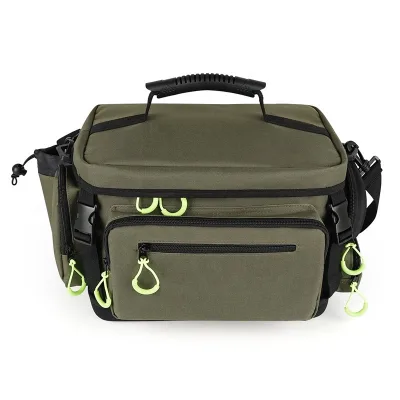


Fishing Tool Backpack Strap Rod Holder Waterproof Fishing Bag Large Storage Bag
$9.90 - $12.90
MOQ: 500 Pieces


Multi-Functional Fishing Bag with Pockets Fishing Rod with Reel Tackle Organizer Bag
$5.50 - $7.50
MOQ: 1000 Pieces


Fishing Tackle Bag with Rod Holder, Tackle Box Storage Backpack Fishing Gear
$5.00 - $10.00
MOQ: 500 Pieces

Fishing Gear Tackle Bag Lightweight Sling Tackle Storage Rod Holder Fishing Bag
$11.20 - $14.50
MOQ: 500 Pieces


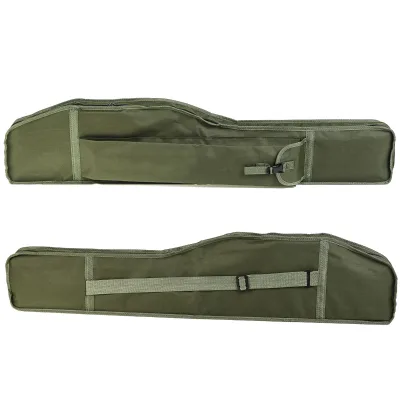
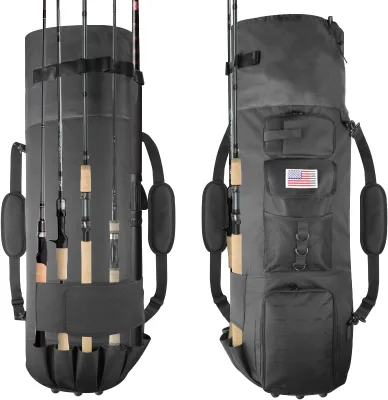
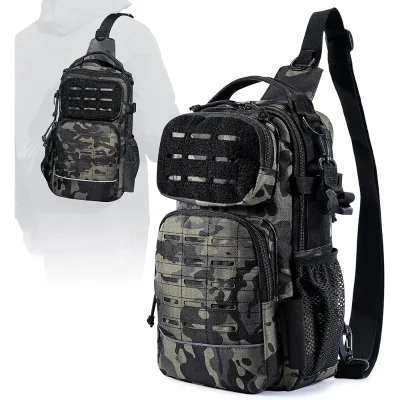
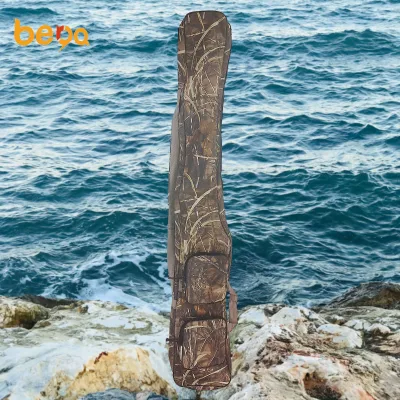

Comprehensive Sourcing Guide
Strategic Sourcing Guide for Fishing Rod Bags
Understanding Product Specifications and Functional Design
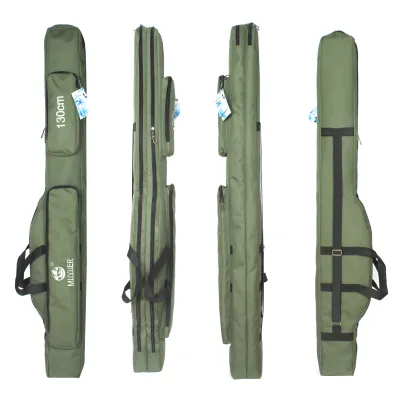
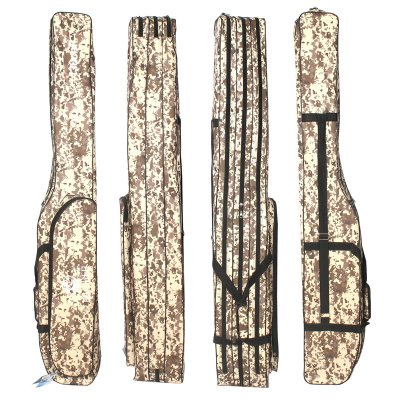
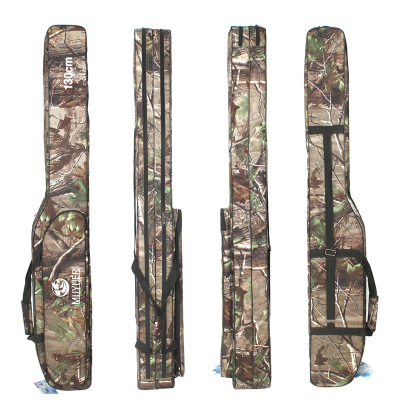
When sourcing fishing rod bags, buyers must first distinguish between the specific functional requirements of the product and the general attributes observed in the market. The core keyword "Fishing Rod Bag" encompasses a diverse range of items, from specialized single-rod holders to multi-use gear carriers. Based on observed product data, the functional design varies significantly. Some units are explicitly categorized as "Fishing Rod Bag" models with specific model numbers like "Fishing Rod Bag-032J" or "Fishing Rod Bag-017H," indicating a dedicated purpose for rod protection. Others are classified under broader categories such as "Duffel Bag" or "Multi-Use" bags that include "Fishing Reel" and "Fishing Rod" in their usage specifications.
A critical technical specification to verify is the presence or absence of a stand. The market data presents a clear bifurcation in this attribute. Certain models are listed with "Stand: Without Stand," suggesting a compact, rollable, or soft-case design intended for storage in tight spaces or transport in a vehicle trunk. Conversely, other listings explicitly state "Stand: With Stand," which implies a rigid or semi-rigid structure designed to hold the bag upright, potentially offering better organization or easier access to gear on a boat or dock. Buyers must align this specification with their logistical needs; a "Without Stand" bag may be preferred for backpacking or travel, while a "With Stand" configuration might be essential for stationary use at a fishing spot.
Material composition is another fundamental technical factor. The observed data frequently cites "300D polyester" and general "Polyester" as the primary material. This fabric choice is standard for outdoor gear due to its balance of durability, weight, and cost. The "Three-layer" construction mentioned in specific listings suggests a reinforced design intended to withstand abrasion from rough surfaces and the weight of heavy equipment. Furthermore, the attribute "Waterproof" is a recurring claim, supported by a specific "waterproof_standard: Yes" notation in some entries. However, buyers should not assume all polyester bags are fully waterproof without verification. The distinction between water-resistant and fully waterproof is critical, especially for gear that may be submerged or exposed to heavy rain.
Compliance, Certification, and Standard Verification
In the B2B procurement of fishing gear, compliance and standard verification are paramount to ensuring product safety and marketability. The supplied data indicates that many products adhere to "customized" standards, denoted as "prod_standard: customized." This implies that the manufacturing process is flexible, allowing buyers to define their own specifications regarding dimensions, materials, and features. However, "customized" does not equate to a lack of standards; rather, it suggests that the standard is defined by the buyer's requirements rather than a universal industry norm.
Buyers must verify specific dimensional standards, as the data shows a wide range of sizes. For instance, specific models list dimensions such as "12.68 x 9.02 x 5 inches," "10.629.063.94 inches," and "5.1 x 8.2 x 14.5 inches," with a note that these are often "customizable." This variability highlights the importance of defining precise capacity requirements. The observed capacity range spans from "10L" to "50L," covering everything from small tackle bags to large duffel-style carriers. A buyer sourcing for a specific client must ensure the selected model meets the exact volume requirements for their target market, as a bag that is too small will fail in utility, while one that is too large may be inefficient for transport.
Regarding certifications, the provided text does not list specific third-party certifications like ISO or CE. Instead, it mentions "prod_standard: customized" and "waterproof_standard: Yes." This absence of explicit certification data in the source material means that buyers cannot assume a product is certified unless the supplier provides documentation. The "advantage: 15 Years Bag Experience" suggests a manufacturer with a long track record, which is a qualitative indicator of reliability but not a formal certification. Buyers should request proof of material testing, particularly for the "waterproof" claim, to ensure the product meets the advertised performance levels. Without explicit certification data, the procurement strategy must rely on rigorous pre-shipment inspections and sample testing to validate the "waterproof" and "Three-layer" claims.
Cost Drivers and Pricing Dynamics
The pricing structure for fishing rod bags is influenced by several key variables, including material quality, customization level, and order volume. The observed listed price range in the market data spans from $1.05 to $29.90 USD. This wide disparity indicates that the cost is not fixed but is highly dependent on the specific configuration of the bag. Lower-priced items likely correspond to basic "Polyester" models with minimal features, while the higher end of the range likely reflects bags with advanced features such as "With Stand," specialized "Three-layer" construction, or custom branding.
Material costs are a primary driver. The use of "300D polyester" is a standard cost factor, but upgrades to heavier denier fabrics or the inclusion of specialized waterproof linings will increase the unit price. The "Customization" attribute is another significant cost driver. The data confirms that "Customization: Available" and "Logo: Acceptable," meaning buyers can add branding, which typically incurs additional setup and per-unit costs. Furthermore, the "prod_standard: customized" attribute suggests that unique dimensions or structural changes will impact the final price.
Order volume plays a crucial role in the final cost per unit. The observed Minimum Order Quantity (MOQ) ranges from 2 to 1000 pieces. A specific listing mentions an "MOQ: 1000PCS," which is typical for highly customized orders or bulk manufacturing runs. Conversely, lower MOQs allow for smaller trial orders but often come with a higher per-unit price. Buyers must balance their budget constraints with their inventory needs. The "Payment: L/C, T/T" terms indicate standard international trade practices, where the payment method can also influence the negotiated price, particularly for large orders where financial security is a priority for the supplier.
Typical Applications and Usage Scenarios
The versatility of fishing rod bags is evident in the diverse usage attributes observed. The data lists "Multi-Use," "Fishing Rod," and "Fishing Reel" as primary usage categories. This suggests that these bags are designed not only for transporting rods but also for holding reels, tackle boxes, and other fishing accessories. The "Group: Adult" attribute confirms that the target demographic is adult anglers, who typically require larger capacity and more durable gear.
Specific applications can be inferred from the product models and features. The "Fishing Rod Bag-032J" and "Fishing Rod Bag-017H" are likely designed for specialized rod protection, perhaps for travel or storage where rod damage is a concern. The "The Black Fitness Duffel Bag" listing, while seemingly unrelated to fishing, shares the "Multi-Use" and "Duffel Bag" attributes, suggesting that the same manufacturing lines can produce bags for fitness and fishing, offering buyers the flexibility to source multi-purpose gear.
The "Location: River" attribute in the data points to a specific environmental application. Bags designed for river fishing may require enhanced waterproofing and resistance to splashing or submersion. The "Waterproof" attribute is therefore critical for this application. Additionally, the "Three-layer" construction suggests a need for durability against the rough surfaces often found near riverbanks or boat decks. Buyers should consider the specific environment where their customers will use the bags. A bag intended for ocean fishing may require different UV resistance or saltwater corrosion protection compared to one for freshwater river fishing, although the provided data does not explicitly detail these environmental standards.
Supplier Evaluation and Operational Capabilities
Evaluating suppliers for fishing rod bags requires a focus on their operational capabilities and production history. The data indicates that the "place_of_origin" is "Guangdong, China," a major hub for textile and bag manufacturing. This location suggests a mature supply chain with access to raw materials like polyester and established manufacturing infrastructure. The "advantage: 15 Years Bag Experience" is a strong indicator of a supplier's maturity, implying a deep understanding of bag construction and a history of meeting client demands.
The "OEM: Yes" attribute confirms that suppliers are willing to engage in Original Equipment Manufacturing, allowing buyers to brand the products as their own. This is essential for buyers looking to build a private label. The "Logo: Acceptable" and "Customization: Available" attributes further support this, indicating that suppliers are flexible regarding branding and design modifications.
However, buyers must verify the supplier's capacity to handle their specific order volume. The "MOQ: 1000PCS" for some models suggests that smaller suppliers or those specializing in high customization may have higher entry barriers. Conversely, the "MOQ: 2" observed in the general range indicates that some suppliers cater to small businesses or drop-shippers. The "Sample Time: 5-7 Days" is a critical metric for evaluating responsiveness. A short sample lead time allows buyers to quickly validate product quality before committing to a large order. Buyers should also verify the "Payment: L/C, T/T" terms to ensure they align with their company's financial policies and risk management strategies.
Quality Control and Long-Term Procurement Considerations
Ensuring consistent quality in fishing rod bags requires a robust quality control (QC) strategy. Given the "customized" nature of many products, buyers cannot rely solely on standard industry benchmarks. Instead, they must establish clear acceptance criteria based on the specific product model. The "Three-layer" construction and "Waterproof" claims must be verified through physical testing. Buyers should request samples to test the water resistance, seam strength, and zipper durability. The "prod_packing" details, such as "Each Packed in a Polybag" or "One Bags in One OPP Bags," indicate that packaging is part of the product specification. Buyers must ensure that the packaging protects the bag during transit and meets any retail requirements.
Long-term procurement considerations involve building a sustainable relationship with suppliers. The "15 Years Bag Experience" suggests that experienced suppliers are more likely to maintain consistent quality over time. However, buyers should monitor the supplier's ability to scale production as demand grows. The "Capacity" range of 10L to 50L offers opportunities for product line expansion, allowing buyers to offer a range of sizes to different customer segments.
Buyers should also consider the "Standard" aspect of the product. Since many standards are "customized," buyers must maintain clear documentation of their specifications to ensure that future orders match the initial sample. The "prod_model" numbers, such as "LYWYH-011" or "ly-zwp246," serve as unique identifiers that should be tracked meticulously to avoid confusion in future orders. Finally, the "Lead Time" and "Sample Time" are critical for supply chain planning. A "5-7 Days" sample time is relatively fast, but buyers must confirm the production lead time for bulk orders to avoid stockouts. By focusing on these operational details, buyers can mitigate risks and ensure a steady supply of high-quality fishing rod bags.
FAQs
What materials are used for fishing rod bags?
Most bags use 300D polyester or general polyester fabric. Some models feature a three-layer construction for added durability. Buyers should verify if the material meets specific waterproof requirements before ordering.
Can I customize the logo on these bags?
Yes, customization is available and logo acceptance is confirmed. Suppliers offer OEM services allowing for branded designs. Buyers must confirm specific customization details and potential costs during the inquiry process.
What is the typical MOQ for fishing rod bags?
The minimum order quantity ranges from 2 to 1000 pieces depending on the model. Some specific listings require an MOQ of 1000 pieces for highly customized orders. Smaller trial orders may be possible with lower volume suppliers.
Are these bags waterproof for river fishing?
Many listings explicitly state the bags are waterproof with a confirmed waterproof standard. This makes them suitable for river environments where splashing occurs. Buyers should request sample testing to verify water resistance levels.
Which capacity sizes are available for these bags?
Available capacities range from 10L to 50L to suit different gear needs. Specific models offer dimensions like 10L, 20L, 30L, 40L, and 50L options. Buyers must select the size that matches their equipment volume requirements.
Where are these fishing rod bags manufactured?
The products originate from Guangdong, China, a major manufacturing hub. Some listings specify the place of origin as China generally. This location indicates access to established textile supply chains and polyester materials.
How long does it take to get a sample?
Sample time is typically 5 to 7 days for production. This allows buyers to quickly validate product quality before placing bulk orders. Buyers should confirm the exact lead time with the specific supplier during the sampling phase.