Find Flat End PTFE Magnetic Strip for Industrial, Auto, and Machinery
Source 30 verified listings for the Flat End PTFE Magnetic Strip, comparing specifications like grade, coating, and dimensions. Buyers can evaluate options for industrial, automotive, and machinery applications with customizable features and varied MOQs.
Key considerations
Products List

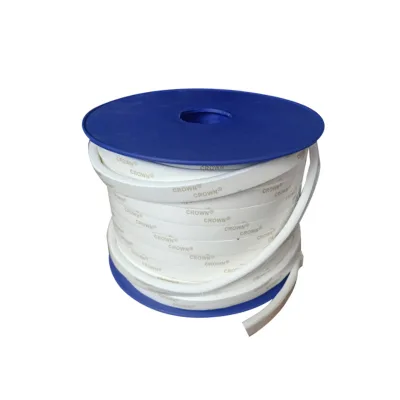
PTFE Magnetic Strip for Laboratory Use with Acid and Chemical Resistance
$160.00 - $180.00
MOQ: 2 Pieces




Comprehensive Sourcing Guide
Strategic Sourcing Guide for Flat End PTFE Magnetic Strip Components
Procuring specialized industrial components like the Flat End PTFE Magnetic Strip requires a disciplined approach that balances material science, mechanical specifications, and supply chain reliability. The core keyword "Flat End PTFE Magnetic Strip" suggests a composite product where a magnetic core is encased or coated in Polytetrafluoroethylene (PTFE) to provide chemical resistance and specific sealing properties. Buyers must navigate a market where product attributes vary significantly between listings, often mixing distinct categories such as sealing strips, magnetic materials, and structural steel components. This guide provides a framework for evaluating these complex items based on verified product data and established industry practices, ensuring that procurement decisions are grounded in factual evidence rather than marketing assertions.
Technical Specifications and Material Composition
The foundation of a successful procurement strategy lies in a precise understanding of the technical specifications provided by suppliers. In the observed product data, the term "Flat End" appears as a specific design attribute, indicating that the product terminates with a planar surface rather than a rounded or tapered profile. This geometric feature is critical for applications requiring a flush fit or a specific sealing interface. The material composition is equally complex, with data points indicating the presence of PTFE, Expanded PTFE, and magnetic grades such as N-shape.
Buyers must verify the exact nature of the magnetic core. The data references "NShape:Bar" and "Gauss Value: Max 6000-7000 Gauss," which suggests a high-strength permanent magnet, likely a rare-earth or high-grade ferrite variant, though the specific alloy is not universally defined in the provided text. The PTFE coating is described as a "Surface Material," implying a protective layer designed to enhance durability. The chemical composition of magnetic materials is sometimes listed as "Fe, Si, B," pointing toward amorphous or nanocrystalline alloys, while other entries mention "1K101/1K107" grades. This inconsistency highlights the need for buyers to request specific material datasheets to confirm whether the product is a solid magnetic bar, a flexible strip, or a composite sealing element.
Furthermore, the physical dimensions are a primary differentiator. Specifications such as "Length: 52mm" and "Diameter 17 mm" appear alongside models like "MB17X52mm." However, other entries list "19mm" or "Rectangle" sectional shapes. The "Flat End" attribute must be cross-referenced with the sectional shape; while some data points to a "Rectangle" section, others mention "Strip" or "Bar." A buyer must explicitly confirm the cross-sectional geometry to ensure the component fits the intended mechanical assembly. The "Vulcanization: Continuous Vulcanization" attribute suggests a manufacturing process involving heat curing, which is typical for rubber or elastomeric coatings, but its application to PTFE requires clarification, as PTFE is typically processed via sintering rather than vulcanization.
Compliance, Certification, and Standard Verification
Navigating the compliance landscape for industrial magnetic and PTFE components requires rigorous verification of standards and certifications. The provided data lists "Standard: Standard, Nonstandard" and "Standard: GB," indicating that some products adhere to Chinese National Standards (GB), while others are custom-made. The "Certification: ISO" entry is a generic reference; buyers must demand specific ISO standard numbers (e.g., ISO 9001 for quality management or ISO 14001 for environmental management) rather than accepting a broad claim.
For magnetic materials, the "Chemical Composition" and "Grade" are critical compliance factors. If the product is intended for use in food processing or pharmaceutical machinery, the PTFE coating must be verified as food-grade, and the magnetic core must be free of hazardous substances. The data mentions "100%ptfe" as a standard, which is a strong claim that requires third-party laboratory testing to validate. Similarly, the "Trademark: Carbon Structural Steel" entry in the magnetic section creates confusion, as carbon steel is not typically the primary material for high-performance magnetic strips compared to amorphous or rare-earth alloys. This discrepancy necessitates a request for a Certificate of Analysis (CoA) that details the elemental composition and magnetic properties.
Buyers should also verify the "Standard" classification against the intended application. For automotive or transformer applications, specific industry standards (such as IEC for transformers or ISO for automotive parts) often supersede general "Standard" or "Nonstandard" labels. The presence of "GB" standards suggests the product originates from a Chinese manufacturing base, which is consistent with the "prod_origin: Ningbo China" and "Zhejiang, China" data points. However, reliance on local standards alone may not be sufficient for global supply chains; international equivalents must be confirmed to ensure compatibility with global regulatory frameworks.
Cost Drivers and Pricing Structure Analysis
Understanding the cost drivers for flat end PTFE magnetic strips is essential for budgeting and negotiation. The observed price range of $0.04 to $180 USD indicates a vast disparity in product value, driven by factors such as material grade, dimensional complexity, and customization levels. The lower end of the spectrum likely corresponds to standard, off-the-shelf components with minimal processing, while the higher end reflects custom-engineered solutions with specialized coatings or high-performance magnetic alloys.
The Minimum Order Quantity (MOQ) is a significant cost driver, with observed ranges from 1 to 50,000 units. High MOQs, such as 10kg for magnetic materials or 50,000 units for general strips, can lock buyers into large inventory commitments, increasing holding costs. Conversely, low MOQs of 1 unit allow for prototyping but often come with a premium per-unit price. The "Customization: Available" attribute suggests that bespoke dimensions or material blends will incur additional tooling and setup costs, which are typically amortized over larger production runs.
Packaging also influences the final landed cost. The data lists "Cartons," "Wooden Box with Foam Lined," and "10PCS in a Shrink, 1000PCS in a Carton." For delicate magnetic components, protective packaging is vital to prevent demagnetization or physical damage during transit. The "Wooden Box with Foam Lined in Safe Conditions" option implies a higher shipping cost but reduces the risk of product loss. Buyers must weigh the cost of premium packaging against the potential cost of damaged goods, especially when sourcing from distant locations like Ningbo or Yangzhong City.
Typical Applications and Performance Requirements
The versatility of flat end PTFE magnetic strips is evident in the diverse applications listed, ranging from "Automobile" and "Machinery" to "Transformer" and "Steel Fabricated House." The "Type: Solid Core Sealing Strip" and "Style: Seal ing Strip" attributes suggest a primary use in sealing and gasketing applications where magnetic retention is required. In automotive contexts, these components might be used in door seals, sensor housings, or vibration dampening systems where chemical resistance to oils and fuels is paramount.
For transformer applications, the "Type: Soft" and "Low Loss" attributes point to the use of amorphous or soft magnetic materials designed to minimize energy loss during operation. The "Performance: Temperature" claim indicates that the PTFE coating must maintain integrity under thermal stress, a critical requirement for electrical equipment. The "High Abrasion Resistance" advantage is particularly relevant for machinery applications where the strip may be subject to friction or wear.
The "Application: Steel Fabricated House, Frame Part" entry introduces a structural dimension, suggesting that some products in this category may serve as structural reinforcements or fastening elements in prefabricated buildings. However, the distinction between a "Sealing Strip" and a "Frame Part" is significant; a buyer must ensure the product selected matches the functional requirement. If the application involves structural load-bearing, the "Cold Drawn Steel" and "Cold Forming Sectional Steel" attributes become relevant, whereas a sealing application prioritizes the "PTFE Coating" and "Flat End" geometry.
Supplier Evaluation and Origin Verification
Evaluating suppliers for flat end PTFE magnetic strips requires a focus on origin, capability, and consistency. The data points to "Ningbo China," "Yangzhong City," and "Zhejiang, China" as primary origins. These regions are known for manufacturing hubs, but the specific location can impact logistics and lead times. Suppliers in Ningbo often have access to major shipping ports, which can streamline export processes, while those in Yangzhong may have specialized capabilities in metal processing or chemical coating.
The "Customization: Available" attribute is a key indicator of supplier flexibility. A supplier that offers customization is likely to have in-house R&D or engineering teams capable of adapting the "Flat End" design or "PTFE" thickness to specific client needs. However, buyers must verify the supplier's track record in handling such customizations. The "prod_packing: According to Customer Required" entry suggests a high level of flexibility, but it also implies that the supplier must be willing to adapt their logistics and packaging protocols, which can introduce variability in the supply chain.
Buyers should also scrutinize the "Standard" and "Certification" claims. A supplier claiming "ISO" certification should be able to provide the specific certificate number and scope. Similarly, the "Standard: GB" claim should be backed by the ability to produce to international standards if required. The presence of multiple model numbers (e.g., "M-01," "M-02," "M-03," "M-04") indicates a product line, but buyers must ensure that the specific model selected matches the technical requirements, particularly regarding the "Sectional Shape" and "Length."
Quality Control and Long-Term Procurement Considerations
Implementing a robust quality control (QC) protocol is essential for mitigating risks associated with sourcing flat end PTFE magnetic strips. Given the variation in "Grade," "Material," and "Performance" claims, buyers should establish a clear acceptance criteria document. This document should specify the maximum allowable deviation in "Gauss Value," the required "Surface Material" integrity, and the dimensional tolerances for the "Flat End" and "Length."
The "Vulcanization" and "Forming" processes mentioned in the data require specific QC checks. For instance, if the product involves vulcanization, the cure time and temperature must be monitored to ensure the PTFE coating adheres properly to the magnetic core. If the product involves "Cold Drawn Steel" or "Cold Forming," the tensile strength and hardness must be verified. The "High Abrasion Resistance" advantage should be validated through standardized testing, such as the Taber Abrasion test, rather than relying solely on supplier assertions.
Long-term procurement considerations include the stability of the supply chain and the availability of replacement parts. The "MOQ: 10kg" for magnetic materials suggests that bulk purchasing may be necessary for certain components, which can impact inventory management strategies. Buyers should also consider the "Lead Time" implications of "Continuous Vulcanization" and "Customization," as these processes may extend the production cycle. Establishing a long-term partnership with a supplier who can consistently meet the "Standard" and "Performance" requirements is crucial for maintaining operational continuity.
Comparative Analysis of Product Attributes
To facilitate decision-making, buyers can utilize the following table to compare key attributes observed in the product data. This comparison highlights the diversity of offerings and the need for precise specification matching.
| Attribute | Observation A | Observation B | Observation C |
|---|---|---|---|
| Shape | Bar | Strip | Rectangle |
| Surface | PTFE Coating | 100% PTFE | PTFE, Expanded PTFE |
| End Design | Flat | Flat | Flat |
| Magnetic Grade | NShape | 1K101/1K107 | Fe, Si, B |
| Gauss Value | Max 6000-7000 | Not Specified | Not Specified |
| Origin | Ningbo, China | Yangzhong City | Zhejiang, China |
| Packing | Cartons | Wooden Box | Shrink + Carton |
| Standard | Standard/Nonstandard | GB | Customized |
This table underscores the importance of verifying each attribute individually. A product listed as a "Bar" with "NShape" may not be suitable for an application requiring a "Strip" with "Expanded PTFE." The "Flat End" attribute is consistent across observations, but the underlying material and magnetic properties vary significantly. Buyers must use this comparative framework to filter suppliers and ensure that the selected product aligns with the specific technical and operational requirements of their project.
In conclusion, sourcing flat end PTFE magnetic strips demands a meticulous approach that integrates technical verification, compliance checks, and supplier evaluation. By focusing on the specific attributes of "Flat End," "PTFE," and "Magnetic" properties, and by rigorously validating the data against industry standards, buyers can secure high-quality components that meet their performance and reliability needs. The diversity in the market offers flexibility, but it also requires a disciplined procurement strategy to navigate the complexities of material science and supply chain logistics effectively.
FAQs
What is the maximum Gauss value for these magnetic strips?
The maximum Gauss value reaches 6000 to 7000 Gauss for high-performance variants. This specification applies to the N-shape bar grade magnetic core used in industrial applications requiring strong magnetic retention.
Can I order custom dimensions for the flat end design?
Yes, customization is available for specific length and shape requirements. Buyers can request non-standard sizes while maintaining the flat end design and PTFE coating for specialized machinery or automotive sealing needs.
Which surface material protects the magnetic core from corrosion?
The magnetic core is protected by a PTFE coating or expanded PTFE surface material. This coating provides high abrasion resistance and chemical stability, making the strip suitable for harsh industrial environments.
How is the product packed for safe international shipping?
Products are packed in cartons, wooden boxes with foam lining, or shrink-wrapped bundles. Specific packaging like 10 pieces per shrink and 1000 per carton ensures the components remain secure during transit from China.
What is the minimum order quantity for these magnetic strips?
The minimum order quantity ranges from 1 unit up to 50,000 units depending on the supplier. Some specific magnetic material grades may require a minimum of 10kg, while others allow single unit prototyping.
Which standards do these magnetic strips typically meet?
These strips often meet GB standards or are produced as non-standard custom items. Some listings specify 100% PTFE standards, while others adhere to general industrial specifications for automotive and transformer applications.
Can these strips be used in transformer applications?
Yes, specific soft magnetic grades with low loss characteristics are designed for transformer use. These variants feature chemical compositions like Fe, Si, and B to ensure optimal performance in electrical equipment.