Source Flat Fan Air Knife for Cooling Drying Cleaning
Compare 30 Flat Fan Air Knife options from verified Chinese suppliers. These units support cooling, drying, and cleaning applications with customizable features and working pressures up to 7 bar.
Key considerations
Products List




Comprehensive Sourcing Guide
Strategic Sourcing Guide for Flat Fan Air Knife Systems
Understanding Core Technical Specifications and Performance Metrics
When sourcing Flat Fan Air Knife systems, buyers must first establish a clear understanding of the fundamental technical parameters that define performance. The core function of these devices is to generate a high-velocity, uniform sheet of air for applications ranging from drying and cooling to cleaning and dust removal. Based on available product data, the working pressure for these systems typically operates within a range of 2 to 6 bar, with some variants capable of handling pressures up to 7 bar. This pressure range is critical for ensuring the air knife maintains the necessary velocity to effectively remove moisture, debris, or lubricants from moving materials without causing damage.
The physical construction of the air knife is equally vital. The materials used directly influence durability, chemical resistance, and thermal stability. Common materials observed in the market include ABS, PP (Polypropylene), Aluminium, and Stainless Steel (SS). The selection of material often depends on the specific operating environment; for instance, Stainless Steel is preferred for high-temperature or corrosive environments, while ABS and PP offer cost-effective solutions for general industrial use. The maximum operating temperature for certain models is noted to be 77°C (170°F), a figure that buyers must verify against their specific process requirements.
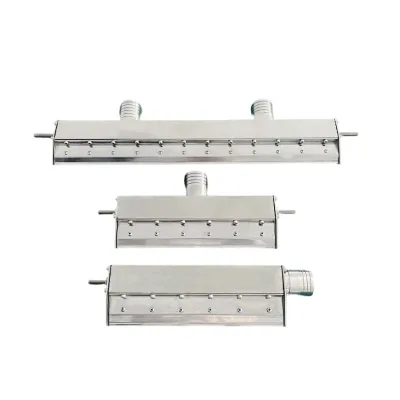
The spray pattern is the defining characteristic of a Flat Fan Air Knife. Unlike solid stream nozzles, flat fan patterns provide a wide, even distribution of air, which is essential for uniform treatment across a product's width. The observed spray patterns include flat fan and solid stream configurations, with some units offering adjustable options. The thread size is a standard specification that dictates compatibility with existing pneumatic systems, with 1/4" being a common size. Buyers should verify whether the thread type is BSPT or NPT and whether the connection is female or male to ensure seamless integration into their current infrastructure.
Compliance, Certification, and Regulatory Standards
In the B2B procurement landscape, compliance is not merely a formality but a prerequisite for market access and operational safety. When evaluating Flat Fan Air Knife suppliers, buyers must scrutinize the certification status of the products. The available data indicates that products often carry RoHS, CE, and ISO certifications. RoHS compliance ensures that the materials used do not contain restricted hazardous substances, which is a mandatory requirement for electronics and many industrial applications in the European Union and other regulated markets.
The CE marking signifies that the product meets EU safety, health, and environmental protection requirements. This is particularly important for machinery that interacts with air systems, as it validates that the device has been assessed for potential hazards. Similarly, ISO certification indicates that the manufacturer adheres to international standards for quality management systems. However, buyers should not assume that every listed product automatically possesses these certifications. The presence of a certification in a product listing is an observation that requires verification through official documentation or third-party audit reports.
Furthermore, the standard of the product itself, often listed as ABS, PP, Aluminium, or SS, must align with the specific industry standards required by the buyer's sector. For example, food processing or pharmaceutical applications may require materials that meet specific FDA or GMP standards, which are not explicitly detailed in the general product attributes. Buyers must explicitly request documentation proving that the materials and manufacturing processes comply with the specific regulatory frameworks applicable to their industry. Relying solely on the generic "CE" or "ISO" labels without verifying the scope of the certification can lead to compliance gaps and potential legal liabilities.
Cost Drivers and Economic Factors in Procurement
The cost of Flat Fan Air Knife systems is influenced by a complex interplay of factors, including material composition, customization options, and order volume. The observed price range in the market is extremely broad, spanning from $0.56 to $1,000,000. This vast disparity suggests that the final cost is heavily dependent on the scale of the system, the complexity of the design, and the specific materials selected. A simple, off-the-shelf nozzle made of ABS will naturally cost significantly less than a custom-engineered air knife system constructed from high-grade stainless steel with integrated flow control mechanisms.
Material selection is a primary cost driver. Stainless Steel (SS) and Aluminium are generally more expensive than ABS or PP due to the raw material costs and the more intensive manufacturing processes required. However, the long-term value proposition of these materials often justifies the higher initial investment, particularly in environments where corrosion resistance or thermal stability is critical. Buyers should perform a total cost of ownership (TCO) analysis rather than focusing solely on the unit price. A cheaper unit that fails prematurely due to material incompatibility will result in higher replacement costs and production downtime.
Customization is another significant factor affecting cost. The availability of customization allows buyers to tailor the air knife to specific application needs, such as unique thread sizes, specific spray patterns, or specialized mounting configurations. While customization adds value, it inevitably increases the unit price and may impact the minimum order quantity (MOQ). The observed MOQ ranges from 1 to 100 pieces, with specific models showing MOQs of 20 or 50 pieces. Buyers with lower volume requirements may face higher per-unit costs or may need to negotiate with suppliers who offer flexible MOQ policies. Additionally, the lead time, typically observed as 7-9 days for standard items, can impact the overall cost if expedited shipping is required to meet production schedules.
Typical Industrial Applications and Usage Scenarios
Flat fan air knives are versatile tools deployed across a wide array of industrial sectors. The primary applications observed include cooling, drying, cleaning, and dust removal. In the drying process, these systems are used to remove water or solvents from surfaces after washing or coating operations. The flat fan pattern ensures that the entire surface area is treated uniformly, preventing streaks or wet spots that could compromise product quality. Similarly, in cooling applications, air knives provide rapid heat dissipation, which is crucial in processes like heat treatment or plastic molding where temperature control is vital.
Cleaning and dust removal are other critical use cases. The high-velocity air stream generated by the air knife can effectively blow away loose particles, dust, and debris from machinery, conveyor belts, and finished products. This is particularly important in industries such as packaging, where dust can affect the adhesion of labels or the integrity of seals. The system's ability to handle moving materials makes it ideal for continuous production lines where manual cleaning is impractical or inefficient.
Beyond these common applications, air knives are also utilized in air and gas washers and quenching during heat treatment processes. In these scenarios, the air knife acts as a precise control mechanism for gas flow, ensuring that the quenching medium is applied consistently. The versatility of the system is further enhanced by the availability of different colors, such as blue, red, grey, yellow, and silver, which can be used for color-coding different stations or processes within a facility. Buyers should carefully map their specific process requirements against the capabilities of the air knife to ensure that the selected model can handle the intended workload, including the specific pressure and flow rate requirements.
Supplier Evaluation and Quality Assurance Protocols
Evaluating suppliers for Flat Fan Air Knife systems requires a rigorous approach that goes beyond simple price comparison. Buyers must assess the supplier's ability to deliver consistent quality, adhere to lead times, and provide adequate after-sales support. The observed delivery time of 7-9 days suggests a relatively efficient supply chain, but buyers should verify if this timeline is consistent for custom orders or if it varies based on order volume and complexity. The origin of the products, often listed as Guangdong or Dong Guan, China, indicates a concentration of manufacturing capabilities in this region, which is known for its robust industrial supply chain.
Quality assurance is paramount. Buyers should request detailed quality control reports that include material certifications, pressure testing results, and dimensional accuracy checks. The presence of certifications like CE and ISO is a positive indicator, but it should be accompanied by evidence of the manufacturer's internal quality control processes. For instance, buyers should inquire about the testing procedures used to verify the spray pattern uniformity and the durability of the materials under operating conditions. The specification of a shim size of 0.05 for certain models indicates a level of precision in manufacturing that should be maintained across all units.
Packaging is another aspect of supplier evaluation. The observed packaging methods, such as carton packaging or standard export cartons, are designed to protect the product during transit. However, buyers should ensure that the packaging is sufficient to prevent damage, especially for delicate components or systems with precise tolerances. The supplier's ability to provide clear documentation, including installation guides and maintenance manuals, is also a key indicator of their commitment to customer success. Buyers should prioritize suppliers who demonstrate transparency in their operations and are willing to provide references or case studies from similar industries.
Long-Term Procurement Considerations and Maintenance
Sourcing Flat Fan Air Knife systems is not a one-time transaction but the beginning of a long-term relationship that requires careful planning for maintenance and lifecycle management. The durability of the system is heavily dependent on the operating environment and the frequency of use. Buyers should consider the wear and tear on components such as nozzles and seals, which may require periodic replacement. The availability of spare parts and the supplier's ability to provide timely replacements are critical factors in minimizing downtime.
Maintenance protocols should be established early in the procurement process. This includes regular cleaning of the air knife to prevent clogging, which can affect the spray pattern and efficiency. Buyers should also monitor the working pressure to ensure it remains within the specified range of 2-6 bar or 0-7 bar, as deviations can indicate issues with the air supply system or the air knife itself. The electrical current type, noted as AC for certain models, requires proper wiring and safety measures to ensure safe operation.
Furthermore, buyers should consider the scalability of their procurement strategy. As production volumes increase, the demand for air knives may grow, and the ability to source additional units quickly becomes important. The observed MOQs of 20 or 50 pieces suggest that suppliers are prepared to handle bulk orders, but buyers should negotiate terms that allow for flexibility in case of unexpected demand spikes. Finally, the total cost of ownership should be continuously evaluated, taking into account energy consumption, maintenance costs, and the potential for upgrading to more efficient models as technology evolves. By adopting a proactive approach to procurement and maintenance, buyers can ensure that their Flat Fan Air Knife systems continue to deliver optimal performance over the long term.
FAQs
What materials are used for flat fan air knives?
Common materials include ABS, PP, Aluminium, and Stainless Steel. Selection depends on the environment, with Stainless Steel preferred for high temperatures or corrosive conditions while ABS and PP suit general industrial use.
How does the working pressure affect performance?
The working pressure typically operates between 2 to 6 bar, with some variants handling up to 7 bar. This range ensures sufficient air velocity for drying, cooling, or cleaning moving materials without causing damage.
Which certifications are available for these systems?
Products often carry RoHS, CE, and ISO certifications. RoHS ensures no hazardous substances, while CE and ISO validate safety and quality management, though buyers must verify specific documentation for their industry compliance.
Can the air knife be customized for specific needs?
Yes, customization is available for unique thread sizes, spray patterns, or mounting configurations. While this adds value, it may increase the unit price and impact the minimum order quantity requirements.
What is the typical lead time for delivery?
The standard delivery time is 7 to 9 days for most items. Buyers should verify if this timeline applies to custom orders or if it varies based on order volume and manufacturing complexity.
How do I ensure the spray pattern is uniform?
Flat fan patterns provide a wide, even distribution essential for uniform treatment. Buyers should request quality control reports verifying spray pattern uniformity and dimensional accuracy to ensure consistent performance.
What is the maximum operating temperature?
Certain models have a maximum operating temperature of 77°C or 170°F. Buyers must verify this limit against their specific process requirements to prevent material failure or safety hazards.