Source Flat Fan Spray Jet Nozzle for Coating, Cleaning, and Cooling
Compare 30 Flat Fan Spray Jet Nozzle options from verified Chinese suppliers. Buyers can evaluate thread sizes, materials like 304 stainless steel, and pressure ratings to find suitable solutions for industrial coating, cleaning, and cooling applications.
Key considerations
Products List


Hvv Vee Jet Flat Fan Spray Nozzle with Filter
$5.00 - $10.00
MOQ: 50 Pieces
Shanghai Xinhou Spraying & Purification Equipment Co., Limited


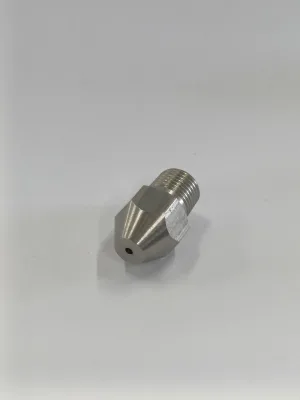


$4.00 - $10.00
MOQ: 100 Sets
Comprehensive Sourcing Guide
Strategic Sourcing Guide for Flat Fan Spray Jet Nozzles
Understanding Core Technical Specifications and Variants
The Flat Fan Spray Jet Nozzle represents a critical component in fluid distribution systems, designed to deliver a uniform, fan-shaped spray pattern for efficient coverage. When sourcing these components, buyers must navigate a landscape of specific model designations and material compositions that directly impact performance. The market offers distinct model series, including the HVV, K1, V/P, HU/H-VV, and SJV configurations, each tailored to specific operational requirements. The primary distinction often lies in the thread size compatibility, which ranges from 1/8" up to 2" in various configurations. For instance, specific model lines support thread sizes of 1/8", 1/4", 3/8", and 1/2", while others extend to 3/4" or even 2" to accommodate high-volume industrial applications.
Material selection is the second pillar of technical specification. The observed inventory includes nozzles constructed from 304 and 316 stainless steel, as well as brass. The choice between these materials is not merely aesthetic but functional; 316 stainless steel offers superior resistance to chlorides and harsh chemicals compared to 304, while brass provides excellent machinability and cost-efficiency for less aggressive environments. Buyers should verify the specific alloy grade for their application, as the presence of corrosion or chemical exposure dictates the longevity of the nozzle. Furthermore, the spray angle is a critical variable, with observed ranges spanning from 0 to 110 degrees depending on the model. Specific configurations offer precise angles such as 15, 25, 35, 40, and 50 degrees, allowing for targeted application in cleaning, coating, or cooling processes.
The working pressure tolerance is another vital technical parameter. Different nozzle variants are engineered to operate within specific pressure bands, with observed ranges extending from 0.3 to 35 bar and 1 to 10 bar. This variance indicates that a single nozzle type is not universally suitable for all pump systems. A low-pressure system may require a nozzle rated for 1-10 bar to prevent damage, whereas high-pressure cleaning applications necessitate units capable of withstanding up to 35 bar. Additionally, the flow rate capabilities are categorized as small, medium, and big flow, which must be matched to the desired throughput of the production line. The thread type is typically standardized as Male BSPT or NPT, but verifying the specific thread standard is essential to ensure compatibility with existing piping infrastructure.
Compliance, Certification, and Regulatory Standards
In the B2B procurement of industrial components, compliance with international standards and certifications is non-negotiable for ensuring safety and market access. The Flat Fan Spray Jet Nozzle market demonstrates adherence to several recognized frameworks. Buyers should look for products that carry CE certification, which indicates conformity with health, safety, and environmental protection standards for products sold within the European Economic Area. Additionally, RoHS (Restriction of Hazardous Substances) certification is frequently observed, ensuring that the manufacturing process and final product do not contain specific hazardous materials that could pose risks to human health or the environment.
Beyond product-level certifications, the manufacturing process itself may be subject to third-party verification. The presence of SGS standards in the supply chain suggests that the production facilities undergo rigorous inspection and testing protocols. While specific test results are not universally guaranteed for every unit, the availability of video outgoing-inspection services indicates a commitment to transparency and quality assurance. Buyers should verify if the supplier provides video documentation of the inspection process prior to shipment, as this serves as a tangible proof of quality control.
It is important to distinguish between product certifications and material standards. While the product may carry CE and RoHS marks, the material standards (such as the specific grade of stainless steel) must be verified against the application's chemical resistance requirements. The origin of the product, often cited as Shanghai, China, implies that the manufacturing follows Chinese industrial standards, which are increasingly aligned with international norms. However, buyers must confirm that the specific batch of nozzles meets the regulatory requirements of their destination market, as local regulations may impose additional testing or certification mandates beyond the baseline CE or RoHS labels.
Cost Drivers and Pricing Dynamics
The pricing structure for flat fan spray jet nozzles is influenced by a complex interplay of material costs, manufacturing complexity, and order volume. The observed price range in the market spans from $0.48 to $15.00 USD. This significant variance is primarily driven by the material composition and the specific model complexity. Nozzles made from standard brass or lower-grade stainless steel will naturally fall at the lower end of the price spectrum, while those constructed from 316 stainless steel with specialized coatings or integrated filters will command higher prices.
Order volume is a decisive factor in the final cost per unit. The Minimum Order Quantity (MOQ) ranges from 1 to 1000 units, indicating that suppliers offer flexibility for small-scale testing or prototyping but provide better unit economics for bulk procurement. Buyers should anticipate that purchasing at the higher end of the MOQ range will likely result in a price closer to the lower bound of the observed range. Conversely, single-unit purchases or small batches will incur a premium due to the fixed costs of packaging and handling.
Additional cost drivers include the customization options available. While the standard product line is non-customized, the availability of customization services suggests that bespoke requirements will incur additional charges. These charges may cover the retooling of manufacturing processes, the application of specific coatings like painting or powder coating, or the modification of thread sizes and spray angles. The packaging requirements also play a role; export-standard packaging is common, but specialized wooden packaging for heavy or fragile shipments may add to the overall cost. Finally, the Incoterms, such as FOB (Free on Board) or CIF (Cost, Insurance, and Freight), will significantly impact the landed cost. Buyers must calculate the total cost of ownership, including shipping and insurance, rather than focusing solely on the unit price.
Typical Applications and Operational Context
Flat fan spray jet nozzles are versatile components utilized across a diverse array of industrial sectors. Their primary function is to create a uniform spray pattern, making them ideal for applications requiring even coverage and precise fluid distribution. One of the most common applications is in cleaning and washing systems, where the flat fan pattern effectively removes contaminants from surfaces without excessive fluid usage. The ability to select specific spray angles allows operators to optimize the cleaning efficiency for different surface geometries.
In the coating and painting industries, these nozzles are essential for applying uniform layers of paint, varnish, or protective coatings. The "Flat Jet" designation highlights their suitability for coating production lines, where consistency is paramount to ensure product quality. The availability of models with integrated filters, such as the Hvv Vee Jet Flat Fan Spray Nozzle with Filter, further enhances their utility in applications where fluid purity is critical to prevent clogging and ensure a smooth finish.
Agricultural and environmental applications also benefit from these nozzles, particularly in irrigation and pesticide application. The wide range of flow rates and spray angles allows for precise control over the distribution of liquids over large areas. In the automotive and metalworking sectors, flat fan nozzles are used for cooling, lubrication, and rinsing processes. The durability of materials like 316 stainless steel makes them suitable for harsh environments involving high temperatures or corrosive chemicals. The "Wearable" feature noted in product attributes suggests that these nozzles are designed to withstand mechanical stress and abrasion, extending their service life in demanding operational contexts.
Supplier Evaluation and Sourcing Strategy
When evaluating potential suppliers for flat fan spray jet nozzles, buyers should adopt a multi-faceted approach that considers technical capability, reliability, and service quality. The first step is to verify the supplier's ability to meet the specific technical requirements identified in the sourcing phase. This includes confirming the availability of the required thread sizes, material grades, and spray angles. Suppliers offering a wide range of models, such as HVV, K1, and V/P, demonstrate a broader manufacturing capability and are better positioned to handle diverse project needs.
Customization capability is another critical evaluation criterion. While many suppliers offer standard non-customized products, the ability to provide customized solutions can be a significant advantage for unique applications. Buyers should inquire about the customization process, including lead times and additional costs. The acceptance of OEM (Original Equipment Manufacturer) orders indicates a supplier's flexibility in branding and design, which is valuable for companies looking to integrate these nozzles into their own product lines.
Logistics and delivery terms are also essential factors. The observed delivery term of "One Week" suggests a responsive supply chain, but buyers must verify if this applies to standard stock items or requires specific production runs. The origin of the product, typically Shanghai, China, implies a well-established manufacturing hub, but buyers should assess the supplier's export experience and ability to handle international shipping documentation. The availability of video outgoing-inspection services is a strong indicator of a supplier's commitment to quality and transparency, allowing buyers to verify the condition of the goods before they leave the factory.
Quality Control and Long-Term Procurement Considerations
Ensuring the long-term reliability of flat fan spray jet nozzles requires a robust quality control strategy. Buyers should prioritize suppliers who adhere to recognized standards and provide evidence of their quality assurance processes. The presence of SGS standards and CE certification are positive indicators, but buyers should request detailed quality reports or test data specific to the batch being purchased. The "Wearable" feature and "Rust/Corrosion Proof" attributes highlight the importance of material integrity, which can be compromised by poor manufacturing practices.
Packaging is a critical aspect of quality control that is often overlooked. The use of export-standard packaging or wooden crates helps protect the nozzles from damage during transit, which is essential for maintaining their precision and functionality. Buyers should verify that the packaging is suitable for the specific shipping conditions and that the nozzles are securely fastened to prevent movement and potential impact damage.
Long-term procurement considerations involve building a sustainable relationship with the supplier. This includes negotiating favorable terms for repeat orders, establishing clear communication channels for technical support, and ensuring a consistent supply of spare parts. The availability of different flow rates and spray angles allows for future scalability, but buyers should confirm that the supplier can maintain consistency in product quality over time. Additionally, the ability to provide video outgoing-inspection for future orders can serve as a valuable tool for maintaining quality standards and reducing the risk of receiving substandard products.
Summary of Key Procurement Parameters
To facilitate a streamlined procurement process, buyers should utilize the following summary of key parameters observed in the market. This table consolidates the critical technical and commercial data points necessary for making informed sourcing decisions.
| Parameter | Observed Range / Options | Key Considerations |
|---|---|---|
| Material | 304/316 Stainless Steel, Brass | Select based on chemical resistance and corrosion requirements. |
| Thread Size | 1/8" to 2" (BSPT or NPT) | Must match existing piping and system infrastructure. |
| Spray Angle | 0-110° (Specific: 15, 25, 35, 40, 50°) | Choose based on coverage area and fluid distribution needs. |
| Working Pressure | 0.3-35 bar (or 1-10 bar variants) | Ensure nozzle rating exceeds system operating pressure. |
| Flow Rate | Small, Medium, Big | Match to required throughput and application speed. |
| Certifications | CE, RoHS, SGS | Verify compliance with destination market regulations. |
| MOQ | 1 - 1000 Units | Higher volumes typically reduce unit cost. |
| Lead Time | One Week (Standard) | Confirm availability for urgent orders or custom runs. |
| Origin | Shanghai, China | Assess logistics and shipping costs from this region. |
| Customization | Available (OEM Accept) | Inquire about costs and lead times for bespoke requirements. |
By carefully evaluating these parameters and adhering to the technical and compliance standards outlined in this guide, buyers can secure high-quality flat fan spray jet nozzles that meet their specific operational needs while minimizing risk and maximizing value.
FAQs
What materials are used for flat fan spray jet nozzles?
These nozzles are constructed from 304 and 316 stainless steel or brass. The choice depends on the application, as 316 offers superior corrosion resistance for harsh chemicals while brass provides cost efficiency for general use.
Which thread sizes are available for these spray nozzles?
Available thread sizes range from 1/8 inch up to 2 inches. Specific models support 1/8, 1/4, 3/8, 1/2, 3/4, and 2 inch options, typically configured as Male BSPT or NPT for various piping systems.
How does the working pressure vary across different models?
Working pressure tolerance varies significantly, with observed ranges from 0.3 to 35 bar or 1 to 10 bar depending on the specific model. Buyers must match the nozzle rating to their pump system to prevent damage.
Can I get customized flat fan spray jet nozzles?
Yes, customization is available for specific requirements, although standard non-customized options are also offered. Buyers should expect additional costs for bespoke modifications involving thread sizes, spray angles, or specialized coatings.
What certifications do these nozzles typically carry?
Common certifications include CE and RoHS, ensuring compliance with safety and environmental standards. Some products also adhere to SGS standards, and video outgoing inspections are provided to verify quality before shipment.
What is the typical delivery time for these nozzles?
The standard delivery term is one week for most stock items. This lead time applies to standard configurations, while customized orders may require additional production time depending on the complexity of the request.
Which spray angles are available for flat fan patterns?
Spray angles range from 0 to 110 degrees depending on the model. Specific configurations offer precise angles such as 15, 25, 35, 40, and 50 degrees to optimize coverage for cleaning or coating applications.