Source flexible embedded anti-glare board for Hospitals, Schools, Malls
Compare 30 flexible embedded anti-glare board options from verified suppliers. Buyers can evaluate specifications like tensile strength, fire ratings, and customization capabilities for use in hospitals, schools, and commercial spaces.
Key considerations
Products List


Maintenance Friendly Surface Interactive Smart Board Long Term Use Whiteboard
$625.00 - $698.00
MOQ: 5 Pieces

LCD Intelligent Touch Interactive Board Digital Interactive Glass Board
$679.00 - $745.00
MOQ: 5 Pieces


4K LCD Mini Infrared Board USB Touch Panel Interface Interactive Smart Whiteboard
$978.00 - $1099.00
MOQ: 1 Pieces


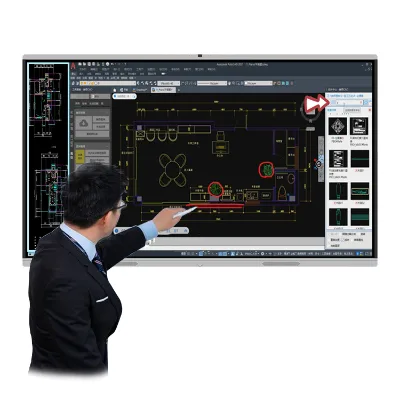


98inch IPS 4K Smart Board 100 Point Touch Anti Glare Glass 2ms Response
$1440.00 - $1590.00
MOQ: 1 Pieces

110inch IPS 4K Smart Board 100 Point Touch Anti Explosion Glass 2ms Response
$4550.00 - $4890.00
MOQ: 1 Pieces


Waterproof Hard Unscratchable Surface Co-Extruded Board with Folding Edge
$2.10 - $3.90
MOQ: 3040 Pieces

Comprehensive Sourcing Guide
Strategic Sourcing Guide for Flexible Embedded Anti-Glare Boards
The procurement of flexible embedded anti-glare boards represents a specialized segment within the broader building materials and electronic component markets. Buyers navigating this space must distinguish between rigid structural panels and flexible substrates designed for optical clarity and surface diffusion. While the term "anti-glare" often implies optical engineering for displays, in construction and industrial contexts, it frequently refers to surface treatments that reduce light reflection while maintaining structural integrity. The available market data indicates a diverse range of materials, from PVC plastic sheets to polycarbonate (PC) hard plastic sheets, each offering distinct properties regarding tensile strength, water absorption, and thermal resistance. Understanding these material variances is critical for aligning product selection with specific project requirements, whether for interior wall decoration, electronic sensor carriers, or communication equipment modules.
Material Composition and Physical Properties
The foundation of any successful procurement strategy lies in a precise understanding of the material composition. The observed product landscape includes two primary categories: PVC plastic sheets and hard plastic sheets, likely made from polycarbonate (PC). These materials exhibit vastly different physical characteristics that dictate their suitability for specific applications. For instance, PVC-based products often feature a "Kind" classification as a plastic sheet with specific surface treatments such as brushed, sanded, or 3D wood grain finishes. These surface processes are essential for achieving the anti-glare effect by scattering incident light rather than reflecting it directly.
In contrast, hard plastic sheets, identified in the data as PC material, offer superior mechanical performance. Key physical attributes for these materials include a tensile strength ranging from 30 to 40 MPa for certain grades, while others may reach up to 130 MPa. This variance highlights the importance of verifying the specific grade before purchase. Thermal properties are equally critical; some observed products boast a Heat Deflection Temperature of 135°C and a service temperature range of -40°C to +120°C. This wide operational window suggests suitability for environments with significant thermal fluctuations. Furthermore, water absorption rates vary significantly, with some materials demonstrating absorption of less than 0.01%, while others may absorb between 1.5% and 3.5%. For applications requiring moisture resistance, such as exterior wall decorations or facilities in humid climates, the lower absorption rate is a decisive factor.
Technical Specifications and Dimensional Standards
Dimensional consistency and standard compliance are paramount when sourcing flexible embedded boards. The market data reveals specific model numbers and standard dimensions that buyers must reference. Common specifications include dimensions of 12202440mm and 12002400mm, which align with standard sheet sizes for construction and manufacturing. However, the flexibility of the product line is also evident in the availability of customized lengths, with some suppliers offering nominal products in feet (FT.) to accommodate unique project needs.
The width of these boards is another critical specification, with observed standards ranging from 400mm to 1200mm. Buyers must verify if the "flexible" aspect of the board allows for bending around curves or if it refers to the thinness of the sheet. The data indicates a contraction percentage of less than 0.4% for certain PVC variants, while PC variants may show a range of 0.4% to 1.4%. This dimensional stability under stress is vital for maintaining the integrity of the anti-glare surface over time. Additionally, the "Single Point Anchorage Force" is noted as being greater than or equal to 0.30, a metric that ensures the board can be securely mounted without failure. When evaluating technical specifications, procurement teams should request test reports that confirm these numerical ranges, as variations between batches can occur.
Compliance, Fire Safety, and Environmental Standards
Safety and environmental compliance are non-negotiable in modern procurement, particularly for products used in public spaces like hospitals, schools, and malls. The observed product data highlights a "Combustion Performance Level" of Grade A for certain boards, indicating a high standard of fire resistance. This is a crucial differentiator from products rated B1 or V2, which may be suitable for less critical applications but fail to meet stringent safety codes for high-traffic areas. The "Fire Rating" of B1/V2 suggests that not all anti-glare boards meet the highest fire safety standards, necessitating a careful review of the specific product certificate for each purchase order.
Environmental considerations are also prominent, with "Eco-Friendly" listed as a key feature for several products. This attribute suggests that the manufacturing process or the material itself adheres to environmental regulations, potentially reducing the carbon footprint of the project. While specific certifications like CE or EN12368 are mentioned in background contexts, buyers should not assume these apply to every listed product without verification. Instead, the procurement strategy should mandate that suppliers provide current, valid certification documents for the specific batch being ordered. The "Water Resistant" and "Waterproof" features further enhance the product's viability for applications in bathrooms, kitchens, or outdoor settings, where moisture resistance is a primary concern.
Application Scenarios and Functional Versatility
The versatility of flexible embedded anti-glare boards is demonstrated by their wide range of applications. The data points to usage in diverse environments, including apartments, hospitals, schools, malls, and leisure facilities. In these settings, the boards often serve as interior wall decorations, providing a modern aesthetic while managing light quality. The "Contemporary" design style and "Capability Graphic Design" suggest that these products can be customized to fit specific architectural visions, including 3D model design capabilities.
Beyond construction, the data indicates specialized applications in the electronics sector. Specific model numbers, such as "Sensor carrier board-#9682" and "Communication equipment module board," point to the use of these materials in housing sensitive electronic components. In these contexts, the "Anti-Impact Strength" of 3J or 10J becomes a critical performance metric, ensuring the board can protect internal electronics from physical shock. The "Outdoor" usage attribute further expands the potential use cases to include exterior signage or cladding, where resistance to UV degradation and weathering is essential. Buyers must match the application environment with the specific material properties; for example, using a high-temperature resistant PC sheet for outdoor applications while selecting a cost-effective PVC sheet for interior decorative panels.
Supplier Evaluation and Customization Capabilities
Selecting the right supplier requires a deep dive into their customization capabilities and service infrastructure. The market data confirms that "Customization" is widely available, with options for customized lengths and specific surface treatments like 3D wood grain. This flexibility allows buyers to tailor products to exact project specifications, reducing waste and improving installation efficiency. The "Easy Installation" attribute is another significant factor, as it reduces labor costs and installation time on-site.
Supplier reliability is further assessed through their after-sales support. The availability of "Online Technical Support" indicates a commitment to resolving issues post-purchase, which is vital for complex projects. Buyers should evaluate the supplier's ability to handle "Small Orders" if their procurement needs are not large-scale, as this flexibility can be advantageous for prototyping or small renovation projects. The "Project Solution" capabilities, including graphic design and 3D model design, suggest that some suppliers offer end-to-end services, acting as partners rather than just vendors. When evaluating suppliers, procurement teams should verify their origin, with many products listed as originating from Hebei, China, a known manufacturing hub. However, the specific location should be confirmed to ensure logistics align with the project timeline.
Cost Drivers and Long-Term Procurement Considerations
Understanding the cost drivers for flexible embedded anti-glare boards is essential for budget management. The observed price range is vast, spanning from $0.01 to $4890, reflecting the diversity of product types, from small electronic modules to large architectural panels. The Minimum Order Quantity (MOQ) also varies significantly, ranging from 1 to 15,000 units, influencing the unit cost and inventory strategy. High-performance materials with superior fire ratings and lower water absorption rates typically command higher prices.
Long-term procurement considerations extend beyond the initial purchase price. The "Tensile Strength" and "Elongation at Break" (>80%) are indicators of durability, which directly impact the lifecycle cost of the product. A board with higher tensile strength and elongation is less likely to crack or fail under stress, reducing maintenance and replacement costs. The "Density" of 1.2 for certain materials also plays a role in shipping costs and structural load calculations. Buyers should prioritize suppliers who offer "Wooden Pallet" packing to ensure safe transport, as damage during shipping can lead to significant financial losses. Additionally, the "Contraction Percentage" must be considered in the design phase to prevent warping or gaps in the finished installation. By focusing on these long-term value drivers rather than just the initial unit price, buyers can secure a more sustainable and cost-effective supply chain for their flexible embedded anti-glare board needs.
Comparative Analysis of Material Options
To facilitate decision-making, it is helpful to compare the primary material options based on the observed data. The following table summarizes the key differences between PVC and PC-based boards, highlighting their respective strengths and ideal use cases.
| Feature | PVC Plastic Sheet | Hard Plastic Sheet (PC) |
|---|---|---|
| Primary Application | Interior Walls, Decoration | Sensor Carriers, Electronics |
| Tensile Strength | 81~130 MPa | 30~40 MPa (or up to 62 MPa at yield) |
| Water Absorption | 1.5%~3.5% | <0.01% |
| Fire Rating | Grade A (observed) | B1/V2 |
| Service Temperature | Not explicitly defined | -40°C to +120°C |
| Surface Treatment | Brushed, Sanded, 3D Wood Grain | Textures |
| Color Options | White | Grey, White, Red, Blue, Transparent, Black, Yellow |
| Installation | Easy Installation | Easy Installation |
This comparison underscores that while PVC sheets excel in aesthetic customization and fire resistance for interior applications, PC sheets offer superior environmental resistance and mechanical stability for technical and outdoor applications. Buyers must align their specific project requirements with these material profiles to ensure optimal performance and cost-efficiency.
FAQs
What customization options are available for flexible embedded anti-glare boards?
Customization is available for these boards, including customized lengths and specific surface treatments like 3D wood grain. Buyers can request tailored dimensions and finishes to match project requirements while maintaining the core material properties.
Which fire rating levels are observed for these plastic sheets?
Some products achieve a Grade A combustion performance level, while others carry a B1 or V2 fire rating. Buyers must verify the specific certificate for each batch to ensure compliance with safety codes for hospitals or schools.
How does water absorption vary between PVC and PC plastic sheet types?
Water absorption varies significantly, with PVC sheets ranging from 1.5% to 3.5% and PC sheets showing less than 0.01%. Selecting the correct material depends on whether the application requires high moisture resistance for outdoor or humid indoor environments.
Can buyers place small orders for these flexible embedded anti-glare boards?
Yes, small orders are accepted for these products, with Minimum Order Quantities ranging from 1 to 15,000 units. This flexibility supports prototyping and small renovation projects without requiring large initial inventory commitments from the buyer.
What installation features are included with these plastic sheet products?
These boards feature easy installation capabilities to reduce labor costs and time on-site. The design supports various applications including interior wall decoration and electronic sensor carriers, ensuring secure mounting with a single point anchorage force of at least 0.30.
Which dimensions are standard for these flexible embedded anti-glare boards?
Standard model numbers include dimensions of 1220 by 2440mm and 1200 by 2400mm. Widths can also range from 400mm to 1200mm, with options for customized lengths in feet to accommodate unique architectural or manufacturing needs.