Source Flipper Pocket Door Slide for Kitchen, Office, and Bathroom
Find and compare 30 Flipper Pocket Door Slide options from verified manufacturers. Evaluate specifications such as load capacity, material, and mounting styles to select the right hardware for your project; compare the available evidence and request quotations based on your requirements.
Key considerations
Products List




Comprehensive Sourcing Guide
Flipper Pocket Door Slide Sourcing Guide
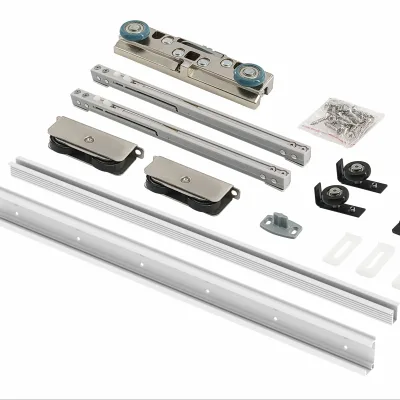
Flipper pocket door slides occupy a specialized niche within cabinet and door hardware, combining a sliding track mechanism with a flip-out arm that lets a door swing open after sliding, or swing closed to conceal a pocket opening. Buyers sourcing this hardware category typically encounter it alongside related ball-bearing slide families, and the listing environment reflects that: many suppliers present these items within broader slide catalogs, using shared model series, thickness options, and mounting conventions. This guide is written for procurement teams evaluating manufacturers rather than retail purchasers, focusing on what can be verified from product listings, what must be confirmed directly with factories, and how to structure a sourcing program that survives repeated reorder cycles.
Because "Flipper Pocket Door Slide" is not always used consistently across supplier catalogs, buyers should anchor their searches on functional attributes: slide type, rail configuration, load capacity, and intended application. Listings in this hardware space commonly describe steel ball-type slides with linear or curved rails, two-section structures, and side or top mounting options. Cross-referencing those attributes against your door weight, thickness, and opening geometry is the most reliable way to shortlist candidates before requesting samples or quotations.
Product Scope and Observed Slide Listings
The observed listings in this category span a wide commercial range. Prices run from roughly $0.05 to $1,900, and minimum order quantities range from a single piece to 5,000 sets, indicating that the same search surface serves both sample buyers and volume furniture programs. Several slide families appear with defined model numbers such as BS3507, BS3508, BS3508A, and BS3502A, offered in 300–450mm and 250–600mm length standards, with thicknesses of 1.2/1.4mm and 1.4/1.4mm. One ball-bearing slide series (BS1035-8) covers 300–550mm. All listed items are new, with customization available, and origins traced to China, including Guangdong.
Applications named in the listings include home, office, and kitchen cabinet use, with door-hardware variants rated for wood doors up to 100kg in kitchen, bathroom, or large-door settings, and door widths of 800–1200mm. Buyers should treat these as observations of individual listings, not guarantees across a supplier's range. A practical scoping step is to map each candidate model's stated length standard, thickness, rail type (linear versus curved), and capacity against your own door specifications before requesting quotations, since a single factory may list dozens of adjacent models under one series.
Technical Specifications to Verify
Request a dimensioned drawing for every model under consideration. The listings provide useful anchors—slide lengths in 300–450mm, 250–600mm, and 300–550mm ranges, one cross-section noted as 35mm × 350–700mm × 9.8mm, and material thicknesses of 1.2/1.4mm or 1.4/1.4mm—but a flipper mechanism adds geometry that standard slide drawings omit: the pivot arm length, swing angle, and clearance required for the flip motion. Confirm the structure (two-knot/two-section is listed) and whether the rail is linear or curved matches your pocket layout, and verify whether mounting is side-mount or top-mount as your cabinet design requires.
Load capacity must be matched to the finished door. One listed door slide carries a 25kg/450mm rating while a larger hanging system is rated at 100kg—figures that cannot be interchanged across product types. Ask how capacity was measured (static load, cycle testing, or both) and whether the rating assumes even weight distribution. For flipper slides specifically, confirm that the flip arm retains its rated capacity through the full swing, not just in the fully extended or closed position, and request cycle-life expectations in writing.
Compliance and Safety Documentation
Certification claims in the observed listings include SGS on one slide item and CE plus ISO on a door-hardware variant, alongside a one-year warranty on another item. These are listing-level statements, not evidence applicable to every product from the same factory. When a listing cites a certification, request the actual certificate document, confirm the certificate holder matches the manufacturing entity, check the scope covers the specific model, and verify validity dates. For destination markets with mandatory requirements—such as CE marking for the EU—confirm which directive or regulation the mark applies to and whether testing was performed by an accredited body or via self-declaration.
Safety review should extend beyond paperwork to mechanical behavior. A flipper mechanism involves moving parts near fingers during door operation, so ask about pinch-point design, edge treatment, and any internal test protocols the factory follows for cycle endurance and load retention. Request material composition declarations—iron and alloy are the listed frame materials—particularly if your market restricts certain substances in hardware. Keep all certificates and declarations on file per model number, since a certificate issued for one slide series does not transfer to another model in the same catalog.
Cost Drivers and Commercial Terms
Price dispersion in this category is extreme, from cents-level items to products listed near $1,900, so normalize quotations before comparing. The main cost drivers are material thickness (1.2mm versus 1.4mm stock changes both material cost and forming yield), slide length within the quoted standard, rail complexity (curved rails cost more than linear), steel ball quality and cage construction, surface finish, and packaging format. One listing specifies 1 set per polybag, 20 sets per carton; another offers customer-requirement packing—clarify whether custom packaging carries tooling or per-unit premiums.
Commercial terms to settle early include the true MOQ per model (observed MOQs span 1 piece to 5,000 sets, and a factory may accept samples at low MOQ while enforcing set-based minimums for production), tooling charges for customization, price validity periods, and Incoterms. Confirm whether quoted prices assume standard lengths or your specific dimensions, since 350–700mm ranges suggest per-length pricing tiers. Also clarify tolerance for thickness and length, as out-of-tolerance goods often surface only after installation, when replacement logistics are most expensive.
| Term | What to Confirm |
|---|---|
| MOQ basis | Per model, per length, or per order |
| Thickness | 1.2mm vs 1.4mm, and tolerance band |
| Packing | Polybag/carton spec or custom requirement |
| Customization | Tooling cost and approval sample process |
Supplier Qualification and Quality Control
Qualify suppliers on manufacturing capability rather than listing polish. Ask which operations are performed in-house—stamping, ball-cage assembly, plating or coating, and packaging—versus outsourced, since outsourced finishing is the most common source of batch inconsistency. A manufacturer identity such as "Fusaier" appears on one listing; regardless of the name, verify the legal entity, factory address, and whether you are dealing with the maker or a trading intermediary. Request references or export history for your destination market, and confirm production capacity against your forecast volumes.
Build inspection checkpoints into the order lifecycle. At pre-production, approve a golden sample covering flip action smoothness, closing alignment, and finish. During production, specify AQL sampling on dimensions (length, thickness, hole positions), salt-spray or equivalent finish durability if your environment demands it, and functional pull/push cycle checks. Before shipment, conduct or commission a final random inspection against the approved sample and a written specification sheet. Document every parameter—two-knot structure, ball type, rail geometry, capacity—so any deviation is objectively identifiable rather than a matter of opinion at receiving.
Long-Term Procurement Checks
Sustained supply depends on change-control discipline. Slide manufacturers routinely adjust thickness, ball bearings, or cage materials when input costs move, and a nominally identical model number may perform differently a year later. Contractually require written notification of any material, dimension, or process change, with re-approval samples before revised goods ship. Maintain an internal record of each approved model's specification—such as BS-series lengths and thicknesses noted above—so incoming inspections compare against a fixed reference rather than the supplier's current listing page.
Finally, plan for continuity and support. Confirm spare-part or replacement-unit availability for installed bases, since flipper mechanisms are serviceable components that end users may need individually. Track warranty handling in practice, not just on paper: the listed one-year warranty is only useful if the claims process, defect classification, and credit mechanism are defined. Review supplier performance quarterly on defect rates, on-time delivery, and responsiveness to engineering queries, and keep at least one qualified alternate for each critical model so a single factory disruption does not halt your door or cabinet production line.
FAQs
What are the available thickness options for these slides?
The available thickness options are 1.2mm and 1.4mm. These specifications ensure durability for various cabinet applications. Buyers can select the appropriate gauge based on their specific load requirements and design preferences for kitchen or office furniture.
Can these slides be customized for specific projects?
Yes, customization is available for these products. Manufacturers accommodate specific project needs, allowing for tailored solutions. This flexibility supports diverse design requirements and ensures the hardware integrates seamlessly into unique cabinet or door installations.
What is the minimum order quantity for these items?
The minimum order quantity varies, with options starting at 1 piece and extending to 4000 sets. This range accommodates both small sample orders and large-scale industrial procurement, providing flexibility for different buyer volumes.
Which certifications do these door slides hold?
These slides hold SGS, CE, and ISO certifications. These credentials verify compliance with international quality and safety standards. Buyers can rely on these certifications to ensure the products meet regulatory requirements for global distribution and installation.
What is the load capacity for the heavy-duty models?
The heavy-duty models support a load capacity of up to 100kgs. This high capacity is suitable for large wooden doors in kitchens or bathrooms. It ensures stable operation and long-term reliability for substantial door applications.
Where are these products manufactured?
These products are manufactured in Guangdong, China. This location is a major hub for hardware production, ensuring efficient supply chains. Buyers benefit from established manufacturing infrastructure and reliable logistics for international shipping and delivery.