Source Customized Bending Closet Rod for Cabinets, Closets, and Wardrobes
Find and compare 30 listings for Customized Bending Closet Rod solutions. Options include iron and aluminum alloy materials with varying thicknesses and finishes. Evaluate specifications for cabinet hangers and closet systems to select the right fit for your storage needs.
Key considerations
Products List

Adjustable Closet Hanging Pole Wardrobe Pipe Heavy Duty Tube Metal Closet Rod
$1.70 - $2.70
MOQ: 3000 Pieces


Furniture Hardware Aluminium Wardrobe Bending Tube Oval Closet Rod 15mm Steel Pipe
$0.85 - $1.20
MOQ: 1000 Pieces


Pipe Support Wardrobe Tube Round Holder Closet Rod Flange Carbon Steel Flange
$0.05 - $0.07
MOQ: 10000 Pieces

Wardrobe Tube Holder Closet Round Pipe Holder Round Tube Support Manufacturers
$0.65 - $0.72
MOQ: 2000 Pieces


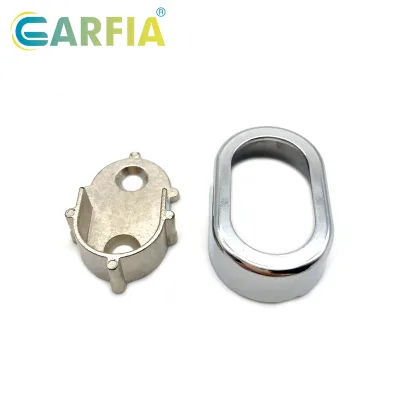

Aluminium Alloy Wardrobe Accessories Heavy Duty Clothes Hanging Oval Closet Rod
$6.66 - $7.00
MOQ: 100 Pieces
Comprehensive Sourcing Guide
Customized Bending Closet Rod Sourcing Guide
Buyers seeking customized bending closet rods must first distinguish between fixed and unfixed mounting systems, as the supplied data indicates products exist in both configurations. The observed listings reveal a specific focus on cabinet and closet hanger applications, where the rod must support significant weight, with some units rated for a maximum capacity of 240 kilograms. This high load-bearing requirement necessitates a rigorous evaluation of the structural integrity of the bending process to ensure the rod does not deform under the stress of hanging heavy garments.
The material composition is a critical differentiator, with available options ranging from iron to various aluminum alloy grades such as 1050, 3003, and 5052. Iron-based units often feature a silver finish and are designed for robust, fixed installations, while aluminum alloy bars offer lighter weight and corrosion resistance suitable for modern closet designs. Procurement teams should verify the specific alloy grade and temper, such as O-H112, to match the environmental conditions of the storage space, ensuring the chosen material will not degrade over time in humid or coastal climates.
Product Scope and Observed Listing Signals
The market for customized bending closet rods presents a wide spectrum of product models, including identifiers like 01H0101 and 01H0302, which signal distinct design variations. Buyers should note that while some listings specify a standard length of 3000mm or 3 meters, others offer fully customizable dimensions to fit unique cabinet interiors. The observed price range of 0.05 to 2400 USD reflects this variability, suggesting that costs are driven heavily by the complexity of the bending, the volume of the order, and the specific finishing requirements rather than a flat unit rate.
Packaging and shipping methods vary significantly across suppliers, with options including export cartons, bubble or shrink bags, and bundle packings of ten pieces. These packaging differences impact the final landed cost and the risk of damage during transit, particularly for long, bent rods that require careful handling. Buyers must explicitly confirm whether the supplier provides standard shipping packaging or specialized protective measures to prevent scratching or bending during delivery, as the product's aesthetic finish is often compromised by poor logistics handling.
Technical Specifications to Verify
Thickness and dimensional tolerances are paramount when sourcing bent rods, as the supplied data lists thicknesses ranging from 0.5mm to 1.5mm and specific standard sizes like 15x30mm. A buyer must verify that the actual thickness of the bent section meets the minimum requirement to prevent sagging, especially since the bending process can thin the material at the curve. It is essential to request mill test reports or dimensional drawings that confirm the thickness remains within the 0.5mm to 1.2mm range even after the cold drawing and bending operations are completed.
Surface treatment and shape are equally critical for both functionality and aesthetics, with options including oxidized finishes, ribbed styles, and round or flat bar profiles. The choice between a silver iron finish and a black aluminum alloy bar depends on the interior design of the closet, but the technical specification must also address the surface treatment process to ensure durability. Buyers should confirm that the oxidation or coating process is compatible with the alloy grade to prevent peeling or corrosion, particularly in high-humidity environments where moisture resistance is a primary concern.
Compliance and Safety Documentation
While specific certification statuses vary, the observed listings reference compliance with international standards such as ASTM, EN, GB, JIS, and ISO RoHS. Buyers should not assume that every listed product automatically meets these standards but must request valid certification documents for the specific batch being ordered. The presence of these standards indicates a baseline for material safety and quality, but verification is required to ensure the supplier has undergone the necessary audits and testing to maintain these credentials for their customized bending processes.
Safety documentation must also address the mechanical stability of the fixed or unfixed mounting systems, ensuring they can safely support the stated maximum capacity of 240 kilograms. Procurement teams should require proof of load testing or engineering calculations that validate the structural integrity of the bent rod under dynamic loads, such as when clothes are added or removed. Without this documentation, there is a risk of structural failure that could lead to property damage or injury, making the verification of safety compliance a non-negotiable step in the sourcing process.
Cost Drivers and Commercial Terms
Minimum Order Quantities (MOQ) are a significant cost driver, with observed ranges spanning from 1000 sets to 5000 sets, and in some cases, 1 ton or 3000 sets. Buyers must align their order volume with these thresholds to avoid prohibitive per-unit costs, as smaller orders may incur higher prices or be rejected entirely. The flexibility of customization is available, but it often comes with a higher MOQ or a setup fee, so procurement strategies should balance the need for specific dimensions against the economic efficiency of ordering standard sizes.
Lead times and payment terms are influenced by the complexity of the customization and the origin of the product, which is listed as Guangdong, China. While specific lead times are not provided in the data, the need for cold drawing, bending, and surface treatment suggests a production cycle that extends beyond standard off-the-shelf delivery. Buyers should negotiate clear delivery schedules and payment milestones that account for the time required for quality control inspections, ensuring that the commercial terms reflect the actual production timeline without risking delays in project completion.
Supplier Qualification and Quality Control
Supplier qualification should focus on their ability to handle the specific alloy grades and temper conditions required for the project, such as the 1000 Series or 5000 Series aluminum alloys. Buyers must verify that the supplier has the technical capability to perform cold drawing and precise bending without compromising the material's structural properties. The availability of 24-hour online service is a positive indicator of responsiveness, but it should be complemented by a review of the supplier's track record in delivering customized metal products to similar industries.
Quality control protocols must be established to ensure consistency across the batch, particularly regarding the uniformity of the bend radius and the thickness of the rod. Since the product is described as "Customized," there is a higher risk of variation between units, making pre-shipment inspections essential. Buyers should mandate a third-party inspection or a detailed quality report that includes measurements of the finished product, surface finish checks, and load testing results to confirm that the delivered goods match the agreed-upon specifications.
Long-Term Procurement Checks
Establishing a long-term relationship with a supplier requires regular audits of their production capabilities and quality consistency over time. Buyers should schedule periodic reviews to ensure that the supplier continues to meet the required standards for material grade, surface treatment, and load capacity as production volumes scale up. This proactive approach helps identify any drift in quality or changes in the supply chain that could affect the performance of the customized bending closet rods in the future.
Continuous monitoring of market trends and material costs is also vital for maintaining a competitive procurement strategy. As aluminum and iron prices fluctuate, buyers should negotiate flexible pricing agreements that allow for adjustments based on raw material costs without sacrificing quality. Additionally, maintaining open communication regarding new product developments or improved manufacturing techniques can provide opportunities to enhance the performance and durability of the closet rods, ensuring the procurement strategy remains aligned with evolving industry standards.
FAQs
Can customized bending closet rods be made from aluminum alloy?
Yes, customized bending closet rods can be manufactured from aluminum alloy, specifically the 1000 Series grades such as 1050, 1060, and 1100. These materials offer a lightweight yet durable structure suitable for modern closet designs. The rods typically feature an oxidized surface treatment for enhanced corrosion resistance and aesthetic appeal, ensuring long-term performance in various humidity conditions.
What is the standard thickness for these aluminum closet rods?
The standard thickness for these aluminum closet rods ranges from 0.5mm to 1.2mm, with specific models like 01H0102 offering 0.9mm thickness. This gauge provides sufficient rigidity to support hanging garments without excessive sagging. The customizable nature allows buyers to select thicker options if higher load-bearing capacity is required for heavy winter clothing or bulk storage solutions.
What is the typical MOQ for ordering customized aluminum rods?
The typical MOQ for ordering customized aluminum rods varies by product model, often starting at 1000 sets or 1500 pieces. Some bulk aluminum bar orders may require a minimum of 1 ton. Buyers should verify the specific MOQ for their chosen model, as packaging formats like cartons or bundles can influence the minimum order quantity requirements set by the manufacturer.
Which certifications apply to these aluminum alloy closet rods?
These aluminum alloy closet rods may comply with various international standards including ASTM, EN, GB, JIS, and ISO RoHS certifications. The materials are often tested against standards like ASTMB to ensure quality and safety. Buyers requiring specific compliance for export markets should request certification documents from the supplier to verify that the aluminum alloy meets the necessary regulatory requirements for their destination.
How are these closet rods packaged for shipping?
These closet rods are typically packaged in export cartons, bubble bags, or shrink bags to prevent damage during transit. Some bundles may contain 10 pieces per carton for efficient handling. The standard shipping packaging ensures that the oxidized surface finish remains scratch-free. Buyers should confirm the specific packing details with the supplier to ensure adequate protection for long-distance international shipping logistics.
What is the maximum load capacity for these closet rods?
The maximum load capacity for these closet rods can reach up to 240kgs, depending on the specific model and installation method. This high capacity ensures stability even when fully loaded with heavy garments. The robust construction, often involving fixed or unfixed mounting options, allows for versatile installation in various cabinet or closet structures while maintaining structural integrity under significant weight.