Source Flocked Paint Roller and Brush Set for Textile, Furniture, and Electronics
Find and compare 30 Flocked Paint Roller and Brush Set options from Chinese manufacturers. Evaluate specifications like size, material, and certification to select the right tools for industrial and civil applications.
Key considerations
Products List


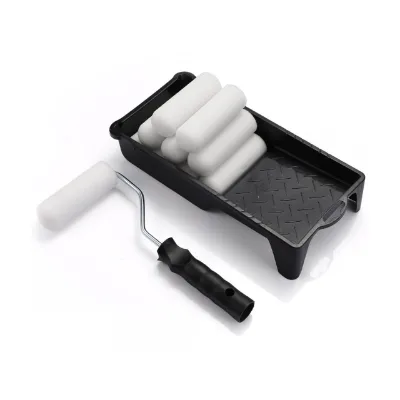
Factory Heavy Duty Paint Roller Decorative Tools Paint Roller Brush Set
$0.20 - $0.40
MOQ: 3000 Pieces




Comprehensive Sourcing Guide
Flocked Paint Roller and Brush Set Sourcing Guide
Sourcing flocked paint roller and brush sets requires a nuanced understanding of both the mechanical construction of the tools and the specific chemical compatibility of the flocking material. These sets are primarily designed for applications requiring smooth, even finishes on complex surfaces, such as wooden furniture, textile printing, and environmental protection equipment. The combination of a roller for broad coverage and a brush for detail work allows for efficient workflow in industrial and civil settings. Buyers must distinguish between standard bristle brushes and specialized flocked rollers, as the latter offers superior paint retention and reduced splatter, which is critical for high-precision tasks in electrical and electronics manufacturing.
The procurement landscape for these items is characterized by a wide variance in customization options and material grades. While many suppliers offer standard configurations, the ability to customize handle materials, brush sizes, and roller densities is a key differentiator. Observations from current market listings indicate that products range from basic maintenance-level tools to specialized industrial-grade equipment. Understanding the specific application environment—whether it involves harsh chemicals in textile dyeing or delicate finishes in furniture making—is essential for selecting the correct tool composition. This guide provides a structured approach to evaluating suppliers, verifying technical specifications, and ensuring compliance with safety standards.
Product Scope and Observed Listing Signals
The current market for paint rollers and brushes exhibits a diverse range of product models and specifications, reflecting the varied needs of different industries. Listings frequently highlight specific model numbers such as JL-PRS-081, TOP-PB, and 511161, which often correspond to distinct size configurations or bristle types. The observed product count of thirty items suggests a competitive market with multiple suppliers offering similar but distinct variations. Buyers should note that while some products are labeled as "flocked," others may be standard bristle or wire brushes, necessitating careful review of material descriptions. The presence of both "Customized" and "Non-Customized" options indicates that buyers can tailor tools to specific ergonomic or functional requirements, such as handle length or grip texture.
Price and minimum order quantity (MOQ) ranges provide insight into the commercial viability of different supplier tiers. The observed price range of $0.10 to $6.12 USD per unit suggests a broad spectrum of quality and volume discounts, with lower prices typically associated with higher MOQs ranging from 100 to 5,000 units. Packaging methods vary, with options including plastic bags, cartons, and specific counts like 60 pieces per carton, which impacts logistics and storage efficiency. Origin locations such as Zhenjiang, Anqing, and Jiangsu are common, indicating a concentrated manufacturing hub in China. Buyers should verify whether the listed prices include packaging and whether the MOQ aligns with their inventory turnover rates to avoid excessive holding costs.
Technical Specifications to Verify
Verifying the physical dimensions and material composition of the tools is critical for ensuring compatibility with existing workflows. Standard sizes observed in the market include 7-inch, 9-inch, and 12-inch configurations, with some products specifically noted as 9" or 7"7". The handle material is often rubber or plastic, with some listings emphasizing a "comfortable" tactile impression and "long" shapes for extended reach. For brush sets, the bristle material can vary significantly, with options including plastic wire or natural fibers, each offering different durability and chemical resistance. Buyers must confirm the exact size and material specifications for each component in the set, as mismatches can lead to inefficiencies or poor finish quality.
The structural integrity and design features of the tools also require close attention. Some products are described as "unfolded" or having specific shapes, which may refer to the roller frame or brush head configuration. The application of the tool is a key technical factor, with listings citing uses in textile printing, wooden furniture, environmental protection, and machinery maintenance. For instance, brushes used in electrical and electronics applications may require non-conductive materials, while those for environmental protection might need resistance to corrosive agents. Buyers should request detailed technical datasheets that specify the density of the flocking, the tensile strength of the bristles, and the compatibility of the handle with various grip styles.
Compliance and Safety Documentation
Compliance with international and regional safety standards is a non-negotiable aspect of sourcing paint rollers and brushes, particularly for industrial applications. Certifications such as GS, CE, CCC, and RoHS are frequently cited in product listings, indicating adherence to specific safety and environmental regulations. The GS mark suggests compliance with German safety standards, while CE indicates conformity with European health, safety, and environmental protection standards. RoHS certification ensures that the product is free from certain hazardous substances, which is crucial for tools used in environmental protection and electronics manufacturing. Buyers must verify the validity of these certifications and ensure they apply to the specific models being purchased, as certification status can vary across product lines.
In addition to product certifications, adherence to industry standards is essential for ensuring consistent quality and performance. The ANSI standard is mentioned in some listings, providing a benchmark for tool dimensions and performance characteristics. Other standards, such as those specifying sizes like 2-9" or 6-10", help in standardizing inventory and replacement parts. Buyers should confirm that the supplier’s products meet the relevant ANSI or other recognized standards for their target market. It is also important to verify that the materials used, such as rubber handles and plastic bristles, comply with local regulations regarding chemical safety and worker health, especially in environments where prolonged exposure is possible.
Cost Drivers and Commercial Terms
The cost of paint roller and brush sets is influenced by several factors, including material quality, customization options, and packaging requirements. Customization, such as specific handle lengths or bristle types, typically increases the unit price due to the additional manufacturing steps involved. The quality grade of the product, often categorized as "maintenance level" or higher, also impacts cost, with higher grades offering greater durability and performance. Packaging plays a significant role in total cost, as options like polybags or cartons with specific counts (e.g., 60PCS/CTN) affect shipping efficiency and storage requirements. Buyers should evaluate the total landed cost, including shipping and handling, rather than focusing solely on the unit price.
Commercial terms, including MOQ and lead times, are critical for supply chain planning. The observed MOQ range of 100 to 5,000 units allows for flexibility, but higher volumes often result in better pricing. Buyers should negotiate terms that align with their production schedules and inventory management strategies. It is also important to clarify whether the supplier offers OEM branding or if products are sold under a factory brand, as this can affect marketing and distribution strategies. Payment terms, warranty policies, and return procedures should be clearly defined in the contract to mitigate risks associated with defective products or supply chain disruptions.
Supplier Qualification and Quality Control
Evaluating supplier qualifications is essential for ensuring a reliable supply of high-quality paint rollers and brushes. Buyers should verify the supplier’s manufacturing capabilities, including their production capacity, quality control processes, and experience in the industry. Suppliers located in established manufacturing hubs like Zhenjiang, Anqing, and Jiangsu may have access to better raw materials and skilled labor, but this should be confirmed through site audits or third-party inspections. It is also important to assess the supplier’s ability to meet customization requests and maintain consistent quality across large orders.
Quality control measures should be clearly defined and enforced throughout the production process. Buyers should request samples for testing before placing large orders, focusing on aspects such as bristle retention, handle comfort, and overall durability. Inspection protocols should include checks for defects in materials, assembly errors, and packaging integrity. Suppliers should provide documentation of their quality control processes, including test results and inspection reports. Establishing a clear communication channel for addressing quality issues and implementing corrective actions is crucial for maintaining a successful supplier relationship.
Long-Term Procurement Checks
Long-term procurement success depends on continuous monitoring of supplier performance and market trends. Buyers should regularly review supplier metrics, such as on-time delivery rates, product quality consistency, and responsiveness to issues. Establishing key performance indicators (KPIs) and conducting periodic supplier evaluations can help identify potential problems early and drive continuous improvement. It is also important to stay informed about changes in industry standards, regulations, and technological advancements that may impact the suitability of current tools.
Diversifying the supplier base can mitigate risks associated with supply chain disruptions and price volatility. Buyers should consider engaging with multiple suppliers to ensure a steady supply of paint rollers and brushes, even if it means accepting slightly higher prices for some components. Building strong relationships with suppliers through regular communication and collaborative planning can lead to better pricing, priority service, and access to new product innovations. Finally, buyers should regularly reassess their tool requirements to ensure they remain aligned with evolving production needs and safety standards.
FAQs
What certifications do the paint brushes have?
The paint brushes carry GS, CE, CCC, and RoHS certifications. These standards ensure safety and environmental compliance for industrial and civil applications in textile, furniture, and electronics sectors.
Which handle materials are available for these brushes?
Available handle materials include rubber and plastic options. Some models feature long plastic handles designed for comfortable tactile impressions during extended use in machinery or environmental protection tasks.
Can I request custom sizes for the roller brushes?
Customization is available for specific product models. Buyers can select from standard sizes like 7, 9, or 12 inches, or request tailored dimensions to fit specific industrial or civil brush requirements.
What is the typical packaging method for these items?
Items are typically packed in plastic bags or cartons. Bulk orders often use cartons containing 60 pieces per carton, ensuring safe transport for both OEM and factory brand products.
Where are these paint brush sets manufactured?
Manufacturing origins include Zhenjiang, Anqing, and Jiangsu in China. These locations supply various models meeting ANSI standards for sizes ranging from 2 to 9 inches in new condition.
What is the minimum order quantity for these brushes?
Minimum order quantities range from 100 to 5000 units depending on the specific model. Buyers should verify the exact MOQ for models like JL-PRS-081 or TOP-PB before placing an order.