Source floral print a-line chiffon dress for events, daily wear, and parties
Explore 30 listings for a floral print a-line chiffon dress with varying sleeve lengths, materials, and customization options. Buyers can compare specifications like waist shape, care instructions, and supply capabilities across multiple suppliers.
Key considerations
Products List


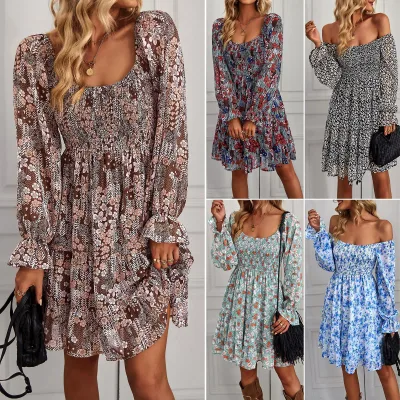


Women's Elegant Floral Print Summer Casual Party Style Girls Fashion Dress
$13.00 - $15.00
MOQ: 100 pieces


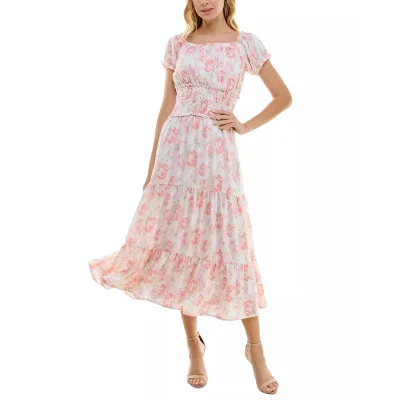
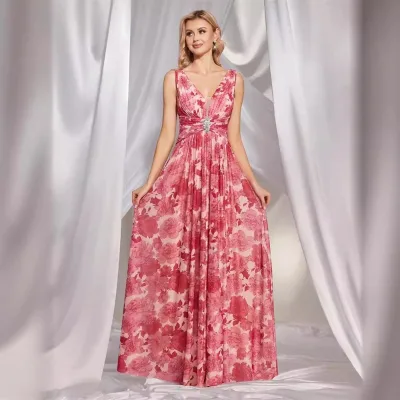


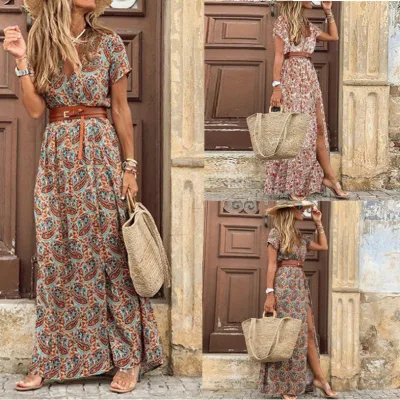


Comprehensive Sourcing Guide
Strategic Sourcing Guide for Floral Print A-Line Chiffon Dresses
Understanding Product Specifications and Material Variability
When sourcing a floral print A-line chiffon dress, the primary challenge lies in distinguishing between the idealized product concept and the actual manufacturing capabilities of potential suppliers. The core keyword implies a specific silhouette (A-line), fabric (chiffon), and pattern (floral print). However, an analysis of available market data reveals a complex landscape where "chiffon" may be substituted with similar lightweight synthetics, and "floral" may be interpreted through various printing techniques.
The supply data indicates that while the target aesthetic is clear, the underlying material composition varies significantly across listings. For instance, some suppliers list "Polyester" as the primary material, while others specify "Viscose." Both materials can be engineered to mimic the drape and flow of traditional chiffon, yet they possess distinct care requirements and tactile properties. Polyester offers durability and resistance to wrinkling, whereas Viscose provides a softer hand feel but may require more delicate handling. Buyers must verify the exact fiber content, as a "Polyester Chiffon" behaves differently in dyeing and printing than a "Viscose Chiffon."
Furthermore, the pattern specification is not uniform. While the search term requests a "floral print," the observed data includes attributes such as "Classic Polka Dots," "Dyed," and "Other" patterns. This suggests that suppliers may use the term "floral" loosely or offer custom printing services where the buyer provides the artwork. The "Dyed" attribute indicates that color is integrated into the fiber rather than printed on the surface, which affects the longevity and vibrancy of the floral design. A buyer seeking a specific floral motif must confirm whether the pattern is achieved through digital printing, screen printing, or a dye-sublimation process, as each method impacts the cost and the minimum order quantity (MOQ).
The silhouette, defined as A-line, is a common style, but the "Skirt Shape" attribute in the data points to a "360° Flared (Natural Drape)" variation. This distinction is crucial for the final look of the garment. An A-line dress typically tapers from the waist to the hem, creating a triangular shape, whereas a 360° flared skirt offers a more voluminous, circular movement. Buyers should request technical sketches or physical samples to ensure the "A-line" description matches the intended volume and flare of the garment. Additionally, the "Style" attribute notes "Loose" fits, which aligns with the A-line cut but requires verification of the specific ease allowance to ensure the dress hangs correctly without being overly baggy.
Technical Construction and Sizing Standards
The technical construction of the dress involves several critical specifications that determine fit, comfort, and production feasibility. The data highlights a wide range of sleeve lengths, including "Long Sleeve," "Short Sleeve," and "Sleeveless" options. This variability allows for seasonal adaptation, with "Spring/Summer" and "Summer" being the dominant seasons listed. However, the "Neckline" is described as a "Soft Curve," which suggests a specific cut that may vary in depth and shape depending on the manufacturer. Buyers must clarify the exact neckline measurement and shape to ensure it meets brand standards, as "Soft Curve" is a descriptive term rather than a precise technical drawing.
Sizing is another area requiring rigorous attention. The data explicitly states that sizes range from "S-3XL" and that "Any Size You Like" can be made. This indicates a high degree of customization capability, often associated with OEM (Original Equipment Manufacturer) services. The "Size" attribute suggests that standard sizing charts may not apply, and suppliers are prepared to produce custom patterns. This flexibility is advantageous for brands with specific demographic targets but introduces complexity in quality control. Buyers must provide detailed size charts, including bust, waist, hip, and length measurements, to avoid discrepancies between the sample and bulk production.
The "Clothing Length" varies between "Long Dress" and "Short Dress," which directly impacts the amount of fabric required and the overall cost. A long dress will naturally consume more material and may require additional lining or structural support to maintain the A-line shape. The "Single Gross Weight" is listed as 0.500kg, which serves as a baseline for shipping calculations but may fluctuate based on the specific length and fabric weight. Buyers should verify the fabric GSM (grams per square meter) to ensure the chiffon is not too sheer or too heavy for the intended design.
Packaging details are also part of the technical specification. The data mentions "1. Clear Plastic Bag, One Bag Per Piece" and "2. Carton" or "Cardboard Box" as packaging options. The choice of packaging affects the final presentation and protection of the garment during transit. For a delicate chiffon dress, the use of clear plastic bags is standard to prevent dust and moisture, but the quality of the plastic and the tightness of the fold can impact the garment's condition upon arrival. The "Standard" dimension of "40303" or "40303.5" likely refers to carton dimensions, which are critical for optimizing container loading and reducing shipping costs.
Compliance, Certification, and Care Requirements
Compliance and certification are paramount in the textile industry, yet the available data presents a nuanced picture. While the term "OEKO-TEX" appears in the background context, it is flagged as low-confidence and should not be assumed as a guaranteed attribute of the product. Buyers must treat certification status as a verification requirement rather than a default feature. The "Care Instructions" vary significantly, with some listings specifying "Professional Dry Clean Only" and others stating "Machine Washable." This discrepancy highlights the importance of verifying the chemical treatments and fabric blends used by the supplier.
A dress labeled as "Machine Washable" implies the use of durable dyes and stabilizers that can withstand agitation and water. Conversely, "Dry Clean Only" suggests a more delicate fabric or a print that may bleed or fade with water exposure. For a floral print chiffon dress, the care instruction is a direct indicator of the print quality and the fabric's chemical finish. Buyers should request test reports or care label samples to confirm the washing instructions before placing a large order. The "Feature" attribute lists "Breathable" and "Anti-Static" properties, which are desirable for summer wear but must be validated through performance testing to ensure they are not merely marketing claims.
Regarding standards, the data includes a "Standard" value of "40303" and "1kg," which likely refers to packaging dimensions and weight rather than a regulatory standard. The absence of specific regulatory certifications (such as REACH, CPSIA, or specific ISO standards) in the high-confidence facts means buyers must explicitly request compliance documentation. The "Supply Type" is listed as "OEM Service," which implies that the supplier is capable of meeting specific brand requirements, including compliance with local regulations. However, the burden of proof lies with the buyer to ensure that the finished product meets the safety and environmental standards of the target market.
The "Customization" attribute is marked as "Available," and "7 Days Sample Customization" is supported. This suggests that suppliers are agile in making adjustments to meet compliance needs, such as changing labels or adjusting fabric blends. However, buyers should be cautious about the timeline for sample customization, as rush orders may compromise quality control. The "Supply Ability" of "50000 Piece/Pieces Per Month More" indicates a high-volume capacity, which is beneficial for large orders but requires a robust quality assurance process to maintain consistency across the batch.
Cost Drivers and Pricing Dynamics
The pricing of a floral print A-line chiffon dress is influenced by a complex interplay of factors, including material costs, labor, customization, and order volume. The observed price range of $0.5 to $58.25 USD represents a vast spectrum, reflecting the difference between basic mass-produced items and high-end custom designs. The lower end of the range likely corresponds to simple polyester chiffon dresses with standard sizing and minimal customization, while the higher end may include Viscose blends, complex floral prints, or bespoke sizing.
The "MOQ" (Minimum Order Quantity) is a significant cost driver. The data shows an MOQ range of 2 to 500 pieces, with a specific listing of "100 PCS." Lower MOQs, such as 2 or 100 pieces, are ideal for startups or test runs but often come with a higher unit price due to the setup costs for printing and pattern making. Higher MOQs, such as 500 pieces, typically result in a lower unit price but require a larger upfront investment. Buyers must balance their budget constraints with their inventory needs to determine the optimal order quantity.
Material costs also play a crucial role. The choice between Polyester and Viscose affects the base price, with Viscose generally being more expensive due to its natural origin and processing requirements. The "Pattern" attribute, whether "Dyed" or "Printed," further influences cost. Digital printing allows for complex floral designs with low setup costs, making it suitable for lower MOQs, while screen printing may be more cost-effective for larger volumes but requires higher initial setup fees. The "Style" of "Loose" fit may reduce fabric waste compared to fitted styles, potentially lowering material costs, but this depends on the specific pattern layout.
Labor costs vary by region and production complexity. The "Location" is listed as "China," which is a major manufacturing hub known for competitive labor rates. However, the complexity of the "360° Flared" skirt or the "Soft Curve" neckline may require skilled labor, increasing the production cost. The "Supply Ability" of 50,000 pieces per month suggests that the supplier has the capacity to handle large orders efficiently, which can help stabilize costs. Buyers should request a detailed cost breakdown, including material, labor, printing, and packaging, to understand the true cost drivers and negotiate effectively.
Supplier Evaluation and Quality Assurance
Evaluating suppliers for a floral print A-line chiffon dress requires a multi-faceted approach, focusing on their technical capabilities, production capacity, and quality control processes. The "Supply Type" of "OEM Service" indicates that the supplier is experienced in working with brands to create custom products. However, buyers should verify the supplier's track record in producing similar garments, particularly those with delicate fabrics like chiffon and intricate floral prints.
The "7 Days Sample Customization" support is a positive indicator of responsiveness, but it should not be the sole criterion for selection. Buyers should request multiple samples to assess the consistency of the print, the quality of the stitching, and the accuracy of the sizing. The "Packaging Detail" of "Clear Plastic Bag" and "Carton" suggests a standard packaging process, but buyers should inspect the packaging for damage and ensure that the garments are protected during transit.
Quality control is essential to ensure that the final product meets the brand's standards. The "Feature" of "Breathable" and "Anti-Static" should be verified through testing, as these claims can be difficult to replicate consistently. Buyers should request test reports or conduct their own quality checks on the samples. The "Care Instructions" should also be tested to ensure that the garment can withstand the recommended washing or dry cleaning process without damage.
The "Model No." listed in the data, such as "LM688065" or "MY203828," suggests that the supplier has a catalog of existing designs. Buyers should inquire about the flexibility of these models and whether they can be modified to meet specific requirements. The "Size" range of "S-3XL" and the ability to make "Any Size You Like" indicate a high level of customization, but buyers should ensure that the supplier has the necessary pattern-making and grading capabilities to produce custom sizes accurately.
Long-Term Procurement and Strategic Considerations
Long-term procurement of floral print A-line chiffon dresses requires a strategic approach that balances cost, quality, and supply chain reliability. The "Supply Ability" of 50,000 pieces per month suggests that the supplier can handle large orders, but buyers should assess their ability to scale production in response to demand fluctuations. The "Customization" availability and "7 Days Sample Customization" support indicate that the supplier is agile, but buyers should establish clear communication channels to ensure that changes are implemented efficiently.
The "Season" attribute of "Spring/Summer" and "Summer" suggests that the product is seasonal, which may lead to inventory management challenges. Buyers should plan their orders well in advance to avoid stockouts during peak seasons and to take advantage of off-season pricing. The "MOQ" of 100 PCS or higher may require buyers to commit to larger orders, which can be risky if the product does not sell as expected. Buyers should consider a phased ordering strategy, starting with smaller orders to test the market and scaling up as demand grows.
The "Material" choice of Polyester or Viscose has long-term implications for the product's lifecycle and environmental impact. Buyers should consider the sustainability of the materials and the supplier's environmental practices. The "Standard" of "40303" and "1kg" for packaging suggests a focus on efficiency, but buyers should evaluate the environmental impact of the packaging materials and explore options for recyclable or biodegradable alternatives.
Finally, the "Location" of "China" offers cost advantages but also introduces logistical considerations, such as lead times and shipping costs. Buyers should factor in the time required for production, quality control, and transportation when planning their procurement strategy. The "Supply Type" of "OEM Service" implies a partnership model, where the buyer and supplier work closely to achieve mutual goals. Building a strong relationship with the supplier can lead to better pricing, improved quality, and more flexible terms over time.
Conclusion
Sourcing a floral print A-line chiffon dress involves navigating a complex landscape of material options, technical specifications, and supplier capabilities. By carefully evaluating the product attributes, verifying compliance and care requirements, and understanding the cost drivers, buyers can make informed decisions that align with their brand's values and market needs. The flexibility of OEM services and the wide range of customization options available provide opportunities for brands to create unique and high-quality products. However, rigorous quality control and strategic planning are essential to ensure long-term success in the competitive fashion market.
FAQs
Can I get custom sizes for this dress?
Yes, you can get any size you like from S to 3XL. The supplier supports OEM services and allows for full customization to match your specific size charts without extra constraints.
What is the minimum order quantity for this dress?
The minimum order quantity ranges from 2 to 500 pieces depending on the specific listing. Some suppliers require 100 pieces while others accept orders as low as two units for testing.
How long does it take to receive a custom sample?
A custom sample can be prepared within 7 days. The supplier explicitly supports 7-day sample customization to help buyers verify fit and fabric quality before placing bulk orders.
What materials are used for this dress?
The dress is primarily made from Polyester or Viscose materials. These fabrics are selected to provide a lightweight feel suitable for spring and summer seasons while maintaining durability.
Is the dress suitable for daily casual occasions?
Yes, the dress is designed specifically for daily casual occasions. It features a loose style with a soft curve neckline and is available in classic polka dot or dyed patterns.
How is the dress packaged for shipping?
Each piece is packed in a clear plastic bag and placed inside a cardboard box or carton. The standard packaging dimensions are approximately 40 by 30 centimeters to ensure safe transit.
Can the dress be machine washed?
Care instructions vary by specific model, with some requiring professional dry cleaning only. Other listings indicate the dress is machine washable, so buyers must verify the care label for their selected item.