Source Food Grade Nylon Filter Mesh for Liquid Solid Gas Filtration
Explore 30 listings for Food Grade Nylon Filter Mesh suitable for liquid filtration, solid-liquid separation, and gas-liquid separation. Buyers can compare mesh counts, widths, and customization options from verified Chinese manufacturers.
Key considerations
Products List


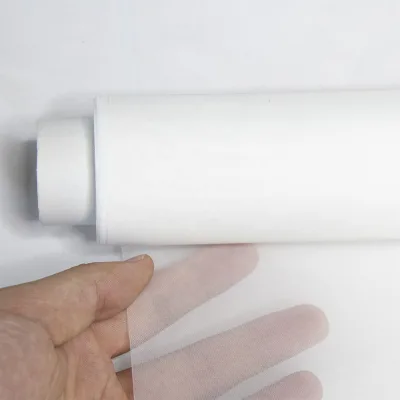


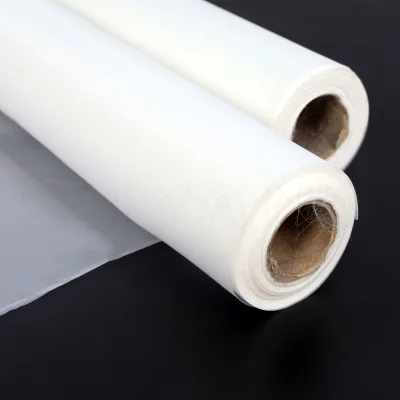

Food Grade Nylon Filter Cloth Filter Mesh Woven Filter Mesh China Supplier
$1.00 - $20.00
MOQ: 10 Meters

Food Grade Micron Monofilament Nylon / Polyester Water Filter Mesh
$10.00 - $20.00
MOQ: 1 Square Meters


Comprehensive Sourcing Guide
Strategic Sourcing Guide for Food Grade Nylon Filter Mesh
Understanding Technical Specifications and Material Variability
When sourcing Food Grade Nylon Filter Mesh, buyers must first navigate a landscape of diverse technical specifications that define the product's performance capabilities. The core material is consistently identified as nylon, a polymer chosen for its durability and chemical resistance, yet the physical attributes vary significantly across different product listings. A critical observation in the current market is the variability in mesh count. While some data points indicate a range of 10 to 330 mesh per inch, other entries suggest a broader spectrum from 6 to 600 mesh. This discrepancy highlights the necessity for buyers to verify the specific micron rating required for their filtration process rather than relying on a single generalized range. The mesh opening size is a pivotal metric; specific observations note openings as small as 90 microns, while other product models reference micron ratings such as 120 or 150 microns. For food grade applications, the precision of these openings determines the efficiency of solid-liquid separation and the purity of the final product.
The structural integrity of the mesh is another primary consideration. The observed data describes the structure as a "Single Network" with "Single" layers, suggesting a monofilament or basic woven construction. However, the width specifications also present a range, with some listings citing 0.6 meters to 3.6 meters, while others extend up to 3.68 meters. This variation in width impacts the roll size and the potential for waste during installation in industrial filtration systems. Furthermore, the color is predominantly observed as white, which is often preferred in food processing environments for hygiene and visual inspection purposes. The product models vary widely, with identifiers ranging from numeric codes like 181 and 219 to alphanumeric strings such as MAISHIJ093. These model numbers often correlate with specific mesh counts or thicknesses, making them essential reference points for procurement teams to ensure they are ordering the exact configuration required for their machinery.
Compliance, Certification, and Food Safety Standards
In the realm of food grade filtration, compliance with international standards is not merely a preference but a regulatory necessity. The sourcing guide must emphasize the verification of certifications that validate the safety of the nylon mesh for contact with consumable goods. One specific certification observed in the market data is ISO9001:2008. While this standard indicates a quality management system, buyers must understand that it is a process certification rather than a direct material safety certification for food contact. Therefore, relying solely on the presence of an ISO9001 label is insufficient. Procurement teams must request additional documentation, such as FDA compliance statements or specific food grade certificates, which are not explicitly detailed in the general product listings but are implied by the "Food Grade" designation in the product names.
The distinction between general industrial nylon and food grade nylon is critical. The product descriptions frequently mention "Food Grade Micron Nylon Filter Mesh" and "food grade 25 micron nylon screen filter mesh fabric." These labels suggest that the material meets specific purity criteria, likely free from heavy metals or toxic additives that could leach into food products. However, the absence of explicit test results or third-party audit reports in the general data means that buyers cannot assume every listed product meets these standards without direct verification. The "High Efficiency" type classification found in the data further implies that the mesh is designed for rigorous separation tasks, but the specific efficiency metrics (such as particle retention rates) must be confirmed through the supplier's test reports. Buyers should insist on seeing machinery test reports, which are noted as "Provided" in some listings, to validate the filtration performance claims before finalizing an order.
Cost Drivers and Pricing Dynamics
The pricing structure for Food Grade Nylon Filter Mesh is influenced by several dynamic factors, primarily mesh count, width, and customization requirements. The observed price range in the market spans from 0.15 to 50 USD, a vast disparity that reflects the difference between standard industrial rolls and specialized, high-precision food grade variants. The lower end of the spectrum likely corresponds to basic mesh counts or smaller widths, while the higher end may encompass custom lengths, specialized micron ratings, or bulk orders with specific packaging requirements. The Minimum Order Quantity (MOQ) is another significant cost driver. Data indicates an MOQ range from 1 meter to 1000 units, with specific observations noting an MOQ of 1 meter for certain products. This flexibility allows small-scale buyers to test samples without significant capital outlay, but it also means that unit prices may be higher for smaller orders.
Customization is a major factor in cost escalation. The market data confirms that customization is available, with options for roll lengths of 30 meters, 50 meters, or "Make as Your Request." Customizing the width to fit specific machinery or altering the mesh count to achieve a precise micron rating will inevitably increase the production cost. Additionally, the packaging method plays a role in the final price. Options include paper carton boxes, PVC bags, plastic films, and paper tubes. More robust packaging, such as reinforced cartons or specialized tubes for long-distance shipping, adds to the overall cost but is essential for preventing damage during transit. Buyers should anticipate that the "Food Grade" designation itself may carry a premium over standard nylon mesh due to the stricter quality control and material sourcing required to meet food safety regulations.
Typical Applications and Operational Use Cases
The versatility of Food Grade Nylon Filter Mesh is evident in its wide array of applications, ranging from liquid filtration to complex separation processes. The primary use cases identified include liquid filtration, solid-liquid separation, and gas-liquid separation. In food processing, this material is frequently employed in the clarification of beverages, the filtration of oils, and the separation of solids from liquids in dairy or juice production lines. The "Single Network" structure and "Single" layer design make it particularly suitable for applications where a balance between flow rate and particle retention is required. The mesh is also utilized in dry filtration scenarios, suggesting its utility in powder processing or air filtration within food manufacturing facilities.
The specific application of "Solid-Liquid Separation" is particularly relevant for industries dealing with slurry or particulate-laden fluids. The ability to handle "Dry Filtration" extends the utility of the mesh to environments where moisture control is critical. The "High Efficiency" classification suggests that these meshes are optimized for capturing fine particles, which is essential for maintaining product quality and preventing equipment clogging. The observation that the mesh is suitable for "Liquid Filter" and "Air Filter" applications indicates a dual-purpose capability, allowing manufacturers to standardize their inventory across different stages of the production line. However, buyers must ensure that the specific mesh count matches the particle size of the material being filtered; a mesh that is too coarse will fail to capture contaminants, while one that is too fine may restrict flow and increase energy costs.
Supplier Evaluation and Quality Assurance Protocols
Evaluating suppliers for Food Grade Nylon Filter Mesh requires a rigorous approach to quality assurance and due diligence. The origin of the products is consistently noted as Hebei, China, or simply China, indicating a concentrated manufacturing hub. While this provides access to a large volume of suppliers, it necessitates a thorough vetting process to ensure consistency and reliability. Buyers should prioritize suppliers who provide machinery test reports and offer free samples, as these actions demonstrate confidence in their product quality. The availability of free samples is a crucial step in the evaluation process, allowing procurement teams to physically inspect the mesh for color consistency, structural integrity, and adherence to the specified micron rating.
When assessing a supplier, buyers must look beyond the basic product descriptions and request detailed documentation regarding the production process. The presence of certifications like ISO9001:2008 is a positive indicator, but it should be complemented by specific food safety audits. The "warranty" status is noted as "Unavailable" in some listings, which is a red flag that buyers should address directly. A reputable supplier should offer some form of guarantee or replacement policy for defective products, especially in the food industry where contamination risks are high. Additionally, the variety of packaging options, from PVC bags to paper tubes, suggests that suppliers have the capability to handle different logistical needs, but buyers must confirm that the packaging is suitable for preserving the food grade integrity of the mesh during storage and transport.
Long-Term Procurement Considerations and Inventory Management
Sourcing Food Grade Nylon Filter Mesh is not a one-time transaction but an ongoing relationship that requires strategic planning for inventory and supply chain stability. The variability in product models, such as the 181, 219, and MAISHIJ093 series, suggests that buyers may need to maintain a diverse inventory to accommodate different production needs. The standard roll lengths of 30 and 50 meters, along with the option for custom lengths, offer flexibility but also complicate inventory management. Buyers should establish clear specifications for their recurring orders to avoid confusion and ensure that the correct mesh count and width are consistently supplied.
Long-term procurement also involves monitoring the supply chain for potential disruptions. Given that the products originate from a specific region, buyers should consider the geopolitical and logistical factors that could impact lead times. The "Make as Your Request" option for roll lengths and customization implies a longer lead time compared to standard off-the-shelf items. Therefore, it is advisable to maintain a buffer stock of critical mesh counts to prevent production stoppages. Furthermore, as food safety regulations evolve, buyers must stay informed about any changes in standards that might affect the compliance of their current suppliers. Regular audits and re-verification of certifications will be essential to ensure that the supply chain remains robust and compliant with the latest industry requirements. By focusing on these long-term considerations, buyers can secure a reliable supply of high-quality Food Grade Nylon Filter Mesh that supports their operational efficiency and product safety goals.
FAQs
What certifications are available for Food Grade Nylon Filter Mesh?
ISO9001:2008 certification is available for some products, but it validates the quality management system rather than direct food safety. Buyers must request additional documentation like FDA compliance statements to confirm the material is safe for food contact applications.
Which mesh counts are available for nylon filter mesh?
Mesh counts range from 6 to 600 mesh per inch, with specific observations noting ranges like 10 to 330 mesh per inch. Buyers should verify the exact micron rating required, as openings can be as small as 90 microns or specified as 120 and 150 microns.
Can I request custom roll lengths for this filter mesh?
Yes, customization is available with standard options of 30 meters or 50 meters, or you can request specific lengths. Customizing the width to fit machinery or altering the mesh count will increase production costs and may extend lead times compared to standard items.
What is the minimum order quantity for nylon filter mesh?
The minimum order quantity ranges from 1 meter to 1000 units depending on the specific product listing. Some products allow an MOQ of just 1 meter, enabling small-scale buyers to test samples without significant capital outlay before placing larger orders.
Where are these food grade nylon filter meshes manufactured?
The products originate from Hebei, China, or generally China, indicating a concentrated manufacturing hub. Buyers should prioritize suppliers who provide machinery test reports and offer free samples to ensure consistency and reliability given the specific regional origin.
How is the Food Grade Nylon Filter Mesh typically packaged?
Packaging options include paper carton boxes, PVC bags, plastic films, and paper tubes. More robust packaging like reinforced cartons adds to the cost but is essential for preventing damage during transit and preserving the food grade integrity of the mesh.