Source Food Grade PP Homopolymer for packaging, automotive, and medical uses
Find 30 verified suppliers of Food Grade PP Homopolymer suitable for packaging, automotive, and medical applications. Compare specifications, prices, and lead times to identify the best raw material options for your manufacturing needs.
Key considerations
Products List


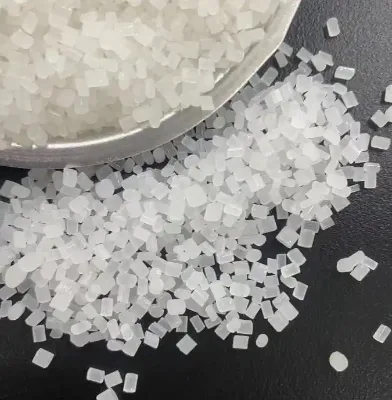


High-Quality Resin Polypropylene Virgin Homopolymer for Food Containers
$860.00 - $1060.00
MOQ: 1 Tons
Comprehensive Sourcing Guide
Strategic Sourcing Guide for Food Grade PP Homopolymer
Understanding Material Fundamentals and Forming Capabilities
Sourcing Polypropylene (PP) homopolymer for food-grade applications requires a precise understanding of the material's intrinsic properties and its processing versatility. The core material is identified as 100% virgin Polypropylene, a thermoplastic resin that exhibits excellent mechanical strength and medium liquidity. This specific grade is characterized by its ability to return to a liquid state upon heating and solidify upon cooling, a property defined as thermoplastic behavior. The material is supplied in the form of granules or particles, often described as transparent granules or white granules depending on the specific formulation and additives.
The versatility of this homopolymer is evident in its diverse forming methods. Buyers must recognize that the same base resin can be processed through extrusion, injection molding, blow molding, and film pressure techniques. The supply chain data indicates that the material is suitable for extrusion, injection, and film pressure applications, allowing manufacturers to produce a wide array of end products. The material's grade includes specific classifications such as extrusion grade, injection molding grade, blown film grade, and drawing grade, ensuring compatibility with various industrial machinery. When evaluating a potential supplier, it is critical to verify that their specific batch of homopolymer aligns with the intended manufacturing process, as the flow characteristics required for injection molding differ significantly from those needed for film extrusion.
Technical Specifications and Grade Verification
When defining the technical requirements for food-grade PP homopolymer, buyers must look beyond generic descriptions to specific performance metrics. The material is classified under the HS code 3902100090, which is the standard international classification for polypropylene homopolymers. A critical distinction in this category is the "virgin" status of the material, ensuring that the resin has not been previously recycled, which is a primary requirement for food contact applications to prevent contamination.
The physical appearance of the raw material is a key indicator of quality. The observed specifications include "transparent granule" and "white" color options, with the shape consistently described as granules. The material is noted for having excellent quality and is available in various forms, including 100% virgin PP material. Buyers should verify that the specific model numbers or product codes provided by the supplier, such as T30s, 1100n, Y35, or 3248r, correspond to the exact mechanical and thermal properties required for their application. These model numbers often denote specific melt flow rates or viscosity levels that dictate the material's behavior during processing.
Furthermore, the material's feature level is described as having medium liquidity and high mechanical strength. This combination is essential for food packaging that must withstand filling pressures and transportation stresses without deforming. The material is also categorized under general plastics, engineering plastics, and specialty plastics, indicating its broad utility. However, for food-grade applications, the specific "Food Grade Fabric Brushed Fiber" feature level mentioned in some listings must be cross-referenced with the actual intended use, as fiber applications differ from rigid packaging. Buyers must ensure the supplier can provide a certificate of analysis (COA) that confirms the material meets the specific regulatory thresholds for food contact, rather than relying solely on general product descriptions.
Compliance, Certification, and Regulatory Alignment
The most critical aspect of sourcing food-grade PP homopolymer is ensuring strict compliance with international and local food safety regulations. While the provided data mentions "Food Grade" as a feature level, it does not list specific certification bodies or standard numbers (such as FDA 21 CFR or EU 10/2011). Therefore, buyers must treat the "Food Grade" label as a claim that requires independent verification. The procurement process must include a rigorous request for documentation proving that the specific batch of virgin PP material has been tested and certified for food contact.
Buyers should verify that the supplier adheres to the standard packing requirements, which are typically 25kg/bag or 100% Virgin PP packaging standards. The origin of the material, often listed as China or specifically Hebei, China, does not inherently determine compliance, but it necessitates a review of the exporting country's regulatory framework and the supplier's track record. The material's biodegradable or photodegradable features, while noted in some product listings, are distinct from food-grade requirements and should not be confused with safety certifications. A material can be biodegradable and still be non-compliant for food contact if it contains unapproved additives.
The procurement strategy must involve a direct inquiry into the supplier's quality management system. Buyers should ask for specific test results regarding migration limits, heavy metal content, and overall compliance with the relevant food safety standards of the destination market. The "Excellent" quality attribute mentioned in the data is a qualitative observation and must be substantiated by quantitative test data. Without explicit certification documents, the "Food Grade" designation remains a marketing claim rather than a verified fact.
Cost Drivers and Economic Factors
The cost of sourcing food-grade PP homopolymer is influenced by several dynamic factors, including the price of crude oil, which is the primary feedstock for polypropylene production. The observed price range in the market spans from $1 to $1,311 USD, a wide variance that likely reflects differences in order volume, specific grade complexity, and packaging configurations. Buyers must understand that the lowest price point may correspond to non-virgin or recycled materials, which are unsuitable for food applications, while the higher end of the spectrum may include specialized grades with added stabilizers or specific certifications.
The Minimum Order Quantity (MOQ) is another significant cost driver. The data indicates an MOQ range from 1kg to 28kg, with a specific standard of 25kg per bag. For small-scale operations or prototyping, an MOQ of 1kg may be necessary, but this often comes with a higher unit cost. Conversely, bulk purchasing at the standard 25kg bag level or larger volumes can significantly reduce the per-unit price. The packaging standard of 25kg/bag is consistent across many listings, suggesting that logistics and handling costs are optimized for this weight.
Lead times also impact the total cost of ownership. The observed delivery times range from 5-7 working days to 7-10 working days. Faster delivery options may incur premium charges, while longer lead times allow for better inventory planning but require more capital tied up in stock. Buyers should factor in the cost of storage and the risk of supply chain disruptions when evaluating the total cost. Additionally, the availability of customization and ODM/OEM services can influence pricing, as tailored solutions often require additional setup costs and longer production cycles.
Typical Applications and End-Use Scenarios
Polypropylene homopolymer is a versatile material used across a wide spectrum of industries, with food packaging being a primary application. The material's high mechanical strength and thermoplastic nature make it ideal for manufacturing rigid containers, caps, and closures that require durability and chemical resistance. The specific forming methods available, such as injection molding and blow molding, are particularly suited for creating complex shapes like bottle closures and food storage containers.
Beyond food packaging, the material is utilized in general plastics applications, engineering plastics, and specialty plastics. The "Film Pressure" forming method suggests suitability for flexible packaging films, while the "Extrusion" method supports the production of pipes, sheets, and fibers. The "Food Grade Fabric Brushed Fiber" feature indicates potential use in food service textiles or specialized filtration media, though this requires careful validation to ensure the fiber structure does not compromise food safety.
The material's application in plastic products is broad, ranging from household items to industrial components. The "General Plastics" usage category encompasses everyday items, while "Engineering Plastics" implies use in more demanding environments. Buyers should match the specific model number and grade of the PP homopolymer to the mechanical and thermal requirements of their end product. For instance, a high-melt-flow grade might be preferred for thin-walled containers, while a high-strength grade is necessary for heavy-duty crates.
Supplier Evaluation and Quality Assurance
Evaluating suppliers for food-grade PP homopolymer requires a multi-faceted approach that goes beyond price and lead time. The first step is verifying the supplier's ability to provide 100% virgin material, as the presence of recycled content can disqualify a batch for food use. Buyers should request detailed product specifications, including the model number, material grade, and physical appearance (e.g., transparent granule vs. white granule). The supplier's location, such as Hebei, China, should be verified for its logistical efficiency and regulatory environment.
Quality control is paramount. Buyers must ensure that the supplier has a robust quality assurance process that includes testing for mechanical strength, liquidity, and compliance with food safety standards. The "Excellent" quality attribute should be backed by consistent test results over time. The supplier's ability to offer customization and ODM/OEM services is also a valuable indicator of their technical capability and flexibility. However, buyers must be cautious of suppliers who claim "Food Grade" status without providing verifiable documentation.
The packaging standard of 25kg/bag or 100% Virgin PP packaging should be consistent to prevent contamination during shipping. The supplier's delivery time, whether 5-7 or 7-10 working days, should be reliable to ensure timely production schedules. Buyers should also consider the supplier's track record in handling food-grade materials and their willingness to undergo third-party audits. A supplier that is transparent about their production process and quality control measures is more likely to deliver consistent, safe products.
Long-Term Procurement Considerations
Sourcing food-grade PP homopolymer is not a one-time transaction but a long-term partnership that requires strategic planning. Buyers should consider the stability of the supply chain, including the supplier's ability to maintain consistent quality and delivery times over extended periods. The variability in lead times (5-10 days) and MOQs (1-28kg) suggests that buyers need a flexible procurement strategy that can adapt to changing market conditions.
Sustainability is another long-term consideration. While some listings mention "Biodegradable" or "Photodegradable" features, these attributes must be balanced with the primary requirement of food safety. Buyers should evaluate whether the supplier offers eco-friendly options that do not compromise the material's performance or safety. The ability to customize the material, such as adjusting the color or adding specific additives, can also be a long-term advantage for product differentiation.
Finally, buyers should monitor market trends and regulatory changes that could impact the availability and cost of food-grade PP. The global supply chain for raw materials is subject to fluctuations, and maintaining a diverse supplier base can mitigate risks. By focusing on technical specifications, compliance verification, and supplier reliability, buyers can ensure a steady supply of high-quality food-grade PP homopolymer for their manufacturing needs.
FAQs
What is the standard packaging for Food Grade PP Homopolymer?
The standard packaging is 25kg per bag. This format is consistent across listings and helps optimize logistics handling while ensuring the material remains protected during transit from the factory to the buyer.
Can suppliers offer customization for virgin PP material?
Yes, customization is available for this material. Buyers can request specific modifications, and suppliers accept ODM and OEM services to tailor the resin properties to unique manufacturing requirements.
Which model numbers are available for virgin PP granules?
Available model numbers include T30s, 1100n, Y35, and 3248r. These codes denote specific grades with varying mechanical strengths and liquidity levels suitable for different processing methods like injection or extrusion.
How long does delivery take for these plastic raw materials?
Delivery typically takes between 5 to 10 working days. The exact lead time depends on the specific supplier and order volume, with options ranging from 5-7 days up to 7-10 days.
What is the minimum order quantity for PP particles?
The minimum order quantity ranges from 1kg to 25kg. While some suppliers accept small orders of 1kg, the standard bulk unit is often 25kg per bag to maintain packaging efficiency.
Which forming methods are supported by this polypropylene grade?
The material supports extrusion, injection molding, blow molding, and film pressure. These versatile processing options allow manufacturers to produce a wide range of products from rigid containers to flexible films.
What is the origin location for these plastic raw materials?
The products originate from Hebei, China. This location is a known hub for plastic production, ensuring a steady supply of virgin PP material for international buyers seeking cost-effective sourcing options.