Source Food Grade Reusable Plastic Bucket for Chemical, Paint, and Water
Find 30 listings for Food Grade Reusable Plastic Bucket options from Chinese manufacturers. Buyers can compare capacities ranging from 4L to 20L, wall thicknesses, and customization features like logo printing.
Key considerations
Products List


$2.66 - $2.90
MOQ: 1000 Pieces




Comprehensive Sourcing Guide
Strategic Sourcing Guide for Food Grade Reusable Plastic Buckets
The global demand for durable, hygienic, and reusable packaging solutions has elevated the importance of food-grade plastic buckets in industrial and commercial supply chains. These containers serve as critical vessels for transporting liquids, semi-solids, and dry goods across various sectors, from food processing to chemical manufacturing. For procurement professionals, sourcing these items requires a nuanced understanding of material properties, regulatory compliance, and supplier capabilities. This guide provides a comprehensive framework for evaluating food-grade reusable plastic buckets, ensuring that buyers select products that meet strict safety standards while optimizing cost and operational efficiency.
Technical Specifications and Material Composition
The foundation of a reliable plastic bucket lies in its material composition and physical dimensions. The primary material identified in the market for these applications is plastic, specifically designed to offer chemical resistance and structural integrity. When evaluating technical specifications, buyers must scrutinize the wall thickness, as this directly correlates with durability and the ability to withstand stacking loads. Observed data indicates that wall thickness can vary significantly, with specific models featuring measurements such as 1.4mm, 1.7mm, 2.0mm, and 2.2mm. Thicker walls generally provide enhanced protection against impact and puncture, which is crucial for reusable applications where the container undergoes multiple cycles of filling, transport, and cleaning.
Dimensional consistency is another critical technical factor. Buckets are available in various standard sizes, ranging from compact units to large capacity vessels. For instance, specific models are designed with dimensions around 191mm x 173mm x 183mm, while larger industrial options may reach 265mm x 235mm x 386mm or even 300mm x 275mm x 360mm. Capacity ratings are equally important, with common offerings including 4L, 5L, and 20L configurations. The 20L variant, often referred to as a 5-gallon square plastic bucket, is particularly prevalent in industrial settings. Buyers should verify that the internal volume matches the labeled capacity to ensure accurate dosing and inventory management.
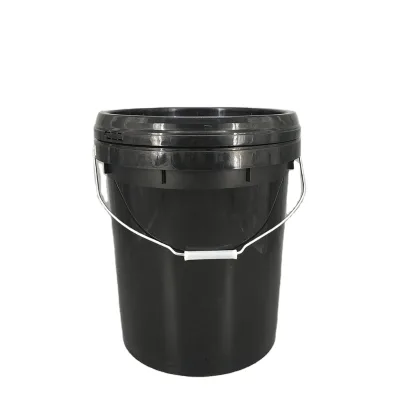
The design of the handle is also a vital technical specification. Options include plastic handles or composite plastic and metal handles, each offering different ergonomic benefits and load-bearing capacities. The choice between these depends on the weight of the contents and the frequency of manual handling. Additionally, the weight of the empty container, ranging from approximately 234g to 1164g depending on the size and thickness, serves as a proxy for material density and potential durability.
Compliance, Certification, and Safety Standards
For food-grade applications, compliance with international safety standards is non-negotiable. The procurement process must prioritize suppliers who can demonstrate adherence to rigorous quality management systems. The market data highlights several key certifications that buyers should verify, including ISO9001, which indicates a commitment to quality management, and HACCP (Hazard Analysis and Critical Control Points), which is essential for food safety management systems. Furthermore, specific mentions of "Un" certification suggest compliance with United Nations standards for the transport of dangerous goods, a critical factor if the bucket is intended for dual-use in chemical or food sectors.
When sourcing food-grade buckets, it is imperative to confirm that the plastic material used is explicitly rated for food contact. While the general classification is "plastic," the specific polymer type (such as HDPE or PP) and its food-grade status must be validated through supplier documentation. The presence of certifications like ISO9001/HACCP/Un in the product data suggests a high level of regulatory awareness, but buyers must ensure these certifications are current and applicable to the specific product line being purchased.
Buyers should also investigate the manufacturing origin, as regional regulations can influence compliance. Products originating from regions like Suzhou or Jiangsu Province in China are common in the global market. However, the country of origin alone does not guarantee compliance; the specific factory's audit history and adherence to local and international food safety laws must be verified. The "Eco-Friendly" feature noted in some product attributes indicates a potential for sustainable manufacturing practices, which may align with corporate sustainability goals, but this should be substantiated with data on recyclability and material sourcing.
Cost Drivers and Economic Considerations
Understanding the cost structure of plastic buckets is essential for effective budget management. The price range observed in the market is vast, spanning from $0.19 to $40,000. This extreme variance is not indicative of a single product type but rather reflects the spectrum from small, single-use containers to large, custom-engineered industrial systems or bulk orders of specialized equipment. For standard food-grade reusable buckets, the cost is primarily driven by material costs, wall thickness, and the complexity of the molding process.
The Minimum Order Quantity (MOQ) is a significant economic factor. Data shows MOQs ranging from 1 to 5,000 pieces, with common thresholds at 500 and 1,000 pieces. Higher MOQs often result in lower unit costs due to economies of scale in production and shipping. However, for buyers with lower volume requirements, suppliers offering flexible MOQs or stocked inventory can reduce the financial burden of overstocking. The "Stocked" attribute suggests that some suppliers maintain ready-to-ship inventory, which can expedite procurement and reduce lead times, though potentially at a slightly higher unit price compared to custom production runs.
Customization is another cost driver. While customization is available for features like logo printing (via IMI, silkscreen, or heat transfer) and color, these add-ons increase the unit cost and may extend the lead time. Buyers must balance the need for branding and specific functional requirements against the budget constraints. Additionally, packaging options, such as PE bags or cartons, influence the final landed cost, especially for international shipping where volume and weight efficiency are critical.
Typical Applications and Functional Versatility
Food-grade reusable plastic buckets are highly versatile, serving a wide array of applications beyond simple food storage. The functional scope includes dye packaging, sealing, color printing, and the storage of peracetic acid and hydrogen peroxide. While the primary focus is on food-grade use, the material's chemical resistance allows these buckets to handle a diverse range of substances, including lubricating oils, paints, and water.
The specific usage cases identified in the market data include beer, milk, paint, and general chemical storage. This versatility makes these buckets suitable for the beverage industry, dairy processing, and even industrial cleaning operations. The "Sealing Packing Barrel" function highlights the importance of airtight or leak-proof designs, which are crucial for preserving the quality of perishable goods like milk and beer. Similarly, the ability to package peracetic acid and hydrogen peroxide indicates a level of chemical resistance that is valuable for sanitation and disinfection processes in food processing facilities.
The "Color Printing Packing Barrel" attribute suggests that these containers can be customized for branding or identification purposes, which is beneficial for logistics and inventory tracking. In a supply chain context, color-coded buckets can help distinguish between different product lines or stages of production, reducing the risk of cross-contamination and improving operational efficiency.
Supplier Evaluation and Quality Assurance
Selecting the right supplier is as critical as selecting the right product. Buyers should evaluate suppliers based on their production capacity, quality control processes, and ability to meet delivery timelines. The lead time for these products can vary from 1 to 30 days, depending on the quantity ordered and the customization level. Suppliers with shorter lead times and reliable delivery records are preferable for maintaining just-in-time inventory systems.
Quality assurance should be a central part of the supplier evaluation process. Buyers should request samples to verify physical attributes such as weight, thickness, and handle strength. The availability of free samples for existing models is a positive indicator, allowing buyers to conduct preliminary testing without significant financial risk. For custom orders, buyers should insist on pre-production samples to ensure that the final product meets all specifications.
It is also essential to verify the supplier's capacity for consistent quality. The presence of certifications like ISO9001 suggests a structured approach to quality management, but buyers should look for evidence of ongoing quality control measures, such as regular inspections and testing protocols. The ability to provide detailed product specifications, including dimensions, weight, and material composition, is a sign of a transparent and professional supplier.
Long-Term Procurement and Sustainability
Sourcing food-grade reusable plastic buckets is not just a one-time transaction but a long-term partnership that impacts operational sustainability. The "Eco-Friendly" feature indicates a growing trend towards environmentally responsible packaging. Buyers should inquire about the recyclability of the plastic material and the supplier's efforts to reduce waste during the manufacturing process. Reusable buckets offer a significant advantage over single-use alternatives by reducing the volume of waste generated and lowering the long-term cost of packaging.
To maximize the lifespan of these buckets, buyers should establish clear usage and maintenance guidelines. Proper cleaning and storage can extend the service life of the containers, ensuring they remain safe for food contact over multiple cycles. Additionally, buyers should consider the end-of-life disposal options for the buckets, ensuring that they can be recycled or disposed of in an environmentally responsible manner.
In conclusion, sourcing food-grade reusable plastic buckets requires a balanced approach that considers technical specifications, regulatory compliance, cost efficiency, and supplier reliability. By carefully evaluating these factors, buyers can secure high-quality packaging solutions that meet their operational needs while adhering to safety and sustainability standards. The wide range of available options, from standard 4L buckets to large 20L industrial containers, provides flexibility for various applications, making these products a valuable asset in the modern supply chain.
FAQs
What certifications do these buckets have?
These buckets hold ISO9001, HACCP, and UN certifications. This ensures compliance with quality management and food safety standards, while UN approval supports transport of dangerous goods.
Can I get free samples for existing models?
Yes, free samples are available for existing models. This allows buyers to verify physical attributes like weight and thickness before committing to a larger purchase order.
What is the typical delivery time for orders?
Delivery time ranges from 1 to 30 days depending on quantity. Customization or larger volumes may extend the timeline, while stocked items often ship faster.
Which capacities are available for these buckets?
Available capacities include 4L, 5L, and 20L configurations. The 20L variant is often a square design suitable for industrial and food-grade storage applications.
How thick are the walls of these buckets?
Wall thickness varies between 1.4mm and 2.2mm depending on the model. Thicker walls provide enhanced durability and protection against impact for reusable applications.
What customization options are available for branding?
Customization includes logo printing via IMI, silkscreen, or heat transfer. Buyers can also request specific colors and packaging types like PE bags or cartons.
Where are these buckets manufactured?
Products originate from Suzhou and Jiangsu Province in China. This location is a common hub for plastic packaging manufacturing with established supply chains.