Source Food Grade PTFE O-ring for Seals, Bearings, and Valves
Find and compare 30 Food Grade PTFE O-ring options for static sealing, bearing applications, and valve components. Evaluate specifications such as hardness, tensile strength, and corrosion resistance to select the right stationary seal for your machinery accessories.
Key considerations
Products List


High Purity PTFE Ring for Industrial Sealing Applications with Custom Size
$0.10 - $5.00
MOQ: 10 Pieces


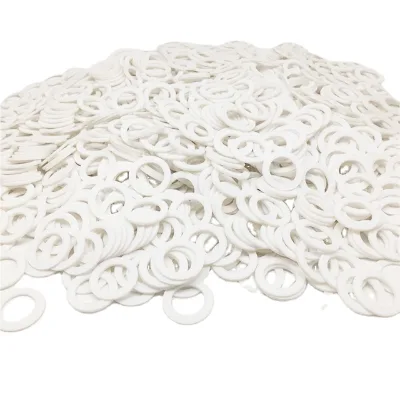


PTFE PFA Coating Encapsulated O Rings with Chemical and Temperature Resistance
$0.01 - $0.05
MOQ: 1000 Pieces

Comprehensive Sourcing Guide
Food Grade PTFE O-ring Sourcing Guide
Sourcing food-grade PTFE O-rings requires a disciplined approach that balances material purity with mechanical reliability. While the supplied product data highlights general PTFE sealing solutions, buyers must explicitly verify that any selected component meets specific food-contact regulations. The presence of certifications such as RoHS and Reach in the observed listings indicates environmental compliance, but these do not automatically equate to food-grade safety. Procurement teams must distinguish between industrial-grade seals and those certified for direct or indirect contact with consumables, ensuring that the material composition aligns with strict hygiene standards.
The observed market signals suggest a wide variance in product specifications, ranging from standard O-rings to bronze-filled PTFE bearings and dust seals. This diversity necessitates a clear definition of the application environment before engaging with suppliers. Buyers should prioritize vendors who offer customization options, as indicated by the available production types and standard variations. However, customization must not compromise the integrity of the food-grade certification. The procurement strategy should focus on identifying suppliers who can provide traceable material batches and consistent manufacturing processes, particularly given the observed origins in Jiangsu, China, where quality control practices may vary significantly between manufacturers.
Product Scope and Observed Listing Signals
The current market landscape for PTFE sealing components includes a broad spectrum of shapes and functions, with O-rings being a primary focus for static sealing applications. Observed listings feature products labeled as "PTFE Ring" and "HDSS0015," alongside specialized items like "Bronze Filled PTFE Bearing" and "HDPTFE0007." These designations suggest that suppliers often bundle various sealing technologies under similar material umbrellas. Buyers must carefully scrutinize product titles and descriptions to ensure that the specific item requested is a true O-ring suitable for the intended sealing function, rather than a generic gasket or bearing component that may lack the necessary elasticity or compression set resistance.
Pricing and minimum order quantities (MOQs) observed in the market range from $0.01 to $20 per unit, with MOQs varying from 1 to 2000 pieces. This wide range reflects the difference between standard off-the-shelf components and custom-machined seals. The availability of "Rich in Size and Quantity" stock suggests that common dimensions are readily accessible, which can reduce lead times for urgent replacements. However, for specialized food-grade requirements, buyers should anticipate higher MOQs or longer lead times due to the need for dedicated production runs and rigorous quality assurance protocols. The observed packing methods, including carton boxes, wooden boxes, and pallets, indicate that suppliers are equipped for both small-batch and bulk industrial shipments.
Technical Specifications to Verify
Material hardness and tensile strength are critical parameters for ensuring the longevity and performance of PTFE O-rings in demanding environments. The observed data indicates hardness values ranging from Shore D 55-65 to 20-90 Shore A, highlighting a significant variation in material formulations. For food-grade applications, the specific durometer must be selected based on the sealing pressure and surface finish of the mating components. Buyers should verify that the chosen hardness provides adequate compression set resistance to maintain seal integrity over time, particularly in dynamic or high-pressure scenarios. The observed tensile strength values of 15-25 MPa provide a baseline, but buyers must confirm that the specific batch meets these mechanical requirements to prevent premature failure.
The coefficient of friction and working temperature range are equally important for operational reliability. Observed coefficients of friction between 0.05 and 0.1 suggest low-friction characteristics, which are beneficial for reducing wear in moving parts. However, for static food-grade seals, the primary concern is often chemical resistance and temperature stability. The observed working temperature range of -35°C to +120°C provides a general guideline, but buyers must verify if the specific food-grade formulation can withstand higher temperatures if required by the sterilization process. Additionally, the density range of 2.1-2.2 G/cm³ should be confirmed to ensure material consistency, as variations in density can indicate the presence of fillers that may not be approved for food contact.
Compliance and Safety Documentation
Certification verification is the most critical step in sourcing food-grade PTFE O-rings. While the observed listings mention RoHS and Reach certifications, these are primarily focused on hazardous substances in electrical and electronic equipment, not food safety. Buyers must explicitly request documentation for FDA 21 CFR 177.1550 or EU Regulation No 10/2011 compliance, which are the standard regulatory frameworks for food-contact materials. Without these specific certifications, a PTFE O-ring cannot be legally or safely used in food processing environments. Procurement teams should insist on certificates of analysis (CoA) and material safety data sheets (MSDS) that explicitly state food-grade compliance for the exact material grade being supplied.
Traceability and batch testing are essential for maintaining compliance throughout the supply chain. Buyers should verify that suppliers maintain detailed records of raw material sources and manufacturing processes. The observed "100% New" condition and "12 Months" after-sale service suggest a commitment to quality, but these claims must be backed by robust quality management systems. It is advisable to request sample testing before placing large orders, ensuring that the material does not leach harmful substances under simulated food-contact conditions. Suppliers who offer "Customized" standards and "Under your requirements" production types may have the flexibility to meet specific regulatory needs, but this must be validated through rigorous documentation review.
Cost Drivers and Commercial Terms
The cost of food-grade PTFE O-rings is influenced by material purity, manufacturing complexity, and certification requirements. The observed price range of $0.01 to $20 reflects the difference between simple, high-volume production and complex, low-volume custom seals. Buyers should expect higher unit costs for food-grade components due to the additional testing and handling procedures required to prevent contamination. The availability of "Customized" colors and sizes may also impact pricing, as special orders often incur setup fees and require dedicated production lines. Understanding these cost drivers helps buyers make informed decisions about inventory management and supplier selection.
Commercial terms such as MOQs and lead times play a significant role in the total cost of ownership. The observed MOQ range of 1 to 2000 pieces offers flexibility, but buyers should negotiate terms that align with their consumption rates. For high-volume applications, larger MOQs may result in better pricing, but they also increase inventory holding costs. Conversely, smaller MOQs may be necessary for specialized or low-volume applications, but they often come with higher per-unit costs. Buyers should also consider the impact of packaging options, such as "Export Carton" or "Pallet," on shipping costs and storage requirements. Clear communication of these terms during the sourcing phase can prevent unexpected expenses and ensure a smooth procurement process.
Supplier Qualification and Quality Control
Supplier qualification involves assessing the manufacturer's ability to consistently produce food-grade PTFE O-rings that meet specified standards. The observed production types, including "Single Production" and "CNC Machining," indicate varying levels of manufacturing capability. Buyers should prioritize suppliers with established quality control processes, such as ISO 9001 certification, and those who conduct regular internal audits. The observed "Machining Method" of CNC machining suggests precision manufacturing, which is crucial for maintaining tight tolerances in sealing components. However, buyers must verify that the supplier has specific experience in producing food-grade materials, as general PTFE manufacturing expertise does not guarantee compliance with food safety regulations.
Quality control measures should extend beyond final product inspection to include raw material verification and process monitoring. Buyers should inquire about the supplier's procedures for preventing cross-contamination with non-food-grade materials. The observed "Surface Treatment" of polishing may enhance the seal's performance, but it must be performed using approved methods and materials. Additionally, buyers should assess the supplier's after-sales service capabilities, including their response time to quality issues and their willingness to provide technical support. The observed "12 Months" after-sale service is a positive indicator, but buyers should clarify the scope of this service to ensure it covers material defects and compliance-related issues.
Long-Term Procurement Checks
Long-term procurement success depends on continuous monitoring of supplier performance and product quality. Buyers should establish key performance indicators (KPIs) such as defect rates, delivery reliability, and compliance documentation accuracy. Regular audits of the supplier's quality management system can help identify potential issues before they impact production. The observed "After Sale Service" of 12 months provides a baseline for warranty claims, but buyers should negotiate longer terms or extended support for critical applications. Continuous feedback loops between the procurement team and the supplier can drive improvements in product quality and service delivery.
Market trends and regulatory changes may impact the availability and cost of food-grade PTFE O-rings. Buyers should stay informed about updates to FDA and EU regulations that may affect material approvals. The observed "Customized" production capabilities suggest that suppliers can adapt to changing requirements, but buyers must ensure that these adaptations are properly documented and certified. Diversifying the supplier base can mitigate risks associated with supply chain disruptions, but it requires careful qualification of new vendors. By maintaining a proactive approach to supplier management and regulatory compliance, buyers can ensure a stable and reliable supply of food-grade PTFE O-rings for their operations.
FAQs
What is the hardness range for these PTFE O-rings?
The hardness typically ranges from Shore D 55-65 for specific models like the PTFE Ring, while other variants offer 20-90 Shore A. This variation allows selection based on the required seal compression and application pressure. Buyers should verify the specific model requirements to ensure the hardness matches their mechanical design needs.
Can these seals be customized to specific drawings?
Yes, customization is available for size, shape, and standard compliance. Products can be manufactured according to customer drawings or specific nonstandard requirements. This flexibility supports unique machinery accessory and bearing applications, ensuring precise fitment for stationary seals and dust seals in various industrial environments.
What certifications do these PTFE products hold?
These products hold RoHS and Reach certifications, indicating compliance with environmental and safety standards. While specific food-grade certification is not explicitly listed in the high-confidence facts, the material properties support industrial use. Buyers requiring strict food-grade validation should request specific test reports from the supplier.
What is the working temperature range for these seals?
The working temperature range is specified as -35 to +120 degrees Celsius for certain models. This range supports applications in machinery accessories and auto parts. The material offers wear-resistant and oil-resistant performance, making it suitable for dynamic and static sealing tasks within these thermal limits.
How are these PTFE rings packaged for shipment?
Packaging options include carton boxes, wooden boxes, export cartons, and pallets. The specific packaging depends on the product model and order quantity. Export cartons are commonly used for standard shipments, while wooden boxes may be selected for heavier or specialized items like Bronze Filled PTFE Bearings to ensure safe transit.