Source Food Grade Round Tin Can for Tea, Food, and Chemical
Compare 30 listings for Food Grade Round Tin Can options suitable for tea, food, and chemical storage. Buyers can evaluate customization, material thickness, and packaging types from verified Chinese manufacturers; compare the available evidence and request quotations based on your requirements.
Key considerations
Products List


$0.25 - $0.35
MOQ: 5000 Pieces


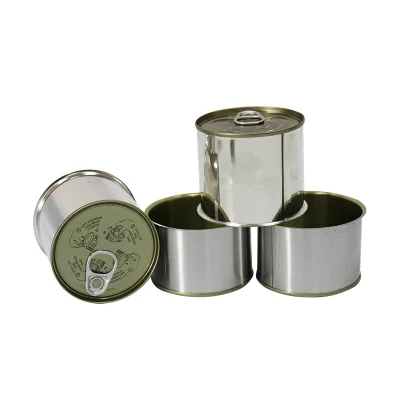


Wholesale Custom Tinplate Food Packaging Empty Food Grade Metal Round Tin Can with Lid
$0.05 - $0.10
MOQ: 100000 Boxes


Comprehensive Sourcing Guide
Food Grade Round Tin Can Sourcing Guide
Sourcing food-grade round tin cans requires a disciplined approach to material verification and functional alignment. Buyers must prioritize containers that explicitly state food-safe compliance, ensuring the tinplate or metal type does not leach harmful substances into consumables. The observed market signals indicate a strong presence of products labeled as "Food Canned" or "Edible Packaging Barrels," which suggests a mature supply chain for this specific category. However, the diversity in product names, ranging from "Paint Tin Can" to "Gift Tin Can," necessitates careful filtering to isolate items intended for direct or indirect food contact. Procurement teams should focus on suppliers who clearly distinguish between industrial-grade packaging and those certified for culinary use, as the latter demands stricter adherence to hygiene and material purity standards.
Beyond basic material selection, the customization capabilities of modern tin can manufacturers offer significant branding and logistical advantages. The availability of custom designs, including offset printing and customer-made artworks, allows buyers to integrate packaging directly into their marketing strategy without compromising structural integrity. Observed attributes highlight features such as "Multi-Use Tinplate Storage Tin Box" and "Premium/Leak Proof Tin Can," which are critical for maintaining product freshness and preventing contamination during transit. Buyers should evaluate how these customization options impact the production timeline and cost structure, ensuring that aesthetic enhancements do not inadvertently introduce non-compliant inks or coatings. The ability to tailor dimensions and shapes, such as deep round or rectangular forms, further enables precise optimization of shelf space and storage efficiency.
Product Scope and Observed Listing Signals
The current market landscape for food-grade round tin cans reveals a wide spectrum of product classifications and intended uses. Listings frequently categorize these items under "Plastic Packaging Barrel" or "Small Package Tank," which may indicate broader industrial applications beyond food storage. Buyers must scrutinize these classifications to ensure the specific SKU is designated for edible packaging, as some listings include functions for dye, chemical, or lubricating oil packaging, which are unsuitable for food contact. The presence of terms like "Peracetic Acid and Hydrogen Peroxide Packing Barrel" alongside "Food Storage Packaging" highlights the need for precise keyword filtering. Procurement specialists should verify that the product description explicitly mentions food safety, avoiding items that are primarily marketed for industrial or cosmetic purposes, even if they share similar physical characteristics.
Observed listing signals also emphasize the versatility and eco-friendly nature of these containers, which aligns with modern sustainability goals. Many suppliers promote their tin cans as "Eco-Friendly" and "Recycle," leveraging the inherent recyclability of tinplate to appeal to environmentally conscious brands. The variety in packaging methods, including carton, stretch film, and PE bag options, suggests that suppliers are equipped to handle diverse logistical requirements. Buyers should note that while the material is tin, the classification sometimes overlaps with plastic packaging, requiring clear confirmation of the metal type. Additionally, the availability of stock molds and competitive pricing for standard sizes offers a cost-effective entry point for new product launches, while custom solutions cater to specialized branding needs.
Technical Specifications to Verify
Verifying technical specifications is paramount to ensuring the tin can meets both functional and safety requirements. Buyers should confirm the metal type, with tinplate being a common and reliable choice for food-grade applications due to its corrosion resistance and non-toxic properties. The thickness of the tinplate, observed in ranges such as 0.23-0.38mm, directly impacts the durability and stackability of the container. Thicker gauges provide better protection against physical damage during shipping, while thinner gauges may offer cost savings but require careful handling. Procurement teams must also verify the dimensional standards, such as 6670mm or 6278mm, to ensure compatibility with existing filling lines and storage systems. Mismatched dimensions can lead to significant operational inefficiencies and increased waste.
Sealing integrity and closure mechanisms are critical technical aspects that determine the shelf life and safety of the packaged food. The "Leak Proof" advantage mentioned in some listings indicates a focus on robust sealing technologies, which are essential for preventing oxidation and moisture ingress. Buyers should inquire about the specific closure type, whether it is a simple lid or a more complex gasketed seal, and request samples to test the seal under various conditions. Additionally, the color and printing options, such as silver or custom full printing, must be evaluated for food safety compliance. Inks and coatings used in the printing process should be certified as food-safe to prevent chemical migration into the product. Understanding these technical details helps in selecting a tin can that balances aesthetic appeal with functional performance.
Compliance and Safety Documentation
Compliance with international safety standards is non-negotiable for food-grade packaging. Buyers must request documentation that verifies the tin can meets relevant food contact regulations, such as those enforced by the FDA or EFSA, depending on the target market. The observed certifications, including ISO and CE, indicate a baseline level of quality management and safety compliance, but they do not automatically guarantee food-grade suitability. Procurement teams should specifically ask for migration test results and material safety data sheets (MSDS) that confirm the absence of harmful substances like lead or cadmium in the tinplate and any applied coatings. These documents provide empirical evidence that the packaging will not contaminate the food product during storage or transport.
In addition to material safety, buyers should verify the supplier’s adherence to hygiene and manufacturing standards. Certifications such as ISO 9001 for quality management and ISO 22000 for food safety management systems are strong indicators of a supplier’s capability to produce safe packaging. The "100% Food Safe" claim observed in some listings should be backed by third-party audit reports or laboratory test results. Buyers should also consider the environmental impact of the packaging, looking for eco-friendly certifications that verify the recyclability and sustainable sourcing of materials. Ensuring comprehensive compliance documentation not only mitigates legal risks but also enhances brand reputation by demonstrating a commitment to consumer safety and environmental responsibility.
Cost Drivers and Commercial Terms
Understanding the cost drivers associated with food-grade round tin cans is essential for accurate budgeting and negotiation. The primary cost factors include the raw material price of tinplate, which fluctuates with global metal markets, and the complexity of the manufacturing process. Customization options, such as unique shapes, sizes, and high-quality offset printing, significantly increase production costs compared to standard stock molds. Buyers should evaluate the trade-off between customization and cost, considering whether branded packaging justifies the higher unit price. Additionally, the MOQ (Minimum Order Quantity) ranges observed, from 1 to 1,000,000 units, offer flexibility for different order sizes, but higher volumes typically result in lower per-unit costs due to economies of scale.
Commercial terms, including payment methods, lead times, and shipping arrangements, also impact the total cost of ownership. Buyers should negotiate favorable payment terms, such as letters of credit or partial advances, to manage cash flow effectively. Lead times can vary based on the level of customization and the supplier’s production capacity, so it is crucial to align order placement with inventory planning to avoid stockouts. Shipping costs are influenced by the packaging method, with options like carton or stretch film affecting the volume and weight of the shipment. Buyers should also consider the total landed cost, including duties and taxes, when sourcing from international suppliers. Clear communication of these terms ensures transparency and prevents unexpected expenses during the procurement process.
Supplier Qualification and Quality Control
Supplier qualification is a critical step in mitigating risks associated with food-grade packaging procurement. Buyers should conduct thorough due diligence on potential suppliers, verifying their manufacturing capabilities, quality control processes, and financial stability. Visiting the factory or requesting virtual tours can provide insights into the production environment and adherence to hygiene standards. It is also important to assess the supplier’s experience in producing food-grade tin cans, as specialized knowledge is crucial for meeting regulatory requirements. Suppliers with a proven track record and positive customer references are more likely to deliver consistent quality and reliable service.
Quality control measures should be integrated into the procurement process to ensure that the delivered tin cans meet specified standards. Buyers should implement incoming inspection protocols, checking for defects such as dents, scratches, or seal failures. Random sampling and testing for leak-proof integrity and dimensional accuracy can help identify potential issues early. Establishing a clear quality agreement with the supplier, outlining acceptable defect rates and remediation procedures, is essential for maintaining high standards. Regular audits and performance reviews can further ensure that the supplier continues to meet quality expectations. By prioritizing supplier qualification and rigorous quality control, buyers can safeguard their brand reputation and ensure the safety of their food products.
Long-Term Procurement Checks
Long-term procurement success depends on continuous monitoring and relationship management with suppliers. Buyers should establish key performance indicators (KPIs) to track supplier performance, including on-time delivery rates, product quality, and responsiveness to issues. Regular communication and feedback loops help identify areas for improvement and foster a collaborative partnership. As market conditions and regulations evolve, buyers must stay informed about changes in food safety standards and sustainability requirements. This proactive approach ensures that the sourcing strategy remains compliant and competitive over time.
Additionally, buyers should explore opportunities for innovation and cost optimization in the long run. Engaging with suppliers on new material technologies or design improvements can lead to more efficient and sustainable packaging solutions. Diversifying the supplier base can also mitigate risks associated with supply chain disruptions. By maintaining a strategic focus on quality, compliance, and cost-effectiveness, buyers can build a resilient sourcing network that supports their business growth. Continuous evaluation and adaptation of procurement practices are essential for navigating the dynamic landscape of food-grade packaging and ensuring long-term success.
FAQs
How do I choose the right size Food Grade Round Tin Can?
The right size depends on your fill volume, product density, and label design. This category includes models such as Innopack-0.185L and Innopack-0.1L metal tin cans, plus dimensional standards like 54*60mm, 62*78mm, and 66*70mm. Confirm your target capacity first, then match the closest listed diameter and height before requesting quotations.
What material is typically used for food grade round tin cans?
Food grade round tin cans in this category are made of tinplate, a tin-coated steel sheet that supports direct food contact applications. Listings describe them as 100% food safe and suitable for tea and other food storage packaging. Always confirm the internal coating and food contact compliance with your chosen manufacturer before bulk ordering.
Can I get custom full printing on food grade round tin cans?
Yes, customization is available across these listings. Options include silver finishes or custom full printing using offset printing, with customer-made artworks accepted for gift and craft uses. Provide your artwork files and design requirements early, since custom printing typically adds a pre-production sampling step before mass production is scheduled.
Which certifications should I check when sourcing these tin cans?
Listings in this category reference certifications including ISO, CE, and CIQ. For food applications, verify that the supplier holds relevant quality management certification and can document food safety compliance for the tinplate material. Request copies of certificates and confirm they are current, since certification coverage can differ between individual factories.
How are food grade round tin cans packed for shipment?
Packing methods listed in this category include cartons, PE bags, stretch film, and combinations such as PE bag inside carton. Carton packing protects cans from denting during transit, while PE bags add a moisture barrier layer. Discuss export packing details with your supplier so the method matches your freight mode and destination handling conditions.
Can tinplate cans be used for non-food products like chemicals or paint?
Yes, listed usages extend beyond food to paint, chemical, aerosol, and lubricating oil packaging, with functions covering dye, sealing, and color printing packing barrels. However, food safe construction is not interchangeable with chemical compatibility. Confirm the intended filling product with the manufacturer so the correct coating and sealing structure are specified.