Source Forged HRC52 Track Link Assy for Excavators, Dozers, and Mining
Explore 30 listings for the Forged HRC52 Track Link Assy designed for heavy-duty construction and earthmoving. Buyers can compare specifications like hardness, material composition, and compatibility with major brands to find the right fit for their machinery.
Key considerations
Products List


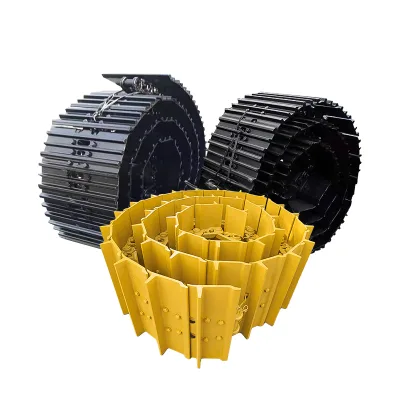
Construction Equipment Undercarriage Parts Track Link Track Chain Assy
$99.00 - $5000.00
MOQ: 1 Pieces


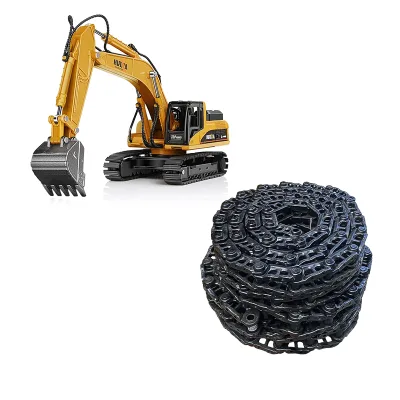
OEM Track Link Assy komatsu Track Link Assy Pc400- 5 Track Link Assy
$1298.22 - $2063.94
MOQ: 1 pieces


Comprehensive Sourcing Guide
Strategic Sourcing Guide for Forged HRC52 Track Link Assemblies
Understanding Technical Specifications and Material Integrity
When sourcing a forged HRC52 track link assembly, the primary objective is to secure components that maintain structural integrity under extreme operational stress. The core keyword implies a specific metallurgical hardness and manufacturing process. Based on available market data, the hardness for these components typically ranges between HRC 50 and 56, with some high-performance variants reaching up to HRC 60. The "HRC52" designation represents a target hardness that balances wear resistance with toughness, preventing brittle fracture in high-impact environments.
The manufacturing technique is a critical differentiator. The supply chain for these parts relies heavily on forging and casting processes, with forging being the preferred method for high-strength applications. Forged links generally exhibit superior grain structure and load-bearing capabilities compared to cast alternatives. The material composition is equally vital; suppliers often utilize alloy steels such as 35MnBH, 40mn2, or 35mnb. These specific alloys are selected for their ability to withstand the abrasive conditions found in mining and heavy construction.
The physical dimensions of the track link are not one-size-fits-all. The pitch of the crawler undercarriage varies significantly, with observed ranges spanning from 90 to 592. This variation necessitates precise matching between the link assembly and the specific machinery model. Furthermore, the depth of the hardened layer is a crucial performance metric. While some specifications indicate a hardness depth of 4mm to 10mm, others suggest a deeper case hardening of 8mm to 12mm. Buyers must verify that the supplier's specific product offers a hardened depth sufficient for the intended application's duration. The surface finish should be smooth to reduce friction and wear on the track rollers and idlers.
Compliance, Certification, and Quality Standards
In the B2B procurement of heavy machinery components, certification serves as a proxy for quality management systems. The most frequently observed certification for track link assemblies is ISO9001, often cited in conjunction with ISO9001:9002 or specific conditions like "Condition:New." Additionally, CE certification is a common requirement for products entering European markets, indicating compliance with health, safety, and environmental protection standards.
However, buyers must exercise caution when interpreting certification claims. While ISO9001 is a standard for quality management, it does not guarantee the specific metallurgical properties of the final product. The presence of a certification label should be verified against the supplier's documentation to ensure it covers the specific manufacturing facility and product line. The "Standard" designation for product standards is also noted, but it is a generic term. Procurement teams should request specific test reports or material certificates that correlate the ISO certification with the actual hardness and tensile strength of the 35MnBH or 40mn2 steel used.
The origin of the product is another compliance factor. The majority of these forged track links originate from China, with specific factory locations noted in cities like Quanzhou and Guangdong. While this geographic concentration offers competitive pricing, it requires rigorous due diligence regarding export standards and shipping logistics. The packaging is typically described as "Export Standard" or "Standard Export Wood Pallet," which is essential for preventing damage during long-haul transportation by sea. Buyers should ensure that the packaging protocol includes moisture protection and secure strapping to maintain the integrity of the forged steel during transit.
Cost Drivers and Pricing Dynamics
The pricing for forged track link assemblies is highly variable, reflecting the complexity of the product and the scale of the order. Observed price ranges in the market span from $5 to $5,000 USD. This wide disparity is driven by several factors, including the specific model number, the weight of the component, and the hardness specifications. For instance, a single track link for a smaller excavator may fall at the lower end of the spectrum, while a heavy-duty assembly for a large mining excavator, such as the R310B or Xe225U models, will command a significantly higher price.
The Minimum Order Quantity (MOQ) is a critical cost driver. The market shows an MOQ range from 1 piece to 2,000 pieces. Suppliers offering an MOQ of 1 piece are often targeting maintenance shops or emergency repair scenarios, which typically carry a higher unit cost. Conversely, bulk orders for fleet replacements can leverage economies of scale to reduce the per-unit price. The payment terms also influence the financial structure of the deal. Common terms include 30% T/T in advance with the balance before shipment, or alternative methods like Money Gram, Western Union, and PayPal. These terms can affect cash flow and risk exposure for the buyer.
Lead times are another variable that impacts the total cost of ownership. Delivery windows vary from 5-14 days for standard items to 25-30 days for customized or high-volume orders. Expedited shipping options may incur additional freight costs, which must be factored into the total procurement budget. The transportation method is predominantly by sea, which is cost-effective for large volumes but requires careful planning to avoid project delays. Buyers should negotiate lead times that align with their maintenance schedules to avoid the high costs of idle machinery.
Typical Applications and Operational Compatibility
Forged HRC52 track link assemblies are designed for heavy-duty environments where reliability is paramount. The primary applications include construction, earthmoving, and mining operations. These sectors demand components that can withstand continuous exposure to abrasive materials like rock, soil, and debris. The versatility of these track links is evident in their compatibility with a vast array of international brands. The supply chain supports models from major manufacturers such as Caterpillar, Komatsu, Hitachi, Hyundai, and Volvo, as well as specialized brands like Herrenknecht, Sandvik, and Atlas Copco.
The specific model compatibility is a key consideration. The market lists models such as Xe225, R310B, and XE225U, indicating that these components are tailored for specific excavator and bulldozer configurations. The "Customized" model number option suggests that suppliers can produce links for non-standard or legacy machinery. The color of the components is typically black or yellow, which aids in visual inspection and safety on the job site. The weight of individual links, such as the 635 kg noted for certain models, provides a tangible metric for logistics planning and handling equipment requirements.
The occasion for use is strictly defined as construction and earthmoving. In these environments, the track link assembly is subjected to cyclic loading and high impact forces. The hardness depth of 8-12mm ensures that the wear surface remains intact even after prolonged use, extending the service life of the undercarriage. This durability is essential for minimizing downtime in remote mining sites or critical construction projects where equipment availability is a bottleneck.
Supplier Evaluation and Verification Protocols
Evaluating a supplier for forged track links requires a multi-faceted approach that goes beyond price comparison. The "Brand Name" field often lists "DONGJUN/OEM," indicating that many suppliers operate as Original Equipment Manufacturers or offer private labeling. This suggests a high degree of customization capability, but it also means the buyer must verify the actual manufacturing source. The "Place of Origin" is consistently listed as China, specifically Guangdong and Quanzhou. While this region has a robust manufacturing base, buyers should conduct on-site audits or request third-party verification of the factory's capabilities.
One of the most valuable verification tools is the "Video outgoing-inspection." Suppliers that provide video evidence of the inspection process demonstrate a commitment to transparency. This allows buyers to visually confirm the quality of the finished product, the packaging, and the labeling before shipment. Additionally, the "After-sales Service Provided" category, which includes online support, is a crucial indicator of supplier reliability. A supplier that offers technical assistance for installation or troubleshooting adds significant value to the procurement process.
The warranty period is another key metric for supplier confidence. A standard warranty of 1 year or 12 months is common in this sector. However, buyers should scrutinize the terms of the warranty to understand what is covered, such as material defects versus wear and tear. The "Customization" attribute being available suggests that suppliers are flexible, but this flexibility must be managed through clear technical drawings and specifications to avoid mismatches.
Quality Control and Long-Term Procurement Considerations
Quality control in the production of forged track links is non-negotiable. The "Hardness" specification of HRC 50-56 or 55-60 must be verified through regular testing. Buyers should request hardness test reports for each batch of products to ensure consistency. The "Finish" being smooth is a visual indicator of quality, but it must be backed by dimensional accuracy checks. The "Product Packing" being standard export ensures that the quality is maintained until delivery, but the buyer should verify that the packaging prevents corrosion during transit.
Long-term procurement considerations involve building a relationship with a supplier that can scale with the buyer's needs. The "Selling Units" being single items allows for flexibility, but for large fleets, establishing a contract with a fixed price and guaranteed lead time is advisable. The "Model Number" variety, ranging from specific excavator models to "All models for Bulldozer Track Link," indicates a broad inventory. However, buyers should focus on suppliers who specialize in their specific machinery brand to ensure optimal fit and performance.
The "Delivery" time of 5-14 days or 25-30 days should be factored into inventory management strategies. For critical spare parts, maintaining a buffer stock is essential to prevent operational disruptions. The "Payment" terms, including T/T and other methods, should be aligned with the buyer's financial policies to mitigate risk. Ultimately, the success of sourcing forged HRC52 track link assemblies depends on a rigorous verification process that combines technical data, certification checks, and supplier reliability assessments. By adhering to these protocols, buyers can secure high-quality components that ensure the longevity and efficiency of their heavy machinery operations.
FAQs
What certifications do these forged track links hold?
These forged track links typically hold ISO9001 and CE certifications. Some listings also mention ISO9001-9002 standards. Buyers should verify that the certification covers the specific manufacturing facility and product line to ensure quality management compliance.
How long is the delivery time for these products?
Delivery times range from 5 to 14 days for standard items and 25 to 30 days for customized orders. The exact lead time depends on the order volume and whether the product requires specific customization or special packaging for export.
Which brands are compatible with these track link assemblies?
These assemblies are compatible with major brands like Caterpillar, Komatsu, Hitachi, and Hyundai. They also support specialized equipment from manufacturers such as Sandvik, Atlas Copco, and Herrenknecht, covering a wide range of excavator and bulldozer models.
Can I get custom sizes for my specific machinery?
Yes, customization is available for these forged track link assemblies. The model number can be customized to fit specific excavator or bulldozer configurations, allowing buyers to source parts for non-standard or legacy machinery without compromising structural integrity.
What is the minimum order quantity for these parts?
The minimum order quantity starts at 1 piece for single item purchases. However, bulk orders can go up to 2000 pieces, with suppliers often offering better pricing for larger volumes to leverage economies of scale in production and shipping.
Where are these forged track links manufactured?
These products originate from China, specifically from factories in Guangdong and Quanzhou. Buyers should note that while this region offers competitive pricing, they must verify export standards and shipping logistics to ensure timely delivery to their location.
What material hardness is standard for these links?
The standard hardness ranges from HRC 50 to 56, with some high-performance variants reaching up to HRC 60. This hardness ensures wear resistance while maintaining toughness, preventing brittle fracture in high-impact mining and construction environments.