Source Forging Red Double RAM BOP for Oil, Gas, and Water
Compare 30 available Forging Red Double RAM BOP units designed for well control applications. Buyers can evaluate specifications including hydraulic power sources, stainless steel or cast steel materials, and various size standards for crude oil, natural gas, and mud operations.
Key considerations
Products List


Double RAM Bop 2 Fz28-35 35MPa, Pipe Rams Assembly, Bop Spare Parts
$9000.00 - $10000.00
MOQ: 1 Pieces


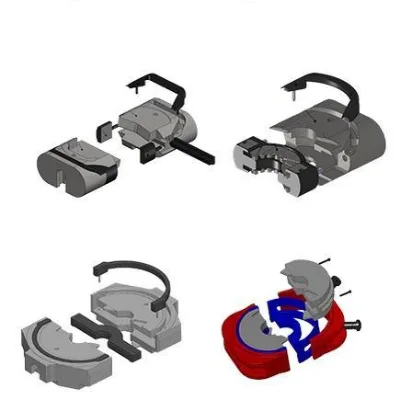


API Pipe RAM /Double RAM Cameron U Bop for Oil Field Blowout Preventer Price
$23670.00 - $24100.00
MOQ: 1 Sets

Top Factory API 16A RAM Single Double RAM Bop 13 5/8"-10000psi Blowout Preventer
$23670.00 - $24100.00
MOQ: 1 Sets


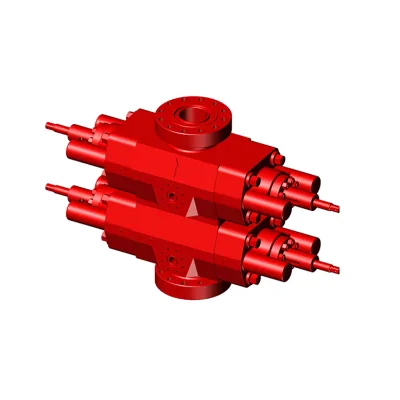
Double Ram Bop/Shaffer Double Ram BOP/Cameron Single Ram Blowout Preventer
$2031.50 - $30472.54
MOQ: 1 Minimum
Dongying Innova Petroleum Technology & Development Co., Ltd.


Comprehensive Sourcing Guide
Strategic Sourcing Guide for Forging Red Double RAM BOP Units
The procurement of a forging red double ram blowout preventer (BOP) represents a critical decision point in well control operations. These high-pressure sealing devices are engineered to withstand extreme downhole conditions, ensuring the safety of personnel and the integrity of the wellbore during drilling, completion, and workover activities. The specific designation "forging" indicates a manufacturing process where metal is shaped under high pressure, a method that generally enhances grain structure and mechanical strength compared to casting. The "red" coloration is a standard industry visual identifier for ram-type BOPs, facilitating quick recognition on the rig floor. The "double ram" configuration implies the presence of two independent ram assemblies, typically allowing for the sealing of different pipe sizes or the cutting of pipe, providing redundancy and operational flexibility.
Technical Specifications and Manufacturing Integrity
When evaluating a Forging Red Double RAM BOP, the primary technical differentiator lies in the manufacturing process and material composition. The supplied data confirms that Forging is a documented manufacturing process for these units, a critical attribute that distinguishes them from cast alternatives. Forging aligns the metal grain flow with the shape of the component, significantly improving resistance to fatigue and impact loads. This is essential for a device that must seal under high pressure and potentially cut through pipe.
The structural design of these units varies, with observations noting Plug-In and Vertical structures. The vertical structure is the industry standard for BOP stacks, allowing for the stacking of multiple units. The Operation Pressure for many of these units is noted as Atmospheric Pressure in specific contexts, which may refer to the storage or handling state, but the operational pressure rating is the critical specification that must be verified against the well's expected pressure profile. The Applicable Medium data indicates these units are designed to handle Crude Oil, Water, Mud, and Natural Gas, confirming their versatility in various well control scenarios.
Material selection is paramount for durability. The observed data lists Stainless Steel, Cast Steel, and Alloy as potential materials. For a forging process, high-grade alloy steels are often preferred to ensure the necessary tensile strength and corrosion resistance. The Surface Treatment varies, with options including Polishing, Sand Blast, and Spray-Paint. The "red" color mentioned in the keyword is likely achieved through the Spray-Paint treatment, which serves both as a visual identifier and a protective layer against corrosion. The HS Code 84314310 is the standard classification for parts of lifting, handling, loading or unloading machinery, which encompasses BOP components, and should be used for customs documentation.
Compliance, Certification, and Standard Verification
Navigating the regulatory landscape for BOP procurement requires rigorous verification of certifications and standards. The provided facts indicate that ISO 9001:CE is a certification observed in the market, and some listings reference ISO 9001 alongside material specifications. Buyers must verify that the supplier holds a valid ISO 9001 certification for their quality management system, as this is a baseline requirement for reputable manufacturers. The "CE" marking suggests compliance with European safety standards, which is a significant indicator of quality for international trade.
Size and pressure ratings are governed by specific standards. The data shows a wide range of prod_standard values, including 7 1/16"-30", 5-1/8'' ~30'', and All size. This variability highlights the need for buyers to match the BOP size precisely to the wellhead configuration. The prod_model listings, such as YBOP-3, Y-BOP-1, BOP-4, Fz 18-35, and 2FZ 28-35, represent different configurations and pressure ratings. For instance, the "18-35" in a model number often denotes a working pressure of 18,000 psi and a bore size of 35 inches, though this is a common industry convention that must be confirmed with the specific supplier.
Buyers should not assume that every listed product meets a specific standard without verification. The data includes entries where prod_standard is listed as "no" or "customized," indicating that some units may be built to client-specific requirements rather than a universal standard. It is the buyer's responsibility to request the specific test certificates and compliance documents that align with the project's regulatory environment, whether that be API (American Petroleum Institute) standards or other regional regulations. The Machinery Test Report is noted as "Provided" in some listings, which is a positive indicator, but the buyer must ensure the report covers the specific unit being purchased and includes hydrostatic pressure testing results.
Cost Drivers and Pricing Dynamics
The pricing for Forging Red Double RAM BOP units is influenced by several factors, including size, pressure rating, material grade, and customization. The observed listed price range spans from 100 to 60,000 USD. This wide range reflects the diversity of the market, where smaller, lower-pressure components or accessories may be priced at the lower end, while large, high-pressure, fully forged units with custom specifications command the higher prices.
The MOQ (Minimum Order Quantity) is observed to be low, ranging from 1 to 2 units. This suggests that the market is flexible for buyers who may only need a single replacement unit or a small stack component, rather than requiring bulk orders. However, the low MOQ does not necessarily imply low cost; a single high-specification unit can still be a significant capital expenditure.
Cost drivers include the Manufacturing Process. Forging is generally more expensive than casting due to the energy and equipment costs involved, but it offers superior mechanical properties. The Surface Treatment also impacts cost; Polishing and specialized Spray-Paint applications add to the final price. Additionally, Customization is listed as Available, and any custom modifications to the standard design will increase the unit cost and potentially the lead time. The Packing method, whether Plywood Case, Wooden Case, Wooden Box, or Standard Export Packing, also contributes to the overall cost, especially for international shipping where Seaworthy packing is required to prevent damage during transit.
Typical Applications and Operational Context
The primary application for a Forging Red Double RAM BOP is Well Control. These units are integral components of the BOP stack, which is installed on the wellhead to control pressure and prevent blowouts. The Applicable Medium data confirms their use in environments containing Crude Oil, Natural Gas, Water, and Mud. This versatility makes them suitable for exploration, drilling, and workover operations across various geological formations.
The Power Source for operating these rams can be Hydraulic or Pneumatic. Hydraulic systems are the most common for high-pressure applications due to their ability to generate significant force, while pneumatic systems may be used in specific scenarios or for backup control. The Structure being Plug-In or Vertical dictates how the unit integrates into the BOP stack. A vertical structure allows for the stacking of multiple BOPs, such as annular preventers and pipe rams, to create a comprehensive well control system.
The Product Name "Bop RAM Assembly" suggests that buyers may be purchasing the internal sealing elements (rams) rather than the entire housing. These assemblies are critical wear items that require regular inspection and replacement. The Application is strictly defined as well control, meaning these units are not suitable for general industrial fluid handling. The Color options, including Red, White, or Others, are primarily for identification and safety, with red being the standard for ram-type preventers.
Supplier Evaluation and After-Sales Support
Selecting a reliable supplier is as important as the technical specifications of the BOP. The data indicates that After Sales support, including OEM Available, is a key factor. Buyers should prioritize suppliers who offer comprehensive after-sales services, including technical support, spare parts availability, and repair services. The Warranty period is observed to be 18mths (18 months) in some listings, which serves as a benchmark for the expected durability and the supplier's confidence in their product.
The prod_origin is consistently listed as Made in China or China. While this indicates the manufacturing location, it does not inherently dictate quality. Buyers must evaluate the specific manufacturer's track record, quality control processes, and adherence to international standards. The presence of ISO 9001 certification is a strong indicator of a supplier's commitment to quality management.
Buyers should also verify the Certification status of the specific unit. Some listings show certifications like ISO 9001:Material:Stainless Steel, which may indicate a specific material certification rather than a general system certification. It is crucial to distinguish between the supplier's system certification and the product-specific certifications. The Machinery Test Report being "Provided" is a positive sign, but the buyer must review the report to ensure it validates the performance of the specific unit under test conditions.
Quality Control and Long-Term Procurement Considerations
Quality control for BOPs involves rigorous testing and inspection. The Surface Treatment processes, such as Sand Blast and Polishing, are not just aesthetic; they are critical for removing surface defects and ensuring a smooth finish that resists corrosion and wear. The Material composition, whether Stainless Steel, Cast Steel, or Alloy, must be verified through mill certificates to ensure it meets the required mechanical properties.
Long-term procurement considerations include the availability of spare parts and the ease of maintenance. The Customization feature allows for tailored solutions, but buyers should ensure that custom parts are compatible with standard industry components to facilitate future maintenance. The Packing method, such as Plywood Case or Wooden Box, must be robust enough to protect the unit during storage and transport, especially if the unit is to be stored for extended periods before installation.
The Size specifications, ranging from 1", 13/16", 2", 2 1/2" to larger bore sizes like 7 1/16 -20 3/4inch, require careful matching to the wellhead. Buyers must verify the exact size requirements before placing an order to avoid compatibility issues. The Standard of All size or customized suggests flexibility, but the buyer must define the exact requirements clearly to ensure the delivered unit meets the operational needs.
Final Procurement Checklist
To ensure a successful procurement of a Forging Red Double RAM BOP, buyers should adhere to a structured checklist. First, verify the Manufacturing Process is indeed Forging and not casting. Second, confirm the Material grade and Surface Treatment align with the operational environment. Third, check for valid Certification such as ISO 9001:CE and review the Machinery Test Report. Fourth, ensure the Size and Pressure Rating match the wellhead specifications. Fifth, evaluate the supplier's After Sales capabilities and Warranty terms. Finally, confirm the Packing method is Seaworthy and suitable for the intended logistics route. By following these steps, buyers can mitigate risks and secure a high-quality BOP unit that ensures safety and operational efficiency.
FAQs
What manufacturing process is used for Forging Red Double RAM BOP units?
Forging is the documented manufacturing process used for these units, which enhances grain structure and mechanical strength compared to casting. Some listings also note CNC milling as a secondary process for specific components. This method ensures resistance to fatigue and impact loads required for well control operations.
Which materials are commonly used in the construction of these BOP units?
Stainless steel, cast steel, and alloy materials are observed in the product listings for these units. The material selection is critical for durability and corrosion resistance, with high-grade alloy steels often preferred for the forging process to ensure necessary tensile strength under extreme downhole conditions.
Can buyers request customization for these Forging Red Double RAM BOP units?
Yes, customization is available for these units, allowing for tailored solutions to specific project requirements. Buyers should verify that custom modifications remain compatible with standard industry components to facilitate future maintenance and ensure the unit meets the specific wellhead configuration needs.
What certifications are typically associated with these BOP products?
ISO 9001 and CE certifications are observed in the market for these units, indicating compliance with quality management and European safety standards. Buyers must verify that the supplier holds a valid ISO 9001 certification and request specific test certificates to ensure the product meets project regulatory environments.
How are these BOP units typically packed for international shipping?
Packing options include plywood cases, wooden cases, wooden boxes, and standard export packing designed to be seaworthy. The robust packaging method is essential to protect the unit during storage and transport, especially when shipped from China to global destinations to prevent damage during transit.
What is the typical warranty period for these Forging Red Double RAM BOP units?
A warranty period of 18 months is observed in some product listings for these units. This benchmark serves as an indicator of the supplier's confidence in product durability, though buyers should confirm the specific warranty terms and coverage details for the unit being purchased.