Source Forklift Work Light for Warehouse, Yard, and Loading Dock
Source 30 Forklift Work Light units with DC power sources and carbon steel construction. Buyers can compare models like AL-07 and 853115, view voltage standards from 10V to 80V, and check certifications such as CE and RoHS before requesting quotes.
Key considerations
Products List







Comprehensive Sourcing Guide
Strategic Sourcing Guide for Forklift Work Light Procurement
Navigating the global market for industrial lighting solutions requires a disciplined approach that balances technical performance with regulatory compliance and supply chain reliability. For buyers seeking forklift work lights, the procurement process begins with a clear understanding of the specific operational environment. These lights are not merely accessories; they are critical safety components that ensure visibility in low-light warehouse conditions, outdoor yards, and loading docks. The market presents a diverse array of options, ranging from compact units to high-output floodlights, each with distinct specifications regarding voltage, lumens, and mounting compatibility. This guide outlines the essential factors for sourcing these products effectively, relying on verified product attributes and industry standards to mitigate risk and ensure operational continuity.
Technical Specifications and Performance Metrics
When evaluating forklift work lights, the primary focus must be on technical specifications that align with the power systems of the intended equipment. The product data indicates a significant variation in voltage standards, with observed ranges spanning from 10V to 80V, including specific configurations for 48V and 10V-48V systems. This variability necessitates a rigorous verification step before purchase, as connecting a light unit with an incompatible voltage rating can lead to immediate failure or damage to the forklift's electrical system. Buyers must confirm that the selected unit matches the specific battery voltage of their fleet, whether it is a standard 12V, 24V, 36V, or 48V setup.
Power consumption and output are equally critical metrics. The observed data points to power sources operating within the DC range, which is standard for battery-operated industrial vehicles. In terms of output, high-performance units are available with operating lumens outputs reaching 2710lm, ensuring adequate illumination for large work areas. The number of LEDs within a single unit also varies, with configurations such as 4PCS LED arrays being documented. Buyers should assess the relationship between wattage and lumens to determine energy efficiency. A unit with a power rating between 31W and 40W may offer a balance between brightness and battery drain, but this must be validated against the specific model's datasheet.
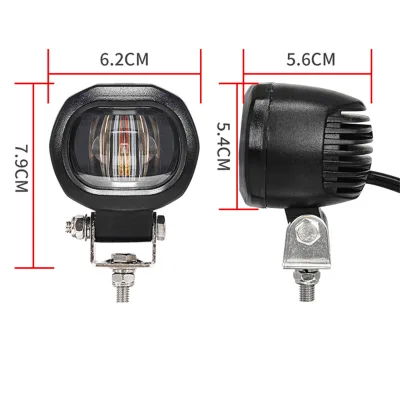
Physical dimensions and mounting characteristics are also key technical considerations. The product specifications list dimensions such as 1688166mm, which provides a reference for clearance requirements on the forklift mast or overhead guard. The view angle is another crucial specification, with some units offering a 150-degree viewing angle to maximize coverage. This wide angle is particularly beneficial for general applications where broad area illumination is preferred over a focused beam. Additionally, the IP rating, while partially obscured in the data as "IPPPower:31-40W," suggests that water and dust resistance are standard considerations. Buyers must explicitly verify the IP rating (e.g., IP65 or IP67) to ensure the light can withstand the washdowns and debris common in industrial environments.
Compliance and Certification Verification
In the industrial sector, compliance is not optional; it is a prerequisite for safe operation and legal procurement. The product attributes highlight several critical certifications that buyers should look for, including REACH, RoHS, and CE. These certifications indicate that the product adheres to strict environmental and safety standards. RoHS compliance ensures that the product is free from hazardous substances, which is vital for environmental protection and worker safety. CE marking confirms that the product meets the health, safety, and environmental protection standards for products sold within the European Economic Area, a common benchmark for global trade.
Furthermore, some product listings reference ISO standards alongside CE and RoHS, suggesting a commitment to quality management systems. However, the presence of these certifications on a product page does not guarantee that every unit in a batch is certified. Buyers must request current, valid certificates of conformity from the supplier for the specific batch being ordered. The data also mentions a "Standard" classification, but this is a generic term. Procurement teams should verify if the product meets specific industry standards such as ISO 9001 for quality management or specific electrical safety standards relevant to forklift accessories.
It is important to note that while some listings mention "Standard" as a product attribute, this should not be confused with a specific technical standard like ISO or IEC. Buyers should explicitly ask for the full name of the standard being met. For instance, if a supplier claims compliance with a specific electrical standard, they must provide the document number. Relying solely on the term "Standard" without further verification can lead to non-compliant products entering the facility, potentially voiding insurance or violating safety regulations.
Cost Drivers and Pricing Dynamics
The pricing landscape for forklift work lights is influenced by several factors, including material composition, certification levels, and order volume. The observed price range in the market spans from $1 to $85 USD, a wide disparity that reflects differences in quality, output, and features. Lower-priced units may utilize basic materials and offer lower lumens, while higher-priced units likely incorporate advanced optics, higher IP ratings, and robust certifications. The material of the housing is a significant cost driver; the data indicates the use of Carbon Steel, which offers durability but may be more expensive than plastic alternatives.
Minimum Order Quantity (MOQ) is another critical factor affecting the total cost of ownership. The observed MOQ ranges from 1 to 1000 units. For small fleets or replacement needs, suppliers with an MOQ of 1 or low quantities are essential, even if the unit price is higher. Conversely, large-scale procurement can leverage economies of scale by ordering in bulk, potentially reducing the per-unit cost. However, buyers must balance the savings from bulk ordering against the risk of inventory obsolescence or storage costs.
Customization is a variable that can significantly impact pricing. While the data lists "Customization: Available" alongside "Customized: Non-Customized," this suggests a tiered offering where standard models are cheaper and custom-branded or spec-specific units command a premium. Buyers should clarify if the customization involves branding, specific voltage configurations, or unique mounting brackets, as each adds to the production cost. Additionally, the packaging type, such as "Export Carton" or "Carton Neutral Packaging," can influence logistics costs. Bulk packaging that minimizes individual unit packaging may reduce shipping weight and volume, thereby lowering freight expenses.
Typical Applications and Operational Context
Forklift work lights are designed for a variety of applications, with the primary use case being general illumination in industrial settings. The product attributes explicitly list "General" as an application category, indicating versatility across different warehouse layouts and loading zones. The specific mention of "Electric Forklift" in the application field highlights the compatibility with electric powertrains, which are prevalent in modern logistics due to their zero-emission operation. These lights must be compatible with the DC power systems of electric forklifts, ensuring they do not interfere with the vehicle's battery management systems.
The operating environment dictates the required durability of the light. Units used in outdoor yards or unheated warehouses must withstand temperature fluctuations and potential moisture. The "Emitting Color" is noted as White, with a "Color Temperature" of Pure White, which is optimal for visibility and reducing eye strain for operators working long shifts. The lifespan of these lights is a critical metric for long-term cost efficiency, with observed data indicating a lifespan of 30,000+ working hours. This extended lifespan reduces the frequency of replacements and maintenance downtime.
Furthermore, the absence of UV or IR radiation is a specific safety feature that protects both the operator and the materials being handled. In environments where sensitive goods are stored, such as food or pharmaceuticals, the lack of UV radiation prevents degradation of packaging or products. The "Guaranteed" period of 12 months under normal conditions provides a baseline for warranty expectations, but buyers should verify if this guarantee covers specific failure modes like lens cracking or LED burnout.
Supplier Evaluation and Selection Criteria
Selecting the right supplier is as important as selecting the right product. The data indicates that products originate from China, a major hub for manufacturing industrial lighting. Buyers should evaluate suppliers based on their ability to provide consistent quality and timely delivery. The "Deliver Time" is listed as 1~3 Days for some items, which suggests a robust logistics network, but this may apply only to stock items or specific regions. For custom orders or bulk shipments, lead times can vary significantly, and buyers must confirm the actual lead time for their specific order volume.
Trade terms such as EXW, FOB, and CIF are standard in international procurement. Understanding these terms is crucial for managing logistics costs and risk. EXW (Ex Works) places the maximum responsibility on the buyer for transportation, while CIF (Cost, Insurance, and Freight) includes delivery to the port of destination. Buyers should choose the term that best aligns with their internal logistics capabilities and risk tolerance. Additionally, the "Selling Unit" is listed as a "Single Unit," which implies flexibility in ordering, but bulk discounts may be available for larger quantities.
Supplier reliability can also be assessed through their response to certification requests and their ability to provide detailed product specifications. A reputable supplier will readily provide test reports, certification documents, and detailed datasheets. They should also be transparent about the "Standard" classification and the specific voltage ranges supported. Buyers should avoid suppliers who are vague about these details or who cannot provide proof of compliance with the claimed standards.
Quality Control and Long-Term Procurement Considerations
Implementing a robust quality control process is essential to ensure that the forklift work lights meet the required specifications upon arrival. Buyers should consider requesting pre-shipment inspections, particularly for large orders, to verify that the products match the ordered specifications regarding voltage, lumens, and dimensions. The "Single Gross Weight" of 0.5kg to 0.6kg provides a baseline for checking packaging integrity and weight consistency, which can indicate manufacturing quality.
Long-term procurement considerations include the availability of spare parts and the supplier's ability to support the product over its lifecycle. The "Guaranteed" period of 12 months is a starting point, but buyers should inquire about the supplier's policy for out-of-warranty repairs or replacements. The "Lifespan" of 30,000+ hours suggests that the lights are designed for long-term use, but the actual performance may vary based on usage conditions. Buyers should establish a maintenance schedule that includes regular cleaning and inspection of the lights to ensure optimal performance.
Finally, the "Packing Size" of 14X12X12 Cm and the use of "Carton Box" or "White Box" packaging should be evaluated for their impact on storage and shipping efficiency. Efficient packaging reduces the risk of damage during transit and optimizes container utilization. Buyers should also consider the environmental impact of the packaging, especially if their organization has sustainability goals. The "Customization" option allows for branding, which can be beneficial for companies that want to maintain a consistent corporate image across their fleet.
In conclusion, sourcing forklift work lights requires a meticulous approach that integrates technical verification, compliance checks, and strategic supplier evaluation. By focusing on the specific needs of the operation and leveraging the available product data, buyers can make informed decisions that enhance safety, efficiency, and cost-effectiveness in their industrial environments. The wide range of options available, from basic units to high-performance lights, offers flexibility, but the key to success lies in rigorous due diligence and clear communication with suppliers.
FAQs
What voltage ranges are available for forklift work lights?
Available voltage ranges span from 10V to 80V, including specific 48V and 10V-48V configurations. Buyers must verify that the selected unit matches the specific battery voltage of their forklift fleet to prevent electrical damage.
Which certifications should I look for in forklift work lights?
Look for REACH, RoHS, and CE certifications to ensure compliance with environmental and safety standards. Some listings also reference ISO standards, but you must request valid certificates of conformity for the specific batch being ordered.
How much do forklift work lights typically cost?
Prices range from 1 to 85 USD depending on quality, output, and features. Lower-priced units often use basic materials while higher-priced options include advanced optics and robust certifications like CE and RoHS.
Can I customize the forklift work lights for my needs?
Customization is available for standard models, though some listings also show non-customized options. Clarify if customization involves branding, specific voltage configurations, or unique mounting brackets as each adds to the production cost.
What is the expected lifespan of these forklift work lights?
The observed lifespan is 30,000 plus working hours under normal conditions. This extended duration reduces replacement frequency, though a 12-month guarantee typically covers specific failure modes like lens cracking or LED burnout.
Which materials are used for the housing of forklift work lights?
Carbon steel is a common material used for the housing to ensure durability. This material choice offers robust protection but may be more expensive than plastic alternatives while providing necessary strength for industrial environments.
What is the minimum order quantity for forklift work lights?
Minimum order quantities range from 1 to 1000 units depending on the supplier. Small fleets can find suppliers with low MOQs, while large-scale procurement can leverage bulk ordering to potentially reduce per-unit costs.