Source Formwork Metal Building Hardware for Scaffolding
Source Formwork Metal Building Hardware for scaffolding and construction projects. Compare 30 products including U clips, ties, and clamps. Options feature galvanized finishes, ISO certifications, and custom sizes for reliable structural support; compare the available evidence and request quotations based on your requirements.
Key considerations
Products List


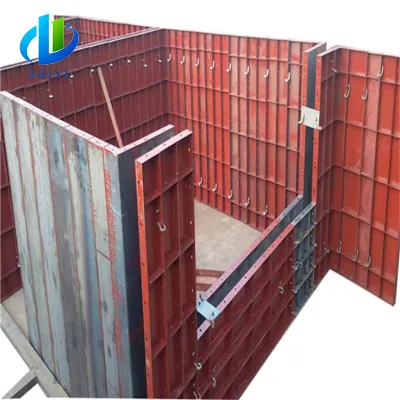


High Quality Building Wall Column Steel Metal Formwork for Concrete Construction
$1200.00 - $1500.00
MOQ: 10 Tons


Steel Concrete Formwork Metal Formwork for Wall and Column Construction
$1200.00 - $1400.00
MOQ: 10 Sets


Steel Frame Formwork Customized Steel Formwork for Building Construction
$10.00 - $1000.00
MOQ: 4 Sets

High Performance Metal Formwork for Building Materials Concrete Steel Formwork
$1200.00 - $1500.00
MOQ: 10 Tons


Reinforced Metal Steel Frame Formwork for Concrete Construction
$60.00 - $70.00
MOQ: 100 Square Meters


Comprehensive Sourcing Guide
Formwork Metal Building Hardware Sourcing Guide
Formwork Metal Building Hardware—clips, tie holders, wall tie couplers, clamps, and scaffolding formwork nuts—forms the load-bearing connection system that keeps concrete formwork assemblies secure during pouring and curing. Because these components carry direct structural tension, procurement teams cannot treat them as commodity fasteners priced purely on weight. A single failed tie or coupler can compromise wall alignment, worker safety, and the finished concrete surface, so sourcing decisions should weigh verified material quality and dimensional accuracy alongside unit price.
This guide walks through the full sourcing cycle for buyers procuring formwork hardware from manufacturing regions, with Hebei, China being a commonly observed origin in this category. It covers how to interpret listing data, which specifications demand written confirmation, what documentation supports safety claims, how commercial terms shape total cost, and which qualification and long-term checks protect your supply chain. The observed listing data used here reflects a set of thirty products, so treat every attribute mentioned as a signal to verify rather than a universal guarantee across the category.
Product Scope and Observed Listing Signals
The observed listings span several product families that buyers frequently procure together: U clips, Z tie holders, universal clamps, wall tie couplers, and scaffolding formwork nuts, with model references such as A-07, A-28, D-11, and D-12 appearing across the set. Typical applications include building scaffold erection, external scaffolding positions, and general formwork assembly, with some items also marketed for machine parts use. Listed diameters such as φ12, φ15, and φ16 and section sizes like 17x10mm and 17mm suggest that sizing consistency across orders is a practical concern worth confirming early.
Listing-level attributes also reveal what suppliers emphasize and what remains ambiguous. Materials are described variously as steel, steel/aluminum, or simply metal; surface treatments include galvanized and heat-treated finishes; and customization is repeatedly marked as available, with OEM service explicitly noted in some listings. Observed prices range from nominal placeholder values up to roughly USD 1,500, and MOQs range from single samples to 30,000 units, indicating a market that serves both trial orders and bulk programs. Always reconcile these advertised signals with direct technical confirmation before committing.
Technical Specifications to Verify
Start verification with the dimensions that govern interchangeability: tie rod diameter compatibility, clip and coupler cross-sections, thread engagement, and overall working dimensions. Because the observed listings show both fixed standards (such as φ12, φ15, φ16 and 17x10mm sections) and "custom" standards in the same category, you should never assume two suppliers' nominally identical parts are interchangeable. Request dimensioned drawings, confirm tolerances in writing, and where possible match hardware to your existing tie rod and formwork panel system before placing volume orders.
Material and mechanical performance come next. Listings reference steel, steel/aluminum combinations, casting technics, heat treatment, and a 180kN tension figure on at least one item—verify that any load rating applies to the specific part and configuration you are buying, not the product family generally. Confirm the base material grade, whether the part is cast or forged, heat treatment parameters where relevant, and the galvanizing or other surface treatment thickness. Weight data, such as a listed 0.5kg item, can serve as a rough consistency check between sample batches and production runs.
Compliance and Safety Documentation
Certification claims in the observed set include ISO, CE, and CCC, sometimes individually and sometimes in combination, alongside surface treatments marked simply as "Yes." Treat each claim as a starting point: ask for the actual certificate copies with scope, validity dates, and the issuing body, and confirm that the certified scope covers formwork hardware of your type rather than an unrelated product line. A certificate number alone is not evidence until you can trace it to a current, relevant attestation.
Beyond certificates, request the documentation that supports safe use under load: material mill certificates or test reports for the raw steel, dimensional inspection reports, and where load ratings are quoted, the test method and results behind them. Ask how the supplier handles batch traceability so that a field failure can be traced back to a production lot. Finally, confirm warranty terms in writing—the observed listings mention two-year warranty periods, but coverage scope, exclusions, and the claims process should be explicitly documented rather than assumed from a listing line.
Cost Drivers and Commercial Terms
Unit cost in this category is driven primarily by material grade, the casting or forming process, heat treatment, surface finishing (galvanizing adds cost but significantly extends service life in wet concrete environments), and order volume. Custom dimensions and OEM branding add tooling or setup charges. Observed MOQs ranging from 1 to 30,000 units show that sample-friendly suppliers exist, but low-MOQ orders typically carry higher per-unit prices; model your total cost across a realistic annual volume rather than optimizing for a single trial order.
Packaging and freight also matter more than buyers expect. Observed packing options include box plus pallet, plastic bag plus pallet, woven bag, carton, plywood case, and steel pallets—heavier palletized packing protects hardware in transit but adds weight, so match packing to your shipping mode. Observed lead times include 30 days after confirmation and 15 days after payment, which suggests meaningful variance; confirm the trigger point (payment or confirmation), production capacity headroom, and Incoterms. Use the observed USD price band only as a bracketing reference—actual quotes depend on specification and volume.
Supplier Qualification and Quality Control
Qualify suppliers with a structured review rather than price comparison alone. Verify business registration, manufacturing capability (in-house casting or forging versus trading), the certifications discussed above, and the supplier's stated after-sales support—the observed listings mention online technical support, which is useful for installation and compatibility questions. Ask for references or export history in your market, and check whether customization claims are backed by tooling capability or merely brokerage of another factory's output.
Before mass production, commission golden samples with documented dimensions and finish, and agree on the inspection standard those samples anchor. During production, define an AQL-based inspection plan covering dimensions, galvanizing adherence, thread quality, and visual defects, and decide whether you will rely on supplier QC, third-party inspection, or your own audits. For repeat programs, require retention samples per batch and periodic re-testing of load-critical items. These controls cost little relative to the risk of formwork hardware failing under tension on site.
Long-Term Procurement Checks
Sustain supplier performance with scheduled reviews rather than one-time qualification. Track defect rates per incoming batch, on-time delivery against confirmed dates, and responsiveness to technical queries, and revisit certification validity annually since certificates lapse independently of your ordering cycle. Re-verify pricing periodically against market movement in steel and zinc, and renegotiate volume tiers as your annual quantities stabilize. Keep approved drawings and sample records current so that any supplier change or model substitution is caught at quotation stage.
Build resilience into the supply chain itself. Qualify at least a second source for safety-critical items such as tie holders and couplers, and maintain buffer stock sized to your observed lead times—30 days is realistic for confirmed production orders, so plan pours and project schedules around that window rather than against it. Finally, gather field feedback from site crews on fit, corrosion, and wear, and feed it back into specifications; hardware that installs smoothly and survives multiple reuse cycles delivers value that unit price alone never captures.
FAQs
What materials are used for Formwork Metal Building Hardware?
Formwork Metal Building Hardware is primarily manufactured from steel, aluminum, or general metal alloys. These materials provide the necessary structural integrity and durability required for construction applications. The choice of material often depends on specific project requirements for weight and corrosion resistance, ensuring long-term performance in demanding environments.
Can formwork hardware be customized for specific projects?
Yes, customization is available for Formwork Metal Building Hardware to meet unique project specifications. Manufacturers accept custom orders for models such as U Clips, Z Tie Holders, and Universal Clamps. This flexibility allows buyers to obtain precise dimensions and configurations that align with their specific scaffolding and formwork system designs.
What certifications are typically provided for this hardware?
Certifications such as ISO, CE, and CCC are commonly provided for Formwork Metal Building Hardware. These standards ensure that the products meet international quality and safety requirements. Buyers can verify these credentials to guarantee compliance with local regulations and industry best practices, ensuring reliable performance and safety in construction projects.
How is the hardware packaged for shipping?
The hardware is typically packaged in boxes, plastic bags, or woven bags, all placed on steel pallets. Some items may also use cartons or plywood cases for added protection. This robust packaging ensures that components like nuts, clamps, and ties remain secure and undamaged during transit, facilitating efficient handling and storage at the destination.
What is the typical lead time for delivery?
The typical lead time for delivery is approximately 15 to 30 days after confirmation or payment receipt. This timeframe allows for production, quality control, and logistics arrangement. Buyers should plan their procurement schedules accordingly to ensure timely arrival of hardware components, avoiding potential delays in their construction or scaffolding project timelines.
What surface treatments are applied to the metal hardware?
Surface treatments such as galvanizing and heat treatment are commonly applied to Formwork Metal Building Hardware. These processes enhance corrosion resistance and structural strength, extending the lifespan of the components. Galvanized finishes are particularly effective in protecting steel and metal parts from environmental degradation, ensuring durability in various construction conditions.