Source Formwork Construction Scaffolding Caster Wheels for Mobile Frames, Building Sites, and Industrial Floors
Compare 30 listings for Formwork Construction Scaffolding Caster Wheels featuring galvanized steel frames, PVC and PU wheels, and various braking options. Buyers can evaluate thickness, height standards, and packing methods to find suitable mobile scaffolding solutions.
Key considerations
Products List


Mobile a Frame Scaffold for Construction Walk Through H Frame Scaffolding
$32.00 - $35.00
MOQ: 100 Sets


Mobile Scaffolding Building Materials Construction Steel Caster Wheel for Sale
$4.56 - $6.99
MOQ: 100 Pieces


Construction Metal Steel Mobile Foldable Scaffolding with Caster Wheel
$80.00 - $120.00
MOQ: 50 Pieces


Nylon Scaffold Wheel Caster with Zinc Plated for Construction Scaffolding
$3.00 - $9.00
MOQ: 600 Pieces




Comprehensive Sourcing Guide
Strategic Sourcing Guide for Formwork Construction Scaffolding Caster Wheels
The global construction industry relies heavily on mobile scaffolding systems to ensure worker safety and operational efficiency during high-rise building projects. At the heart of these systems lies a critical component: the caster wheel. For procurement professionals sourcing Formwork Construction Scaffolding Caster Wheels, the decision-making process extends far beyond simple price comparison. It requires a deep understanding of material science, load-bearing mechanics, surface treatment durability, and the specific operational environments where these wheels will function. This guide provides a comprehensive framework for evaluating suppliers and selecting the right caster wheels, grounded in verified product attributes and industry best practices.
Technical Specifications and Material Composition
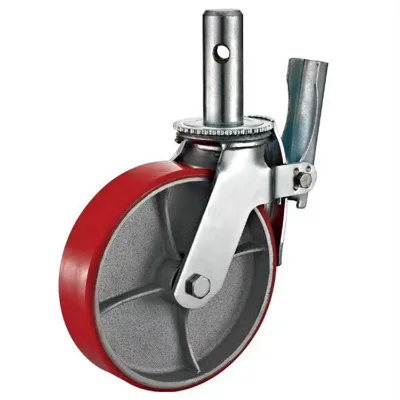
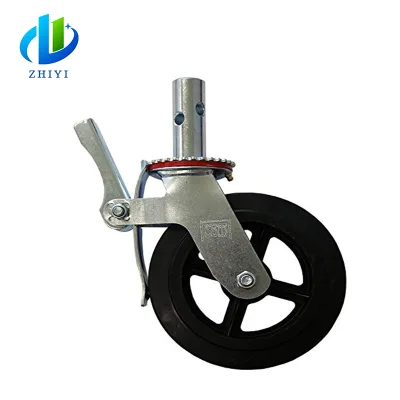
The foundation of a reliable caster wheel lies in its material composition and manufacturing process. In the current market, steel remains the dominant material for the structural frame of scaffolding casters, offering the necessary rigidity to support heavy loads during vertical construction. The wheels themselves, however, vary significantly based on the floor surface and noise requirements of the job site. Observations from available product data indicate a diverse range of wheel materials, including PVC, PU (Polyurethane), and Rubber.
PVC wheels are often selected for their cost-effectiveness and resistance to chemical degradation, making them suitable for indoor environments or sites with potential chemical exposure. Conversely, PU wheels are frequently specified for their superior load-bearing capacity and wear resistance, providing a smoother rolling experience on concrete surfaces while minimizing floor damage. The choice of wheel material directly impacts the "Move Method" of the scaffolding. Systems designed for "Integral Lifting" or "Attached Lifting" require wheels with high stability and precise steering, whereas "Floor Type Scaffolding" may prioritize durability over maneuverability.
The structural integrity of the caster is further defined by the bearing type. High-performance applications typically utilize ball bearings to reduce friction and allow for smooth rotation under heavy loads. Some specifications note the availability of "Telling Bearing or Plastic Bearing" options, which may be suitable for lighter duty cycles or specific budget constraints. The thickness of the steel frame is another critical specification, with observed ranges varying from 0.9mm to 2.4mm. Thicker gauges, such as 1.5mm or 2.0mm, generally offer enhanced resistance to deformation during the "Welding After Casting" process and subsequent assembly. Buyers must verify the exact thickness required for their specific scaffolding model, as thinner frames may compromise safety in high-wind or high-load scenarios.
Surface Treatment and Corrosion Resistance
Construction sites are notoriously harsh environments, exposing equipment to moisture, dust, and varying temperatures. Consequently, surface treatment is a primary determinant of the caster wheel's lifespan. The supplied data highlights several treatment methods, with Galvanization being the most prevalent. Hot-dip galvanization provides a robust zinc coating that offers exceptional protection against rust and corrosion, essential for outdoor scaffolding applications.
In addition to galvanization, some products feature Powder Coating or Zinc Plating. Powder coating adds an extra layer of protection and allows for color customization, which can be useful for site safety coding or branding. The data also mentions Electrophoresis as a surface treatment option, a process that provides a uniform and high-quality finish with excellent adhesion. When evaluating suppliers, buyers should request specific details on the thickness of the zinc coating or the quality of the powder coat, as these factors directly influence the warranty period and expected service life.
The standard "21.5cm/H" mentioned in product specifications likely refers to a specific height or dimensional standard for the caster assembly. However, without explicit context on whether this is a diameter or a height measurement, buyers must verify this dimension against their existing scaffolding frames. The "Galvanized Steel Folding Scaffolding" models often come with a standard height of 1.2m, 1.5m, or 1.8m, indicating that the caster wheels must be compatible with these modular frame heights. Ensuring that the surface treatment matches the environmental conditions of the project site is crucial for maintaining the structural integrity of the entire scaffolding system.
Compliance, Certification, and Safety Standards
While specific certification bodies are not explicitly listed in the provided product data, the "prod_standard" field references various height configurations such as 1m, 1.7m, 1.9m, and 1.2m. These standards imply adherence to regional or international safety regulations regarding scaffolding stability and load distribution. Buyers must verify that the caster wheels comply with local construction safety codes, which often mandate specific load ratings and braking mechanisms.
The presence of a "With Brake" feature is a critical safety requirement for mobile scaffolding. Brakes prevent unintended movement of the scaffolding structure, which is vital when workers are operating at height. The data confirms that many models are equipped with brakes, but the type of braking mechanism (e.g., foot-operated, lever-actuated) should be confirmed. Additionally, the "Ball Bearing" specification suggests a focus on smooth operation, but buyers should ensure that the bearings are sealed to prevent dust and debris ingress, which can lead to premature failure.
When assessing compliance, procurement teams should look for evidence of testing against recognized standards for load capacity and durability. Although specific test results are not provided in the source data, the "Construction Properties" listed as "Building Scaffold" indicate that these components are designed for structural support. Buyers should request third-party test reports that validate the load-bearing capacity of the caster wheels, ensuring they meet the safety factors required for the specific type of scaffolding, such as "Single Row Scaffolding" or "Doors Scaffolding."
Cost Drivers and Pricing Dynamics
The price of scaffolding caster wheels is influenced by a complex interplay of factors, including material costs, manufacturing complexity, and order volume. The observed price range in the market spans from $0.1 to $120, a wide variance that reflects differences in quality, size, and customization. Lower-priced units typically correspond to basic PVC wheels with standard steel frames and minimal surface treatment. In contrast, higher-priced units often feature PU or rubber wheels, advanced galvanization, custom colors, and specialized braking systems.
The Minimum Order Quantity (MOQ) is another significant cost driver. The observed MOQ range of 1 to 5000 units suggests that suppliers offer flexibility for small-scale projects while incentivizing bulk purchases for large construction firms. Buyers should note that ordering in larger quantities can significantly reduce the per-unit cost, but it also increases inventory holding costs. The "Woven Bags" or "Tray" packing options mentioned in the data can also impact shipping costs, as more robust packaging may be required for international transport to prevent damage during transit.
Customization is a key factor in pricing. The data indicates that color customization is available, and thickness options range from 1.0mm to 2.4mm. These customizations often incur additional tooling and setup costs. Buyers must balance the need for specific features against the budget constraints of the project. For instance, while a custom color may be desirable for branding, it may not be necessary for temporary scaffolding used on short-term projects.
Supplier Evaluation and Quality Assurance
Selecting the right supplier is as important as selecting the right product. The "prod_origin" field indicates that many of these products originate from China, specifically Hebei, a region known for its manufacturing capabilities in steel and construction equipment. While this suggests a mature supply chain, buyers must conduct thorough due diligence to ensure quality consistency.
Key evaluation criteria should include the supplier's production capacity, quality control processes, and after-sales support. The "Welding After Casting" process mentioned in the data requires skilled labor and precise machinery to ensure structural integrity. Buyers should request photos or videos of the manufacturing process to verify that the welding is clean and consistent. Additionally, the "Framework" type, described as "Frame Combined Scaffolding," implies a modular design that requires precise tolerances. Suppliers should be able to demonstrate their ability to maintain these tolerances across large production runs.
Quality assurance should also extend to the packaging and shipping process. The data lists various packing methods, including "Woven Bag/Wooden Box/Carton" and "Package by Bag." Buyers should ensure that the packaging is robust enough to protect the wheels during transit, especially for international shipments. The "1 Set: 4 PCS" specification indicates that wheels are often sold in sets, which simplifies inventory management but requires careful verification of the total quantity ordered.
Typical Applications and Operational Considerations
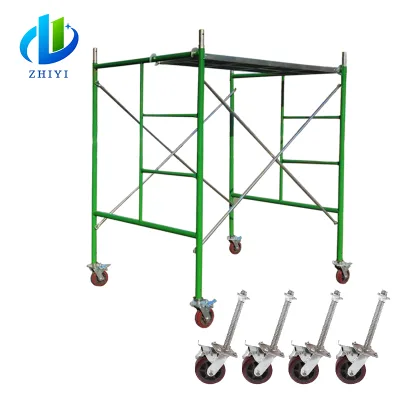
Scaffolding caster wheels are designed for a variety of applications, ranging from "External Scaffolding" to "Mobile Folding Scaffolding." The "Move Method" varies depending on the application, with options including "Integral Lifting," "Attached Lifting," and "Floor Type." Each method imposes different demands on the caster wheels. For example, "Integral Lifting" requires wheels that can support the entire weight of the scaffolding structure during movement, while "Attached Lifting" may require wheels that are integrated into the frame for stability.
The "Equipped with" list, which includes "Pedals, Caster Wheels, Clamps, Tripods," suggests that these wheels are part of a larger system. Buyers should ensure that the wheels are compatible with the other components of the scaffolding system. The "Lapping Form" of "Single Row Scaffolding" and the "Structural Style" of "Doors Scaffolding" further define the specific use cases. For instance, "Doors Scaffolding" may require wheels with a specific height and load capacity to accommodate the door-like frame structure.
Operational considerations also include the "Erection Position." Wheels used for "External Scaffolding" must withstand outdoor conditions, while those for indoor use may prioritize noise reduction and floor protection. The "Color" customization option can be used to differentiate between different types of scaffolding or to enhance visibility on the job site. Buyers should consider the specific operational needs of their projects when selecting the appropriate caster wheels.
Long-Term Procurement and Maintenance Strategies
For procurement professionals, the long-term value of scaffolding caster wheels extends beyond the initial purchase price. A strategic approach involves considering the total cost of ownership, including maintenance, replacement, and downtime. The "Galvanized" and "Powder Coated" finishes are designed to extend the lifespan of the wheels, reducing the frequency of replacements. However, regular inspection and maintenance are essential to ensure continued safety and performance.
Buyers should establish a maintenance schedule that includes checking the condition of the wheels, bearings, and brakes. The "Ball Bearing" and "Telling Bearing or Plastic Bearing" options may have different maintenance requirements, with ball bearings generally requiring less frequent lubrication. The "Thickness" of the frame, ranging from 0.9mm to 2.4mm, also affects the durability of the wheels. Thicker frames are less likely to deform over time, reducing the risk of failure.
In conclusion, sourcing Formwork Construction Scaffolding Caster Wheels requires a meticulous approach that balances technical specifications, cost considerations, and safety standards. By understanding the nuances of material composition, surface treatment, and supplier capabilities, buyers can make informed decisions that enhance the safety and efficiency of their construction projects. The wide range of options available, from basic PVC wheels to high-performance PU models with custom finishes, ensures that there is a solution for every project requirement.
FAQs
What materials are used for the frame and wheels?
The frame is made of steel with galvanized or zinc-plated surface treatment. Wheels are available in PVC, PU, or rubber materials depending on the specific model and application requirements.
Which bearing types are available for these caster wheels?
Ball bearings are commonly used for smooth rotation under heavy loads. Some models also offer Telling Bearing or plastic bearing options suitable for lighter duty cycles or specific budget constraints.
Can the scaffolding caster wheels be customized in color?
Yes, color customization is available for the caster wheels and frames. Powder coating allows for specific color choices to meet site safety coding or branding needs while adding extra corrosion protection.
What is the typical thickness range for the steel frame?
Steel frame thickness ranges from 0.9mm to 2.4mm depending on the model. Thicker gauges like 1.5mm or 2.0mm offer enhanced resistance to deformation during welding and assembly processes.
How are the caster wheels typically packed for shipping?
Packing options include woven bags, trays, wooden boxes, or cartons. The specific packaging method depends on the order quantity and shipping requirements to ensure protection during transit.
Do these mobile scaffolding casters come with braking systems?
Many models are equipped with brakes to prevent unintended movement. This feature is critical for safety when workers operate at height on mobile scaffolding structures.