Find Freestanding Wood Burning Fire Pit for Camping, Outdoor, and BBQ
Source 30 Freestanding Wood Burning Fire Pit options from Henan and Qingdao suppliers. Compare modern and classic designs in Cortensteel and cast iron, featuring folding capabilities and online technical support for outdoor and camping use.
Key considerations
Products List
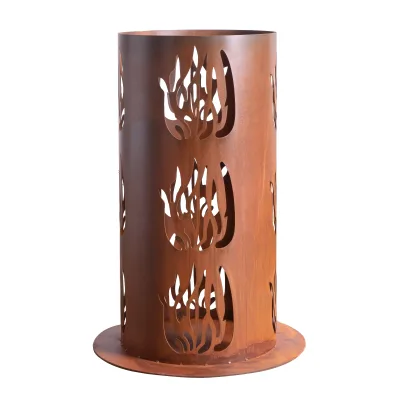


Smokeless Outdoor Aluminum Fire Pit Portable Wood Burning Carbon Fire Pit
$13.80 - $14.50
MOQ: 8 Pieces

Large Outdoor Stainless Steel Fire Pit Portable Wood Burning Smokeless Fire Pit
$38.00 - $50.00
MOQ: 1 Pieces


Stainless Steel Portable 19inch Smokeless Fire Pit for Outdoor Wood Burning
$67.00 - $72.00
MOQ: 1 Pieces


New Design Stove Portable Outdoor Camping Smokeless Wood Burning Bonfire Fire Pit
$40.00 - $50.00
MOQ: 750 Pieces

Customized Camping Stove Smokeless Stainless Steel Wood Burning Fire Pit
$40.00 - $50.00
MOQ: 750 Pieces
Comprehensive Sourcing Guide
Strategic Sourcing Guide for Freestanding Wood Burning Fire Pits
The global demand for outdoor heating solutions has driven a significant shift toward freestanding wood burning fire pits, which serve as both functional heating elements and aesthetic focal points for residential and commercial landscapes. For procurement professionals, navigating the market requires a disciplined approach that distinguishes between verified product attributes and marketing assertions. This guide synthesizes available market data to provide a framework for sourcing reliable units, focusing on material integrity, compliance verification, and operational suitability. The following analysis is grounded in observed product specifications and established industry practices, ensuring that procurement decisions are based on tangible evidence rather than speculative claims.
Material Composition and Construction Standards
The durability and safety of a Freestanding Wood Burning Fire Pit are inextricably linked to the materials used in its construction. Market observations indicate a strong preference for metals that can withstand high thermal stress and resist corrosion in outdoor environments. Corten steel and cast iron emerge as primary materials in the current supply landscape. Corten steel, often utilized for its weathering properties, offers a distinct aesthetic that develops a protective rust layer over time, making it suitable for the "Modern" design style frequently observed in product listings. Conversely, cast iron provides superior heat retention and structural mass, aligning with the "Classic" design style and the requirement for units labeled as "Wood Fireplaces" or "Stoves."
When evaluating suppliers, buyers must verify the specific metal type and finishing processes. A common finishing method identified in the supply chain is power coating, which enhances the corrosion resistance of the metal base. However, the presence of power coating does not guarantee longevity without proper surface preparation. Procurement teams should request mill certificates or material test reports to confirm that the metal meets the necessary tensile strength and thermal conductivity requirements. The distinction between "Metal" as a generic category and specific alloys like "Cortensteel" or "Cast Iron" is critical; generic listings may imply lower-grade materials that are prone to warping or rapid degradation under repeated heating cycles.
Technical Specifications and Dimensional Variability
Freestanding fire pits exhibit significant variance in dimensions, which directly impacts their suitability for different installation sites. Observed product data reveals a wide range of standard dimensions, from compact units measuring approximately 32 inches in diameter to larger models exceeding 46 centimeters in length. Specific models have been noted with dimensions such as 32"D x 32"W x 24"H, while others range up to 463031cm. This variability necessitates a rigorous verification process before placing orders, as the physical footprint must align with the intended outdoor space.
The installation type is another critical technical parameter. While the core keyword specifies "freestanding," the market also includes units designed for "Insert" installation or those with "Folding" features for portability. Buyers must ensure that the selected unit matches the intended use case. For instance, a "Folding" feature is highly relevant for camping applications, whereas a "Freestanding" unit with a fixed base is better suited for permanent garden installations. Additionally, the "Without Remote Control" attribute is a common observation, indicating that these units typically rely on manual operation. Procurement teams should confirm the absence of electronic components if the goal is a purely mechanical, low-maintenance solution, as electronic failures can compromise the unit's reliability in outdoor settings.
Compliance, Certification, and Safety Protocols
Safety and regulatory compliance are paramount when sourcing heating equipment. The supply chain data highlights several certifications, including CE, ETL, RoHS, and GS. The CE mark indicates conformity with health, safety, and environmental protection standards for products sold within the European Economic Area. Similarly, ETL certification, often associated with Intertek, verifies that the product meets specific North American safety standards. RoHS compliance ensures that the product is free from specific hazardous materials, which is essential for environmental and health safety.
However, the presence of a certification claim on a product listing does not automatically guarantee that every unit in a batch is certified. Buyers must verify that the certification applies to the specific model number, such as FP01 or BB002, rather than the brand generally. Furthermore, the data indicates that some units are listed as "Without Overheating Protection" and "Without Automatic Thermostat." This absence of safety features requires careful consideration during the risk assessment phase. Procurement professionals should explicitly confirm whether the supplier offers optional safety upgrades or if the design inherently relies on user supervision to prevent overheating. Relying on products without these automated safeguards increases the operational risk and may require additional training for end-users.
Cost Drivers and Economic Considerations
The pricing structure for freestanding wood burning fire pits is influenced by material costs, finishing processes, and customization capabilities. Observed price ranges in the market span from 5 to 550 USD, reflecting the diversity from simple, portable camping units to complex, high-end residential installations. The lower end of the spectrum typically corresponds to basic metal constructions with minimal finishing, while the higher end often includes Corten steel, power coating, and custom design elements.
Customization is a significant cost driver, with many suppliers offering "Available" customization options. This can include bespoke dimensions, specific color finishes like "Black" or "Brown," and tailored graphic design capabilities for branding. However, customization often impacts the Minimum Order Quantity (MOQ), which ranges from 1 to 750 units in the observed data. Buyers seeking custom solutions must be prepared for higher MOQs and potentially longer lead times. Additionally, the packaging method, whether "Carton" or "CTN," and the shipping method, such as "Shipping by Sea," contribute to the total landed cost. Sea freight is generally more economical for large orders but requires careful planning regarding lead times and inventory management.
Supplier Evaluation and Operational Capabilities
Selecting the right supplier involves more than just comparing prices; it requires an assessment of their operational capabilities and after-sales support. The data indicates that "Online technical support" is a standard service provided by many suppliers, which is crucial for troubleshooting installation or usage issues. Buyers should verify the availability and responsiveness of this support channel before finalizing a contract.
The place of origin is another key factor in supplier evaluation. Most observed products originate from China, with specific hubs in Henan and Qingdao. While these regions are known for manufacturing expertise, buyers should assess the supplier's logistics network and ability to handle international shipping. The "Graphic design" project solution capability suggests that some suppliers can assist with visualizing the product in a specific environment, which is a valuable service for large-scale procurement projects. However, buyers must ensure that these design services are distinct from the manufacturing process to avoid confusion regarding quality control responsibilities.
Quality Control and Long-Term Procurement Strategy
Implementing a robust quality control (QC) strategy is essential to mitigate the risks associated with importing industrial goods. Given the variability in materials and finishes, buyers should establish clear acceptance criteria based on the observed specifications. For example, verifying that the "Power Coated" finish is applied uniformly and that the "Cortensteel" or "Cast Iron" matches the agreed-upon grade is a fundamental QC step. Inspection protocols should include checks for structural integrity, especially for units with "Folding" mechanisms, to ensure they can withstand repeated use without failure.
Long-term procurement considerations also include the warranty and maintenance requirements. A "5 years" warranty is a notable observation in the market, suggesting that high-quality suppliers are confident in their product durability. However, buyers must clarify the terms of this warranty, including what constitutes a valid claim and the process for filing a complaint. The "Without Remote Control" and "Without Overheating Protection" attributes imply that the product relies on manual operation, which may affect the frequency of maintenance and the need for user training.
Typical Applications and Market Segmentation
Freestanding wood burning fire pits serve a diverse range of applications, from residential gardens to commercial camping sites. The "Outdoor" use case is the primary market segment, with specific models designed for "Camping" and "BBQ" activities. The "Modern" and "Classic" design styles cater to different aesthetic preferences, allowing buyers to select units that align with the architectural style of the installation site. The "Easily Cleaned" feature is particularly relevant for high-traffic areas where maintenance efficiency is a priority.
The following table summarizes the key attributes observed in the market to assist buyers in segmenting their procurement strategy:
| Attribute Category | Observed Values | Procurement Implication |
|---|---|---|
| Material | Cortensteel, Cast Iron, Metal | Verify mill certs; prioritize weathering resistance. |
| Design Style | Modern, Classic, Customized | Align with site architecture; confirm customization costs. |
| Installation | Freestanding, Insert, Folding | Match to site constraints; check stability for freestanding units. |
| Safety Features | Without Overheating Protection, Without Thermostat | Assess user training needs; consider risk mitigation. |
| Certification | CE, ETL, RoHS, GS | Verify model-specific compliance; avoid generic claims. |
| Warranty | 5 Years | Confirm terms and claim process; verify supplier stability. |
| Origin | Henan, Qingdao, China | Evaluate logistics and shipping lead times. |
In conclusion, sourcing freestanding wood burning fire pits requires a meticulous approach that balances technical specifications, safety compliance, and economic factors. By grounding procurement decisions in verified product attributes and maintaining a rigorous quality control framework, buyers can secure reliable heating solutions that meet the demands of diverse outdoor environments. The market offers a wide array of options, but success depends on the ability to discern between generic listings and high-quality, certified products that deliver long-term value.
FAQs
What materials are used for freestanding wood burning fire pits?
These units are primarily constructed from Cortensteel or Cast Iron to ensure durability. Cortensteel offers weathering resistance for modern designs, while Cast Iron provides superior heat retention for classic styles. Both materials often feature power coating to enhance corrosion protection in outdoor environments.
Which certifications should I verify for safety compliance?
Look for CE, ETL, RoHS, and GS certifications on specific model numbers like FP01 or BB002. These marks indicate conformity with European and North American safety standards. However, verify that the certification applies to the exact unit rather than the brand generally to ensure regulatory compliance.
Can I customize the dimensions and finish of the fire pit?
Yes, customization is available for dimensions, colors like Black or Brown, and graphic design capabilities. However, custom orders often require higher Minimum Order Quantities ranging up to 750 units. Buyers should confirm lead times and costs associated with bespoke specifications before placing an order.
How do I ensure the installation type matches my site?
Most units are designed as freestanding, but some models feature folding mechanisms for camping or insert types. Verify the installation type against your site constraints, as folding units suit portable camping while fixed bases are better for permanent garden installations. Check dimensions like 32 inches or 46 centimeters for fit.
What warranty coverage is typically offered for these products?
A 5-year warranty is a common observation for high-quality freestanding wood burning fire pits. This coverage suggests confidence in product durability, but buyers must clarify specific terms and claim processes. Ensure the warranty covers the specific model and understand any exclusions related to manual operation features.
Which suppliers provide online technical support for installation issues?
Many suppliers in Henan and Qingdao offer online technical support as a standard service. This assistance is crucial for troubleshooting installation or usage problems during the product lifecycle. Buyers should verify the responsiveness of this support channel before finalizing a contract to ensure reliable after-sales service.
What are the typical dimensions for freestanding fire pit models?
Dimensions vary significantly, with common sizes including 32 inches by 32 inches by 24 inches or 46 by 30 by 31 centimeters. Specific models like FP05 measure 35 inches in diameter. Always confirm the exact footprint against your intended outdoor space to ensure proper fit and stability for the selected unit.
How does the price range reflect product quality and features?
Prices range from 5 to 550 USD depending on material and finishing. Lower costs typically cover basic metal constructions, while higher prices include Cortensteel, power coating, and custom designs. Customization options and packaging methods like sea freight also influence the final landed cost and overall value proposition.