Source Front Changan Car Control Arm for Suspension, Steering, and Repair
Explore 30 listings for the Front Changan Car Control Arm, comparing stainless steel and steel alloy options with OEM customization. Buyers can evaluate models like 002624 and NJF776 for various vehicle brands including Kia, Toyota, and BMW.
Key considerations
Products List


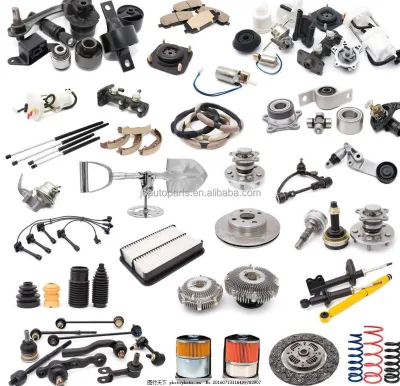


$1.00 - $5.00
MOQ: 100 Pieces


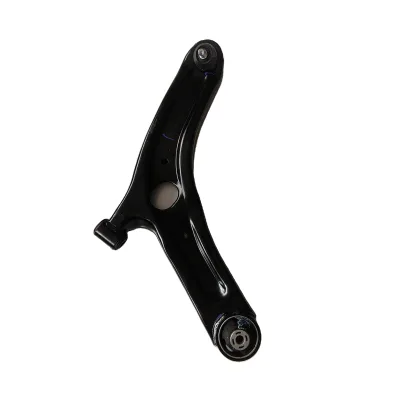
Comprehensive Sourcing Guide
Strategic Sourcing Guide for Front Changan Car Control Arms
Understanding Component Specifications and Material Integrity
When sourcing front control arms for Changan vehicles, the primary objective is to identify components that match the precise engineering requirements of the suspension system. The market offers a diverse array of options, but the specific application for a front control arm dictates strict material and dimensional constraints. Based on available industry data, the core material composition for these components frequently includes stainless steel, steel alloy, and aluminum alloy. The selection between these materials often depends on the specific model year of the Changan vehicle and the desired balance between weight reduction and structural rigidity. Stainless steel variants are noted for their corrosion resistance, which is critical for underbody components exposed to road salts and moisture, while steel alloys provide the necessary tensile strength to handle dynamic loads during cornering and braking.
The manufacturing process for high-quality control arms typically involves a combination of die forging, machining, and surface treatment. Die forging ensures a refined grain structure that enhances the part's durability compared to cast alternatives. Following the forging process, precision machining is applied to achieve the exact tolerances required for the ball joint and bushing interfaces. The supplied data indicates a tolerance level of 0.1mm, a figure that buyers should verify against their specific vehicle's service manual, as suspension geometry is highly sensitive to dimensional variance. Surface finish is another critical attribute; while some listings indicate a "No" surface finish status, others suggest surface treatment is part of the standard process. Buyers must clarify whether the component requires a specific coating, such as galvanization or powder coating, to meet the environmental conditions of their operating region.
Compliance, Certification, and Standard Verification
In the B2B procurement of automotive suspension components, verifying compliance with international standards is non-negotiable. The control arm market is populated with suppliers claiming adherence to various quality management systems. The observed data includes references to ISO, ISO/TS, OHSAS, GSV, GMP, BSCI, and other certifications. However, it is crucial to treat these as observations of supplier claims rather than universal guarantees for every listed product. A buyer must explicitly request the current certificate of compliance for the specific batch of control arms intended for Changan vehicles. The standard for the product itself may be described as "Customized," "Standard," or "According to the drawing." This variability underscores the necessity of obtaining the original equipment manufacturer (OEM) drawings or technical specifications from the vehicle manufacturer to ensure the supplier's product matches the exact engineering requirements.
The certification status of the supplier is often linked to their ability to maintain consistent quality. For instance, ISO/TS 16949 (often referenced as ISO/TS in general contexts) is a specific automotive quality management standard. If a supplier claims ISO certification, the buyer should verify the scope of that certification to ensure it covers the specific manufacturing processes of forging and machining. Furthermore, the "Standard" attribute listed in some product descriptions may refer to general industry standards, while others may indicate a "Customized" standard based on customer drawings. This distinction is vital; a "Customized" standard implies the part is made to a specific design, which requires rigorous validation against the Changan vehicle's suspension geometry. Buyers should not assume that a "Standard" certification automatically equates to OE equivalence without cross-referencing the specific OE numbers, such as 2678 or K-8726t, which are observed in the market data.
Cost Drivers and Pricing Structure Analysis
The pricing structure for front control arms is influenced by a complex interplay of material costs, manufacturing complexity, and order volume. The observed price range in the market spans from 1 to 322 USD, a wide variance that reflects differences in material quality, brand positioning, and order quantities. The "Lowest" price attribute found in some listings should be approached with caution; it often correlates with lower MOQs or generic specifications that may not meet the rigorous demands of a specific Changan model. The cost drivers include the type of alloy used (aluminum vs. steel), the extent of surface treatment required, and the precision of the machining tolerances.
Order Volume is a significant factor in determining the final unit cost. The Minimum Order Quantity (MOQ) is observed to range from 1 to 1000 units, with many suppliers indicating that the MOQ "Can Be Negotiated." This flexibility allows buyers to start with smaller trial orders to validate quality before committing to larger volumes. However, negotiating a lower MOQ often comes with a higher per-unit price. Conversely, larger orders typically unlock better pricing tiers. The payment terms, observed as TT (Telegraphic Transfer) or LC (Letter of Credit), also impact the financial dynamics of the transaction. LC terms are generally preferred for large orders to mitigate risk, while TT is common for smaller, established relationships. Buyers should calculate the total landed cost, including shipping (by Sea, Air, or Express) and packaging (Wooden Package, Fiber Wooden Case, or Carton), as these logistics costs can significantly affect the overall budget.
Typical Applications and Vehicle Compatibility
The front control arm is a critical suspension component designed to connect the wheel hub assembly to the vehicle's chassis, allowing for controlled movement while maintaining wheel alignment. The observed data lists a broad compatibility with numerous car brands, including Kia, Mazda, Volvo, Lexus, Peugeot, Audi, Roewe, Geely, Cadillac, Chevrolet, Chery, Buick, Ford, Nissan, Toyota, Honda, Hyundai, BMW, Benz, WuLing, and Volkswagen. While the core keyword focuses on Changan, the presence of these brands in the supplier's portfolio suggests a high degree of adaptability in the manufacturing process. However, buyers must be vigilant; a part listed as suitable for multiple brands does not guarantee interchangeability without specific part number verification.
The specific application for a Changan vehicle requires matching the "Position" attribute, which is explicitly listed as "Front" in the relevant product data. This distinguishes the component from rear control arms, which have different load-bearing characteristics and mounting geometries. The product models observed, such as 002624, 090505, NJF776, RK622161, FS010, and CP647, represent specific design iterations. Buyers should cross-reference these model numbers with the Changan vehicle's service manual or the existing part number to ensure a direct fit. The "OE Number" attribute, citing values like 2678 and K-8726t, provides a direct link to the original equipment specifications. If a supplier offers a part with these OE numbers, it is a strong indicator of compatibility, but the buyer must still verify the physical dimensions and bushing types against the vehicle's requirements.
Supplier Evaluation and Operational Capabilities
Evaluating a potential supplier for front control arms requires a deep dive into their operational capabilities and production capacity. The data indicates that the origin of these products is primarily China, with specific mentions of Luoyang as a manufacturing hub. This location is known for its heavy industry and metalworking capabilities, which supports the production of steel and alloy components. The "Automatic" attribute suggests that the manufacturing process involves automated machinery, which can enhance consistency and reduce human error. However, buyers should verify the extent of automation and the skill level of the operators to ensure that the "High Level" quality claims are substantiated.
The customization capabilities of the supplier are a key differentiator. The "Customization" attribute is marked as "Available," and the "OEM" status is confirmed as "Yes." This means suppliers are willing to produce parts based on customer drawings or specific design requirements. For a buyer sourcing for Changan, this is a valuable feature if the original parts are discontinued or if a design improvement is desired. The "Colors" attribute, noted as "Depend on Customer," further highlights the flexibility of the supplier. However, buyers must ensure that any custom color or finish does not compromise the material's corrosion resistance or structural integrity. The "Hardness" attribute is listed as "High," which is a positive indicator for durability, but this should be verified through material test reports rather than relying solely on marketing claims.
Quality Control and Long-Term Procurement Strategy
Implementing a robust quality control (QC) strategy is essential for mitigating the risks associated with sourcing automotive suspension components. The "Condition" of the product is listed as "New," which is the baseline expectation, but buyers must go further to ensure the parts meet the "High Level" quality standards observed in the market. This involves requesting detailed inspection reports, including hardness tests, tensile strength data, and dimensional checks against the 0.1mm tolerance specification. The "Surface Finish" attribute, which varies between "No" and "Surface Treatment," requires clear definition in the purchase order to prevent receiving parts that are prone to premature failure due to corrosion or wear.
Long-term procurement considerations extend beyond the initial purchase to include supply chain reliability and after-sales support. The "Delivery Time" is observed to range from 15 to 30 days, depending on the order volume and customization requirements. Buyers should factor in these lead times when planning inventory levels to avoid production stoppages. The "Packing" methods, ranging from "Wooden Package" to "Fiber Wooden Case" and "Carton," play a crucial role in protecting the components during transit. For long-term contracts, buyers should negotiate packaging standards that minimize damage and ensure easy handling. Additionally, the "Payment" terms of TT/LC should be structured to align with the delivery schedule, ensuring that payments are released only after successful quality verification. By maintaining a focus on these operational details, buyers can build a resilient supply chain that delivers consistent quality for their Changan vehicle operations.
Summary of Key Sourcing Parameters
To facilitate a streamlined procurement process, the following table summarizes the critical parameters observed in the market for front Changan car control arms. This comparison highlights the variability in specifications and the need for precise verification.
| Parameter | Observed Range/Options | Verification Requirement |
|---|---|---|
| Material | Stainless Steel, Steel Alloy, Aluminum Alloy | Confirm specific alloy grade for application |
| Position | Front, Rear | Ensure "Front" is selected for Changan front suspension |
| Tolerance | 0.1mm | Verify against OEM drawing specifications |
| Certification | ISO, ISO/TS, OHSAS, GSV, GMP, BSCI | Request valid certificate for specific batch |
| MOQ | 1 - 1000 | Negotiate based on initial trial vs. volume |
| Delivery Time | 15 - 30 Days | Align with production schedule and inventory |
| Packing | Wooden Package, Fiber Wooden Case, Carton | Ensure packaging protects against transit damage |
| Origin | China (e.g., Luoyang) | Verify factory location and audit reports |
| OEM Status | Yes | Confirm ability to produce to OE drawings |
| Payment | TT / LC | Select based on order value and risk profile |
By adhering to these structured guidelines and maintaining a rigorous approach to verification, buyers can successfully source high-quality front control arms for Changan vehicles, ensuring safety, performance, and reliability in their automotive operations.
FAQs
Can I customize the Front Changan Car Control Arm specifications?
Yes, customization is available for these components. Suppliers accept drawings and specific requests for dimensions, colors, and packaging to match your exact engineering requirements.
What material is used for the Front Changan Car Control Arm?
The product is typically made from stainless steel, steel alloy, or aluminum alloy. These materials provide high hardness and corrosion resistance suitable for suspension systems.
Which certification standards do the manufacturers meet?
Manufacturers often hold ISO, ISO/TS, OHSAS, GSV, GMP, BSCI, and GMP certifications. Buyers should verify specific certificates for the batch to ensure compliance with automotive quality standards.
How long is the delivery time for this product?
The standard delivery time ranges from 15 to 30 days depending on order volume. Customized orders or larger quantities may require the full 30-day production window.
What is the minimum order quantity for front changan car control arms?
The minimum order quantity ranges from 1 to 1000 units and can be negotiated. Buyers can start with smaller trial orders before committing to larger production volumes.
Can the product be sourced from specific locations in China?
Yes, products originate from China, with specific manufacturing hubs mentioned in Luoyang. Buyers can request origin details to verify the supply chain location for their procurement.
How is the product packed for shipment?
Packing options include wooden packages, fiber wooden cases, cartons, or pallets. The specific packing method depends on customer requests and can be customized for safe transit.