Source Fruity Cotton Candy Hair Floss for Parties, Salons, and Daily Use
Explore 30 listings for Fruity Cotton Candy Hair Floss, including liquid candy and spray options. Compare solid fruit sugar styles, bowknot shapes, and custom designs suitable for youth and daily use. Find suppliers offering OEM services and fast delivery for hair accessories.
Key considerations
Products List

Hot Selling Colorful Toothbrush Shape Fruity Flavour Spray Liquid Candy
$13.00 - $15.00
MOQ: 100 Boxes


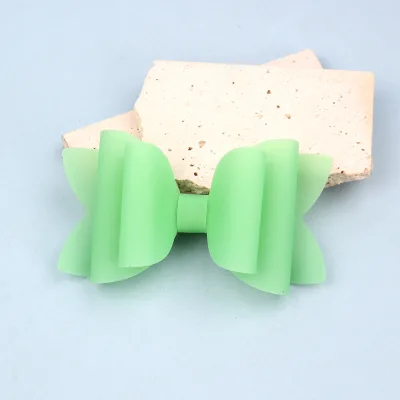


Women Hair Clip Girls Candy Colors Frosted Plastic Butterfly Hair Claw Clip
$0.80 - $0.89
MOQ: 20 pieces
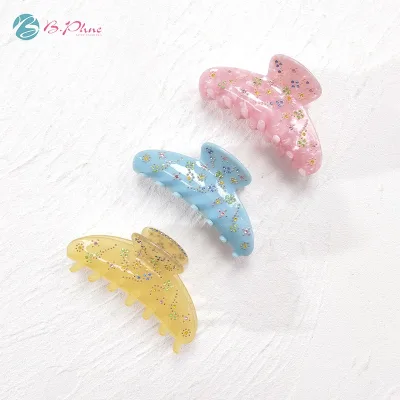


Plastic Candy-Colored Cat-Ear Cartoon Anti-Static Massage Detangling Hair Brus
$0.50 - $0.52
MOQ: 1000 Pieces

Candy-Colored Cute Hairdressing Comb with Flower Print and Colored Air Cushion
$0.42 - $0.45
MOQ: 1000 Pieces
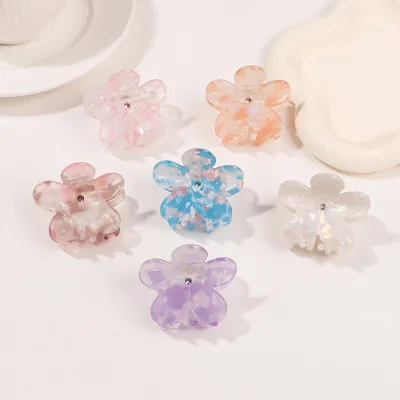

New Arrivals Brightening Strengthening Toothpick Floss for Bed and Breakfast
$0.17 - $0.18
MOQ: 5000 Pieces

Custom Children's Travel Tangle Brush Mini Hair Brush Candy Color Small Wet Hair Brush Comb
$0.29 - $0.44
MOQ: 1000 Pieces


Comprehensive Sourcing Guide
Fruity Cotton Candy Hair Floss Sourcing Guide
The term "Fruity Cotton Candy Hair Floss" often conflates edible confectionery with hair care accessories, requiring buyers to distinguish between actual fruit-flavored candies and hair styling tools that may share aesthetic or naming similarities. In the current market, observed listings include diverse categories such as fruit sugar products and various hair accessories like hair claws, combs, and brushes. Procurement teams must carefully verify whether a supplier offers edible items or hair tools, as the product attributes for "Fruit Sugar" and "Hair Claws" appear in the same data set, indicating a potential category mix-up or a broad supplier catalog.
Buyers should prioritize suppliers who clearly separate their edible inventory from personal care items to avoid regulatory confusion and safety risks. The observed product data lists attributes like "Fruit Liquid Candy" alongside "Hair Comb" and "Hair Brush," suggesting that some vendors operate as general trading companies with mixed portfolios. When sourcing, it is critical to confirm the specific nature of the item, ensuring that the "Fruit Sugar" designation does not apply to a hair accessory, or vice versa, as the intended use dictates entirely different compliance and safety requirements for the final product.
Product Scope and Observed Listing Signals
The observed product scope reveals a wide spectrum of items ranging from solid fruit sugars to various hair styling tools, including hair claws, combs, and brushes. Listings indicate specific forms such as "Solid" for candies and "Plastic" for hair accessories, with shapes varying from "Bowknot" designs to standard "Common Comb" structures. The data also highlights specific models like "A-D123" for candies and "clip-02" for hair tools, demonstrating that suppliers often list multiple distinct product lines under a single search query, necessitating precise filtering by the buyer.
Visual and functional signals in the listings suggest a focus on customization and variety, with attributes like "Accept Customized Logo/Designs" and a wide range of color options including "lake blue," "peach color," and "light green." The packaging materials observed include "Plastic" and "Carton" for candies, while hair tools are often packed in "Gift Box" or "OPP Bag." Buyers must scrutinize these signals to ensure the specific item matches their needs, as the presence of "Liquid Candy" attributes alongside "Hair Brush" attributes indicates a need for rigorous product verification before placing an order.
Technical Specifications to Verify
Technical verification must begin with the physical form and dimensions of the product, as the data shows significant variation between "Solid" fruit sugars and "Plastic" hair tools. For hair accessories, buyers should confirm the standard dimensions, noting observed ranges such as "10-20CM" and "5-15CM" for combs and brushes. It is essential to validate the specific model numbers provided, such as "clip-02" or "HTTTOYS," to ensure the physical specifications align with the intended application, whether for salon use, home styling, or travel.
Material composition and structural integrity are equally critical, with observed data specifying "Plastic" as the primary material for hair tools and "Plastic" packaging for candies. Buyers should verify the exact material grade and durability, especially for items intended for repeated use, as the "Disposable" attribute is marked as "Non-Disposable" for the hair comb and brush category. Additionally, the "Standard" specifications like "17g30pcs12jars" for candies and "20g" for hair tools must be cross-referenced with the actual product samples to ensure consistency in weight and volume across the order.
Compliance and Safety Documentation
Compliance verification is paramount when dealing with products that may be confused between edible and non-edible categories, as the data lists both "HACCP" and "FDA" certifications alongside hair accessory attributes. Buyers must explicitly request documentation proving that hair tools are free from food-grade contaminants and that any edible products are strictly separated from personal care items in the supply chain. The presence of "ISO" and "BRC" certifications in the data suggests that some suppliers adhere to high standards, but these must be validated for the specific product line being purchased to ensure they cover the relevant safety protocols.
Safety documentation should also address the intended usage environment, as the "Suitable for" attribute lists "Youth" for candies and "Travel, Salon, Home, Hotel" for hair tools. For hair accessories, buyers should verify that the materials used, such as the "Plastic Hair Brush," meet safety standards for contact with skin and hair, particularly for products marketed to "All Ages." It is crucial to ensure that the "Storage Method" of "Normal" does not compromise the integrity of the product, and that any "Customized Logo/Designs" do not introduce hazardous materials or sharp edges that could pose a safety risk.
Cost Drivers and Commercial Terms
Cost structures in this market are influenced by the complexity of customization and the specific material requirements of the product. The observed "MOQ" ranges from 10 to 5000 units, with specific listings showing "10PCS" for hair claws and higher volumes for other items. Buyers should anticipate that customizing logos, designs, colors, and packaging will increase the unit cost, as the data confirms support for "Custom Logo/Design/Color/Packing." The "Fast Delivery" and "High Speed Reply" attributes suggest that expedited services may carry a premium, impacting the overall commercial terms.
Payment and logistics terms also play a significant role in the final cost, with observed payment methods including "T/T," "Paypal," "Credit Card," and "Ali Online Order." The "Sample Time" of 3-5 days indicates that prototyping and approval processes can affect the timeline and cost of the initial order. Buyers must negotiate clear terms regarding the "Standard" specifications, such as "17g30pcs12jars" or "20g," to avoid hidden costs associated with weight discrepancies or packaging variations. Understanding these commercial drivers is essential for budgeting and ensuring that the total landed cost aligns with the procurement strategy.
Supplier Qualification and Quality Control
Supplier qualification should focus on verifying the "Combin Factory" status and the ability to maintain consistent quality across mixed product lines. The data indicates that some suppliers operate as "Hair Brush Factory" entities, which may offer better expertise for hair tools than general trading companies. Buyers should assess the supplier's capacity to handle "Customized Logo/Designs" without compromising the structural integrity of the product, as the "Superior" attributes highlight "Product Facto" as a key strength. It is vital to confirm that the supplier has the necessary infrastructure to manage both edible and non-edible products separately to prevent cross-contamination.
Quality control processes must be rigorous, especially given the diverse product attributes observed, such as "Fruit Liquid Candy" and "Hair Comb." Buyers should request evidence of quality checks for the "Shape" and "Style" of the products, ensuring that "Bowknot" designs and "Fashion" styles meet the specified standards. The "Season" attribute of "Whole Year" suggests that suppliers must maintain consistent quality regardless of seasonal demand fluctuations. Establishing a clear quality control protocol that covers material inspection, dimensional accuracy, and packaging integrity is essential for maintaining product standards and minimizing returns.
Long-Term Procurement Checks
Long-term procurement success depends on establishing a reliable supply chain that can adapt to changing market demands and product specifications. Buyers should monitor the "Sample Time" and "Lead Time" consistency, as the observed "3-5 Days" for samples sets a baseline for future production cycles. It is important to verify that the supplier can maintain the "Custom" capabilities for logos, designs, and colors over multiple orders, ensuring that the "Customerized" branding remains consistent and high-quality. Regular audits of the supplier's production facilities and quality control processes will help mitigate risks associated with mixed product lines.
Sustainability and regulatory compliance should also be part of the long-term strategy, given the "HACCP," "FDA," "ISO," and "BRC" certifications observed in the data. Buyers should ensure that the supplier continues to meet these standards as regulations evolve, particularly for products intended for "Youth" or "All Ages." The "Storage Method" of "Normal" and "Shelf Life" of ">12 Months" for candies require ongoing verification to ensure product stability over time. By maintaining a proactive approach to supplier management and quality assurance, buyers can secure a stable supply of high-quality products that meet their specific needs.
FAQs
What certifications are available for Fruity Cotton Candy Hair Floss products?
Products typically hold HACCP, FDA, ISO, and BRC certifications to ensure safety and quality standards. These credentials verify that manufacturing processes meet international regulatory requirements for hygiene and material safety. Buyers should verify specific documentation with suppliers to confirm compliance with their local market regulations before placing large orders.
Can I customize the logo and packaging for these hair accessories?
Yes, customization is available for logos, designs, colors, and packaging materials. Suppliers accept custom requests to help brands establish unique market identities. This service allows buyers to tailor the product appearance to their specific marketing needs while maintaining the core functionality and quality of the hair floss items.
What is the typical shelf life for these solid fruit sugar products?
The shelf life is generally greater than 12 months when stored under normal conditions. This longevity ensures that inventory remains fresh and usable for extended periods. Proper storage in a cool, dry place helps maintain the integrity of the solid form and prevents any potential degradation of the material over time.
Which specifications are standard for the A-D123 model hair floss?
The A-D123 model typically follows a standard of 17g per unit with 30 pieces packed in 12 jars per carton. This specification provides a clear volume and packaging structure for bulk ordering. Buyers can use these dimensions to calculate shipping costs and storage requirements accurately for their distribution channels.
What is the minimum order quantity for custom hair floss orders?
The minimum order quantity starts at 10 pieces for many suppliers. This low MOQ allows buyers to test the market or order small batches for specific events. It reduces initial investment risk while still enabling customization options for logos and packaging designs to suit individual brand requirements.
How are these hair floss products packaged for shipping?
Products are commonly packaged in plastic materials within cartons or gift boxes. The packaging is designed to protect the solid form during transit and storage. Some items may also use OPP bags for individual units, ensuring hygiene and ease of distribution to retail outlets or direct consumers.