Source Halal Fruity Hot Dog Marshmallow for Parties, Gifts, and Retail
Explore 30 Halal Fruity Hot Dog Marshmallow listings from verified Chinese manufacturers. Compare product specifications, packaging standards, and certification details to identify suitable bulk confectionery suppliers for your sourcing requirements; compare the available evidence and request quotations based on your requirements.
Key considerations
Products List


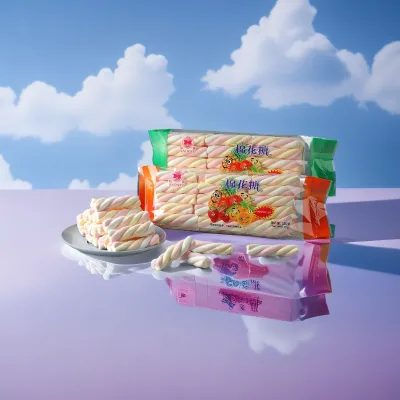
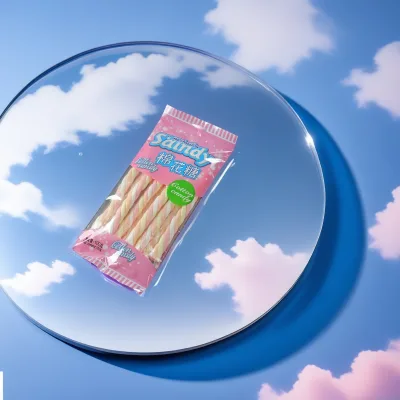


New Good Quanlity Chocolat Marshmallow Halal Bulk Crispy Milk Marshmallows
$25.85 - $28.50
MOQ: 500 Boxes


Comprehensive Sourcing Guide
Halal Fruity Hot Dog Marshmallow Sourcing Guide
Procuring Halal Fruity Hot Dog Marshmallow requires identifying suppliers who explicitly align their product lines with specific dietary and flavor profiles. The available market data confirms that manufacturers offer distinct variations, including hot dog-shaped marshmallows and fruit-flavored options, often packaged in cartons or jars. Buyers must verify that the "Hot Dog Marshmallow" and "Fruity Marshmallow" attributes appear together in the same SKU to ensure the product meets the dual requirement of shape and flavor.
Sourcing decisions should prioritize vendors who list OEM customization capabilities, allowing for tailored branding on these specific confectionery items. The observed product models, such as A-M320 and A-M075, indicate that manufacturers produce these items in various standard configurations, ranging from small retail jars to bulk wholesale boxes. Understanding these structural differences is essential for aligning the order with your specific distribution channel, whether it targets individual consumers or large-scale retail operations.
Product Scope and Observed Listing Signals
The product scope for this category encompasses solid confectionery items that combine fruit flavors with distinctive hot dog shapes, often marketed as wholesale or OEM custom goods. Listings frequently highlight attributes like "Fruit Flavored Marshmallow" and "Hot Dog Shaped Marshmallow," confirming that the core product exists as a specific niche within the broader confectionery market. Buyers should expect to find these items in solid form, packaged in plastic or carton materials, with storage methods designed for normal conditions to maintain texture and flavor integrity.
Observed listing signals reveal a wide range of packaging standards, from 17g units in 24-box configurations to 120g bags in 48-unit packs. These variations suggest that suppliers cater to different volume needs, with some models like M035 offering 10g units in jars and others like A-M039 providing 1g units in 6-jar sets. When evaluating listings, procurement teams must cross-reference the specific model number with the stated standard to ensure the physical dimensions and unit counts match the intended application, avoiding mismatches between the ordered specification and the delivered product.
Technical Specifications to Verify
Technical verification begins with confirming the exact product model and its corresponding standard, as specifications vary significantly across different SKUs. For instance, model A-M320 follows a 17g12pcs24boxes standard, whereas model A-M075 adheres to a 120g*48bags configuration. Buyers must explicitly request the technical data sheet for the specific model they intend to purchase to validate the weight per piece, the number of pieces per inner pack, and the total quantity per master carton, ensuring the logistics plan aligns with the physical dimensions of the shipment.
Beyond physical dimensions, the formulation details regarding the gelling agent and fruit content require careful scrutiny to ensure consistency with the "Fruit Sugar" or "Fruit Jam" attributes observed in the market. The product form is consistently listed as solid, but the specific texture and sweetness levels may differ based on whether the item is categorized under "Cotton Candy" or "Lollipop" departments in the supplier's catalog. Verifying the shelf life, which is noted as exceeding 12 months for certain models, is critical for inventory planning, as this duration impacts storage requirements and the feasibility of long-term stockpiling without quality degradation.
Compliance and Safety Documentation
Compliance verification is paramount when sourcing halal-certified confectionery, as the market data indicates that certifications such as HACCP, FDA, BRC, and HALAL are standard requirements for reputable suppliers. Buyers must request current, valid certificates for the specific production facility and batch, ensuring that the "Marshmallow Halal" attribute is backed by an official document from a recognized Islamic authority. It is essential to confirm that the certification covers the entire supply chain, including the sourcing of fruit flavors and the manufacturing process, to prevent any risk of cross-contamination or non-compliance with dietary laws.
Safety documentation must also address the presence of ISO standards, which are listed alongside other certifications for certain product models like A-M039. Procurement teams should verify that the supplier maintains an active ISO certification, as this indicates adherence to international quality management systems that support consistent product safety. Additionally, checking for FDA and HACCP compliance ensures that the facility meets rigorous food safety protocols, which is particularly important for products intended for export to markets with strict regulatory environments regarding confectionery ingredients and processing hygiene.
Cost Drivers and Commercial Terms
Cost drivers for Halal Fruity Hot Dog Marshmallow are heavily influenced by the complexity of the shape and the specific flavoring agents used, which can vary the base price significantly. The observed price range of 0.58 to 200 USD suggests that costs fluctuate based on packaging volume, customization levels, and the specific model ordered. Buyers should anticipate that OEM customization, which allows for private labeling and unique packaging designs, will incur additional costs compared to standard wholesale offerings, and this premium must be factored into the total landed cost calculation.
Commercial terms regarding Minimum Order Quantity (MOQ) are equally critical, with observed ranges spanning from 1 to 10,000 units. Small buyers may find suppliers willing to accept low MOQs for trial orders, while larger retailers will likely negotiate better unit prices by committing to higher volumes. It is advisable to clarify whether the MOQ applies per flavor or per shape, as the market data shows distinct models for different configurations. Understanding these thresholds helps in negotiating favorable payment terms and avoiding unexpected costs associated with splitting orders across multiple SKUs to meet minimum thresholds.
Supplier Qualification and Quality Control
Supplier qualification should focus on verifying the manufacturer's ability to deliver consistent quality across different product models, such as the A-M318 and A-M025 variants. Buyers must assess the supplier's track record in handling customization requests, as the availability of OEM services implies a flexible production line capable of adapting to specific branding and packaging needs. A robust quality control system should be in place to ensure that every batch of "Fruity Candy" or "Hot Dog Shape Marshmallow" meets the defined standards for weight, flavor intensity, and visual appearance before shipment.
Quality control protocols must also include regular testing for the gelling agents and fruit jams used in the formulation to ensure they meet the specified "Fruit Sugar" or "Fruit Jam" attributes. Suppliers should provide batch-specific test results that confirm the absence of allergens and the presence of required certifications. It is essential to establish a clear communication channel for reporting any deviations in product quality, such as texture inconsistencies or flavor discrepancies, and to define the corrective actions the supplier will take to resolve these issues promptly and maintain the integrity of the supply chain.
Long-Term Procurement Checks
Long-term procurement strategies require regular audits of supplier performance to ensure that the "Halal" and "Fruity" attributes remain consistent over time. Buyers should schedule periodic reviews of the supplier's certification status, verifying that HACCP, FDA, and HALAL certifications remain active and that no regulatory changes have impacted their ability to produce the specific product models. This proactive approach helps mitigate the risk of supply disruptions and ensures that the product continues to meet the evolving dietary and safety standards of the target market.
Continuous monitoring of market trends and product specifications is also necessary to adapt to changes in consumer preferences for fruit flavors and marshmallow shapes. Buyers should maintain a dynamic relationship with suppliers to stay informed about new product developments, such as updated packaging materials or new flavor profiles that might enhance the product line. By keeping a close watch on the standard configurations and model numbers, procurement teams can ensure that their inventory remains relevant and competitive, allowing for timely adjustments to ordering strategies based on real-time market feedback and supplier capabilities.
FAQs
What certifications are available for Halal Fruity Hot Dog Marshmallow?
Suppliers offer HACCP, FDA, BRC, HALAL, and ISO certifications for these products. Buyers should verify which specific combination matches their regional regulatory requirements. Documentation is typically provided upon request to ensure compliance with international food safety standards.
What are the common packaging specifications for this product?
Standard packaging includes cartons, boxes, bags, and jars with various configurations. Examples include 17g units in 12-piece boxes or 120g bags. Buyers can request specific packaging formats to align with their retail distribution needs and shelf space requirements.
Can suppliers provide OEM customization for fruity hot dog marshmallow?
Yes, OEM customization is available for these marshmallow products. Buyers can request specific shapes, flavors, or branding to match their market needs. Suppliers typically require minimum order quantities to accommodate custom production runs and packaging design changes.
What is the typical shelf life of these marshmallows?
The shelf life is generally greater than 12 months when stored under normal conditions. Proper storage in a cool, dry place helps maintain product quality. Buyers should check specific storage instructions on the packaging to ensure optimal freshness during transit.
What are the minimum order quantities for wholesale purchases?
MOQs vary by supplier and product configuration, ranging from 1 to 10,000 units. Buyers should confirm the specific MOQ for their desired packaging and customization level. Lower MOQs may be available for standard products, while custom orders often require higher volumes.
What flavors are available for fruity hot dog marshmallow?
Common flavors include fruit, sweet, and fruity varieties. Specific options may include fruit jam or fruit sugar types. Buyers can select from standard flavor profiles or request custom flavor combinations to differentiate their product line in the market.