Source Compostable Kraft Burger Box for Food, Packaging, and Catering
Compare 30 listings for the Compostable Kraft Burger Box designed for food, packaging, and catering needs. Buyers can evaluate features like biodegradability, oil-proof function, and customization options from verified manufacturers in China.
Key considerations
Products List


Eco-Friendly Biodegradable Compostable Kraft Paper Burger Hamburger Box
$0.01 - $0.04
MOQ: 30000 piece


Biodegradable Kraft Fries Hamburger Box Custom Cardboard Paper Burger Box
$0.02 - $0.05
MOQ: 30000 piece


Compostable Kraft Paper Packaging Hamburger Box for Sustainable Burger Service
$0.03 - $0.05
MOQ: 50 Pieces

Compostable Kraft Paper Box Burger Packaging for Sustainable Fast Food Service
$0.03 - $0.05
MOQ: 50 Pieces

Biodegradable Kraft Paper Burger Box for Environmentally Friendly Packaging
$0.03 - $0.05
MOQ: 50 Pieces

Biodegradable Kraft Paper Burger Packaging Box for Eco-Friendly Restaurants
$0.03 - $0.05
MOQ: 50 Pieces

Recyclable Kraft Paper Burger Packaging Box for Environmental Sustainability
$0.03 - $0.05
MOQ: 50 Pieces

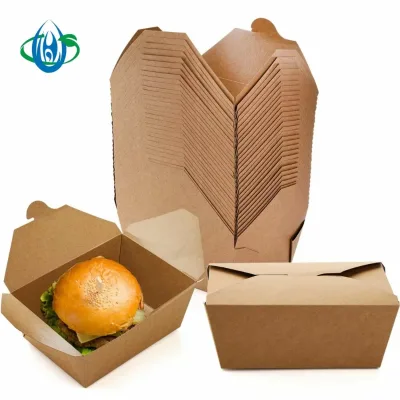


Eco-Friendly and Sustainable 100% Compostable Tableware Bagasse Burger Boxes
$0.04 - $0.05
MOQ: 50000 Pieces

Comprehensive Sourcing Guide
Compostable Kraft Burger Box Sourcing Guide
The global shift toward sustainable packaging has elevated the Compostable Kraft Burger Box from a niche alternative to a standard requirement for food service operators prioritizing environmental responsibility. These containers are engineered to balance the structural integrity needed for hot, greasy foods with the biodegradability required to meet modern waste management goals. Sourcing these items requires a disciplined approach to verify that the "compostable" label aligns with actual material composition and end-of-life processing capabilities, ensuring that the procurement strategy delivers genuine ecological value rather than relying on vague marketing claims.
Buyers must navigate a market where product attributes vary significantly between suppliers, even when the core keyword remains identical. The observed product landscape includes variations in paper weight, from 150GSM to 350GSM, and diverse functional features such as oil-proofing and microwavability. A successful sourcing strategy begins with defining the specific operational needs, such as whether the box must accommodate specific food types like fried chicken or noodles, and then rigorously filtering suppliers based on their ability to meet those precise technical and regulatory requirements without compromising on the eco-friendly promise.
Product Scope and Observed Listing Signals
The product scope for compostable kraft burger boxes encompasses a wide range of applications, primarily serving the food and beverage packaging sector with a focus on hot food items like hamburgers, fried chicken, and noodles. Listings frequently highlight features such as being disposable, eco-friendly, and biodegradable, with specific mentions of suitability for thermal applications and food ingredients packaging. The observed market signals indicate that these products are often designed with a square shape and are available in custom sizes, allowing them to adapt to various menu requirements while maintaining the aesthetic of natural kraft paper.
When evaluating listings, buyers should look for specific signals regarding customization and production capacity, as these are critical for scaling operations. The data shows that customization is widely available, including options for custom logos, exquisite designs, and tailored packing solutions like export cartons. However, the presence of these features does not guarantee uniformity across all suppliers; some listings may emphasize single-page printing while others offer complex handling like embossing or lamination. Buyers must verify that the specific customization options they require are supported by the supplier's actual production capabilities rather than assuming all listed features apply to every unit.
Technical Specifications to Verify
Technical verification begins with the material composition, where the core requirement is the use of kraft paper or corrugated paper that meets specific weight standards between 150GSM and 350GSM. This weight range directly influences the box's ability to hold hot, oily foods without collapsing or leaking, making it a primary metric for quality assessment. Buyers should request physical samples to test the paperboard's rigidity and confirm that the material is indeed paper-based, as some listings may mix terms like "paperboard" and "kraft paper" without clarifying the exact blend or coating used.
Beyond the base material, functional performance attributes such as oil-proofing, waterproofing, and microwavability must be validated through testing or certified data sheets. The observed product data indicates that many suppliers claim these features, but the actual performance can vary based on the internal coating or treatment applied to the paper. Additionally, the printing handling methods, including glossy or matte lamination and varnishing, can impact the box's resistance to grease and its overall durability. Procurement teams must ensure that the chosen printing and coating processes do not interfere with the compostability of the final product, as certain synthetic laminates can hinder biodegradation.
Compliance and Safety Documentation
Compliance and safety are paramount when sourcing food-contact packaging, requiring suppliers to provide verifiable documentation that their products meet international food safety standards. The observed listings frequently cite certifications such as FDA, CE/EU, CIQ, LFGB, and EEC, which serve as critical indicators of a supplier's adherence to safety regulations. Buyers must treat these certifications as essential prerequisites and request current, valid certificates for each specific product model to ensure that the packaging is safe for direct contact with food ingredients and hot meals.
In addition to food safety, the environmental claims of the product must be backed by recognized standards to avoid greenwashing. While some background knowledge suggests standards like EN13432 or ASTM D6400, buyers should not assume these apply unless explicitly confirmed by the supplier's documentation. Instead, the focus should be on verifying that the supplier can provide test results proving the product's biodegradability and compostability under specific conditions. This due diligence ensures that the packaging will break down effectively in commercial composting facilities, aligning with the brand's sustainability commitments and regulatory requirements in target markets.
Cost Drivers and Commercial Terms
Cost drivers for compostable kraft burger boxes are heavily influenced by the complexity of customization, the specific paper weight selected, and the volume of the order. The observed MOQ range spans from 50 to 50,000 units, indicating that suppliers cater to both small-scale startups and large-scale distributors, with pricing structures that likely reflect these volume tiers. Buyers should anticipate that higher paper weights and advanced printing techniques, such as embossing or multi-color lamination, will increase the unit cost, necessitating a careful balance between aesthetic requirements and budget constraints.
Commercial terms regarding lead times and packaging logistics are equally critical for supply chain stability. Listings indicate that products are typically packed in export cartons, and customization is accepted, which can extend lead times compared to standard stock items. Buyers must clarify the production capacity and lead time expectations during the negotiation phase, as the ability to accept custom orders often implies a longer manufacturing cycle. Understanding these terms helps in planning inventory levels and avoiding stockouts, especially when dealing with seasonal demand spikes or new product launches.
Supplier Qualification and Quality Control
Supplier qualification requires a thorough assessment of their manufacturing capabilities, specifically their ability to maintain consistent quality across custom orders. The observed data shows that many suppliers offer OEM/ODM services and accept custom logos, but the consistency of these customizations can vary. Buyers should implement a quality control protocol that includes requesting pre-production samples to verify the accuracy of the custom logo, the precision of the box shape, and the integrity of the paper weight before committing to a large production run.
Quality control should also extend to the packaging and shipping process to ensure that the products arrive in perfect condition. Since the product type includes items like buckets and burger boxes that rely on structural integrity, damage during transit can render the entire shipment unusable. Buyers must verify that the supplier uses robust export cartons and appropriate internal packing methods to prevent crushing or moisture damage. Establishing a clear quality agreement that defines acceptable defect rates and outlines the process for handling non-conforming goods is essential for maintaining a reliable supply chain.
Long-Term Procurement Checks
Long-term procurement success depends on establishing a partnership with suppliers who can adapt to evolving market demands and regulatory changes. As sustainability standards tighten, buyers should regularly review their suppliers' certification status and material sourcing practices to ensure continued compliance with new environmental regulations. This proactive approach helps mitigate the risk of supply chain disruptions caused by sudden changes in compliance requirements or material availability.
Furthermore, maintaining a diverse supplier base can provide resilience against market volatility and capacity constraints. Buyers should periodically re-evaluate their supplier portfolio to ensure they have access to alternative sources for compostable kraft burger boxes, particularly for critical product lines. Regular performance reviews that assess on-time delivery, quality consistency, and responsiveness to customization requests will help identify suppliers who are capable of supporting long-term growth. By continuously monitoring these factors, procurement teams can secure a stable supply of high-quality, eco-friendly packaging that supports their brand's long-term strategic goals.
FAQs
Can compostable kraft burger boxes be customized with logos?
Yes, custom logos are accepted for these packaging solutions. Buyers can request bespoke designs to match their brand identity. The supplier accepts OEM and ODM orders, allowing for tailored branding. This customization is available for various paper types, including kraft and white paper, ensuring a professional look for food service businesses.
What certifications do these paper food containers hold?
These containers hold several key certifications including FDA, CE/EU, CIQ, LFGB, and EEC. These standards ensure the packaging is safe for direct food contact. The materials are designed to meet international regulatory requirements for food safety. This makes them suitable for export and use in various global markets without compliance issues.
What is the typical paper weight for these burger boxes?
The paper weight typically ranges from 150GSM to 350GSM. This range provides durability and structural integrity for holding hot or greasy foods. The specific weight can be customized based on the product requirements. Heavier weights offer better oil-proof and waterproof properties, ensuring the box remains sturdy during transport and consumption.
Are these boxes suitable for microwave use?
Yes, the food container features are described as microwavable. This allows for convenient reheating of food directly in the packaging. The material composition supports this functionality while maintaining safety standards. Buyers should verify specific product models for exact microwave compatibility, as features may vary slightly between different paper types and designs.
What printing options are available for these kraft boxes?
Available printing handling includes embossing, glossy lamination, and matt lamination. These options allow for high-quality visual presentation and brand differentiation. The printing page can be single-sided, offering flexibility in design. Customized exquisite designs are accepted, enabling businesses to create unique and attractive packaging that stands out in the market.
What is the minimum order quantity for these products?
The observed minimum order quantity ranges from 50 to 50,000 units. This wide range accommodates both small businesses and large-scale operations. Buyers can negotiate specific MOQs based on their production needs and customization requirements. The flexibility in ordering allows for efficient inventory management and cost control for various business sizes.
Where are these compostable burger boxes manufactured?
These products originate from China, with specific mentions of Ningbo as a production location. The manufacturing process utilizes high-quality paper materials like kraft and corrugated paper. The origin ensures access to established supply chains and production capabilities. Buyers can expect consistent quality and availability from these manufacturing hubs for their packaging needs.