Source Galvanized Car Scissors Jack for Auto Repair, Towing, and Maintenance
Compare 30 listings for a Galvanized Car Scissors Jack featuring steel construction, single post designs, and customizable weights. Buyers can evaluate options with ISO and CE certifications, varying lift heights, and OEM services from suppliers in China.
Key considerations
Products List


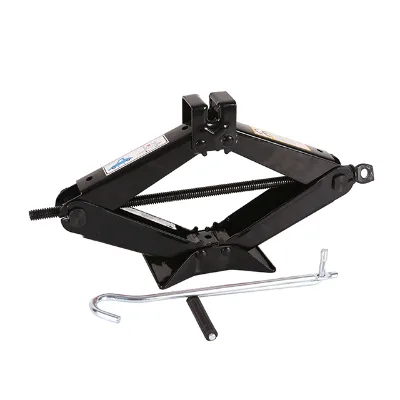


$7.00 - $100.00
MOQ: 100 Pieces


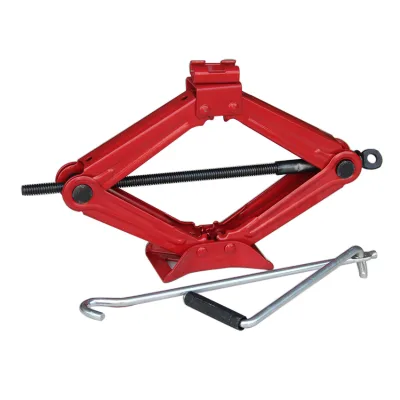
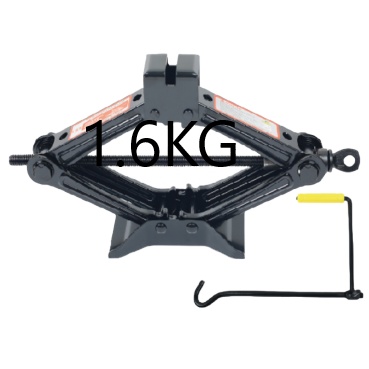


Comprehensive Sourcing Guide
Strategic Sourcing Guide for Galvanized Car Scissors Jacks
Understanding the Technical Architecture of Scissor Jacks
When evaluating a Galvanized Car Scissors Jack, the primary focus must be on the mechanical lifting mechanism and the structural integrity of the lifting column. The core design for these units is typically a single-post configuration, which provides a stable vertical lift path essential for automotive maintenance. The driving motor or manual actuation relies on a specific mechanical lift type, often categorized as a small shear type or planer-type mechanism. This distinction is critical because the shear type dictates the force distribution and the smoothness of the lifting motion. In many industrial specifications, the product is classified under the broader category of one-cylinder hydraulic lifts, although manual variants are equally prevalent in the consumer and light commercial sectors.
The physical dimensions of the jack are not uniform across all suppliers. Buyers must verify the specific size classification, which can range from compact units to large-scale industrial lifts. The operational height range is a vital technical parameter; observed specifications indicate a minimum height of approximately 115mm and a maximum height of 360mm. This range determines the vehicle clearance required for the jack to function effectively. The material composition is predominantly steel, chosen for its high tensile strength and durability under load. The surface treatment process is a defining characteristic of the "galvanized" keyword, often involving a combination of spraying, polishing, galvanizing, or electroplating to ensure corrosion resistance. This multi-step surface treatment is essential for products intended for export markets where humidity and road salt exposure are common.
Compliance Verification and Certification Standards
Navigating the compliance landscape for automotive lifting equipment requires rigorous verification of certifications. The supply chain for these products frequently cites international standards such as ISO, GS, RoHS, and CE. However, buyers must treat these as observations of specific listings rather than universal guarantees for every unit. For instance, while some product entries explicitly list ISO and CE certifications, others may only reference ISO9001:2008 or SGS standards. The presence of a CE mark is a common requirement for products entering the European market, but its validity depends on the specific testing documentation provided by the manufacturer.
The standardization of the product is another area requiring attention. While some manufacturers adhere to ISO9001:2008 quality management systems, others may offer custom standards based on specific buyer requirements. It is imperative to verify if the product carries a Certificate of Conformity that aligns with the destination country's safety regulations. The absence of certain features, such as an ABS (Anti-lock Braking System) component, is typical for mechanical jacks, as they are passive lifting devices. Buyers should confirm that the certification documents are current and issued by recognized bodies, rather than relying solely on the product title or marketing claims. The export markets for these jacks are global, which implies that suppliers must maintain a diverse portfolio of certifications to meet varying regional regulatory frameworks.
Cost Drivers and Pricing Dynamics
The pricing structure for galvanized car scissors jacks is influenced by several variable factors, including material costs, surface treatment complexity, and order volume. The observed listed price range in the market spans from 0.5 to 100 USD, reflecting a wide spectrum of product qualities, from basic manual units to more robust, specialized industrial models. This broad range indicates that price alone is not a reliable indicator of quality without a detailed specification comparison. The cost is heavily driven by the customization options available. Suppliers offering OEM services allow for branding and design modifications, which inevitably increase the unit cost compared to standard off-the-shelf models.
Minimum Order Quantity (MOQ) is a significant cost driver in the procurement process. The market data shows an observed MOQ range between 10 and 500 pieces. Some suppliers may set a low entry barrier of 10 pieces, while others, particularly those offering custom galvanization or specialized packaging, may require a minimum of 500 pieces. This variance affects the total landed cost for smaller buyers who may need to absorb higher per-unit costs due to lower volume discounts. Additionally, the payment terms, typically structured as T/T (Telegraphic Transfer), influence cash flow and risk management. Buyers should negotiate payment schedules that align with production milestones to mitigate financial risk. The packaging method, whether in wooden cases, carton boxes, or plywood boxes with pallets, also contributes to the final cost, especially when factoring in shipping logistics for international transport.
Typical Applications and Operational Environments
Galvanized car scissors jacks are designed for a variety of applications, primarily centered around vehicle maintenance and emergency roadside assistance. The primary use case is as a car jack for lifting passenger vehicles, light trucks, and commercial vans. The specific design features, such as the single-post structure and small shear type mechanism, make them suitable for environments where space is limited, such as in a garage or on a roadside shoulder. The product is often categorized under "Car Lift" or "Jack" types, indicating its versatility in different lifting scenarios.
The operational environment dictates the necessity of the galvanized surface treatment. These jacks are frequently used in outdoor conditions where exposure to rain, humidity, and road chemicals is inevitable. The galvanization process provides a protective barrier against rust and corrosion, extending the service life of the equipment. The net weight of the unit, often around 3.0kg for standard models, ensures portability for emergency kits while maintaining sufficient mass to stabilize the vehicle during lifting. The warranty period, typically 12 months, suggests that the manufacturer expects the product to withstand standard operational stresses. However, for heavy-duty applications, buyers should verify if the specific model's load capacity and material thickness meet the required safety margins for the intended vehicle weight.
Supplier Evaluation and Geographic Considerations
When evaluating potential suppliers, geographic origin plays a crucial role in logistics and quality perception. The primary production hubs for these products are located in China, specifically in regions like Weifang City in Shandong Province and Zhejiang Province. These locations are known for their manufacturing clusters and supply chain efficiency. The shipping port is predominantly Qingdao, which offers convenient access to global maritime routes. The transport method is typically by sea or air, depending on the urgency and volume of the order.
Supplier evaluation should extend beyond the product specifications to include their service capabilities. The availability of OEM services is a key differentiator, allowing buyers to customize the product with their own branding or specific technical requirements. The customization options extend to the color, with black being a common standard, and the packing materials, which can range from simple carton boxes to more robust wooden cases. Buyers must verify the supplier's ability to meet the specific MOQ requirements and their track record in the global export market. The condition of the product is listed as "New," but buyers should request evidence of quality control processes to ensure that the items are free from manufacturing defects. The inner package, often a carton box or plastic bag, should be inspected to ensure it provides adequate protection during transit.
Quality Control and Long-Term Procurement Strategy
Ensuring long-term value requires a robust quality control strategy that goes beyond the initial purchase. The quality attribute is often described as "High," but this is a subjective claim that must be substantiated through third-party testing or factory audits. Buyers should verify the surface treatment quality, ensuring that the galvanizing layer is uniform and free from defects that could lead to premature corrosion. The material, specified as steel, should be of a grade that meets the necessary load-bearing requirements for the intended application.
For long-term procurement, establishing a consistent relationship with a supplier who can maintain quality standards is essential. The warranty period of 12 months provides a baseline for accountability, but buyers should also consider the availability of spare parts and after-sales support. The product model number, such as JF-237458964 or Q074, serves as a unique identifier for tracking and reordering. When placing repeat orders, buyers should ensure that the specifications remain consistent, particularly regarding the certification standards and surface treatment processes. The use of custom standards or specific SGS certifications can help maintain product integrity over time. Ultimately, the success of the procurement depends on a clear understanding of the technical requirements, a thorough verification of certifications, and a strategic approach to supplier selection that balances cost, quality, and reliability.
FAQs
What certifications do galvanized car scissors jacks typically have?
These jacks often carry ISO, GS, RoHS, and CE certifications. Buyers must verify specific documents for each listing as not every unit includes all marks, and some may only reference ISO9001:2008 or SGS standards depending on the manufacturer.
Can I customize the design of a Galvanized Car Scissors Jack?
Yes, customization is available for these products including branding and design modifications. Suppliers offer OEM services, allowing buyers to specify details like color, packaging, or specific mechanical lift types such as the small shear or planer-type mechanisms.
What is the typical minimum order quantity for these jacks?
The minimum order quantity ranges from 10 to 500 pieces depending on the supplier. Some vendors accept low volumes starting at 10 units, while others requiring custom galvanization or specialized packaging may mandate a minimum of 500 pieces.
Where are galvanized car scissors jacks manufactured?
Production primarily occurs in China, specifically in Weifang City, Shandong Province, and Zhejiang Province. These locations serve as key manufacturing hubs with shipping ports like Qingdao facilitating global export via sea or air transport.
How is the surface treated on a Galvanized Car Scissors Jack?
The surface undergoes treatments like spraying, polishing, galvanizing, or electroplating to ensure corrosion resistance. This multi-step process is essential for products intended for export markets where exposure to humidity and road salt is common.
What payment terms are standard for purchasing these jacks?
The standard payment term is T/T, which stands for Telegraphic Transfer. Buyers should negotiate payment schedules that align with production milestones to mitigate financial risk while ensuring the supplier receives funds according to agreed-upon delivery schedules.
What is the warranty period for a Galvanized Car Scissors Jack?
The typical warranty period is 12 months for standard models. This baseline provides accountability for manufacturing defects, though buyers should verify if specific heavy-duty applications require extended coverage or different service agreements.