Source Galvanized Oval Eye Plates for Marine Rigging and Machinery
Compare 30 listings of Galvanized Oval Eye Plates from verified Chinese manufacturers. Buyers can evaluate specifications, certifications, and pricing for marine hardware, industrial machinery, and lifting applications.
Key considerations
Products List
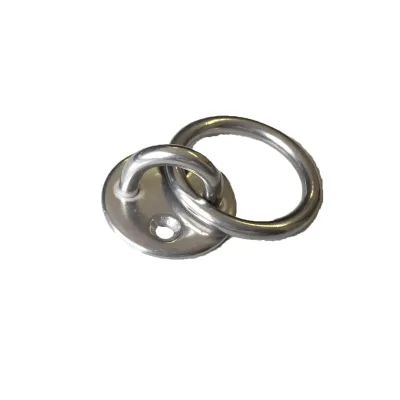

High Quality Forged Steel Lashing Base Deck Rectangular Eye Lifting Eye Plate
$0.59 - $1.29
MOQ: 100 Pieces


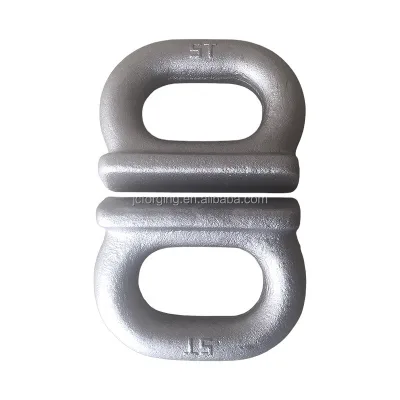
Factory Supply OEM Lifting Eye Plate With Base Carbon Steel Pad Eye for Wholesale
$0.25 - $0.30
MOQ: 1000 pieces
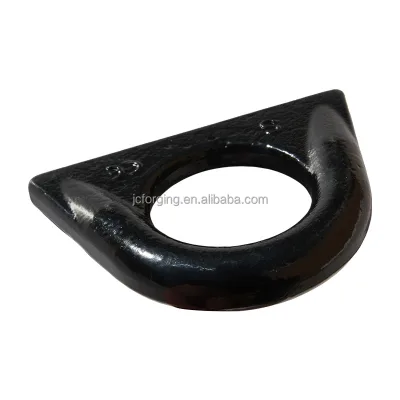

High Quality Hot DIP Galvanized Eye Anchor Plate for Pole Line Hardware
$2.50 - $15.00
MOQ: 1000 Pieces

Comprehensive Sourcing Guide
Strategic Sourcing Guide for Galvanized Oval Eye Plates
Understanding Product Specifications and Material Integrity
When sourcing Galvanized Oval Eye Plates, the primary objective is to identify components that meet rigorous structural and environmental demands. The core keyword implies a specific geometry—oval rather than round—which offers distinct advantages in load distribution and clearance in tight marine or industrial assemblies. Based on available market data, the foundational material for these components is typically stainless steel or carbon steel, with the latter often requiring galvanization for corrosion resistance. Buyers must verify the specific alloy grade, as the supplied context indicates a variety of origins, including Fujian and Shandong provinces in China, where manufacturing capabilities vary significantly.
The manufacturing process is a critical determinant of the final product's strength. The observed data highlights "investment casting" and "forging" as primary technologies. Investment casting is suitable for complex shapes and high precision, while forging, particularly pressure casting or mechanical forging, is often preferred for heavy-duty lifting applications due to the grain structure alignment that increases tensile strength. The surface treatment is equally vital; while some listings mention "mirror polishing" or standard "polish," the specific requirement for "galvanized" implies a zinc coating process. Buyers should distinguish between hot-dip galvanizing and electro-galvanizing, as the former provides superior thickness and longevity for outdoor or marine environments. The supplied facts also note "sand blasting" as a surface treatment option, which is often a preparatory step before galvanization to ensure proper adhesion of the zinc layer.
Compliance, Certification, and Standard Verification
In the B2B procurement of lifting hardware, compliance is not merely a formality but a safety imperative. The supplied product attributes list several certifications, including ISO 9001, RoHS, CE, and GS. These certifications indicate that the manufacturer adheres to specific quality management systems and safety standards. ISO 9001, for instance, ensures a consistent quality control process, while CE marking suggests compliance with European safety, health, and environmental protection requirements. However, buyers must exercise caution; the presence of a certification claim does not guarantee that every specific SKU in a catalog is certified. Verification should be requested on a per-shipment basis.
Regarding technical standards, the data references a mix of international and domestic norms, including GB (Guobiao), ASTM, DIN, EN124, and GSG. The "GB" standard is specific to China, while ASTM and DIN are widely recognized in North America and Europe, respectively. For oval eye plates, the relevant standard often dictates the testing methodology for proof load and breaking load. Buyers should explicitly request the mill test certificates or third-party inspection reports that correlate the specific product model (e.g., SA-3366211 or 007) to the claimed standard. The absence of a specific standard in a listing requires the buyer to define the required standard in the purchase order, ensuring the supplier understands the regulatory framework of the destination market.
Cost Drivers and Economic Factors in Procurement
The pricing landscape for Galvanized Oval Eye Plates is influenced by several volatile factors. The observed price range in the market is noted as 0-15 USD, which suggests a wide variance based on size, weight, and finishing quality. The "galvanized" aspect adds a significant cost layer compared to uncoated or painted alternatives. The cost drivers include the raw material price of steel or stainless steel, the energy intensity of the galvanizing process, and the labor costs associated with the specific manufacturing technique, such as investment casting versus forging.
Minimum Order Quantities (MOQ) play a crucial role in the unit economics of procurement. The data indicates an MOQ range from 1 to 1000 pieces, with specific listings showing ranges like 100-1000 PCS or a flat 100 PCS. For buyers requiring large volumes, negotiating a lower unit price is feasible, but the lead time and logistics costs must be factored in. The "Factory directly supply" attribute suggests that bypassing intermediaries can reduce costs, but it also requires the buyer to manage the supply chain more directly. Additionally, the "Selling Units" are often listed as "Single item," which can complicate bulk pricing if the supplier does not have a tiered pricing structure. Buyers should analyze the total landed cost, including shipping from ports like Qingdao, Shanghai, Ningbo, or Tianjin, rather than focusing solely on the ex-works price.
Typical Applications and Operational Context
Galvanized Oval Eye Plates are versatile components designed for heavy-duty applications where secure attachment points are required. The supplied context explicitly mentions "Marine Hardware" and "Machinery Parts" as primary application areas. In marine environments, the galvanized coating is essential to resist saltwater corrosion, making these plates ideal for rigging, mooring, and deck fittings. The "oval" shape is particularly advantageous in marine settings as it allows for easier alignment with shackles and pins that may have clearance constraints.
Beyond marine use, these components are frequently utilized in industrial lifting scenarios. The "Lifting Capacity" of 4T noted in the data points to their suitability for medium-to-heavy lifting tasks in construction, manufacturing, and logistics. The "Fixed Form" being "Welding Type" indicates that many of these eye plates are designed to be permanently attached to structures, machinery frames, or vessels. The "Rope Core Type" of "Hemp Core" mentioned in the data, while seemingly contradictory to a metal plate, suggests that these plates are often sold as part of a larger assembly involving wire ropes or slings. The "Sling Color" of black and the "Shape" of round or flat further indicate their integration into lifting slings and rigging systems. Buyers must ensure the oval eye plate is compatible with the specific load angles and dynamic forces expected in their operational environment.
Supplier Evaluation and Manufacturing Capabilities
Selecting the right supplier requires a deep dive into their manufacturing capabilities and business model. The data highlights "Business Type: Factory and Trade," indicating that some suppliers may act as both manufacturers and trading companies. A "Factory directly supply" status is generally preferred for custom orders and quality control, as it reduces the risk of miscommunication. The "Place of Origin" is listed as Fujian and Shandong, with specific mentions of Weifang, Shandong. These regions are known for their heavy manufacturing industries, but buyers should verify the specific factory's capacity to handle the required volume and customization.
The "Customization: Available" attribute is a key differentiator. Buyers often require specific dimensions, hole sizes, or coating thicknesses that deviate from standard catalog items. The "OEM: Acceptable" status confirms that suppliers are willing to produce goods under the buyer's brand or with specific design modifications. However, the "Advantages" section notes a lead time of "Within 20 Days After Receiving Last Confirm Info," which is a critical metric for project planning. Buyers should also verify the "Quality Control" processes, such as the "100% Inspected" claim, to ensure that every unit meets the specified tolerances, such as the "Forging Tolerance: +/-0.5mm" observed in the data.
Quality Control and Long-Term Procurement Considerations
Ensuring the long-term reliability of Galvanized Oval Eye Plates requires a robust quality control strategy. The "Quality Control: 100% Inspected" claim suggests a comprehensive internal inspection process, but buyers should supplement this with third-party inspections, especially for the first order or large shipments. The "Surface Treatment" and "Finish" must be scrutinized to ensure the galvanization is uniform and free of defects like runs, drips, or bare spots. The "Heat Treatment: Normalizing" process mentioned in the data is a positive indicator, as it relieves internal stresses in the metal, improving ductility and toughness.
Long-term procurement considerations extend beyond the initial purchase. The "Condition: New" attribute is standard, but buyers should inquire about the shelf life of the galvanized coating and storage requirements. The "prod_packing: Plywood Box" indicates that the products are packaged for protection during transit, which is essential for preventing damage to the zinc coating. Buyers should also consider the "Quotation Lead Time" of "Within 24 Hours" as a measure of supplier responsiveness, which is crucial for urgent procurement needs. Finally, the "Unique: China Gold Supplier" status, while a marketing term, often correlates with a history of reliable transactions and verified business credentials, serving as a preliminary filter for supplier selection.
Comparative Analysis of Product Attributes
To facilitate a clearer decision-making process, the following table summarizes the key attributes observed in the market data for Galvanized Oval Eye Plates and similar lifting hardware. This comparison helps buyers identify the specific requirements they must verify against supplier offerings.
| Attribute Category | Observed Value / Range | Verification Requirement for Buyer |
|---|---|---|
| Material | Stainless Steel, Steel | Confirm specific alloy grade and galvanization type. |
| Shape | Round, Oval, Flat Eye | Verify geometry matches design clearance and load path. |
| Manufacturing | Investment Casting, Forging | Determine if casting or forging is required for the load class. |
| Surface Treatment | Mirror Polish, Sand Blasting, Galvanized | Ensure galvanization thickness meets corrosion resistance needs. |
| Certifications | ISO 9001, CE, RoHS, GS, ASTM, GB | Request valid certificates for the specific batch/model. |
| MOQ | 1 - 1000 PCS | Negotiate based on volume to optimize unit cost. |
| Origin | Fujian, Shandong, China | Assess logistics costs from specific ports (Qingdao, Shanghai, etc.). |
| Lead Time | Within 20 Days (Post-confirmation) | Confirm if this includes production or just shipping preparation. |
| Tolerance | +/-0.5mm (Forging) | Verify if this tolerance applies to hole diameter or overall dimensions. |
| Lifting Capacity | 4T (Observed) | Calculate safety factor based on actual application load. |
This structured approach ensures that buyers can navigate the complexities of sourcing Galvanized Oval Eye Plates with confidence, relying on verified data points rather than unconfirmed marketing claims. By focusing on material integrity, certification validity, and supplier transparency, procurement professionals can secure high-quality components that meet the demanding standards of marine and industrial applications.
FAQs
What certifications do Galvanized Oval Eye Plates typically have?
These plates often carry ISO 9001, CE, RoHS, and GS certifications. Buyers should verify that the specific batch matches these standards before purchase to ensure compliance with safety and quality requirements.
How is the manufacturing process for these plates determined?
Manufacturing typically involves investment casting or forging depending on the load requirements. Forging is preferred for heavy-duty lifting due to superior grain structure, while casting suits complex shapes.
Can I get custom dimensions for Galvanized Oval Eye Plates?
Yes, customization is available for these components to meet specific design needs. Buyers should confirm the lead time, which is often within 20 days after receiving the final confirmation.
What is the typical minimum order quantity for these plates?
The minimum order quantity ranges from 1 to 1000 pieces depending on the supplier. Specific listings may require 100 pieces or more, so volume negotiation is essential for unit pricing.
Where are these plates typically manufactured in China?
Production originates mainly from Fujian and Shandong provinces, with Weifang being a specific hub. Buyers should consider logistics from ports like Qingdao or Shanghai when calculating total costs.
What surface treatments are applied to these steel plates?
Surface treatments include mirror polishing, sand blasting, and galvanization for corrosion resistance. Sand blasting is often used as a preparatory step to ensure the zinc coating adheres properly.
What is the lifting capacity of these oval eye plates?
Observed lifting capacities can reach up to 4 tons for specific models. Buyers must calculate the safety factor based on their actual application load rather than relying solely on listed maximums.