Source Garden Water Irrigation Hose Timer for Home, Industry, Agriculture
Explore 30 verified options for the Garden Water Irrigation Hose Timer designed for home, industry, and agriculture applications. Buyers can compare specifications, certifications, and pricing to find the right automatic electronic water timer for their needs; compare the available evidence and request quotations based on your requirements.
Key considerations
Products List


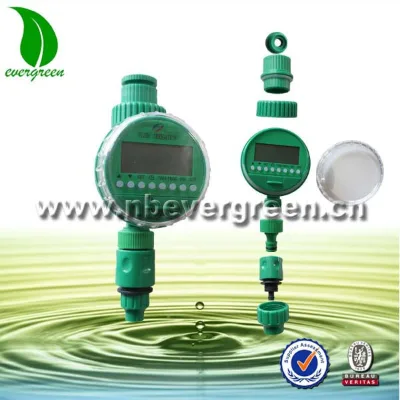


China Factory Competitive Price Irrigation Watering Timer Electric Garden Water Timer
$12.00 - $18.00
MOQ: 20 Pieces




Comprehensive Sourcing Guide
Garden Water Irrigation Hose Timer Sourcing Guide
Sourcing garden water irrigation hose timers requires a clear understanding of the diverse product landscape available from global manufacturers. These devices are essential for automating watering schedules, ensuring consistent moisture levels for plants while conserving water resources. Buyers must navigate a market that offers both simple analogue mechanical units and advanced electronic controllers with LCD displays. The choice between these types depends heavily on the specific irrigation needs, such as drip irrigation systems or general garden hose applications. Understanding the distinction between basic timer functions and programmable features is the first step in defining procurement requirements.
The supply chain for these timers is robust, with significant manufacturing capacity originating from regions like Hebei, China, and exporting to major markets including Europe, Australia, and America. Suppliers often provide customization options, allowing buyers to tailor products to specific branding or functional needs. It is crucial to verify the supply ability of potential vendors, as some may offer substantial monthly production volumes while others operate on a smaller scale. Aligning your order quantity with the supplier’s production capabilities ensures timely delivery and consistent product quality, which is vital for maintaining reliable irrigation operations in both residential and agricultural settings.
Product Scope and Observed Listing Signals
The observed product listings reveal a wide range of specifications, indicating that buyers must carefully evaluate individual product attributes rather than assuming uniformity across all suppliers. Key observations include variations in model numbers such as Pr303e, PRDT011601, PR202E, and YM202E, which suggest different feature sets or design iterations. Packaging details also vary, with some items packed in double blister packs while others use standard export paper cartons. Buyers should note the single package dimensions and gross weights, as these factors directly impact shipping costs and storage requirements. Understanding these logistical details is essential for accurate cost estimation and inventory planning.
Functional attributes observed in the listings highlight the importance of matching the timer type to the intended use case. Some products are identified as analogue timers, while others are electronic with LCD displays and battery power. The irrigation time settings can range from a minimum of one minute to a maximum of nine hours and fifty-nine minutes, with frequency options of one to eight times per day. These specifications are critical for determining whether a timer is suitable for precise drip irrigation or broader garden watering. Buyers must verify these operational parameters to ensure the selected device meets their specific scheduling and duration requirements.
Technical Specifications to Verify
When evaluating technical specifications, buyers must prioritize the mechanism and power source of the timer to ensure compatibility with their existing irrigation infrastructure. Electronic timers typically require batteries, often two units, and operate within a specific work temperature range, such as 0-40 degrees Celsius. It is essential to confirm the power requirements and battery life expectancy, as frequent battery changes can be inconvenient and costly. Additionally, the work pressure range, often cited as 3-8 bar, must be compatible with the water supply pressure to prevent damage to the timer or inefficient water flow. Verifying these technical limits prevents operational failures and ensures long-term reliability.
The display type and programming capabilities are also critical technical factors to verify. While some timers feature simple analogue dials, others offer LCD displays for more precise control over irrigation schedules. Buyers should assess whether the timer supports programmable cycles, including start times, duration, and frequency, to meet complex watering needs. The mechanism type, whether electronic or mechanical, influences the accuracy and ease of use. Furthermore, the material composition, often plastic, should be evaluated for durability and resistance to environmental factors. Ensuring that the technical specifications align with the intended application, whether for home gardens or industrial agriculture, is paramount for successful procurement.
Compliance and Safety Documentation
Compliance with international standards is a critical aspect of sourcing garden water irrigation timers, as it ensures product safety and market accessibility. Buyers should verify that suppliers hold relevant certifications, such as ISO, CE, and RoHS, which indicate adherence to quality management and environmental standards. These certifications are often listed in product attributes and serve as a baseline for assessing supplier credibility. However, buyers must not assume that all listed products automatically meet every standard; instead, they should request current certification documents to confirm validity. This due diligence helps mitigate risks associated with non-compliant products, which could face regulatory hurdles or safety issues in the destination market.
Authentication and standard compliance also extend to packaging and labeling requirements. Export standard packing, such as paper carton packing, must meet the regulatory requirements of the importing country. Buyers should ensure that product labels include necessary information, such as model numbers, origin, and safety warnings. The origin of the product, often China or specifically Hebei, should be clearly documented for customs clearance. Additionally, buyers must verify that the product meets any specific regional standards for electrical safety or water contact materials. Proper documentation and compliance verification are essential for smooth customs processing and maintaining brand reputation in international markets.
Cost Drivers and Commercial Terms
Cost drivers for garden water irrigation timers include the complexity of the mechanism, the type of display, and the packaging requirements. Electronic timers with LCD displays and programmable features typically command higher prices than simple analogue models. Buyers should also consider the supply ability of the supplier, as higher production volumes may offer economies of scale. The minimum order quantity (MOQ) is another significant factor, ranging from 1 to 500 units, which affects the initial investment and inventory management. Understanding these cost components allows buyers to negotiate better terms and align their procurement strategy with their budget constraints.
Commercial terms, including payment methods, lead times, and shipping arrangements, must be clearly defined in the procurement contract. The port of dispatch, often Ningbo, influences shipping costs and transit times to various global destinations. Buyers should verify the leading exporter regions, such as Europe, Australia, and America, to ensure the supplier has experience in exporting to their target market. Additionally, the packaging details, such as PCS per carton and carton size, impact logistics efficiency. Clear communication of these commercial terms helps avoid misunderstandings and ensures a smooth transaction process. Buyers must also consider the total landed cost, including duties and taxes, when evaluating the overall value of the procurement.
Supplier Qualification and Quality Control
Supplier qualification is a critical step in ensuring the reliability and consistency of garden water irrigation timers. Buyers should assess the supplier’s production capacity, supply ability, and export experience to determine their capability to meet order requirements. Suppliers with a supply ability of 10000 pieces per week or 500000 pieces per month demonstrate significant manufacturing scale. Buyers must verify these claims through site audits or third-party inspections to ensure accuracy. Additionally, the supplier’s ability to provide customization, such as OEM branding, should be evaluated to meet specific market needs. A qualified supplier should have a robust quality control system in place to maintain product consistency.
Quality control measures should include regular inspections of raw materials, production processes, and finished products. Buyers should request quality assurance documentation, such as inspection reports and test results, to verify product performance. The material composition, often plastic, should be checked for durability and resistance to environmental factors. Furthermore, the packaging quality must be assessed to prevent damage during transit. Buyers should establish clear quality standards and acceptance criteria in the procurement contract. Regular communication with the supplier regarding quality issues and improvements is essential for maintaining high product standards and customer satisfaction.
Long-Term Procurement Checks
Long-term procurement checks involve continuous monitoring of supplier performance and product quality to ensure sustained value. Buyers should establish key performance indicators (KPIs) to track delivery times, product defect rates, and customer feedback. Regular reviews of these metrics help identify potential issues early and allow for corrective actions. Additionally, buyers should stay informed about changes in market trends, regulatory requirements, and technological advancements in irrigation timers. This proactive approach ensures that the procurement strategy remains aligned with business objectives and market demands. Continuous improvement initiatives with suppliers can lead to better product designs and cost efficiencies over time.
Building a strong relationship with suppliers is also crucial for long-term success. Open communication and collaboration can lead to better product development and problem-solving. Buyers should consider diversifying their supplier base to mitigate risks associated with single-source dependencies. Regular audits and performance evaluations help maintain high standards and ensure accountability. Furthermore, buyers should invest in training and development for their procurement teams to enhance their expertise in sourcing and quality management. By focusing on long-term partnerships and continuous improvement, buyers can achieve sustainable procurement outcomes and drive business growth in the garden water irrigation timer market.
FAQs
How does an electronic Garden Water Irrigation Hose Timer work?
It connects between the garden tap and hose, opening and closing a valve according to programmed start times and durations. Most models run on two batteries and use an LCD display for programming. Irrigation frequency can typically be set from one to eight times per day, with each watering session lasting from one minute up to nine hours and fifty-nine minutes.
What irrigation frequency and duration settings are supported?
Common models support one to eight irrigation starts per day, giving flexible scheduling for lawns, drip lines, and vegetable beds. Each watering event can be set from a minimum of one minute to a maximum of nine hours and fifty-nine minutes. Check the specific model listing, since basic mechanical versions may offer simpler duration ranges than electronic units.
Which water pressure range can these irrigation timers handle?
Typical electronic garden water timers operate within a working pressure of three to eight bar, which suits standard household tap supplies and pressurized drip irrigation systems. Confirm your supply pressure before installation, because pressures outside this range can affect valve sealing and program accuracy. Low-pressure gravity-fed systems may not close the valve reliably, so verify compatibility first.
Can I customize the timer for my own brand or market?
Yes, customization is available from the listed products, with OEM brand naming supported on certain models. Buyers can typically adjust packaging and branding while keeping the core valve and control design unchanged. Discuss artwork, packaging format such as carton or double blister packing, and logo placement with the supplier before ordering, since minimum quantities and lead times depend on the customization scope.
What certifications do these irrigation timers carry?
Listed products reference ISO certification, with some models also citing CE and RoHS compliance, and BSCI or SGS related authentication. Certification coverage varies by model, so request copies of current certificates for the exact product before placing an order. This is especially important for European and Australian buyers where CE marking and RoHS compliance are commonly required at import.
What are the packing and shipping details for bulk orders?
Products are packed in export-standard paper cartons, with options such as double blister packing for retail units and carton packing for bulk shipments. Typical carton sizes are around sixty-five by thirty by twenty-four centimeters, holding twenty to twenty-four pieces per carton. Dispatch commonly runs through the port of Ningbo, and goods originate from suppliers in Hebei and other regions of China.
How much supply capacity can suppliers provide per month?
One listed irrigation timer product indicates a supply ability of five hundred thousand pieces per month, while another lists ten thousand pieces per week, so capacity differs by supplier and model. Confirm the monthly output for the exact model you plan to order, including any production time needed for customization, before committing to a delivery schedule for large seasonal orders.
Which applications are these garden water timers suitable for?
They are designed for garden and agriculture irrigation, including home gardening, drip irrigation systems, and broader agricultural watering setups. Operating temperatures of zero to forty degrees Celsius suit typical outdoor seasons, though freezing conditions should be avoided by draining the unit. Electronic mechanisms help save water and cost by watering precisely on schedule instead of leaving taps running unattended.